Buying Sage Oil: Which Sage Is in the Bottle?
"Sage" on a bottle can mean at least five different plants, and they smell and behave about as differently as a lemon and a pine tree. Common garden sage, clary sage, Spanish sage, Greek sage and white sage all turn up under the same one-word label. Settle which plant is in the bottle first, and the rest of your buying decisions get much easier.
Five plants, five different oils
The plain-English version is that each sage has its own chemical backbone.
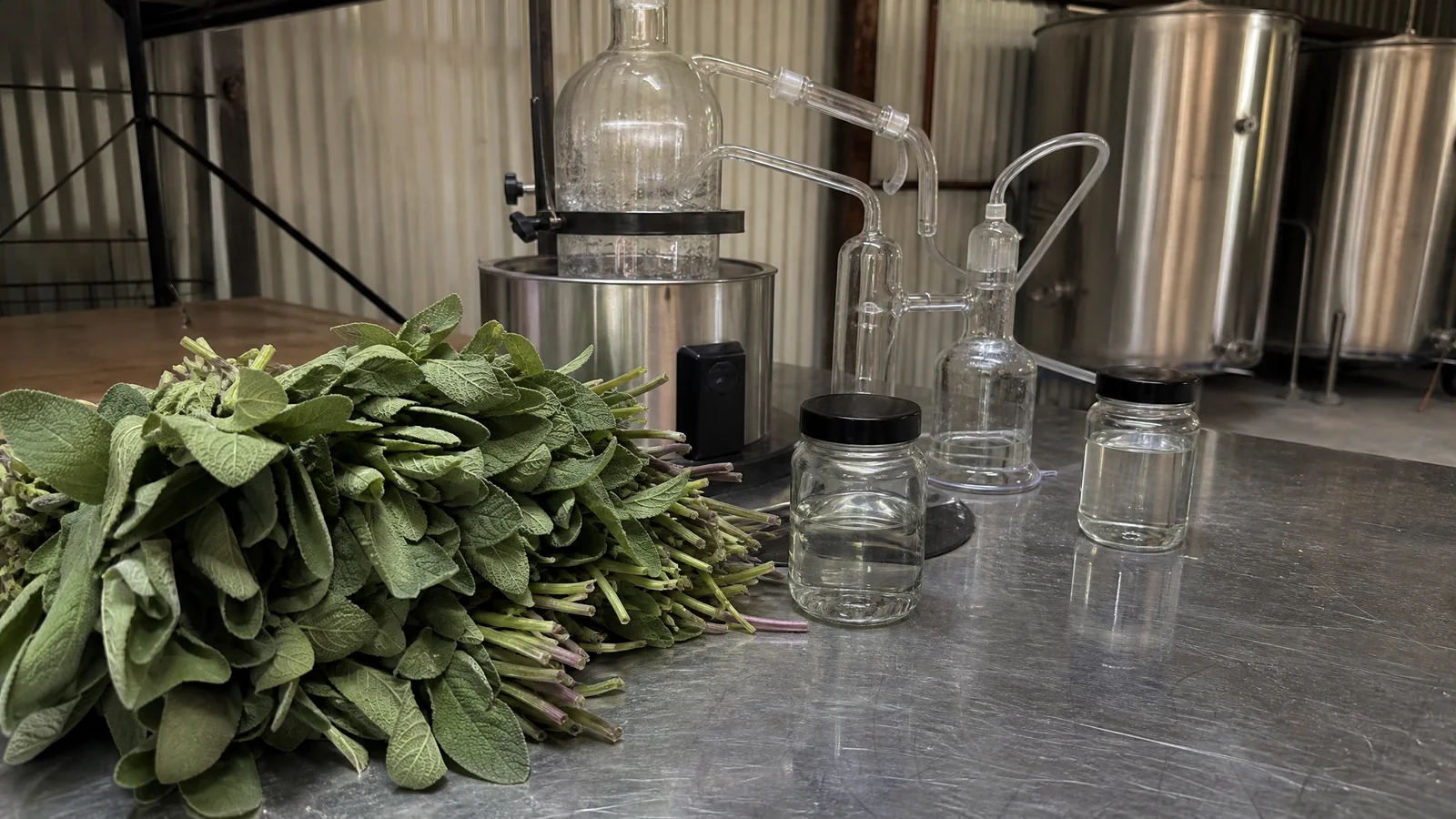
Common garden sage (Salvia officinalis) is the kitchen herb's oil, and it is the one we sell. It is built around thujone, with camphor and 1,8-cineole behind it. In the European Union's feed-additive review, five batches of one supplier's oil averaged about 25 percent alpha-thujone, 5.6 percent beta-thujone, 18.7 percent camphor and 10.7 percent cineole (EFSA FEEDAP Panel, 2024). Those are shares of the gas-chromatography peak area for that supplier's batches, so use them to see the shape of the oil, not as a promise about any particular bottle.
Clary sage (Salvia sclarea) is a different animal. Its oil leans on linalyl acetate and linalool, the same family of sweet, floral molecules found in lavender, and in the same EFSA programme thujones were not detected in clary at all (EFSA FEEDAP Panel, 2024, clary sage oil). Our clary versus common sage comparison goes into more depth.
Spanish sage (S. lavandulifolia) and Greek sage (S. fruticosa) sit in between. A review of Mediterranean sage oils describes Spanish sage by its cineole and camphor, and Greek sage as cineole-rich, typically around 50 to 70 percent, with most studies finding no significant thujone (Karalija et al., 2022). Our piece on Spanish and Greek sage picks up the details.
White sage (Salvia apiana) is the California plant used for smudge bundles. A 2023 study found its oil to be mostly cineole, pinenes, myrcene and camphor, with thujone never reported (Krol et al., 2023). Smudging is a living practice of Indigenous peoples and a separate matter from a bottle of oil; we explore the difference in white sage and sage oil.
The takeaway is practical. Because the thujone-heavy oil and the linalyl-acetate-heavy oil are so different, the species decides the aroma, the safety picture and the kind of paperwork worth asking for. Do not carry safety numbers from one sage across to another.
What the label can tell you
A good label does a few simple things. It gives the full Latin name, not just "sage", which matters because the European Medicines Agency notes that sage oil composition is very variable with source and harvest (EMA/HMPC, 2016). It names the plant part and how the oil was made. It carries a lot number you can match to a document. And it says plainly whether the oil is meant for skin, diffusing or neither, with a note on dilution if it is sold neat.
Words that do not tell you anything are worth recognising. "Premium", "natural" and "therapeutic-grade" do not say which plant, which part or which lot, and our article on grading explains why no standard backs the last of those.
What paperwork shows
A Certificate of Analysis is only as informative as the tests on it. Density, refractive index and optical rotation tell you an oil falls inside an expected window, and they are a sensible first check. A gas chromatography report goes further and shows what the oil is made of, which for sage means the thujone figure. Our guide to reading a GC-MS report is a good companion if you want to go that far.
The Certificate of Analysis we publish is for a single batch. It names Salvia officinalis, leaf, steam distilled, and lists a relative density of 0.915, a refractive index of 1.469 and an optical rotation of minus 10 degrees, each beside a printed range. It does not include a GC-MS breakdown. If you need one, ask us in writing through the contact page before you order, and get the answer in writing too.
Opening the bottle
Once an oil arrives, give it a minute before you judge it. Garden sage should read as herbal and earthy: our Botanical listing is herbaceous, earthy and camphoraceous with a dry green character, and our Purity listing is fresh and green with a peppery edge. Put a drop on a paper strip rather than your skin and notice whether the smell matches what the seller described. Keep the cap tight, store the bottle somewhere cool and dark, and write the date you opened it on the label so you always know how old it is. A small bottle is a sensible way to begin with a strong oil like this, because a little goes a long way.
Questions worth sending
- What is the Latin name, and is the part leaf?
- Which lot will I receive, and does your document name that lot?
- What are alpha- and beta-thujone as a percent of peak area, by which method, and who ran the test?
- Can I see the whole report rather than a summary?
Those four questions will sort most sellers quickly, and we are glad to be asked them.
Who this oil is not for
Garden sage oil is a concentrated material. The EMA's herbal committee describes thujone as toxic at high doses and found the benefit-risk balance of sage oil as a herbal medicine to be negative (EMA/HMPC, 2016). Our own guidance is not to take it by mouth, to avoid it in pregnancy and breastfeeding, to keep it away from children and pets, and to leave it alone with a seizure disorder. Our thujone article explains the reasoning. We sell common garden sage in two listings, sold neat, and a pharmacist or physician is the right person to ask about your own situation.
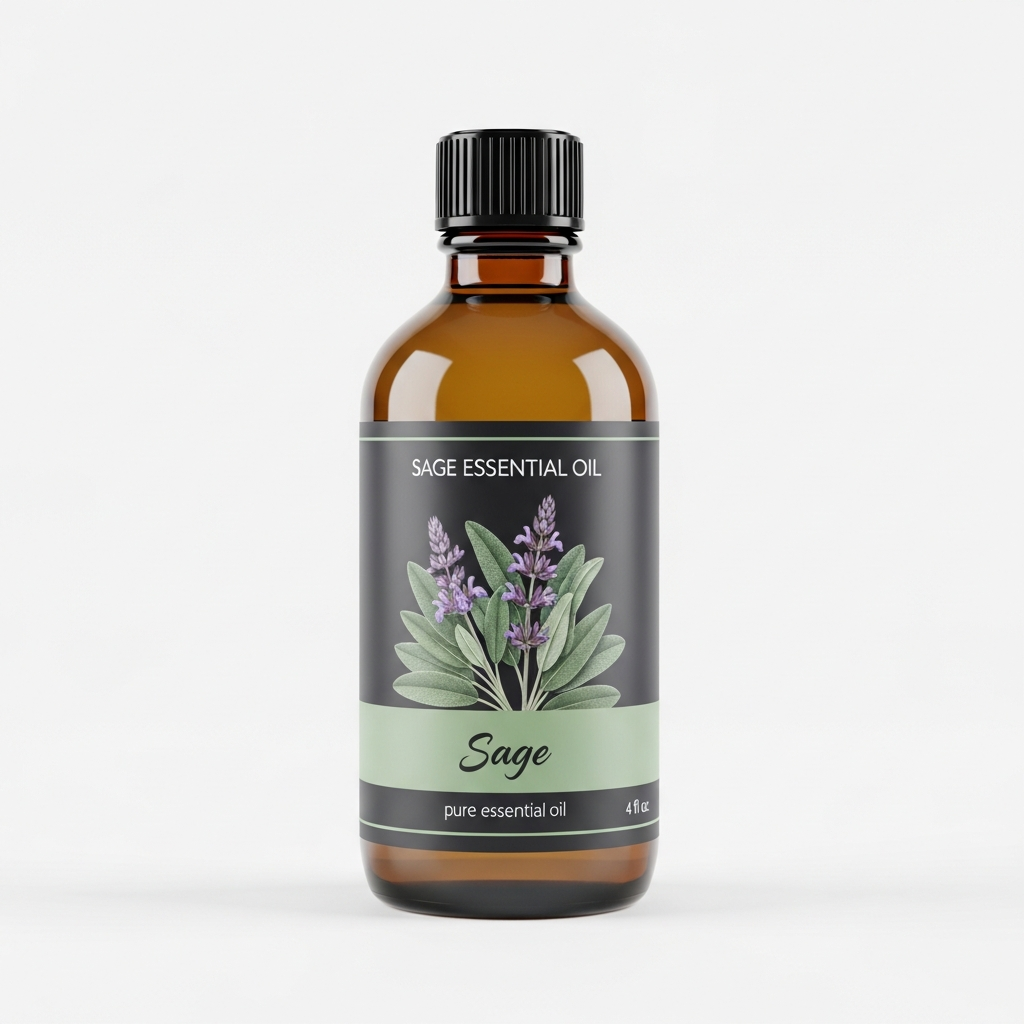
Sage Essential Oil
Sage Essential Oil from our own shop, in sizes from 0.5 oz to bulk.
From $13.99
Shop Now →Sources & Further Reading
- EFSA FEEDAP Panel, 2024. Safety and efficacy of a feed additive consisting of an essential oil derived from the leaves of Salvia officinalis L. (sage oil) for use in all animal species (FEFANA asbl). EFSA Journal. PMC11656093
- EFSA FEEDAP Panel, 2024. Safety and efficacy of a feed additive consisting of an essential oil derived from the flowering stems of Salvia sclarea L. (clary sage oil) for use in all animal species (FEFANA asbl). EFSA Journal. PMC11561422
- Karalija E, Dahija S, Tarkowski P, Zeljkovic SC, 2022. Influence of Climate-Related Environmental Stresses on Economically Important Essential Oils of Mediterranean Salvia sp. Front Plant Sci. PMC9114806
- Krol A et al., 2023. Evaluation of the yield, chemical composition and biological properties of essential oil from bioreactor-grown cultures of Salvia apiana microshoots. Sci Rep. PMC10154310
- EMA/HMPC, 2016. Assessment report on Salvia officinalis L., folium and Salvia officinalis L., aetheroleum. ema.europa.eu
- EMA/HMPC, 2016. Public statement on Salvia officinalis L., aetheroleum. ema.europa.eu