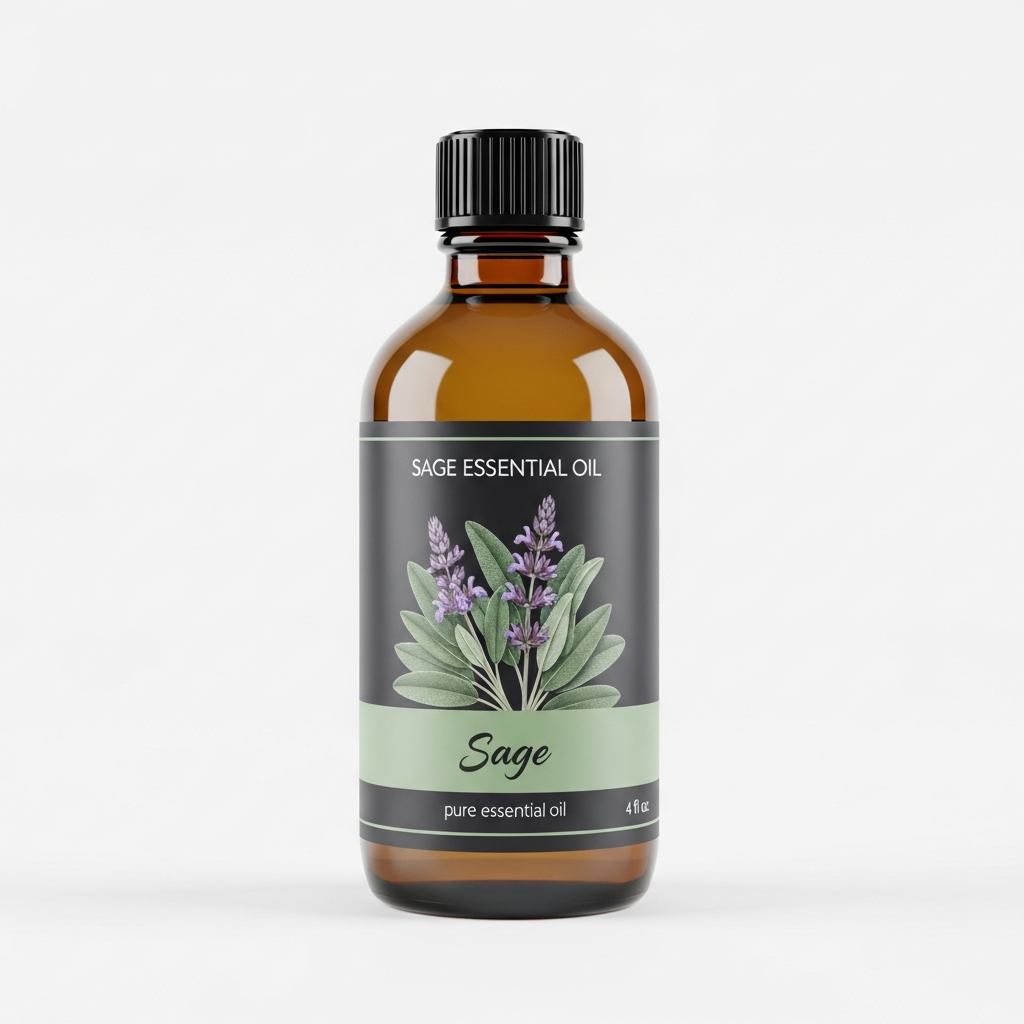
Sage essential oil is a fresh, green, herbaceous distillate with a peppery, camphor-tinged edge, and it draws a specific set of wholesale buyers: candle and soap makers, grooming and haircare brands, perfumers, and botanical ritual product makers. This guide covers what the oil actually is, how to vet a supplier, and how sizing works from a small sample bottle through a large production drum.
Review current bulk pricing and place a sample order before committing to a production run.
Sage essential oil sold on this site is steam-distilled from the leaves of Salvia officinalis, the common garden sage grown across the Mediterranean and cultivated widely today for its crisp, peppery-camphor character. The distillation step matters to buyers because it shapes both aroma and consistency: how the leaf is turned into oil covers everything from batch-to-batch consistency to how the oil behaves once diluted into a finished product.
Buyers new to the category often assume one sage oil is interchangeable with another, but species, growing region, and extraction method all move the aroma and the price. A buyer's guide to species, labels, and quality is worth reading before requesting a quote, since the label alone rarely tells the whole story.
The oil sits as a middle note in a perfumery accord and blends cleanly with rosemary, cedarwood, lavender, bergamot, clary sage, and lemon, which is why it shows up across candle, soap, grooming, and fine-fragrance formulas rather than staying inside one category.
| Sold as | What it actually is | How to recognize it |
|---|---|---|
| Common (Dalmatian) Sage Oil | Steam-distilled from the leaf of Salvia officinalis, the species this site sells | Labeled plainly as Salvia officinalis, with a fresh, green, peppery aroma carrying a camphor edge rather than anything floral or sweet |
| Clary Sage Oil | A related but different plant, Salvia sclarea, with its own aroma profile and its own buyer base | Sold and priced under its own name; the two are close cousins, not substitutes |
| White Sage Smudge Products | Salvia apiana, a different plant tied to a smoke-based clearing tradition rather than a bottled essential oil | Marketed around burning and smoke, not distillation, and rarely sold by the same suppliers as Salvia officinalis oil |
| Sage Fragrance Oil | A synthetic or partly synthetic blend built to smell like sage rather than distilled from the plant | Labeled fragrance oil, not essential oil, and the ingredient panel rarely names Salvia officinalis at all |
The clearest way to sort these apart is to read the species name on the label rather than the word sage alone: clary sage and common sage compared lays out why the two get confused, and sage oil versus white sage smudge covers a mix-up that trips up buyers sourcing for ritual and clearing product lines. Lesser-known relatives worth knowing about are covered in Spanish and Greek sage, which some suppliers substitute or blend in without saying so.
The sourcing trap here is treating sage oil as a single commodity. A quote that looks cheap relative to the rest of the market is worth a second look at the species name and the extraction method before ordering, since a synthetic fragrance oil or a different Salvia species can sit under the same generic listing title.
The wholesale buyers who actually reorder this oil are formulators, not individual shoppers: candle and home fragrance houses building a green, herbaceous line; cold-process and melt-and-pour soap makers; natural cleaning and household spray brands; grooming and beard-care lines; haircare brands building scalp rinses; fine-fragrance and perfumery houses; and makers of botanical clearing sprays and mists. Wholesale sizing and pricing for this oil breaks down how order volume tends to track with each of these categories.
What most of these buyers share is a need for the oil to read as genuinely herbal rather than as a synthetic stand-in: what the label won't tell you about synthetic herbal fragrance is the difference their end customers are paying for. Formulators sourcing at pound and drum volumes want that authenticity backed by paperwork, not just a marketing claim.
Before requesting a quote, run any prospective supplier through the following checklist.
Documentation is the difference between a formula that survives a retailer's ingredient audit and one that gets pulled. Keep the published Certificate of Analysis on file alongside every batch you buy, not just the first one.
Sizing should match where a formula actually is, not where a buyer hopes it will be. Which bottle to order first covers the early stage, when a small sample and a bench batch matter more than price per pound.
Once a formula is locked, storage matters as much as sizing: keeping the herbal edge intact covers how to store larger volumes so a drum bought for a full production run still smells the same on the last batch as it did on the first.
Order a half-ounce or one-ounce bottle to confirm aroma and performance in a bench formula before committing to any real volume.
Lock the ratio in a small batch, sized four ounces to sixteen ounces, and run it through whatever stability or patch testing the finished product category calls for.
Move to pound-tier sizing, five pounds or twenty-five pounds, once the formula is fixed and a production run is scheduled.
Standing production settles into a repeat order at the pound or drum tier, with the published Certificate of Analysis checked against each new batch.
The sections below cover the specific wholesale categories that actually buy this oil, with what each one needs from a supplier and how sizing tends to run.
Fresh, green, and herbaceous with a peppery edge, this oil gives candle and diffuser lines a herb-garden note that reads as distinct from lavender or rosemary.
Read the sourcing guide →Cold-process and melt-and-pour soap makers use this oil for a crisp, herbal bar note that reads as garden-fresh rather than sweet.
Read the sourcing guide →Household spray brands use this oil purely for a crisp, herbaceous scent layer in kitchen and all-purpose formulas.
Read the sourcing guide →Grooming brands use this oil to give a beard or body oil an earthy, herbaceous edge that reads as distinct from the usual cedar and citrus lineup.
Read the sourcing guide →Haircare brands work this oil into scalp rinses and hair oils at a low dilution for a fresh, herbaceous note, framed strictly around scent and feel.
Read the sourcing guide →Perfumers use this oil as a middle-note building block, valued for a peppery, camphor-tinged green character that reads as genuinely herbal rather than synthetic.
Read the sourcing guide →Ritual and clearing product makers use this oil in bottled mists and roll-ons, offering a smoke-free alternative to traditional white sage smudging.
Read the sourcing guide →Sample first, then scale from pound sizing to drum volume as your formula locks.