Best Sage Oil Sizes: Which Bottle Should You Order First?
Buying sage essential oil for the first time is surprisingly easy to get wrong. Not because the oil itself is complicated, but because the size you choose can dramatically affect value, freshness, and how satisfied you feel with your purchase six months later. A 1-ounce bottle sounds modest until you realize you mostly use sage in a diffuser. A 4-ounce bottle sounds practical until it sits half-open on a shelf for two years, slowly oxidizing.
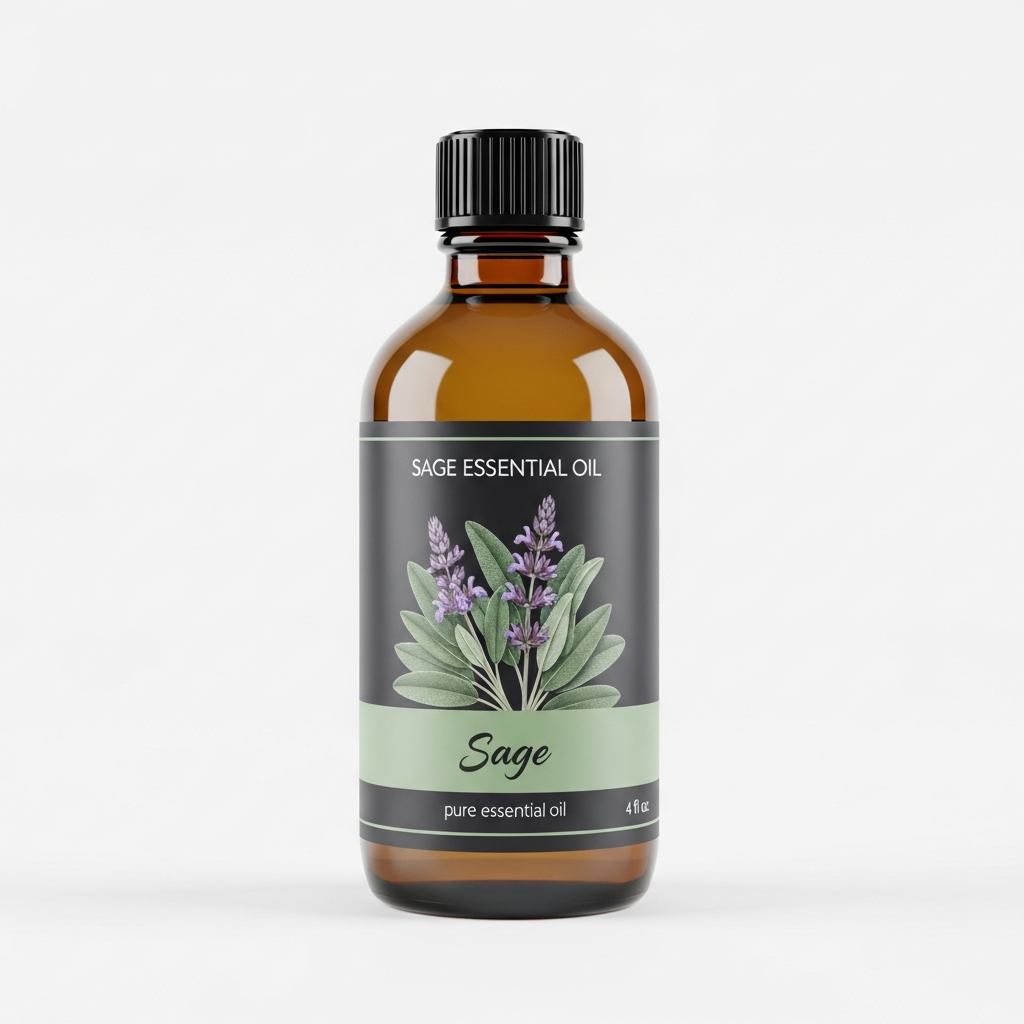
This guide walks through what to look for, how to compare bottles side by side, and which sizes tend to make sense at different stages of a sage oil practice. Whether you are buying garden sage (Salvia officinalis) or shopping specifically for a clary sage essential oil bottle (Salvia sclarea), the same logic applies.
Garden Sage vs. Clary Sage: Know What You Are Buying
Before comparing sizes, it helps to confirm which species you actually want. The two most common sage oils on the retail market are garden sage and clary sage, and they are genuinely different products with different scent profiles and different common uses.
- Garden sage (Salvia officinalis): Sharp, herbaceous, slightly medicinal in character. Steam distilled from the leaves. Used frequently in men's grooming formulations, deodorant bases, and bold aromatic blends.
- Clary sage (Salvia sclarea): Warmer, softer, faintly floral with a nutty undertone. A popular choice for personal care formulations, massage oil bases, and evening diffuser blends.
Some sellers label products simply as "sage oil" without clarifying the species. That ambiguity is worth scrutinizing before you add anything to your cart. For a deeper look at species differences, see our guide on how to buy pure sage oil: the complete guide to species.
Quality Indicators to Check Before Choosing a Size
Size is irrelevant if the oil inside the bottle is poor quality. Start here before comparing ounces and prices.
GC/MS Testing
Gas chromatography/mass spectrometry testing breaks down an oil's chemical composition and flags adulterants or dilution. Reputable sellers publish these reports, either batch-specific documents downloadable from the product page or available on request. If a seller cannot produce a GC/MS report for their sage oil, move on.
Botanical Latin Name on the Label
The label should state the full Latin name: Salvia officinalis or Salvia sclarea. "Sage oil" alone tells you very little. Also look for the plant part used (leaf, flowering tops) and the extraction method (steam distilled).
Country of Origin
Garden sage from the Dalmatian coast of Croatia is widely regarded as a benchmark for quality. Spanish and French origins are also common and can be excellent. Clary sage is often sourced from France, Russia, or Bulgaria. Origin alone does not guarantee quality, but combined with GC/MS data, it gives you useful context.
Packaging
Essential oils degrade with light and oxygen exposure. Amber or cobalt glass bottles are the standard for good reason. If a seller ships sage oil in clear glass or plastic, that is a practical concern for shelf life, regardless of the oil's initial quality.
Shelf Life Information
Sage oil typically carries a shelf life of two to three years from distillation when stored correctly (cool, dark, tightly capped). Look for a batch date or best-by date on the label. Sellers who provide this information are generally more transparent across the board.
Comparing Sage Oil Sizes: A Practical Breakdown
| Bottle Size | Approximate Drops | Best For | Typical Price Range |
|---|---|---|---|
| 5 mL (approx. 0.17 oz) | 85 to 100 drops | First-time buyers, sampling a new supplier | $5 to $14 |
| 10 mL (approx. 0.34 oz) | 175 to 200 drops | Regular diffuser users, small batch formulators | $10 to $22 |
| 1 oz (30 mL) | Approx. 600 drops | Active personal care formulators, committed daily users | $18 to $45 |
| 4 oz (120 mL) | Approx. 2,400 drops | Small-batch product makers, studio or classroom use | $55 to $130 |
| 16 oz and larger | 9,600+ drops | Formulators with established usage volume, bulk buyers | $180 and up |
Prices fluctuate based on species, supplier, and current crop yields. Clary sage is generally more expensive per ounce than garden sage due to lower oil yield during distillation.
Top Picks at Different Price Points
Best First Purchase: 5 mL or 10 mL
If you are working with a new supplier for the first time, the smartest move is to start small. A 5 mL or 10 mL bottle gives you enough oil to assess scent character, test in a blend, and evaluate how the supplier packages and ships their products. Garden sage in particular has a bold, assertive scent that some people love immediately and others find overwhelming. A 5 mL purchase is a low-stakes way to find out which camp you are in.
Look for suppliers who offer these smaller sizes at a fair per-mL price. A reasonable markup over larger sizes is expected, but if a 5 mL bottle costs three times the per-mL price of a 1-ounce bottle from the same seller, you are paying steeply for the convenience.
Best Everyday Size: 1 oz (30 mL)
For most home users who diffuse regularly or incorporate sage into personal care blending, a 1-ounce bottle hits a comfortable balance of value and freshness. At roughly 600 drops, a 1-ounce bottle gives an active user several months of consistent use before oxidation becomes a concern. This is also the size where per-mL pricing starts to become noticeably better than smaller bottles.
If you are formulating clary sage into products like facial serums, body oils, or hair care blends, a 1-ounce bottle is a practical starting point for recipe development.
Best for Formulators: 4 oz
A 4-ounce bottle makes sense once you have confirmed a supplier's quality and established your usage rate. At this size, you are committing to a single batch for potentially six months to a year. Make sure your storage setup (a cool, dark cabinet or refrigerator) is appropriate before scaling up. Sage oil stored carelessly in a warm bathroom cabinet will not last as long as the label suggests.
Bulk and Wholesale Sizes
Sizes above 4 ounces move into semi-professional territory. If you are producing sage-infused products in volume, the per-unit cost savings at 16 oz, 1 kg, or larger can be significant. This territory also involves more due diligence: verifying supplier certifications, requesting current-crop GC/MS reports, and understanding minimum order policies. For a thorough overview of that purchasing tier, see our article on wholesale sage oil: bulk sizes, species, and pricing explained.
Red Flags to Avoid When Shopping Sage Oil Sizes
The essential oil market has a wide quality range. These signals suggest a product or seller may not meet the standard you are looking for.
- Uniform pricing across all species: If lavender, rose, and sage all cost the same per mL, the seller likely is not offering pure single-origin oils. Rose absolute and sage oil have very different production costs.
- No Latin name on the label: Already covered above, but worth repeating as a hard stop.
- "Fragrance oil" language mixed with "essential oil" language: These are different products. A listing that blurs the line between them deserves skepticism.
- Enormous bottles at suspiciously low prices: A 16-ounce bottle of clary sage priced below $40 should raise questions about purity, adulteration, or species substitution.
- No return or batch testing policy: Quality suppliers stand behind their products. If a seller cannot tell you what happens if you receive an off-smelling or mislabeled batch, that is not a supplier relationship worth building.
- Plastic bottles for large sizes: Small sample vials sometimes use plastic acceptably. But larger volumes in plastic suggest the seller is not prioritizing oil integrity.
Where to Buy Sage Oil
Specialty Essential Oil Retailers
Dedicated essential oil companies with transparent sourcing, published GC/MS data, and knowledgeable customer service tend to offer the best combination of quality and accountability. They typically stock multiple sage species, multiple sizes, and can answer detailed sourcing questions.
Botanical Supply Houses
Companies that supply ingredients to professional formulators (cosmetic chemists, soap makers, small-batch skincare brands) often carry sage oil in a wider size range and at competitive pricing. Quality standards at these suppliers are usually high, since their customers are professionals who notice problems quickly.
Large Online Marketplaces
Platforms like Amazon carry sage oil, and a handful of reputable sellers operate there. But the marketplace format makes it harder to verify sourcing claims, batch documentation, and storage conditions during transit. Buy from a named brand with verified reviews, not from an anonymous third-party listing with no identifying information.
Local Health and Natural Foods Stores
A good option for smaller sizes when you want to smell the oil before committing. Stock is often limited to a few suppliers, but the ability to inspect packaging in person has real value for first-time buyers.
For more detail on evaluating specific retail options and what to check on clary sage labels in particular, see our guide on where to buy clary sage oil: shops, labels, and what to check.
A Few Notes on Safety and Dilution
Sage essential oil, both garden and clary varieties, is potent. Garden sage (Salvia officinalis) in particular contains high levels of thujone and should be used at low dilution rates in cosmetic applications, typically 0.5% to 1% in rinse-off products and lower in leave-on formulations. Always perform a patch test before applying any new diluted blend to a larger skin area. Sage oils are generally not recommended for use around young children or during pregnancy. Consult a qualified healthcare provider if you have questions about whether sage oil is appropriate for your situation.
These safety considerations are also relevant when choosing your bottle size. If you are a casual diffuser user who blends once a month, a 1-ounce bottle will last you well past its optimal freshness window. A 5 mL or 10 mL bottle is not just a sampling move; for light users, it may be the most sensible ongoing size to buy.
The Short Version
Start with a 5 mL or 10 mL bottle from any supplier you have not purchased from before. Verify the Latin name, request or download the GC/MS report, and check that the packaging is amber glass. Once you are confident in the supplier and have a clear sense of your usage rate, move up to a 1-ounce bottle for daily use or a 4-ounce bottle if you are formulating in volume. Avoid pricing that seems too good to be true, and give the same attention to sage oil sizes as you would to any ingredient that you plan to put on your skin or in your home environment.