
How to Buy Pure Sage Oil: The Complete Guide to Species, Labels, and Quality
Key Takeaways
- "Sage oil" covers several distinct botanical species. Knowing which one you are buying matters enormously for scent, composition, and intended use.
- Garden sage (Salvia officinalis) and clary sage (Salvia sclarea) are the two dominant species in the sage essential oil market. They are not interchangeable.
- The Latin binomial on a label is your single most reliable quality signal. If it is absent, regard the product with skepticism.
- Reputable suppliers provide batch-specific GC/MS (gas chromatography/mass spectrometry) test results. These documents are worth requesting before you buy.
- Dilution, blending purpose, and skin sensitivity all factor into which species belongs in your cart.
- Price alone is a poor quality indicator. Both suspiciously cheap and aggressively premium products deserve scrutiny.
Why Sage Oil Shopping Is Genuinely Confusing
Type "sage essential oil" into any retailer search bar and you will get a wall of results. Some bottles say simply "sage." Others say "clary sage," "white sage," "Spanish sage," "Dalmatian sage," or even just "garden herb oil." The price spread across those results can be dramatic, sometimes three hundred percent from one bottle to the next for what appears to be the same product.
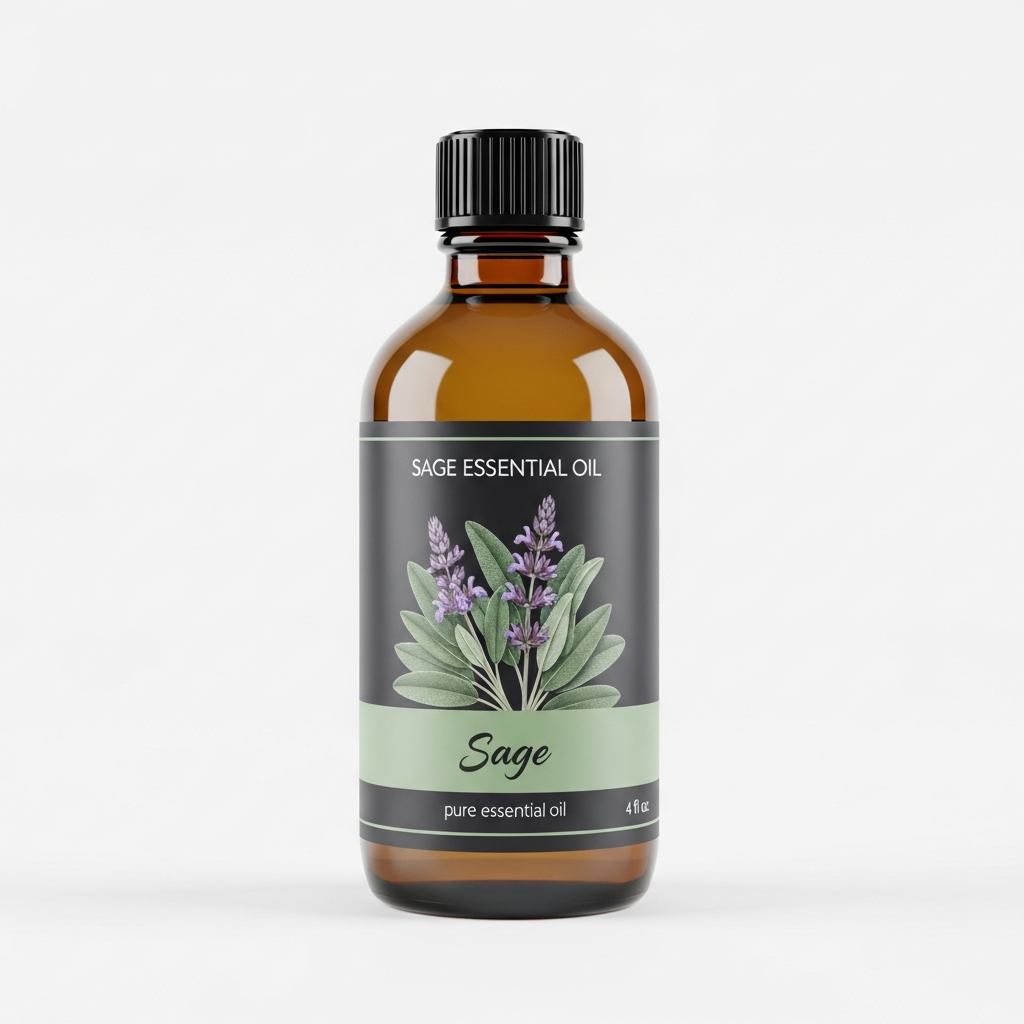
This is not an accident, and it is not purely marketing noise. The sage genus (Salvia) contains roughly a thousand species. Several of them are commercially distilled into essential oils, and each one has a genuinely different chemical profile, scent character, and appropriate application. When a label says only "sage," you genuinely cannot be certain which plant is inside.
This guide is written specifically for buyers of garden sage oil (Salvia officinalis, steam distilled), the classic botanical form. It covers how to identify what you are looking at across the broader sage essential oil market, what quality documentation to request, and how to avoid the labeling practices that create confusion in the first place.
If your interest leans toward clary sage specifically, the comparison guide Clary Sage vs. Common Sage Oil: Which One Should You Buy goes deep on that particular fork in the road.
The Species Guide: What Is Actually in That Bottle
Understanding the species landscape is the foundation of smart buying. Here is a practical overview of the sage oils you are most likely to encounter.
Garden Sage / Common Sage (Salvia officinalis)
This is the classic culinary and aromatic sage. Steam distillation of the leaves and flowering tops produces an oil that is sharp, herbaceous, and camphoraceous, with a warm woody base note that emerges as the top notes lift. The scent is instantly recognizable to anyone who has rubbed a sage leaf between their fingers in a kitchen garden.
Chemically, Salvia officinalis oil is defined largely by its thujone content. Alpha-thujone and beta-thujone together typically account for anywhere from 15 to 50 percent of the oil, depending on harvest timing, plant chemotype, and origin. This is relevant for safety considerations, which are covered in the dilution notes below.
Salvia officinalis is most commonly produced in the Balkans (Croatia, Bosnia, Albania), the Mediterranean basin, and parts of North Africa. Dalmatian sage, which you may see as a distinct market category, simply refers to Salvia officinalis grown in the Dalmatian coastal region. It is the same species, with a regional origin designation that some buyers consider a premium marker.
Clary Sage (Salvia sclarea)
Clary sage is the dominant species in the global sage essential oil market by volume, largely because it is widely used in perfumery as a fixative and for its linalyl acetate content. It smells nothing like garden sage. The scent is sweeter, more floral, almost nutty, with an earthy ambery undertone that perfumers prize.
Buyers who expect the sharp herbal punch of garden sage and receive clary sage are often genuinely startled. The two oils come from plants in the same genus but smell like different worlds. If a bottle simply says "sage" and costs very little, there is a reasonable chance it is clary sage, because Salvia sclarea is typically less expensive to produce at scale.
For a thorough side-by-side breakdown, see Clary Sage vs. Common Sage Oil: Which One Should You Buy.
White Sage (Salvia apiana)
White sage carries significant cultural meaning within certain Indigenous North American traditions, and the ethics of its sourcing and commercialization are worth understanding before you buy. As a distilled essential oil, white sage has a softer, slightly sweeter herbal profile than garden sage, with less of the camphoraceous edge.
It is worth noting that much of what is commercially labeled "white sage oil" is distilled from cultivated plants rather than wild-harvested material, though this varies significantly by supplier. The guide Sage Oil vs. White Sage Smudge: Two Very Different Traditions explores the distinction between the distilled oil and the ceremonial smudging tradition in more depth.
Spanish Sage (Salvia lavandulifolia)
Spanish sage is sometimes described as a lower-thujone alternative to garden sage. Its aroma is lighter and more lavender-adjacent, which is not surprising given that lavandulifolia translates roughly as "lavender-leaved." It is produced primarily in Spain and is used in both fragrance blending and cosmetic formulation.
Quick Species Comparison
| Common Name | Latin Binomial | Scent Profile | Primary Origin | Key Note |
|---|---|---|---|---|
| Garden Sage | Salvia officinalis | Sharp, camphoraceous, herbaceous, warm wood base | Balkans, Mediterranean | High thujone content |
| Clary Sage | Salvia sclarea | Sweet, floral, earthy, amber-musky | France, Russia, Bulgaria | High linalyl acetate; popular in perfumery |
| White Sage | Salvia apiana | Soft herbal, slightly sweet, mild camphor | California, cultivated globally | Sourcing ethics matter |
| Spanish Sage | Salvia lavandulifolia | Light herbal, lavender-adjacent, fresh | Spain | Lower thujone than common sage |
Reading Labels Like a Botanist
A well-constructed essential oil label communicates a lot. A poorly constructed one conceals a lot. Here is how to decode what you are looking at.
The Latin Binomial: Non-Negotiable
The single most important piece of information on any essential oil label is the Latin botanical name. For garden sage, this is Salvia officinalis. For clary sage, Salvia sclarea. Nothing else definitively identifies the species.
Common names are unreliable. "Sage oil" could be any of the species listed above. "Garden sage" is better but still depends on the supplier's honesty and botanical knowledge. "Dalmatian sage" implies a specific regional origin but does not substitute for the Latin name. Always look for the binomial. If it is not there, contact the supplier and ask directly. A quality supplier will answer immediately and confidently.
Plant Part and Extraction Method
For Salvia officinalis, the standard is steam distillation of the leaves and flowering tops. Some producers use leaves only; others include stems and tops, which can affect the chemical composition subtly. The label should state both the plant part and the extraction method.
If a label says "cold pressed" for sage oil, that is a significant red flag. Cold pressing is used for citrus peels. Steam distillation is the correct method for sage. An incorrect extraction claim suggests either carelessness or misrepresentation.
Country of Origin
Origin matters for scent, chemistry, and traceability. Dalmatian (Croatian or Bosnian) sage is widely considered a benchmark for Salvia officinalis quality. Moroccan and Tunisian sage oils exist in the market and can be excellent, but they sometimes show different thujone ratios and slightly different aromatic profiles.
A label that states the country of origin demonstrates supplier transparency. One that omits it does not necessarily indicate a poor product, but it does mean you have less information to work with.
Batch or Lot Number
A batch number connects your specific bottle to testable documentation. Without it, a supplier cannot provide meaningful quality verification for what you actually purchased. Batch numbers are standard practice among reputable suppliers and should appear on the label or be readable via a QR code.
What to Ignore
Several label claims are essentially marketing language without regulatory meaning in the essential oil context. "Pure" and "natural" are unregulated terms. "Therapeutic grade" is a trademarked phrase used by one specific multi-level marketing company and has no independent industry or regulatory standard behind it. "Certified organic" does have regulatory meaning, because it refers to USDA or equivalent certification programs with actual audit requirements, but "organic" without a certifying body listed is just a word.
Focus on the verifiable information: Latin name, plant part, extraction method, origin, batch number, and available test documentation. Everything else is marketing.
Quality Signals Beyond the Label
The label gets you oriented. These additional signals help you go deeper before committing to a purchase, or before reordering.
GC/MS Testing: What It Is and Why You Want It
Gas chromatography/mass spectrometry analysis is the industry standard method for verifying essential oil composition. It identifies and quantifies the chemical constituents in a given batch, giving you a breakdown of what is actually present in the oil.
For Salvia officinalis, a typical GC/MS report for a quality Dalmatian sage would show alpha-thujone and beta-thujone as major constituents, alongside camphor, 1,8-cineole (eucalyptol), alpha-humulene, borneol, and various other terpenes. The specific percentages vary by chemotype and harvest, but the general pattern is recognizable.
What GC/MS testing detects: adulteration with synthetic constituents, blending with cheaper oils, solvent residues in some cases, and simple misidentification of species. Reputable suppliers either publish batch-specific GC/MS reports on their website or provide them on request at no charge. If a supplier does not have GC/MS data available for the specific batch they are selling you, that is worth noting.
A GC/MS report is not a guarantee of perfection. It is a snapshot of composition at the time of testing. It also requires an experienced reader to interpret correctly. But the willingness to share it is itself a meaningful quality signal about how a supplier operates.
Organoleptic Assessment: Trusting Your Senses
Before any instrument test, experienced buyers assess essential oils through scent, color, and consistency. This is called organoleptic assessment, and for garden sage oil it tells you a great deal quickly.
Pure Salvia officinalis oil is typically pale yellow to colorless, with a slightly viscous but still fluid consistency at room temperature. The scent is immediately sharp and herbal, with a pronounced camphoraceous edge and a warmer woody dry-down. There is a certain bracing quality to it, almost medicinal in the aromatic sense.
Off-notes to watch for include:
- A flat or muted scent that lacks the characteristic camphor bite (possible adulteration or old stock)
- A soapy or synthetic undertone (possible adulteration with synthetic linalool or similar)
- A vinegar-like sharpness (possible oxidation)
- An unexpectedly sweet, floral character (possible substitution with clary sage)
If you receive a bottle and the scent does not match what you know garden sage smells like, contact the supplier with a description. Quality suppliers take these reports seriously.
Packaging and Storage Indicators
Essential oils oxidize when exposed to light, heat, and air. Quality packaging reflects an understanding of this. Look for dark amber or cobalt glass bottles. Avoid clear glass unless the product is stored in a lightproof outer box. UV-resistant dark glass is the standard for a reason.
Caps should be tight-fitting with a reduction orifice insert that dispenses drops accurately while minimizing air exchange. A dribbly or loose cap on a first opening is a quality control note worth flagging.
Reputable suppliers also store their stock in climate-controlled conditions and note the expected shelf life clearly. Garden sage oil stored properly has a shelf life of approximately two to three years from distillation. A supplier who cannot tell you the distillation date for a given batch is one step removed from that traceability standard.
ISO and Industry Certifications
Some suppliers operate under ISO 9001 quality management standards, which govern their processes rather than the oil's chemistry specifically, but which indicate a systematic approach to consistency and documentation. ECOCERT and USDA Organic certifications on sage oil are verifiable through the certifying bodies and carry actual audit requirements.
None of these certifications fully substitute for GC/MS data, but they collectively build a picture of how seriously a supplier takes quality infrastructure.
Where to Buy Pure Sage Oil
The channel through which you buy matters almost as much as the brand. Different purchasing contexts come with different risk profiles and different advantages.
Specialist Essential Oil Suppliers
Dedicated essential oil suppliers, whether operating primarily online or with physical premises, are generally the most reliable source for traceable, documented sage oils. They carry a narrower product range and typically have deeper botanical expertise. They are also more likely to publish GC/MS data, list Latin binomials as a matter of course, and stock multiple sizes for different use cases.
For guidance on bottle sizing for your first purchase, Best Sage Oil Sizes: Which Bottle Should You Order First walks through the practical decision.
Health Food and Natural Grocery Stores
Physical retail stores offer the advantage of being able to smell an oil before buying, which matters. Their selection is limited, though, and the staff expertise varies widely. Label quality in this channel ranges from excellent to quite poor. Apply all of the label-reading criteria above when shopping in person.
Large Online Marketplaces
Marketplaces like Amazon carry many sage oils, but the buyer experience here requires more vigilance. Third-party sellers on open marketplaces have fewer accountability mechanisms than dedicated suppliers, and counterfeit or adulterated products have been documented in this channel across the essential oil category broadly. If you buy from a marketplace, buy directly from the brand's official storefront rather than from a reseller listing, and check whether the GC/MS documentation is accessible.
Direct from Distillers
Buying directly from a distillery is the closest you can get to the source. Some small Balkan or Mediterranean producers sell directly to international buyers, particularly in larger quantities. The traceability at this level is exceptional because you are often speaking with the person who ran the still. The tradeoff is that minimum order quantities are typically larger than most individual buyers want.
If you are considering larger volume purchases for formulation or commercial use, the guide Wholesale Sage Oil: Bulk Sizes, Species, and Pricing Explained covers what to expect in that context.
What to Look for When Evaluating a Supplier's Website
- Latin binomials listed for every product
- Country of origin clearly stated
- Batch-specific GC/MS reports accessible (on the page or on request)
- Transparent return and quality guarantee policy
- Contact information for a real human being who can answer botanical questions
- Reasonable pricing that reflects actual production costs (see pricing discussion below)
For an expanded guide to evaluating clary sage suppliers specifically, see Where to Buy Clary Sage Oil: Shops, Labels, and What to Check.
Red Flags and Market Pitfalls
The sage essential oil market, like the broader essential oil industry, has quality problems that experienced buyers learn to spot. Here are the patterns worth knowing.
Suspiciously Uniform Pricing Across Species
Different sage species cost different amounts to produce. Clary sage oil is generally less expensive than garden sage oil at equivalent volume because Salvia sclarea produces higher oil yields. If you see both species priced identically by the same supplier, that is worth examining. It may simply reflect a pricing decision, but it can also indicate that a cheaper oil has been substituted.
"Fragrance Oil" vs. "Essential Oil"
These are fundamentally different products. A fragrance oil is a synthetic or blended aromatic compound. It may smell like sage, but it is not distilled from the plant. The distinction should be clear on the label. If you see "sage fragrance oil" and want a pure distilled product, keep looking.
No Latin Name, No Batch Number, No GC/MS
A product with none of these three documentation elements is essentially unverifiable. You are buying on faith in the brand. Some brands earn that faith over time. But for a first purchase, absence of all three signals is worth pausing over.
Adulteration Patterns Specific to Sage Oil
Documented adulteration practices in the sage oil category include:
- Cutting Salvia officinalis with synthetic camphor or 1,8-cineole to hit expected constituent ratios cheaply
- Substituting clary sage for garden sage entirely, which GC/MS testing would catch immediately
- Using steam distillation residue or re-distilled material and representing it as first-distillation oil
- Blending Spanish sage with garden sage to reduce cost while retaining some expected chemical markers
None of this is detectable to the nose with certainty. GC/MS testing is the reliable check.
Pricing Reality Check
High-quality Salvia officinalis oil from reputable Dalmatian sources is not the cheapest oil on any shelf. The plant requires significant agricultural input, and yield per kilogram of material is not particularly high. A ten-milliliter bottle at a price that seems implausibly low compared to other quality suppliers deserves scrutiny. That said, artificially high pricing is not a quality indicator either. Some brands charge premium prices for undistinguished products. Use price as one data point, not the whole picture.
Choosing the Right Species for Your Use
Once you understand the species landscape and can read a label with confidence, the practical question is which oil belongs in your formulation or aromatic practice.
For Cosmetic Formulation and Skincare
Both garden sage and clary sage appear in cosmetic formulations, but they serve different roles. Garden sage (Salvia officinalis) brings a sharp, assertive herbal note and is typically used in small proportions within a blend. Its thujone content means it warrants careful attention to dilution guidelines. The general guidance from professional aromatherapy organizations is to use it at one percent or below in leave-on products.
Clary sage is more commonly used in cosmetic formulations where a softer, more floral herbal note is desired. Its linalyl acetate content gives it a different aromatic character and a somewhat different sensory profile in application.
Safety note for all sage oil applications: Always dilute essential oils properly before any skin contact. A standard starting point for leave-on products is one to two percent dilution in a suitable carrier oil. Always perform a patch test on a small area of skin and wait 24 hours before broader application. Sage oils, particularly Salvia officinalis, are not recommended for use during pregnancy or while nursing. Consult a qualified healthcare provider before use if you have any health concerns or are taking any medications.
For Aromatic and Diffuser Use
In a diffuser or as part of a room blend, garden sage produces a distinctive herbaceous, camphoraceous atmosphere that many people find grounding and clarifying. It blends well with rosemary, lavender, cedarwood, bergamot, and juniper berry. For a comparison of sage and rosemary as aromatic partners, see Sage Oil vs. Rosemary Oil: Comparing Two Garden Herb Classics.
Clary sage in a diffuser creates a very different atmosphere: warmer, softer, more enveloping. It pairs especially well with citrus oils, frankincense, and bergamot. Knowing which atmosphere you are after will help you choose the right species before you buy.
For Fragrance and Perfumery Work
In perfumery, clary sage is the more widely used of the two, largely because of its fixative qualities and its compatibility with florals and woody bases. Garden sage contributes a distinctive herbal-camphor note that works well in fougere and chypre-adjacent blends but can easily dominate if overdosed. Perfumers typically work with garden sage as a supporting character rather than a lead note.
For Blending with Other Herb Oils
Sage sits in a family of sharp, camphorous, Mediterranean herbs that includes rosemary, thyme, and oregano. If you are building a Mediterranean herb blend, garden sage anchors that profile. If you want to explore how sage and rosemary compare as distinct aromatic voices, Sage Oil vs. Rosemary Oil: Comparing Two Garden Herb Classics explores exactly that.
Matching Species to Volume Needs
If you are a formulator buying at scale, the species decision also involves supply chain considerations. Clary sage is produced in larger volumes globally and tends to be more consistently available in bulk quantities. Garden sage can have more variability in availability due to smaller production regions. For wholesale or bulk context, Wholesale Sage Oil: Bulk Sizes, Species, and Pricing Explained covers the sourcing landscape in detail.
Your Pre-Purchase Checklist
Pull this out the next time you are evaluating a sage oil purchase. It applies whether you are buying a small bottle for home diffusing or sourcing larger quantities for a cosmetic product line.
Label Verification
- Does the label show the Latin binomial (Salvia officinalis for garden sage)?
- Does it specify the plant part used (leaves, flowering tops, or both)?
- Does it state the extraction method (should be steam distillation)?
- Is the country of origin listed?
- Is there a batch or lot number?
Supplier Credibility
- Does the supplier publish or provide GC/MS test data by batch?
- Are their Latin binomials consistent and correct across their product range?
- Can you reach a knowledgeable person if you have a sourcing question?
- Do they have a clear quality or satisfaction policy?
- Is their pricing in a realistic range relative to comparable quality suppliers?
Scent and Physical Quality (on receipt)
- Is the oil colorless to pale yellow with normal fluidity?
- Does it smell immediately sharp, herbal, and camphoraceous, consistent with Salvia officinalis?
- Is the bottle dark glass with a tight, properly functioning cap?
- Is there a production or best-before date on the packaging?
Safety Before Use
- Are you planning to dilute properly before any skin application?
- Have you checked the contraindication notes specific to Salvia officinalis?
- If you are pregnant, nursing, or managing any health condition, have you consulted a qualified healthcare provider?
Bringing It All Together
Buying pure sage oil well is mostly a matter of knowing what to ask for and what to look at. The sage essential oil market rewards buyers who understand species distinctions, can read a label critically, and know which documentation to request. It is not a difficult skill set once the framework is in place, and every bottle you evaluate thoughtfully builds your ability to spot quality quickly.
The Latin binomial is your anchor. The GC/MS report is your verification tool. And your nose, once calibrated to what genuine Salvia officinalis smells like, is a remarkably good first filter.
Start with a small bottle from a supplier who can answer your questions clearly. Evaluate the scent, check the documentation, and build from there. The deeper your sourcing knowledge, the more confidently you can work with one of the most characterful herbal oils in the aromatic tradition.
For a practical first purchase decision, Best Sage Oil Sizes: Which Bottle Should You Order First is a good next stop.