
Clary Sage vs Common Sage Oil: Which One Should You Buy?
Two bottles. Similar names. Wildly different oils. If you've ever stood in front of a supplier's catalog wondering whether to order Salvia sclarea or Salvia officinalis, you're not alone. The confusion is understandable: both come from the sage genus, both carry that distinctive herbal character, and both show up constantly in aromatherapy and cosmetic formulation circles. But they are not interchangeable, and buying the wrong one can derail a blend, a product, or a personal ritual.
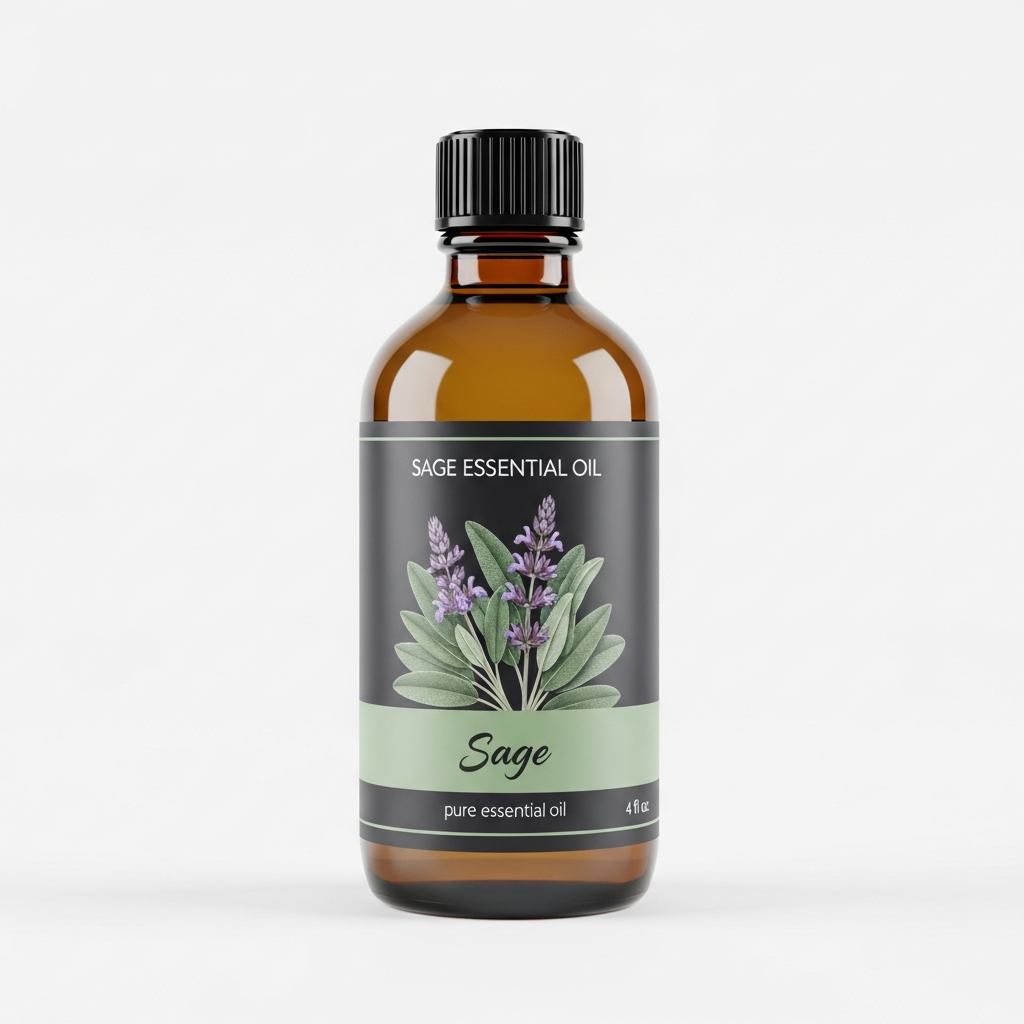
This guide breaks down the genuine differences between clary sage essential oil and sage officinalis essential oil, covering scent, chemistry, safety profile, shelf life, and practical applications. By the end, you'll know exactly which bottle belongs in your cart.
First, a Quick Botanical Grounding
Both oils belong to the Salvia genus within the Lamiaceae (mint) family, but they diverge significantly in species, geography, and composition.
Clary sage (Salvia sclarea) is a tall, flowering biennial native to the Mediterranean basin and central Asia. Its large, velvety leaves and showy pink-purple flower spikes make it visually unmistakable. Most commercial clary sage oil is steam-distilled from the flowering tops and leaves, primarily sourced from France, Bulgaria, and Russia.
Common sage, also called garden sage (Salvia officinalis), is the compact, silver-green shrub you likely recognize from the kitchen. Its essential oil is steam-distilled from the dried leaves and flowering tops. Major producing regions include Dalmatia (Croatia), Albania, and Spain, with Dalmatian sage widely considered the quality benchmark among buyers and formulators.
The species difference is not cosmetic. It drives everything: chemical composition, aroma, safety thresholds, and best-fit applications.
Scent Profile: What Does Each Oil Actually Smell Like?
Scent is often the first deciding factor for buyers, and the two oils land in genuinely different aromatic territories.
Clary Sage Essential Oil
Clary sage has a complex, slightly sweet, and somewhat floral-herbaceous quality. There's a distinctly nutty, almost beeswax-like undertone that many perfumers prize as a fixative. It blends seamlessly with lavender, bergamot, cedarwood, and geranium. The overall impression is softer and more diffuse than common sage, less overtly "herbal kitchen" and more meditative.
Sage Officinalis Essential Oil
Common sage oil is sharper, greener, and unmistakably culinary in its opening note. The camphoraceous edge is pronounced, giving it an almost medicinal crispness (though we're talking aroma descriptors here, not any kind of efficacy claim). It pairs well with rosemary, lavandin, eucalyptus, and citrus top notes. In blends, it tends to dominate, so lighter hands are warranted.
If your nose is the primary decision-maker, clary sage is the more versatile, crowd-pleasing choice. Common sage is bolder and more demanding to work with.
Chemical Composition: Where the Real Differences Live
Understanding the chemistry isn't just academic. It explains why these two oils behave differently in formulations and why their safety profiles diverge so sharply.
| Constituent | Clary Sage (S. sclarea) | Common Sage (S. officinalis) |
|---|---|---|
| Linalyl acetate | 55–75% | Trace to absent |
| Linalool | 10–20% | Low to trace |
| Sclareol | Present (sesquiterpene alcohol) | Absent |
| Alpha-thujone | Trace to absent | 20–50% |
| Beta-thujone | Trace to absent | 5–15% |
| Camphor | Low (<1%) | 15–35% |
| 1,8-Cineole | Low to moderate | 5–15% |
| Alpha-pinene | Low | Present, variable |
The dominant component in clary sage, linalyl acetate, is the same ester that gives lavender its characteristic smooth quality. That's why clary sage blends so naturally with lavender and why it tends to feel gentler in formulation.
Common sage's high thujone and camphor content is what defines both its sharp scent and its more restrictive safety profile. Thujone is a ketone with known neurotoxic potential at high doses, which is why regulatory bodies and professional aromatherapy organizations set stricter usage guidelines for sage officinalis than for most other common essential oils.
Side-by-Side Comparison Table
| Attribute | Clary Sage (S. sclarea) | Common Sage (S. officinalis) |
|---|---|---|
| Latin name | Salvia sclarea | Salvia officinalis |
| Distillation source | Flowering tops and leaves | Dried leaves and flowering tops |
| Scent character | Sweet, floral-herbal, slightly nutty | Sharp, camphoraceous, green-herbal |
| Key chemistry | High linalyl acetate, linalool | High thujone, camphor |
| Safety profile | Moderate (generally considered gentler) | Restrictive (thujone content; not for broad use) |
| Typical use in cosmetics | Skincare, hair products, body blends | Fragrance, targeted cosmetic use only |
| Use in diffusion | Well-suited, broadly tolerated | Short sessions, low concentration |
| Shelf life | 2 to 3 years properly stored | 2 to 3 years properly stored |
| Typical price point | Moderate to moderately high | Moderate (Dalmatian commands a premium) |
| Beginner-friendly? | Yes | Requires more formulation knowledge |
Safety: The Most Important Difference
This section deserves its own heading because the safety gap between these two oils is significant, and it's the number one factor that should shape your purchase decision.
Clary sage essential oil carries a moderate safety profile. It is generally considered skin-safe at recommended dilutions (typically 0.25% to 1% for leave-on products, though always check current IFRA guidelines and consult your formulation reference). Some sources recommend caution during pregnancy, as with many essential oils, so consulting a qualified healthcare provider is always the right step before use in vulnerable populations.
Common sage (sage officinalis essential oil) carries a more restrictive profile due to its thujone content. The International Fragrance Association (IFRA) and the Research Institute for Fragrance Materials (RIFM) have issued usage limits for sage officinalis in finished products. Dermal limits vary by product category, but they are lower than what you'd see for most floral or citrus oils. Sage officinalis is generally considered unsuitable for use during pregnancy, and extended or high-concentration diffusion sessions are not recommended.
A note on sourcing: Because thujone levels in sage officinalis can vary meaningfully by geographic origin and harvest timing, a gas chromatography/mass spectrometry (GC/MS) report from your supplier is not optional. It's the minimum standard for responsible formulation. If a supplier can't provide one, look elsewhere.
For a detailed breakdown of what to look for in lab documentation and how to read species labeling correctly, see our guide on how to buy pure sage oil: the complete guide to species.
Cosmetic and Aromatic Applications
Where Clary Sage Shines
- Hair care formulations: Clary sage is a popular addition to scalp serums and conditioning rinses. Its sclareol content and overall chemical profile make it well-suited to products designed for a healthy scalp environment.
- Facial and body skincare: At proper dilution (0.25% to 1% depending on product category), clary sage adds aromatic depth to creams, oils, and serums without the irritation risk that comes with more volatile, high-camphor oils.
- Evening diffusion blends: Clary sage pairs beautifully with lavender, vetiver, and sandalwood for calm, grounding atmospheric blends. It's a staple of wind-down diffuser routines.
- Natural perfumery: Its fixative quality and complex mid-to-base note character make clary sage valuable as a bridge note between light top notes and deep base notes.
- Bath and body products: Bath salts, body scrubs, and massage oils all benefit from clary sage's relatively gentle dermal profile and pleasing scent.
Where Common Sage Earns Its Place
- Fragrance components: Sage officinalis adds genuine herbal sharpness and green complexity to masculine or unisex fragrance compositions. A small percentage can give a blend real botanical authenticity.
- Targeted cosmetic use by experienced formulators: Deodorant formulations, certain hair products, and rinse-off products (where dermal exposure is lower) are categories where sage officinalis appears, always within established limits.
- Short-duration diffusion: A brief burst of common sage in a well-ventilated room creates a distinctly crisp, focused atmosphere. Many people find it useful before a morning work session as part of a ritual to get mentally oriented.
- Aromatherapy education and study: For students of essential oil chemistry, having a bottle of sage officinalis alongside safer oils offers a useful comparative learning reference.
Pros and Cons: Quick Reference
Clary Sage Essential Oil
Pros:
- Gentler safety profile, more accessible for home and professional use
- Versatile across skincare, hair care, and diffusion applications
- Complex, sophisticated scent that blends broadly
- Works well in leave-on cosmetic products at appropriate dilutions
- Widely available with good quality sourcing from established growing regions
Cons:
- Pricier than some common sage offerings, particularly French-origin batches
- The nutty, musky undertone is polarizing: some love it, some find it heavy
- Pregnancy cautions still apply; not truly suitable for unrestricted general use without professional guidance
Common Sage (Sage Officinalis) Essential Oil
Pros:
- Distinctive, authentic herbal scent with real aromatic power
- Valuable in fragrance formulation for green, camphoraceous notes
- Often more affordable per milliliter than clary sage
- Dalmatian origin offers well-documented, consistent quality benchmarks
Cons:
- Thujone content demands strict adherence to usage limits
- Not suitable for pregnant or nursing individuals, young children, or people with certain health histories
- Requires GC/MS verification for every batch; chemical variation between sources can be wide
- More challenging to use skillfully in blends due to its assertive character
- Not a good fit for leave-on skincare products in anything but very limited applications
"Best For" Recommendations by Use Case
| Use Case | Best Choice | Notes |
|---|---|---|
| First sage oil purchase | Clary Sage | Safer starting point; broader application range |
| Leave-on skincare formulation | Clary Sage | Stick within IFRA cosmetic limits |
| Hair care products | Clary Sage | Scalp serums, conditioning rinses |
| Evening or wind-down diffusion | Clary Sage | Pairs well with lavender, vetiver |
| Natural perfumery (herbal accent) | Either, purpose-dependent | Clary for soft herbal; sage officinalis for sharp green |
| Masculine fragrance formulation | Common Sage | Small percentages; follow IFRA limits |
| Rinse-off products (lower exposure) | Common Sage (experienced formulators) | GC/MS report required; follow current guidelines |
| Bulk production or wholesale purchasing | Evaluate both species | See our wholesale sage oil guide for bulk sizes, species, and pricing |
Pricing and Sizing: What to Expect
Both oils are available in sizes ranging from 5 ml sample vials up to kilogram quantities for production use. Clary sage typically commands a slightly higher price at the retail end due to lower essential oil yield per plant compared with many common sage crops. However, the gap narrows significantly at wholesale volumes.
For buyers who are still deciding on bottle size before committing to a larger order, the considerations are a little different for each oil. With clary sage, starting with a 15 ml or 30 ml bottle gives you enough material to run serious formulation trials. With common sage, a smaller starting quantity makes sense until you've confirmed the GC/MS report is within expected parameters and you understand how the particular batch behaves in your formulations.
For a full breakdown of how to choose the right starting size for your situation, the guide on best sage oil sizes and which bottle to order first walks through quantity decisions for both retail and production buyers.
Spotting Adulteration and Quality Issues
Both oils have their own adulteration patterns worth knowing about before you buy.
Clary sage is sometimes extended with synthetic linalyl acetate or blended with cheaper lavandin fractions to boost volume. A GC/MS report from a reputable third-party lab should show a recognizable sclareol peak and a linalyl acetate-to-linalool ratio consistent with authentic Salvia sclarea.
Common sage faces a different challenge. Lower-quality or misrepresented batches may be blended from Spanish sage (Salvia lavandulifolia), which has a lower thujone content and a different chemical signature. While Spanish sage can be a useful oil in its own right, it is not sage officinalis, and selling it as such is a labeling problem. Always check that the Latin name on your certificate of analysis matches your order.
Reputable suppliers provide batch-specific GC/MS reports and optical rotation data. If that documentation isn't available on request, treat it as a red flag.
The Verdict
For most buyers, including home aromatherapy enthusiasts, independent cosmetic formulators, and small-batch product makers, clary sage essential oil is the stronger starting choice. Its more accessible safety profile, broader application range, and genuinely appealing scent give it clear advantages. The chemistry is more forgiving, the regulatory landscape is less complicated, and the blending possibilities are more flexible.
Common sage officinalis is not a lesser oil. It's a more specialized one. It belongs in the hands of formulators who understand thujone chemistry, who verify every batch with proper documentation, and who have a specific aromatic or cosmetic goal that only Salvia officinalis can deliver. For experienced perfumers and product developers, it earns its place without apology.
The salvia sclarea vs officinalis question doesn't have a universally correct answer. It has a correct answer for your specific situation. Know your use case, respect the chemistry, source responsibly, and the right bottle becomes an easy call.
Ready to go deeper on sourcing? The complete guide to buying pure sage oil by species covers everything from reading supplier documentation to evaluating country-of-origin claims, so your next purchase is one you can stand behind.