
Wholesale Sage Oil: Bulk Sizes, Species, and Pricing Explained
Buying wholesale sage oil is a different exercise than picking up a 10-milliliter bottle for personal use. The stakes are higher, the variables multiply, and a single sourcing mistake can ripple through an entire product run. This guide breaks down what actually matters when you're purchasing bulk sage essential oil: species differences, quality signals, realistic pricing benchmarks, and the red flags that experienced buyers learn to spot early.
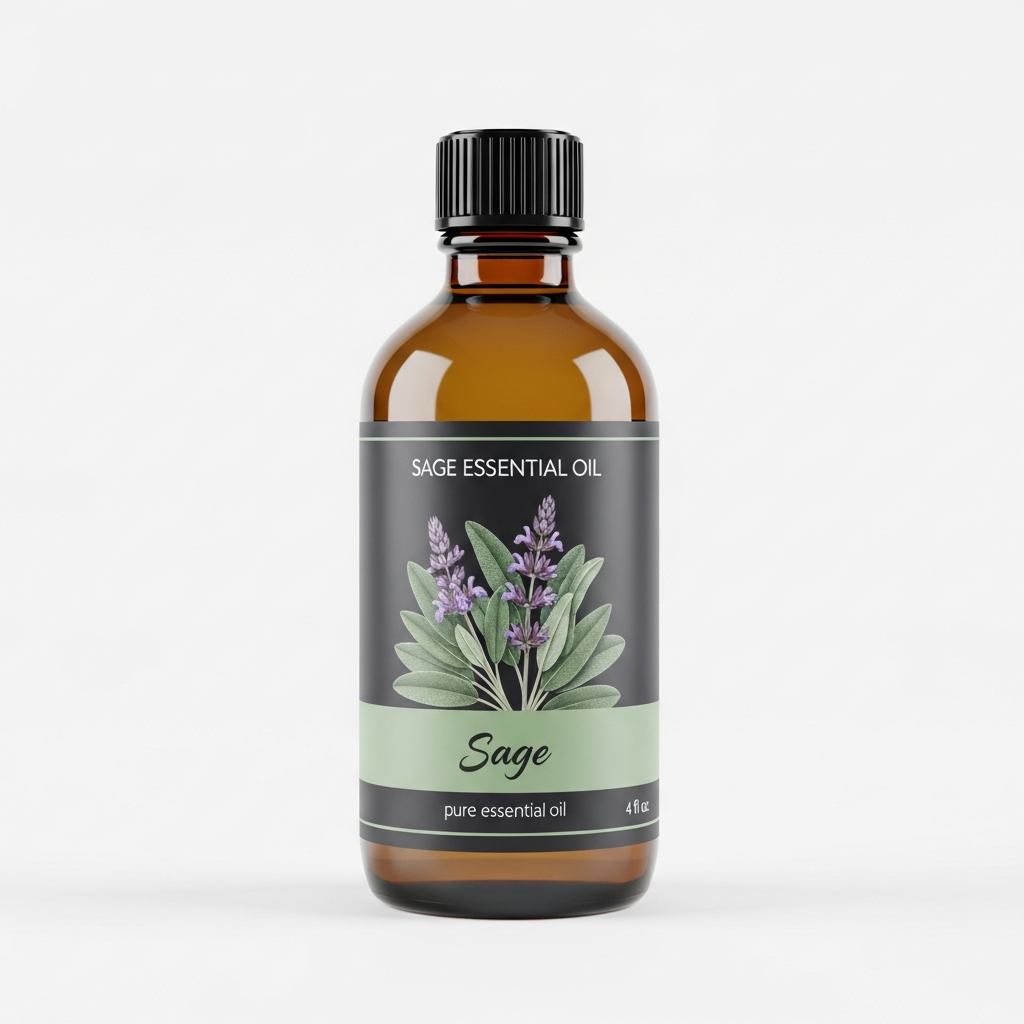
Garden Sage vs. Clary Sage: Get the Species Right First
Before you compare a single price, confirm exactly which species you need. The two most common sage oils in commerce are Salvia officinalis (garden sage, also called common sage or Dalmatian sage) and Salvia sclarea (clary sage). They share a genus but deliver quite different aromatic profiles and chemical compositions. Mixing them up in a formulation is an expensive mistake.
- Salvia officinalis (Garden Sage): Sharp, herbaceous, slightly camphorous. Common in fragrance work, personal care products, and cosmetic formulations. Contains thujone, which influences both its character and its handling guidelines.
- Salvia sclarea (Clary Sage): Softer, slightly floral, with a musky warmth. Widely used in perfumery and skin-care blending. Lower thujone content than garden sage.
- Salvia lavandulifolia (Spanish Sage): Occasionally listed by suppliers as a lower-thujone alternative to garden sage. Worth noting, though less common in bulk trade.
This guide focuses on garden sage (Salvia officinalis), steam-distilled. If you're sourcing clary sage for a specific project, take a look at our detailed breakdown on where to buy clary sage oil, including what to check on labels before you place an order.
Quality Indicators: What to Evaluate Before You Buy
Price per kilogram is not a quality metric. It is a starting point. Here is what actually tells you whether a bulk sage essential oil is worth purchasing.
GC/MS Testing (Gas Chromatography/Mass Spectrometry)
Any reputable sage oil company will provide a GC/MS report for each batch, and a Certificate of Analysis (COA) is the minimum documentation you should request. The GC/MS report shows the actual chemical profile of that specific lot. For garden sage, look for the primary constituents: alpha-thujone, beta-thujone, camphor, 1,8-cineole, and linalool. These should fall within recognized reference ranges (the ISO standard for Salvia officinalis oil is ISO 9909).
If a supplier cannot produce a batch-specific GC/MS report, move on.
Country of Origin and Distillation Method
Dalmatian sage from the former Yugoslav region (Croatia, Bosnia and Herzegovina, North Macedonia) is historically regarded as a quality benchmark. The altitude, soil, and climate of that region contribute to a chemical profile that formulators often prefer. French and Albanian sources also appear regularly in the wholesale market. Spanish sage, as noted, is a distinct species and should be labeled accordingly.
Steam distillation is the standard method for garden sage. Solvent-extracted versions exist but are far less common in essential oil trade. Confirm the extraction method is listed on all documentation.
Botanical Name on Every Document
The Latin name should appear on the COA, the Safety Data Sheet (SDS), and the product label or spec sheet. "Sage oil" without a botanical name is a sourcing gap. Push for clarity before ordering any quantity.
Odor Profile Consistency
Request a sample before committing to a bulk order. Garden sage should be sharply herbaceous, with green and slightly woody undertones and a distinct camphorous lift. If a sample smells flat, overcooked (a sign of over-distillation), or has an unexpected sweetness that wasn't in previous lots, ask for a fresh batch before proceeding.
Specific Gravity and Refractive Index
These physical parameters, listed on a proper COA, confirm you have a genuine, unadulterated oil. Adulteration with synthetic camphor or cheaper carrier oils is a known issue in bulk sage trade. Cross-reference stated values against ISO 9909 published ranges.
For a deeper orientation to species and purity evaluation, the complete guide to buying pure sage oil and navigating species differences covers the full picture in one place.
Bulk Sizes: How Wholesale Orders Are Structured
Sage essential oil is typically sold at wholesale in the following increments. Pricing structures vary by supplier, but these are the common breakpoints you'll encounter.
| Pack Size | Typical Container | Best For |
|---|---|---|
| 100g / 3.5 oz | Dark glass bottle or aluminum | Small-batch product testing, initial sampling |
| 500g / 17.6 oz | Aluminum bottle or sealed tin | Indie cosmetic brands, small-run production |
| 1 kg / 2.2 lb | Aluminum bottle or drum liner | Standard wholesale entry point |
| 5 kg / 11 lb | Aluminum drum | Mid-size formulators, fragrance houses |
| 25 kg / 55 lb | Steel drum | Larger manufacturers, contract production |
Most buyers moving to wholesale for the first time start at the 1 kg level. It provides meaningful pricing relief compared to retail without the storage demands of a 25-kilogram drum.
Pricing Benchmarks: What to Expect
Sage essential oil pricing fluctuates with harvest conditions, regional supply, and global demand. The following ranges reflect typical market conditions for genuine, tested garden sage from named origins. Treat them as orientation, not guarantees.
- Budget tier (100g sample to 500g): Pricing at this level is often higher per gram due to packaging and handling. Expect to pay a premium for the convenience of small quantity. Useful for testing a new supplier before committing.
- Mid-tier (1 kg to 5 kg): This is where meaningful per-kilogram savings begin. Quality here varies widely. Request full documentation for every order, regardless of relationship history.
- Volume tier (25 kg and above): Significant price breaks are available, and many suppliers offer customized SDS documentation, private labeling support, or blending services at this level. Contracts often include minimum order frequency requirements.
Be cautious of pricing that sits significantly below market average. Dalmatian sage from named Croatian or Bosnian sources at a suspiciously low per-kilogram price is worth scrutinizing carefully. Adulteration or mislabeling becomes more common when margins are thin and oversight is low.
Comparing Suppliers: Key Features to Evaluate Side by Side
When you're shortlisting sage oil companies, use a consistent comparison framework. Here are the features that matter most for wholesale purchasing decisions.
Documentation Standards
Does the supplier provide: COA (batch-specific), GC/MS report, SDS, IFRA documentation if relevant, and country of origin certification? A supplier offering all of these without being asked is signaling operational maturity.
Sample Policy
Any credible wholesale supplier offers samples. Paid samples with the cost credited toward a first order are a standard and fair arrangement. Free samples with no friction are excellent. Suppliers who resist providing samples before a bulk commitment are worth treating with caution.
Minimum Order Quantities (MOQs)
MOQs vary considerably. Some suppliers have no minimums at the 1 kg level; others require 5 kg as a starting point. Know your production volume before evaluating whether a supplier's MOQ structure fits your business.
Lead Times and Stock Reliability
Sage harvest is seasonal. Reliable suppliers maintain standing inventory and communicate proactively when a crop year affects availability or pricing. Ask about typical lead times and how out-of-stock situations are handled before you build a supplier into a production schedule.
Regulatory Support
For cosmetic product manufacturers, compliance documentation matters. Does the supplier provide allergen declarations? Are they ISO certified or do they work with accredited third-party testing labs? These details simplify your own compliance work downstream.
Red Flags to Avoid
Experience in wholesale sourcing comes partly from recognizing the signals that indicate a supplier is not operating at the standard a serious buyer needs.
- No batch-specific COA. A generic spec sheet that never changes across lots is not a COA. It is a marketing document.
- No botanical name listed. "Sage oil" tells you nothing. This is a basic labeling failure.
- Pricing far below market without explanation. Harvest shortfalls are real. Reputable suppliers explain price increases. Unexplained prices that are dramatically lower deserve investigation.
- Resistance to sample requests. Confidence in product quality and willingness to sample go hand in hand.
- Vague origin claims. "Europe" or "Mediterranean" is not an origin. Dalmatian sage from a specific country and region is an origin.
- No SDS available. Every essential oil sold at wholesale requires a current Safety Data Sheet. Absence of one is a compliance gap and a practical safety concern for your team.
- Overblown claims in product listings. If a supplier's own copy is making sweeping wellness claims about their sage oil, that is a signal about how seriously they take regulatory responsibility. It may reflect similar looseness in their sourcing practices.
Where to Buy: Sourcing Channels for Bulk Sage Essential Oil
Wholesale sage essential oil moves through several distinct channels, each with trade-offs.
Specialized Essential Oil Wholesalers
These companies focus exclusively on aromatic raw materials. Documentation standards tend to be higher, staff knowledge is deeper, and sampling is standard practice. For formulators and cosmetic brands, this is usually the preferred channel. Look for membership in industry organizations such as the National Association for Holistic Aromatherapy (NAHA) or the Alliance of International Aromatherapists (AIA) as one signal of seriousness, though membership alone is not sufficient due diligence.
Direct Import from Distillers
Purchasing directly from a Dalmatian or regional distiller is possible, particularly at higher volumes. The advantage is traceability and often price. The challenge is that minimum quantities are typically large, customs and import logistics require planning, and payment terms may be less flexible than with a domestic wholesaler.
B2B Marketplaces
Platforms that aggregate ingredient suppliers can be useful for initial price discovery. Due diligence requirements are higher here because vetting falls entirely on the buyer. Always request full documentation and samples before placing any meaningful order through a marketplace listing.
Domestic Distributors with International Sourcing
For buyers who want the convenience of domestic shipping, straightforward currency and payment terms, and local regulatory compliance support, distributors who import and then wholesale in-country offer a reasonable middle path. Pricing will be somewhat higher than direct import, but the logistical simplicity often justifies the difference at mid-tier volumes.
If you are comparing sage to other herbaceous botanicals for a formulation project, the side-by-side look at sage oil versus rosemary oil covers aromatic character, sourcing context, and formulation considerations for both.
A Quick Checklist Before You Place Your First Wholesale Order
- Confirmed botanical name: Salvia officinalis, steam-distilled.
- Country of origin clearly stated on documentation.
- Batch-specific COA and GC/MS report received and reviewed.
- Physical sample evaluated against expected odor profile.
- SDS obtained and filed for your records.
- Supplier's lead time, MOQ, and reorder process understood.
- Pricing benchmarked against at least two comparable sources.
Wholesale purchasing is a relationship as much as a transaction. Suppliers who communicate clearly, document rigorously, and handle problems with transparency are worth paying a modest premium for. Your formulations depend on consistency, and consistency starts with knowing exactly what is in the drum before it arrives at your door.