
Sage Oil vs Rosemary Oil: Comparing Two Garden-Herb Classics
Both sage and rosemary grow wild around the Mediterranean, share a family tree in the Lamiaceae (mint) family, and have been harvested for fragrance and cosmetic purposes for centuries. Pick up a bottle of each and they will smell unmistakably related. Yet the two oils are genuinely different in character, chemistry, and the situations where each one shines. This herb essential oil comparison walks through what actually sets them apart, so you can make a confident, informed choice rather than guessing.
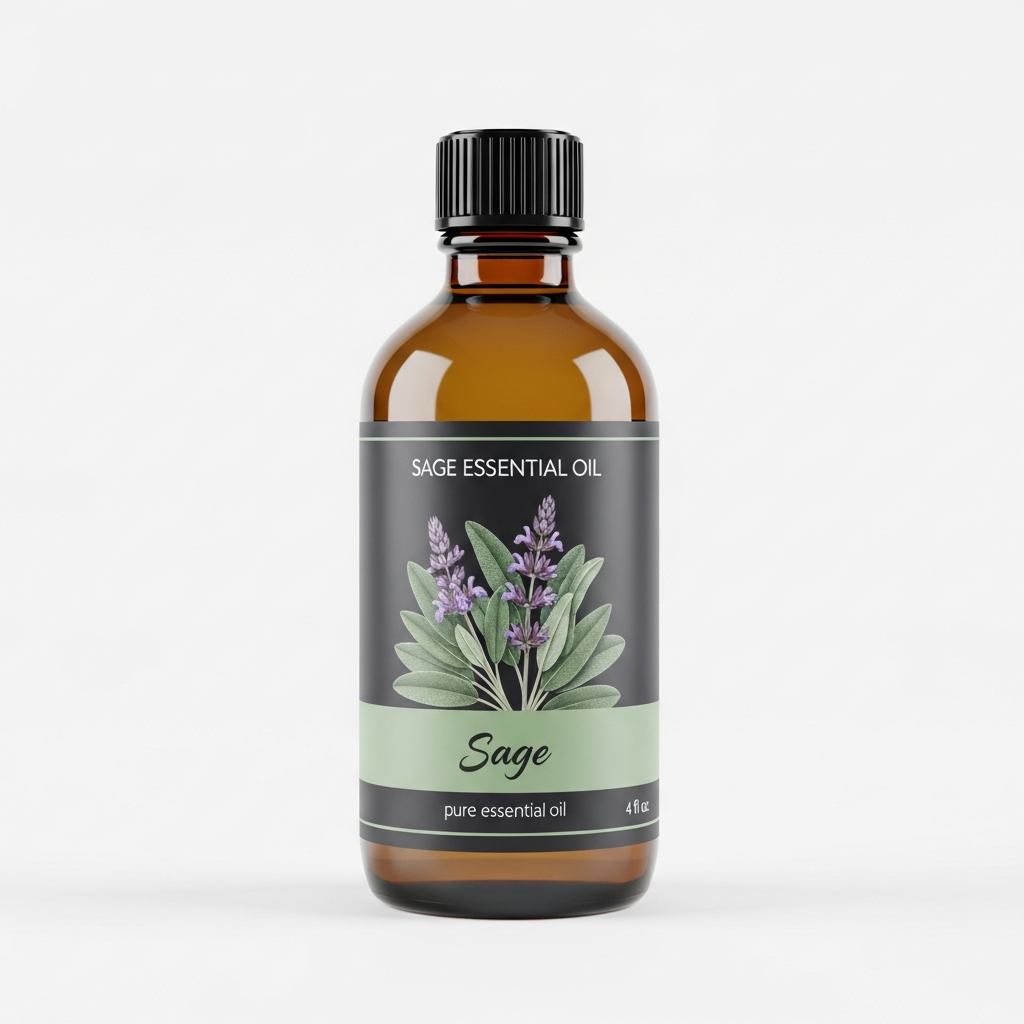
The Short Answer on Rosemary Sage Difference
Sage oil (distilled from Salvia officinalis, garden sage) is sharper, more camphoraceous, and more complex in its scent profile. Rosemary oil (Rosmarinus officinalis, or its reclassified name Salvia rosmarinus) is cleaner, more pine-like, and broadly considered the easier of the two to work with at standard dilutions.
That said, "easier" does not mean "better." The rosemary sage difference becomes meaningful only when you know what you are trying to accomplish. Diffusing for focus is a different goal than blending a botanical hair rinse, which is a different goal than creating a signature herbal cologne accord. Each oil has a context where it earns its place.
A Closer Look at Each Oil
Sage Essential Oil (Salvia officinalis)
Garden sage oil is steam-distilled from the leaves and flowering tops of the same plant that fills herb gardens across Europe and North America. Its scent is bold: camphoraceous on the top note, transitioning into something earthy and slightly resinous in the dry-down. Some people describe it as medicinal in the best herbal sense, though of course it is a cosmetic and aromatic ingredient rather than a medicine of any kind.
The main chemical constituents include alpha- and beta-thujone, camphor, 1,8-cineole, and borneol. Thujone is what gives sage oil its distinctive edge and also what calls for careful, responsible use. Reputable suppliers will list the thujone percentage on a certificate of analysis. If yours does not, that is a red flag worth taking seriously. For more on choosing a trustworthy source, see our complete guide to buying pure sage oil by species.
Because of its thujone content, sage oil requires conservative dilution and is not appropriate for use during pregnancy, while nursing, or in households with young children without guidance from a qualified health professional. Topical use should stay at or below 0.4% in leave-on products, per IFRA guidelines, though some formulators work at even lower concentrations for sensitive skin blends.
Rosemary Essential Oil (Rosmarinus officinalis / Salvia rosmarinus)
Rosemary oil is one of the most-studied aromatic ingredients in modern fragrance and cosmetic chemistry. Its scent is bright, green, and clean, with a herbal freshness that reads as invigorating rather than heavy. The camphor note is present but softer than in sage oil, and the overall profile sits closer to a crisp eucalyptus-adjacent freshness than to sage's earthier complexity.
Three chemotypes exist for rosemary: ct. camphor, ct. cineole, and ct. verbenone. Each has a slightly different scent profile and constituent makeup. The cineole chemotype is the most widely available and the most commonly used in cosmetic formulations, where its fresh, clean character blends easily with citruses, florals, and other herbals.
Rosemary oil is generally considered less restrictive than sage oil for most adult cosmetic applications, though it still requires proper dilution (typically 1-2% for leave-on products) and is contraindicated during pregnancy. It does not contain significant thujone, which accounts for its wider use window.
Side-by-Side Comparison Table
| Attribute | Sage Oil (S. officinalis) | Rosemary Oil (R. officinalis) |
|---|---|---|
| Scent character | Camphoraceous, earthy, resinous, complex | Fresh, green, clean, pine-adjacent |
| Key constituents | Alpha/beta-thujone, camphor, 1,8-cineole, borneol | 1,8-cineole, camphor, alpha-pinene, borneol |
| Typical dilution (leave-on) | 0.4% or below (IFRA guidance) | 1-2% general cosmetic use |
| Blending ease | Moderate: dominant, requires balancing | High: pairs well with most scent families |
| Main aromatic uses | Diffusing, candle fragrance, masculine accord bases | Diffusing, hair care, skincare, fragrance |
| Sourcing complexity | Higher: species and chemotype matter significantly | Moderate: chemotype labeling is important |
| Pregnancy safety | Avoid (thujone content) | Avoid (general precaution) |
| Price range (typical) | Moderate to moderately high | Low to moderate |
| Shelf life | 2-3 years properly stored | 2-3 years properly stored |
Pros and Cons
Sage Oil: Pros
- Rich, complex scent with genuine botanical character that synthetic versions rarely capture convincingly
- A small amount goes a long way, making a well-priced bottle economical for diffusing and candle work
- Distinctly different from anything else in a standard herbal collection: it fills a unique olfactory niche
- Valued in masculine fragrance accords and earthy, grounding blends where rosemary would feel too light
- Long tradition in aromatic and cosmetic contexts that gives it credibility in botanical product lines
Sage Oil: Cons
- Thujone content demands conservative dilution and makes it unsuitable for broad populations including pregnant individuals and children
- Species confusion is common: what is sold as "sage oil" may be S. officinalis, S. sclarea (clary sage), or white sage (S. apiana), which are significantly different products
- Its assertive character can overwhelm a blend if used without care
- Quality varies substantially between suppliers, and low-quality distillates can smell flat or harsh
Rosemary Oil: Pros
- Clean, versatile scent that pairs with florals, citruses, woods, and other herbals without bulldozing them
- Generally considered more accessible for beginners and for broader cosmetic application
- Widely available, well-documented, and less prone to species-level confusion at retail
- Popular in hair care formulations, where its scent is widely enjoyed
- Lower price point makes it practical for formulating in larger batch quantities
Rosemary Oil: Cons
- Less distinctive than sage oil: it is familiar to the point where it can read as generic in a crowded herbal blend
- Chemotype matters more than most casual buyers realize, and many retail listings do not specify
- Its freshness, while pleasant, lacks the depth and earthiness of sage oil for applications where complexity is the goal
- Still requires careful dilution and has its own contraindications despite being broadly considered more forgiving
Best For: Use-Case Recommendations
Diffusing for a Focused, Grounding Atmosphere
Edge: Sage oil for those who want something distinctive and earthy; rosemary oil for a lighter, cleaner feel. Both are popular choices for morning or daytime diffusing. Sage creates a richer, more complex room scent. Rosemary is brighter and less likely to feel heavy in a smaller space.
Scalp and Hair Care Formulations
Edge: Rosemary oil. Its scent is widely associated with hair care, it blends comfortably into rinse-off and leave-on products at appropriate dilutions, and its familiarity reads as intentional rather than unusual. Sage oil can certainly be incorporated, but at its conservative dilution limits it contributes more to scent layering than to primary character.
Candle and Wax Melt Fragrance
Edge: Sage oil for complexity; rosemary for brightness. Sage oil's camphoraceous depth performs well in soy and beeswax candles, particularly in earthy or forest-inspired blends. Rosemary adds an herbal freshness that works well in lighter spring and summer-themed candles. Both hold reasonably well in wax, though fragrance load and wax type will affect performance more than the oil choice itself.
Masculine Fragrance Accords and Colognes
Edge: Sage oil. Its rugged, resinous undertones sit naturally alongside cedarwood, vetiver, labdanum, and black pepper. Rosemary is frequently used as a top note in masculine fragrance as well, but sage brings a distinctiveness that separates a blend from the familiar.
Skincare Formulations (Toners, Serums, Creams)
Edge: Rosemary oil for most applications, given its wider dilution latitude and cleaner scent. Sage oil can be incorporated into skincare at very low concentrations as a fragrance component, but formulators need to stay well within IFRA guidelines. Anyone working with leave-on products should review current IFRA standards and consult a cosmetic chemist if uncertain.
Soap Making
Edge: Tie, depending on the soap concept. Sage oil contributes a herbal earthiness that works well in garden-inspired bars. Rosemary is a classic soap ingredient with strong consumer recognition. Both have reasonable staying power in cold-process soap when used at appropriate usage rates.
A Note on the Sage Side of Things: Species Really Matter
One of the most important points in any sage oil vs rosemary oil conversation is that "sage oil" is not a single ingredient the way rosemary oil roughly is. You may encounter Salvia officinalis (the subject of this article), Salvia sclarea (clary sage, which smells quite different and has its own profile), or Salvia apiana (white sage, a culturally significant plant with a very different aromatic character and sourcing considerations). These are not interchangeable. The comparison table and recommendations above refer specifically to S. officinalis.
For a full breakdown of the species question, the article on sage oil vs white sage: two very different traditions covers the cultural and aromatic distinctions in detail. And if you are shopping and wondering whether what you are looking at is genuinely distilled sage or a fragrance blend, the piece comparing sage oil vs synthetic herbal fragrance is worth reading before you buy.
Blending the Two Together
There is a strong argument for not choosing at all. Sage and rosemary blend naturally. Together, they create a fuller, more dimensional herbal accord than either produces solo. A starting point worth exploring: 60% rosemary (ct. cineole), 30% sage (S. officinalis), and 10% a grounding base note such as cedarwood or sandalwood. This keeps the thujone-heavy sage at a lower overall proportion while still letting its character come through.
As with any blend, dilute into your carrier or formula at the appropriate percentage, perform a patch test on a small skin area before wider application, and wait 24 hours for any reaction. Proper dilution is not optional; it protects your skin and keeps your formula within safe use standards.
The Verdict
If you can only buy one, rosemary oil is the more practical starting point. It costs less, blends more easily, and fits a wider range of applications without demanding the same careful attention that sage's thujone content requires.
But sage oil is worth having. Its scent is genuinely its own. In diffusing blends, candles, and fragrance work, it does something rosemary simply cannot. The two oils are not really competitors. They are complementary voices in the same herbal conversation, each saying something the other cannot quite express.
Buy both when your budget allows. Learn to use sage oil conservatively and correctly. The rosemary sage difference, once you have experienced it firsthand through real oils, becomes obvious, and the comparison stops being abstract.