
Sage Oil vs Synthetic Herbal Fragrance: What the Label Won't Say
Walk into any candle shop or scroll through an online marketplace and you will find dozens of products labeled with some variation of "sage scent." Garden sage. White sage. Pineapple sage fragrance oil. Earthy botanical blends. The names sound lush and specific. The prices vary wildly. And very few labels explain what is actually inside the bottle.
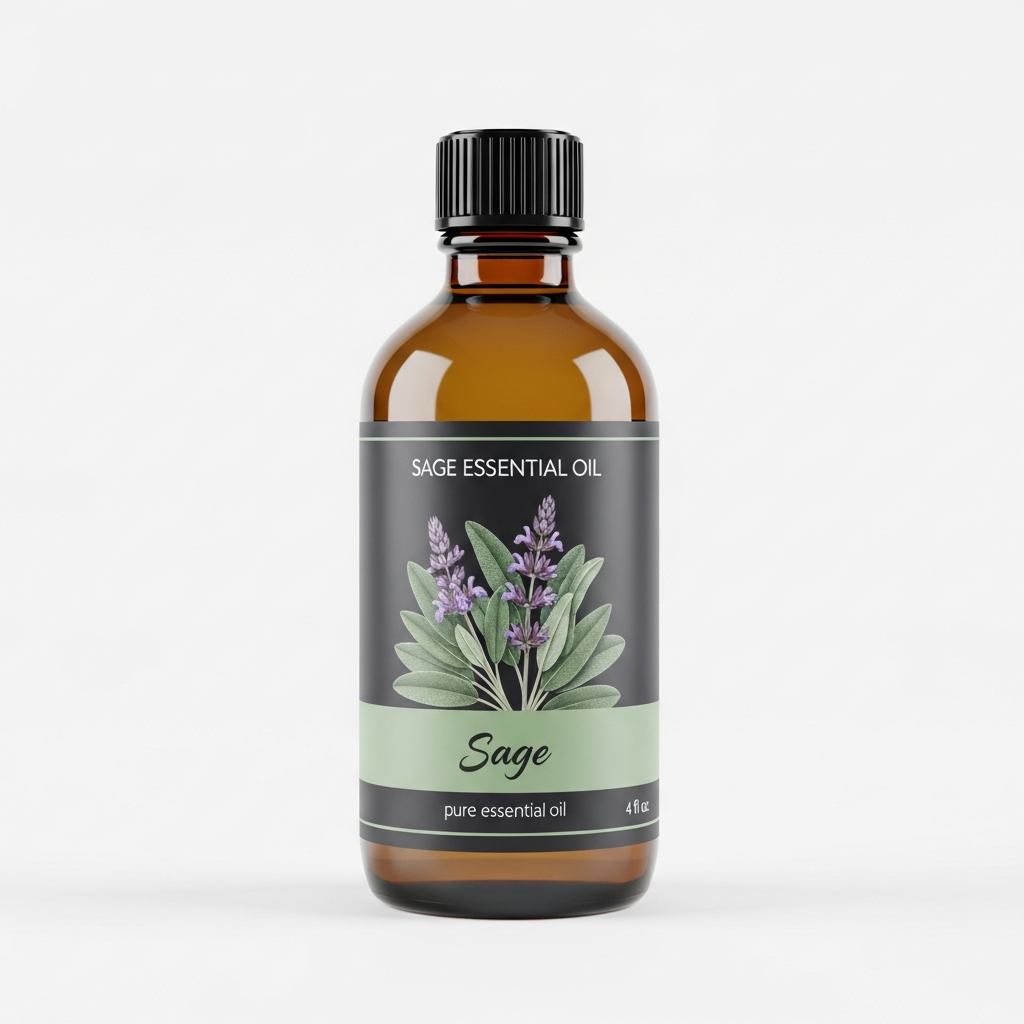
This gap between marketing language and ingredient reality is where a lot of consumer confusion begins. If you have ever wondered whether your sage fragrance oil is doing what you think it is, or whether it even contains a single drop of actual plant distillate, this article is for you. We are going to work through the most persistent myths in the sage oil category and lay out what the evidence actually shows.
Why This Comparison Matters
Essential oils and synthetic fragrance oils are not interchangeable. They look similar in a bottle. They can smell remarkably alike. But they are produced differently, composed differently, and perform differently depending on your intended use. For cosmetic formulators, candle makers, home fragrance enthusiasts, and anyone building a personal aromatic practice, knowing which you are working with shapes every decision downstream: dilution, blending behavior, scent longevity, and ingredient transparency.
The sage category is a particularly good place to untangle these myths because it contains so many distinct product types. Garden sage essential oil, distilled from Salvia officinalis, is a genuine botanical extract. A sage fragrance oil, by contrast, is typically a lab-constructed blend of aroma compounds designed to evoke sage without necessarily containing it. Then you have specialty entries like pineapple sage fragrance oil, which mimics the bright, fruity-herbal scent profile of Salvia elegans using synthetic molecules because the plant itself is rarely steam-distilled commercially.
None of this makes synthetic fragrances bad. It makes accurate labeling essential. Let us get into the myths.
Myth 1: "If It Smells Like Sage, It Contains Sage Oil"
The Myth
The assumption runs deep: a product that smells convincingly herbal and earthy must be made from the real plant. Consumers reasonably expect that a bottle labeled "sage scent" or "herbal sage blend" reflects its aromatic source.
The Truth
Modern fragrance chemistry is sophisticated enough to reproduce almost any botanical scent profile from purely synthetic starting materials. The compounds that give garden sage its characteristic smell, including camphor, 1,8-cineole, alpha-thujone, and linalool, can each be synthesized independently and combined in ratios that closely mimic the natural oil's signature.
Research into aroma compound profiles confirms that synthetic sage accords are widely used in the fragrance industry precisely because they offer consistency, lower cost, and extended shelf stability compared to the distilled essential oil. A product can smell unmistakably of sage while containing zero percent Salvia officinalis extract.
The myth persists because smell is a powerful and persuasive sense. Our brains associate a scent with its natural source. Fragrance marketing leans into this association deliberately.
What to Do
Read the full ingredient list. Genuine sage essential oil will appear as Salvia officinalis oil or Salvia sclarea oil (clary sage) in INCI nomenclature. A fragrance oil entry will typically read as "fragrance," "parfum," or list specific aroma chemicals. If the ingredient declaration is absent entirely, that is itself a signal worth noting. For a deeper look at how to identify species and sourcing on labels, see our complete guide to buying pure sage oil by species.
Myth 2: "Fragrance Oils Are Inferior and Should Be Avoided"
The Myth
In essential oil communities, synthetic fragrances sometimes carry a stigma. The narrative positions them as cheap substitutes with no legitimate place in quality products.
The Truth
This framing is too simple. Fragrance oils serve genuinely distinct purposes, and dismissing them wholesale misunderstands the category. For candle making, wax melts, and bath and body products where scent throw and stability matter most, high-quality fragrance oils often outperform essential oils. They hold up under heat. They do not oxidize as quickly. They can be formulated to carry a consistent profile batch after batch.
Pineapple sage fragrance oil is a clear example of where synthetic blending fills a genuine gap. Salvia elegans, the pineapple sage plant, produces an intriguing fruity-herbal scent from its fresh leaves. But steam distillation of this species does not yield a commercially viable essential oil at meaningful volume. So if you want that bright, almost tropical sage note in a candle or a room spray, a well-formulated pineapple sage fragrance oil is not a compromise. It is the appropriate tool for that creative job.
The evidence suggests that the quality gap exists within each category, not between them. A poorly sourced essential oil that has oxidized on a warehouse shelf is not superior to a carefully formulated fragrance oil from a reputable supplier. Provenance and quality control matter in both cases.
What to Do
Match your material to your application. For skin-contact products where botanical origin matters to you or your customers, distilled sage essential oil is the appropriate choice. For candles, diffusers, and decorative products where transparency about synthetic ingredients is clearly communicated, fragrance oils are a legitimate and often practical option. Looking for curated gift sets that bridge both worlds? Our sage oil gift guide for herb garden lovers covers options across the spectrum.
Myth 3: "Sage Fragrance Oil and Sage Essential Oil Perform the Same Way in Recipes"
The Myth
Because both products are liquid, similarly concentrated, and sold in comparable packaging, many new formulators assume they can be swapped one-for-one in recipes. Adjust for scent strength, and you are done.
The Truth
The performance differences between a sage essential oil and a sage fragrance oil go well beyond scent intensity. They stem from fundamental differences in composition.
Garden sage essential oil is a complex natural mixture of dozens of volatile compounds, each with its own evaporation rate (vapor pressure), solubility behavior, and interaction profile with carrier substances. When you blend distilled sage oil into a lotion base, an oil serum, or a bath salt, those compounds behave according to their natural chemistry.
A sage fragrance oil is typically a blend of synthetic aroma molecules, often suspended in a carrier solvent such as dipropylene glycol or isopropyl myristate. The solubility profile of a fragrance oil in water, alcohol, or wax can differ markedly from its essential oil counterpart. Formulators working with fragrance oils in cold-process soap, for instance, report that some sage fragrance blends accelerate trace significantly, which garden sage essential oil does not tend to do in the same way.
Scent longevity also differs. Synthetic aroma molecules in fragrance oils are often engineered for persistence. In a soy candle, a sage fragrance oil may provide a stronger room-filling throw than the essential oil, which contains lighter top-note compounds that dissipate relatively quickly under heat.
What to Do
Always run small test batches when substituting one for the other. If you are moving from essential oil to fragrance oil in a soap recipe, research whether your specific sage fragrance oil is known to accelerate trace. Check with your supplier for usage rate guidelines, which differ between the two product types. And if you are developing a fall seasonal blend for home fragrance, our piece on autumn sage blends for a cozy home walks through scent layering using both oil types.
Myth 4: "Natural Always Means Safe for Skin; Synthetic Always Means Harsh"
The Myth
This one circulates widely across the natural products space. The logic goes: essential oils come from plants, plants are natural, therefore essential oils are gentle. Synthetic fragrances come from a lab, therefore they are harsh or irritating.
The Truth
Garden sage essential oil, distilled from Salvia officinalis, contains naturally occurring compounds including alpha-thujone and camphor that require careful attention to dilution in skin-contact applications. These are potent volatile molecules. Evidence indicates that improper use of high-thujone sage oil at undiluted or high concentrations may cause skin sensitization in some individuals.
Standard cosmetic formulation guidance recommends using garden sage essential oil at dilutions appropriate to the product type, generally within established safe-use ranges that vary depending on rinse-off versus leave-on application. Patch testing before use is advisable regardless of the product's natural or synthetic origin.
On the synthetic side, some fragrance molecules do carry higher sensitization potential than others, and responsible formulators and suppliers reference safety data from organizations like IFRA (International Fragrance Association) when setting usage rates. Well-formulated fragrance oils from reputable suppliers include documentation on these limits.
The origin of a material, botanical or synthetic, does not determine its safety profile. Its specific chemistry and your usage rate do.
What to Do
For any skin-contact product containing sage essential oil, dilute appropriately. A common starting point for leave-on products is 1 to 2 percent dilution in a suitable carrier, though specific guidance varies by formulation context. Always patch test. Consult qualified safety resources or a cosmetic formulator if you are developing products for sale. If you have specific health concerns, speaking with a qualified healthcare provider before incorporating new aromatic materials into your personal care routine is a sensible step.
Myth 5: "Pineapple Sage Fragrance Oil Is Just a Novelty"
The Myth
Specialty sage fragrance profiles like pineapple sage fragrance oil get dismissed as gimmicky, a marketing invention with no real aromatic heritage behind it.
The Truth
Pineapple sage, Salvia elegans, is a genuine botanical species with a distinct and well-documented scent character. Gardeners and botanists have long noted its leaves carry a bright, fruity note layered over a clean herbal base. The fragrance oil category that takes its name from this plant is not an invention: it is an attempt to capture a real scent profile that the distillation process cannot economically deliver at scale.
In practice, pineapple sage fragrance oil has found a genuine audience among candle makers and home fragrance formulators looking for a sage-forward scent that reads as lighter and more approachable than the camphor-rich intensity of classical garden sage. It layers well with citrus, light florals, and green accords. It brings a late-summer garden quality to seasonal blends without heaviness.
The novelty label undersells a product that fills a real creative niche.
Reading Labels with Clearer Eyes
Sage fragrance oil and sage essential oil occupy different but equally legitimate places in aromatic and cosmetic work. The confusion between them is not accidental. Labels are often designed to evoke the natural source without being explicit about whether that source is actually in the bottle. Ingredient lists, when present and complete, tell the real story.
Knowing the difference between Salvia officinalis oil and "fragrance (parfum)" on a label gives you practical power as a buyer and formulator. It shapes which product you reach for, how you use it, and how you communicate its qualities honestly to anyone you are making something for.
The sage category is rich, varied, and worth understanding in full. The label is just the starting point.