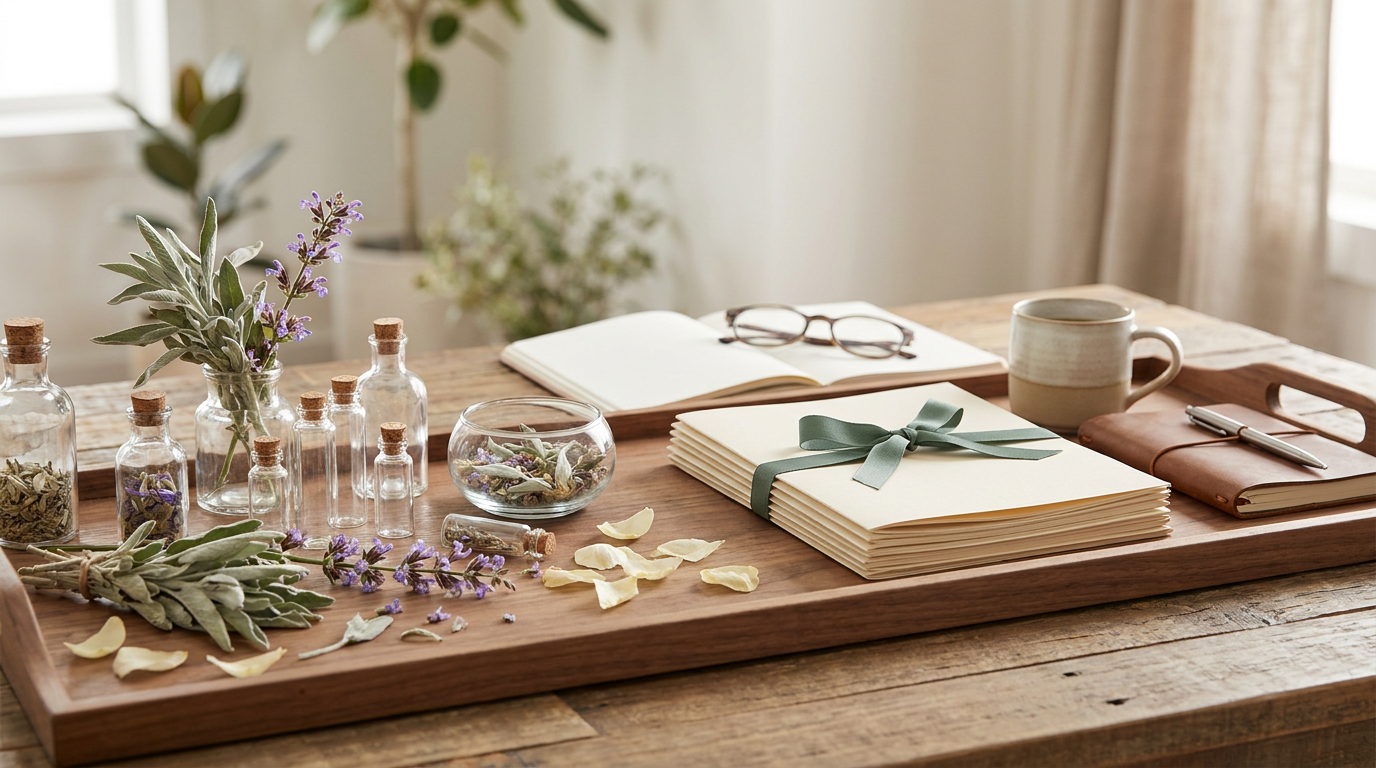
Autumn Sage Blends: Harvest-Season Scents for a Cozy Home
Something shifts in mid-September. The light goes golden, the air carries a faint woodsy edge, and suddenly the candles and diffusers you ignored all summer feel essential again. If you've been looking for a way to lean into that seasonal mood, fall sage blends deserve a serious spot in your autumn rotation.
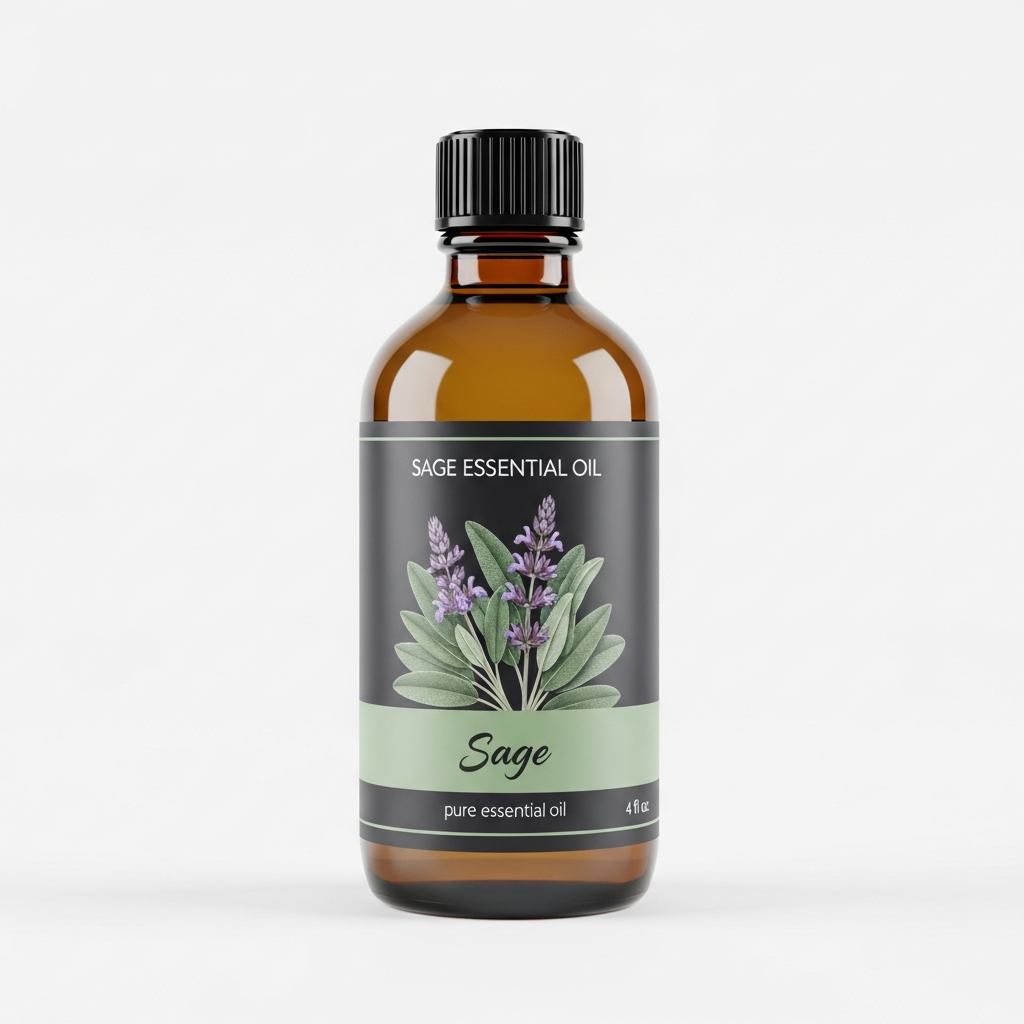
Garden sage essential oil (distilled from Salvia officinalis) has a scent profile that is genuinely built for this time of year. Herbaceous and slightly resinous, with a dry green character that reads as earthy without being heavy, it layers beautifully with the warm and spiced notes that define classic harvest-season scents. The result is something that smells sophisticated rather than overtly seasonal, cozy without tipping into cloying.
This guide covers why sage oil is a strong anchor for autumn essential oil blends, how to combine it with other fall-friendly oils, and practical diffuser and room-scenting recipes you can put to use right now.
Why Sage Oil Works So Well in Fall Blends
Most people reach for cinnamon, clove, or orange when they want a fall atmosphere. Those are excellent choices. But they tend to dominate a blend, and after a few weeks they can feel one-dimensional.
Sage adds what perfumers sometimes call a "green bridge." It connects the warm-spiced base notes to cooler, herbal top notes without pulling attention away from either. Think of it as the middle layer that makes a blend feel complete rather than flat.
From a purely aromatic standpoint, garden sage oil contains camphor, alpha-thujone, cineole, and borneol. These compounds give it that clean, slightly medicinal-green sharpness that cuts through sweetness in a blend. When you pair it with a rich resin like frankincense or a warm wood like cedarwood, the sage keeps the overall scent from feeling heavy or overpowering.
It is also worth noting that sage oil varies meaningfully by source and production. Before you build recipes around any bottle, it helps to understand what you're working with. Our complete guide to buying pure sage oil covers sourcing markers, quality indicators, and what to look for on a label.
A Note on Sage Varieties Before You Shop
If you've browsed essential oil retailers recently, you've probably noticed that "sage oil" can mean several different things. Garden sage (Salvia officinalis) and clary sage (Salvia sclarea) are the two most common options, and they smell quite different. Clary sage is softer, almost floral and slightly musky. Garden sage is sharper and more assertively herbal.
For the warm, grounded scent profiles in this guide, garden sage is the right choice. Clary sage blends beautifully too, but it suits different aromatic directions. If you're unsure which one belongs in your collection first, this comparison of clary sage vs. common sage oil lays out the differences clearly.
Five Autumn Essential Oil Blends Featuring Sage
Each recipe below is written for a standard 100ml ultrasonic diffuser. Adjust drop counts proportionally if your diffuser is larger or smaller. Run the diffuser in 30-to-60-minute intervals rather than continuously, and ensure the room has some air circulation.
1. Harvest Hearth
This is a classic autumn blend: warm, slightly smoky, with an herbal backbone that keeps it from smelling like a dessert candle.
- 3 drops garden sage
- 3 drops cedarwood (Virginia or Atlas)
- 2 drops sweet orange
- 1 drop clove bud
The cedarwood provides a dry, woody foundation. Orange brightens the mid-notes. Clove bud (just one drop) adds warmth without taking over. Sage ties it together with that signature green sharpness.
2. Forest Floor After Rain
More atmospheric than spiced. This one is good for an afternoon when you want a contemplative, quiet mood in the space.
- 4 drops garden sage
- 3 drops frankincense (Boswellia carterii or serrata)
- 2 drops black spruce or fir needle
- 1 drop vetiver
Frankincense gives depth and a slight resinous sweetness. Spruce or fir adds the cool green-forest note. Vetiver grounds the whole blend with an earthy, almost smoky quality. Use this one in a study or reading room.
3. Apple Orchard Morning
Crisp and bright with just enough warmth. A good choice for diffusing in the morning or early afternoon rather than evening.
- 2 drops garden sage
- 4 drops sweet orange or tangerine
- 2 drops cinnamon bark (use carefully: it is a known skin sensitizer, so diffuser use only)
- 2 drops cardamom
Sage keeps this from going fully into "potpourri" territory. Cardamom adds a spiced, slightly floral warmth that works well with citrus. Keep cinnamon bark to just two drops in the diffuser; it is potent and can irritate mucous membranes at higher concentrations.
4. Amber Dusk
A richer, more resinous blend suited for evenings or a bedtime wind-down ritual. The scent profile is dark and warm, with a herbal counterpoint from the sage.
- 3 drops garden sage
- 3 drops sandalwood (Australian or Hawaiian, sustainably sourced)
- 2 drops benzoin resinoid or labdanum
- 1 drop patchouli
Benzoin and labdanum are thick, sweet resins with a vanilla-adjacent warmth. Patchouli deepens the earthiness. Sandalwood provides a creamy, smooth base. Sage punctuates all that richness with a clean, dry note.
5. Herb Garden at Harvest
For those who prefer a lighter, more culinary-leaning autumn scent. This one recalls dried herb bundles and the last of the kitchen garden season.
- 4 drops garden sage
- 2 drops rosemary
- 2 drops lavender (40/42 or true lavender)
- 1 drop lemon
Clean, herbal, and a little nostalgic. The lemon adds lift and prevents the blend from feeling flat. Good for a kitchen or dining area.
Seasonal Variations as the Season Deepens
Early autumn and late autumn have different aromatic needs. In September and early October, lighter, crisper blends feel right. By November, when the days are genuinely cold and the light is gone by 5 p.m., most people gravitate toward deeper, warmer profiles.
Here is a simple way to think about it:
| Time of Season | Scent Direction | Best Sage Pairings |
|---|---|---|
| Early fall (Sept) | Crisp, herbal, citrus-forward | Orange, rosemary, lemon, fir needle |
| Mid-fall (Oct) | Warm, spiced, balanced | Cedarwood, clove, cardamom, frankincense |
| Late fall (Nov) | Deep, resinous, wood-heavy | Sandalwood, patchouli, vetiver, benzoin |
Think of your blends as evolving across the season rather than staying static. Swapping just one oil in a formula can shift the whole character of the scent.
Beyond the Diffuser: Other Ways to Use Sage Blends at Home
A diffuser is the easiest starting point, but it is far from the only option for creating cozy home scents with sage and seasonal oils.
Reed Diffusers
You can make a simple DIY reed diffuser using a carrier like fractionated coconut oil or dipropylene glycol (the latter gives better throw), diluted with your chosen essential oil blend at around 20-to-30 percent concentration. Use a narrow-necked bottle and 4-to-6 reed sticks. Flip the reeds every few days.
Linen and Room Sprays
Combine distilled water, a small amount of high-proof alcohol (like 190-proof grain alcohol) as a dispersant, and your essential oil blend at around 1-to-2 percent dilution. Shake well before each use. Avoid spraying directly onto delicate fabrics or wood surfaces. A light mist near (not on) soft furnishings works well.
Simmer Pots
For a very gentle ambient scent, add a drop or two of essential oil to a small bowl of warm water near (not on) a heat source, or use a proper essential oil warmer with a tea light. Do not leave unattended and do not let the water fully evaporate.
A quick note on DIY safety: Essential oils are highly concentrated plant extracts. When blending for any skin-contact application, always check current dilution guidelines from a reputable aromatherapy resource (such as the IFRA guidelines or Robert Tisserand's dilution charts). Perform a patch test on a small area of skin before wider use. If you are pregnant, nursing, or have a relevant health consideration, consult a qualified healthcare provider before using essential oils.
Getting the Right Bottle for the Season
If you plan to experiment with multiple blends across the full autumn season, a single small bottle of sage oil may not last as long as you expect. Sage oil is a workhorse in these formulas, often making up three or four drops per blend. Running the diffuser a few times a week through October and November adds up.
It is worth thinking about bottle size before you order. Our guide on which sage oil bottle size to order first walks through the practical math, including how long different sizes last under typical use patterns and when it makes sense to buy larger.
A Few Quick Tips for Blending Success
- Start with fewer drops than you think you need. You can always add more; you cannot subtract. In a new blend, start at half the suggested drops and evaluate the scent before adding the rest.
- Let the blend rest. If you're pre-mixing a blend in a small amber bottle, let it sit for 24 hours before diffusing. The individual oils harmonize and the overall scent rounds out during that resting period.
- Nose fatigue is real. After smelling three or four blends in a row, your perception becomes unreliable. Take breaks, smell fresh air or unscented coffee grounds, and return with a fresh nose.
- Keep notes. Write down every blend you try, including what you liked and what felt off. Scent memory is surprisingly unreliable without documentation, and you will want to recreate your best formulas next autumn.
- Check oil freshness. Sage oil, like all essential oils, oxidizes over time. If your bottle is more than two or three years old, the scent may have shifted and the oil is probably past its best. Fresh oil makes better blends.
Garden sage essential oil earns its place as a fall staple not because it is trendy, but because its scent character is genuinely suited to the season. Dry, herbal, grounding, and complex enough to work across a range of blend directions, it is one of those oils that will be useful from the first cool September morning straight through to the last days of November. Pull it out, experiment with the recipes above, and let your home smell like the season actually feels.