Where to Buy Clary Sage Oil: Shops, Labels, and What to Check
Searching for clary sage oil near me can feel oddly complicated for a product that sounds simple. A quick browse online or a walk down the natural beauty aisle reveals dozens of options, each claiming to be the best. Prices swing wildly. Bottles look nearly identical. And the labeling language ranges from genuinely informative to borderline gibberish.
This guide cuts through that noise. It covers what quality actually looks like on a label, which price tiers are worth your money, the red flags that should make you put a bottle back on the shelf, and exactly where to shop, whether you prefer clicking or browsing in person.
What Makes a Quality Clary Sage Essential Oil
Before you can evaluate a product, you need to know what you are looking for. Clary sage oil is steam-distilled from Salvia sclarea, a biennial herb cultivated primarily in France, Bulgaria, and Russia. The scent is distinctive: earthy, slightly sweet, faintly herbaceous with a warm, almost musky undertone. If a bottle smells sharp and medicinal, like the common culinary sage you might find on a spice rack, the product may be mislabeled or adulterated.
The Latin Name on the Label
This is the single most important thing to check. The label must read Salvia sclarea. If it reads only "clary sage" with no botanical name, or if the Latin name is absent entirely, that is a problem. Common sage (Salvia officinalis) is a very different oil with a different chemical profile. Our complete guide to sage oil species walks through the full family in detail, which is worth reading before you spend money on any sage product.
Country of Origin
French-distilled clary sage, particularly from the Provence and Languedoc regions, has a long reputation for producing high linalool and linalyl acetate content. These are the two primary constituents that give clary sage its characteristic soft, rounded scent. Bulgarian origin is also well-regarded. Oils without any country of origin listed are a yellow flag at minimum.
GC/MS Testing
Gas chromatography and mass spectrometry testing breaks an oil down into its constituent parts and verifies that the chemistry matches what the label claims. Reputable suppliers make GC/MS reports available, either as a download on their website or by request for each batch. The report should reference the specific lot number on your bottle. If a company cannot provide this, shop elsewhere.
Packaging
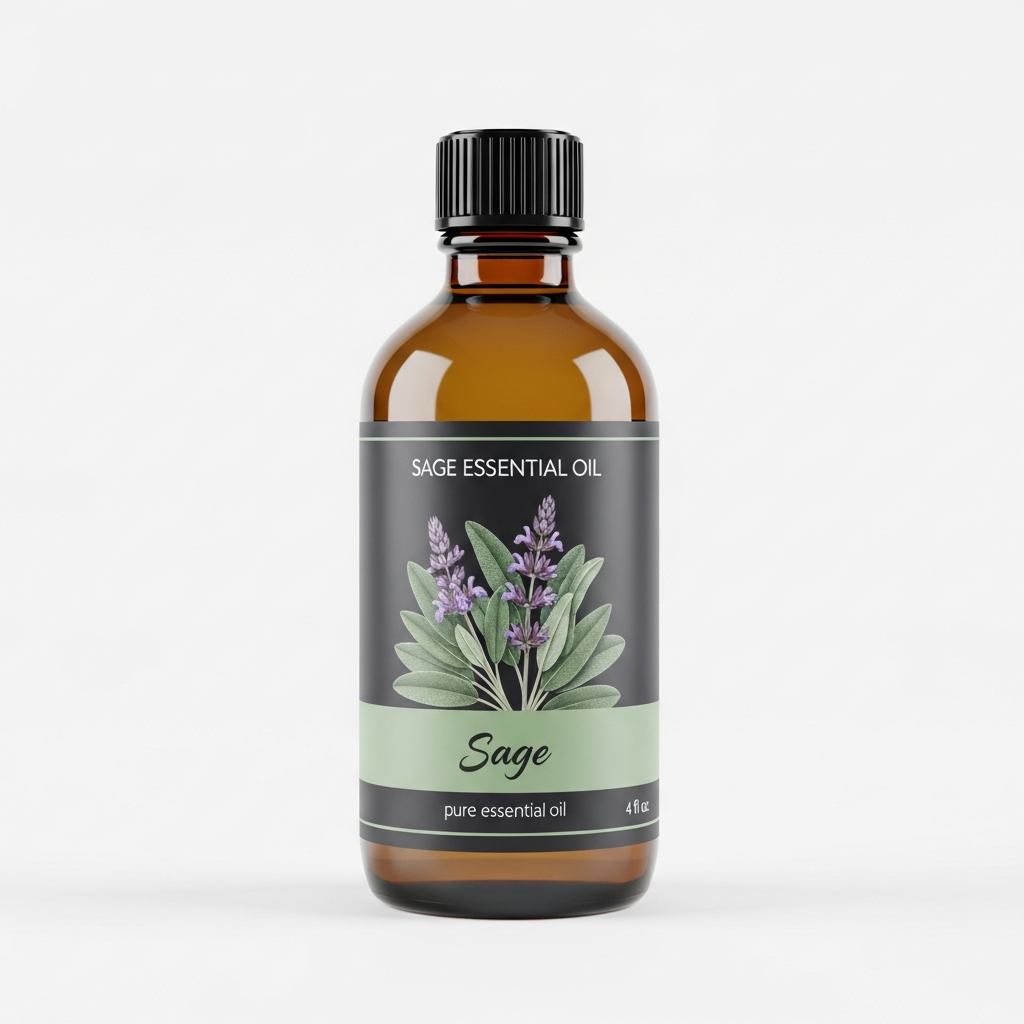
Clary sage oil should always come in a dark amber or cobalt blue glass bottle. Essential oils are volatile compounds that degrade with light and oxygen exposure. Clear glass bottles, plastic bottles, and oversized containers with wide openings are all signs that the seller is cutting corners on storage quality, or simply does not understand the product they are selling.
Scent Profile
If a supplier offers samples or a return policy on first orders, take advantage of it. Authentic clary sage oil has a multi-layered, almost wine-like quality at the top notes, settling into something earthy and warm. It lingers. A flat, sharp, or purely green scent suggests adulteration or substitution.
Key Features to Compare When Shopping
- Botanical name: Must be Salvia sclarea
- Distillation method: Should specify steam distillation
- Country of origin: France, Bulgaria, or Russia are standard benchmarks
- Batch-specific GC/MS reports: Available and accessible, not just a generic chart
- Certifications: USDA Organic certification is verifiable; labels that say "natural" or "pure" without certification carry no regulatory weight
- Volume options: Reputable suppliers typically offer 5 ml, 10 ml, and 30 ml sizes, allowing you to try before committing to bulk
- Shelf date or lot number: Lets you cross-reference testing data
- Dilution disclosure: Some products, especially those marketed for direct skin use, are pre-diluted in a carrier oil. This is not a flaw, but the label must clearly state the dilution ratio and the carrier used
Price Tiers: What to Expect
Clary sage is not among the most expensive essential oils, but genuinely good quality does carry a cost. Here is a rough breakdown of what different price points typically deliver.
| Price Range (10 ml) | What You Typically Get | Worth It? |
|---|---|---|
| Under $5 | Synthetic fragrance oil, mislabeled species, no GC/MS, minimal sourcing info | Rarely |
| $8 to $15 | Entry-level genuine oil; some brands in this range offer solid quality with GC/MS on request | Sometimes, with research |
| $15 to $30 | Mid-range certified or wildcrafted; transparent sourcing; batch-specific testing standard | Yes, for most buyers |
| $30 and above (10 ml) | Premium single-origin; organic certified; often smaller production runs with traceable farms | Yes, for fragrance blending or discerning cosmetic use |
One note on bulk purchasing: if you find clary sage oil nearby at a health food store selling a 30 ml bottle for less than $10, that price almost certainly signals either a diluted product or a synthetic. Undiluted, pure Salvia sclarea at that volume simply does not exist at rock-bottom prices if the sourcing is honest.
Top Picks by Category
Best for Beginners: Mid-Tier Direct-to-Consumer Brands
Brands like Plant Therapy and Rocky Mountain Oils sit comfortably in the $10 to $20 range for a 10 ml bottle, make GC/MS reports publicly available by lot number, and maintain clear labeling. They are not the most exclusive products on the market, but they are honest and consistent. A solid starting point.
Best for Fragrance Blending and Cosmetic Formulation
For candle makers, perfumers, or anyone formulating skin care products, a French-origin clary sage from a supplier like Tisserand or Eden Botanicals offers a more refined scent profile. Expect to pay more per milliliter, but the linalyl acetate content tends to be higher, producing that signature sweet, slightly floral character that blends beautifully with cedarwood, bergamot, and geranium.
Best Organic Certified Option
If USDA Organic certification matters to your purchasing philosophy, look for suppliers who display a valid certification number, not just the word "organic" in their branding. Aura Cacia and Mountain Rose Herbs both carry certified organic clary sage and operate with transparent supply chains.
Best Local Discovery: Health Food Stores
If you have been searching for clary sage essential oil near me specifically because you want to smell before you buy, a well-stocked natural foods store is your best bet. Whole Foods Market, Natural Grocers, and independent co-ops often carry brands with legitimate sourcing. The selection is narrower than online, but you get to evaluate the scent in person, which is genuinely useful.
Where to Buy: Your Options Compared
Online Specialty Retailers
The best quality-to-selection ratio lives online. Suppliers like Eden Botanicals, Stillpoint Aromatics, and Aromatics International specialize exclusively in essential oils. They publish sourcing details, maintain lot-specific testing, and often sell directly from farms or small distilleries. Shipping costs can add up, but many offer free shipping thresholds that make a multi-bottle order sensible.
Amazon and General Marketplaces
Amazon stocks clary sage oil from dozens of brands, which creates both opportunity and real risk. Counterfeit products, gray-market listings, and repackaged synthetic fragrances all circulate on the platform. If you buy here, stick to brand storefronts you can verify independently, check that the seller is the brand itself rather than a third-party reseller, and read recent reviews critically for any mention of off scents or inconsistent batches.
Health Food and Natural Product Stores
Searching for clary sage oil nearby in a physical retail context usually points you toward natural grocers or co-ops. These stores curate their selections more carefully than general pharmacy chains, and staff are often knowledgeable enough to help you compare what is in stock. You lose access to the widest price range, but you gain tactile confidence in what you are buying.
Pharmacy and Drugstore Chains
CVS, Walgreens, and similar chains occasionally stock essential oils, typically from mass-market brands. The labeling standards are lower, the sourcing is rarely transparent, and the scent quality reflects that. These are not the worst options for a diluted aromatherapy blend in a roller bottle, but if you want a pure, undiluted Salvia sclarea oil, this is not the right aisle.
Craft and Hobby Stores
Stores like Michaels or Hobby Lobby carry essential oils aimed at candle and soap makers. Quality varies, but because these buyers often care more about scent performance in a finished product than about botanical purity, the labeling standards can be looser. Check for the Latin name and GC/MS availability before purchasing from these channels.
Red Flags to Avoid
- No botanical Latin name on the label. This is a non-negotiable baseline.
- "Fragrance oil" or "perfume oil" language. These are synthetic products, not steam-distilled botanicals.
- Unrealistically low prices. A 4-ounce bottle of pure clary sage for $6.99 is not a bargain. It is a different product.
- Vague certifications. "All natural," "100% pure," and "therapeutic grade" are marketing phrases with no regulatory definition. Look for USDA Organic seals with verifiable certification numbers instead.
- No lot number or batch information. Without this, there is no way to cross-reference a GC/MS report.
- Plastic bottles for undiluted oil. Essential oils can leach compounds from plastic over time. Amber or blue glass is standard for undiluted product.
- Missing country of origin. Legitimate suppliers are proud of their sourcing and list it clearly.
A Few Comparisons Worth Making Before You Buy
If you are new to sage oils in general, it helps to understand how clary sage relates to the broader family before committing to a purchase. Our article on sage oil vs. rosemary oil is a useful read for anyone comparing herbal oils for aromatic or cosmetic projects. And if you have encountered white sage smudge sticks or white sage oil in your search, note that those products come from a completely different tradition and botanical source. The piece on sage oil vs. white sage smudge explains those distinctions clearly.
For a deeper look at navigating the full range of sage species before you buy any sage product, the complete guide to sage oil species covers the key differences and helps you arrive at the right bottle for your actual needs.
A Quick Checklist Before You Add to Cart
- Does the label show Salvia sclarea as the botanical name?
- Is the country of origin listed?
- Can you access a GC/MS report for this specific lot?
- Is the bottle dark glass?
- Is the price in a realistic range for genuine distilled oil?
- If certified organic, is the certification number present and verifiable?
- If pre-diluted, does the label clearly state the carrier oil and dilution percentage?
Run through that list and most of the guesswork disappears. Clary sage oil is a genuinely lovely aromatic material with a long history in perfumery and botanical cosmetics. Finding a good bottle is mostly a matter of knowing what honest labeling looks like, and now you do.