How to Store Sage Oil: Shelf Life and Keeping the Herbal Edge
You open a bottle of garden sage essential oil and that sharp, clean, faintly camphoraceous scent lifts right off the neck of the bottle. It is one of the most recognizable aromas in the herbalist's cabinet. The question most people forget to ask until it is too late: how long will that character last, and what can you do to protect it?
Proper storage is the single most important factor in sage oil shelf life. Buy the finest distilled garden sage on the market, store it carelessly, and within a year you may be left with something flat and vaguely chemical. Store a mid-range bottle correctly, and it can hold its profile for two to three years or longer. This guide walks you through exactly what to do, what to avoid, and why each step matters.
If you are new to this oil altogether, it helps to start with the basics. Our complete beginner's guide to sage essential oil covers botanical sourcing, distillation, and what to expect from a quality product before you invest in a larger supply worth protecting.
Understanding Sage Oil Shelf Life
Garden sage essential oil (Salvia officinalis) is rich in monoterpenes and oxygenated compounds, including camphor, 1,8-cineole, and alpha- and beta-thujone. These molecules are volatile by nature. That volatility is exactly what gives the oil its aroma. It is also what makes sage oil susceptible to oxidation over time.
Oxidation occurs when oxygen molecules react with the oil's chemical constituents. The result is a gradual shift in scent profile: the bright, green top notes fade first, followed by a dulling of the mid notes, and eventually the oil may take on a stale or slightly rancid character. Oxidized essential oils are also more likely to cause skin sensitivity, which is worth keeping in mind if you use sage oil in blends or personal care products. Our guide to sage oil safety, dilution, and patch testing goes deeper on that topic.
A well-stored bottle of garden sage essential oil typically maintains good aromatic quality for two to three years from the date of distillation (not the purchase date). Some bottles carry a batch or distillation date; if yours does not, ask your supplier. Oils that have been sitting in a warehouse for eighteen months before you purchase them have already used up a portion of that window.
The four enemies of essential oil quality are:
- Oxygen (the primary driver of oxidation)
- Light (especially UV, which accelerates chemical breakdown)
- Heat (increases molecular movement and speeds oxidation)
- Moisture (can introduce microbial contamination and alter chemistry)
Good essential oil storage practice is simply the discipline of minimizing all four.
What You Will Need
Before diving into the steps, gather the following materials. Many of these are inexpensive and reusable.
- Amber or cobalt blue glass bottles with tight-fitting orifice reducers and caps (5 ml, 10 ml, or 15 ml sizes work well)
- A cool, dark storage location (a drawer, cabinet, or dedicated essential oil case)
- Sticky labels or a label maker
- A permanent marker for dating
- Optional: a small refrigerator or wine cooler dedicated to botanical products
- Optional: vacuum-seal bottle caps designed for essential oils (available from specialty suppliers)
- Optional: inert gas spray (food-grade nitrogen or argon) for long-term preservation
Step-by-Step: How to Store Sage Oil Properly
Step 1: Choose the Right Container
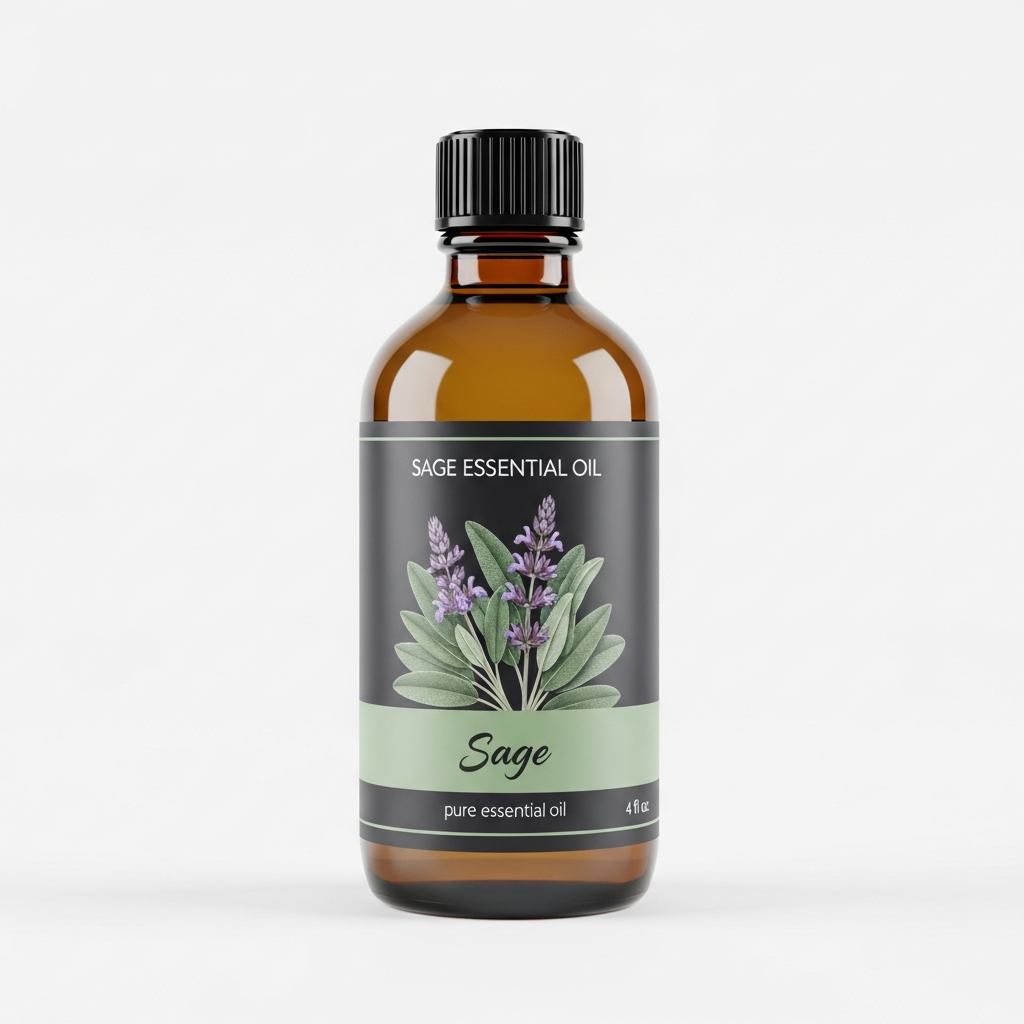
If your sage oil arrived in a clear glass or plastic bottle, transfer it as soon as possible. Plastic can leach into essential oils over time, and clear glass offers no UV protection. Amber glass is the industry standard for a reason: it filters out the wavelengths of light most responsible for photodegradation. Cobalt blue works similarly. A 5 ml or 10 ml bottle with a tight orifice reducer limits how much air enters each time you open it.
If you purchased a larger quantity (30 ml or more), consider decanting into several smaller bottles. Working from a small "daily use" bottle while keeping the rest sealed preserves the bulk of your supply from repeated air exposure.
Step 2: Label Every Bottle with a Date
This step feels minor. People skip it constantly, then wonder whether a bottle they found at the back of a cabinet is still worth using. Write the purchase date and, if you have it, the distillation date directly on the label or on a small sticker on the base of the bottle. Include the oil name and any batch information from your supplier. A simple system now saves real frustration later.
Step 3: Seal Tightly After Every Use
Every moment a bottle sits open, oxygen is entering. Make a habit of capping your sage oil immediately after dispensing, even if you plan to use it again in a few minutes. Orifice reducers slow the process, but they do not stop it. A firmly closed cap does. If you are using sage oil in a blending session that takes twenty minutes, replace the cap between each pour.
Step 4: Store Away from Light
A windowsill looks lovely. It is one of the worst places in your home for essential oil storage. Sunlight and fluorescent light both degrade volatile compounds. A closed drawer, a cabinet with a door, or a dedicated storage box lined with foam inserts keeps your collection protected and organized. If you display your oils for aesthetic reasons, choose a spot that receives no direct sunlight and minimal ambient light.
Step 5: Control the Temperature
Room temperature storage works well for most essential oils, provided your home stays reasonably consistent and does not get very warm. Aim for a range between 60 and 75 degrees Fahrenheit (15 to 24 degrees Celsius). Avoid storing oils near heat sources: stovetops, radiators, sunny windowsills, or areas that heat up significantly in summer.
For longer-term storage, a small dedicated refrigerator or wine cooler set to around 55 degrees Fahrenheit is an excellent option. If you go this route, allow the bottle to come to room temperature before opening it. Condensation can introduce moisture if you open a cold bottle immediately. A few minutes on the counter first is all it takes.
Step 6: Minimize Headspace as the Bottle Empties
As you use an essential oil, the air space inside the bottle grows. More air means more opportunity for oxidation. When a bottle is roughly half empty, consider transferring the remaining oil into a smaller bottle that the oil will nearly fill. This simple step can add months to the useful life of the oil. It is the same logic behind using smaller jars for leftover food: less air contact, slower degradation.
Step 7: Consider Inert Gas for Long-Term Preservation
This step is optional but worth knowing about if you purchase sage oil in larger quantities or invest in high-quality batches you want to preserve carefully. Food-grade nitrogen or argon sprays (sometimes marketed for wine preservation) can be used to displace the oxygen in a bottle before capping. The inert gas sits on top of the oil, physically blocking oxygen contact. It is a technique used by professional perfumers and serious botanical collectors. For most home users, steps one through six are sufficient.
Common Mistakes to Avoid
Storing in the Bathroom
Bathrooms are warm, humid, and subject to frequent temperature swings when showers run. They seem like a convenient spot for oils you use in personal care routines, but they are genuinely hard on aromatic products. A cool bedroom drawer or a linen closet shelf is a better choice for anything you use daily.
Buying More Than You Can Use
Bulk purchasing makes economic sense up to a point. If a 30 ml bottle of garden sage will take you three years to work through, you would likely be better served by buying a 10 ml bottle more frequently. Freshness at the time of use is worth more than a modest per-milliliter savings on a large bottle that oxidizes before you finish it.
Ignoring the Distillation Date
Purchase date and distillation date are not the same thing. A reputable supplier will provide or readily share the distillation date and batch number for any essential oil they carry. If that information is unavailable, that is itself useful information about the supplier's transparency. Our history of garden sage touches on why provenance and sourcing have always mattered for this particular herb, long before essential oil distillation entered the picture.
Using Oxidized Oil in Skin Applications
An oil that has noticeably shifted in scent (flat, harsh, or off in a way that is hard to describe) should be retired from any application that involves skin contact. Oxidized oils are more likely to cause sensitivity reactions. Use old oil in a diffuser or a room spray at most, and always perform a patch test with any new or old oil before applying diluted blends to larger areas of skin.
How to Tell If Your Sage Oil Has Turned
Trust your nose. Fresh garden sage essential oil has a sharp, green, herbaceous top note with a slightly camphoraceous character underneath. If your bottle smells muted, sour, or simply wrong when you compare it to a memory or a fresh sample, oxidation has likely progressed significantly. The color may also shift slightly as the oil ages. When in doubt, compare your bottle to a freshly opened one from the same supplier. The difference is usually obvious.
Expected Results from Good Storage Practice
With consistent attention to container choice, temperature, light, and air exposure, most quality garden sage essential oils may maintain their characteristic aromatic profile for two to three years from distillation. Some batches, particularly those from well-run distilleries using fresh, properly dried herb material, may hold their character even longer when stored under ideal conditions.
Good essential oil storage does not change what an oil does aromatically. It preserves what the distiller worked to capture. When you open a well-stored bottle of garden sage after eighteen months and that clean, assertive herbal note is exactly where you left it, the steps above are why.
A note on safety: Always dilute sage essential oil properly before any skin application, and consult a qualified healthcare provider before incorporating any essential oil into your personal wellness routine. Sage oil is not appropriate for all individuals. See our full sage oil safety and dilution guide for detailed guidance.