
What Is Sage Essential Oil? A Complete Beginner's Guide
Key Takeaways
- Sage essential oil comes from Salvia officinalis, the common garden sage, through steam distillation of its leaves and flowering tops.
- It has a bold, herbaceous, slightly camphoraceous scent that reads as distinctly green and earthy.
- The oil contains notable amounts of thujone, a compound that makes proper dilution and safety awareness essential for every user.
- It is used widely in cosmetic formulations, perfumery, candles, and home fragrance blending.
- Sage oil is not the same as clary sage oil. The two plants are related but chemically distinct.
- Quality varies significantly by origin, harvest timing, and distillation method. Knowing what to look for saves money and frustration.
- Always dilute before any skin application, perform a patch test, and consult a qualified healthcare provider before using around children, people who are pregnant, or anyone with a health condition.
1. What Is Sage Essential Oil?
Sage essential oil is a concentrated aromatic extract produced from the leaves and flowering tops of Salvia officinalis, the garden sage most people recognize from their kitchen spice rack or a backyard herb garden. The oil is captured through steam distillation, a process that drives volatile aromatic compounds out of the plant material and condenses them into a potent liquid.
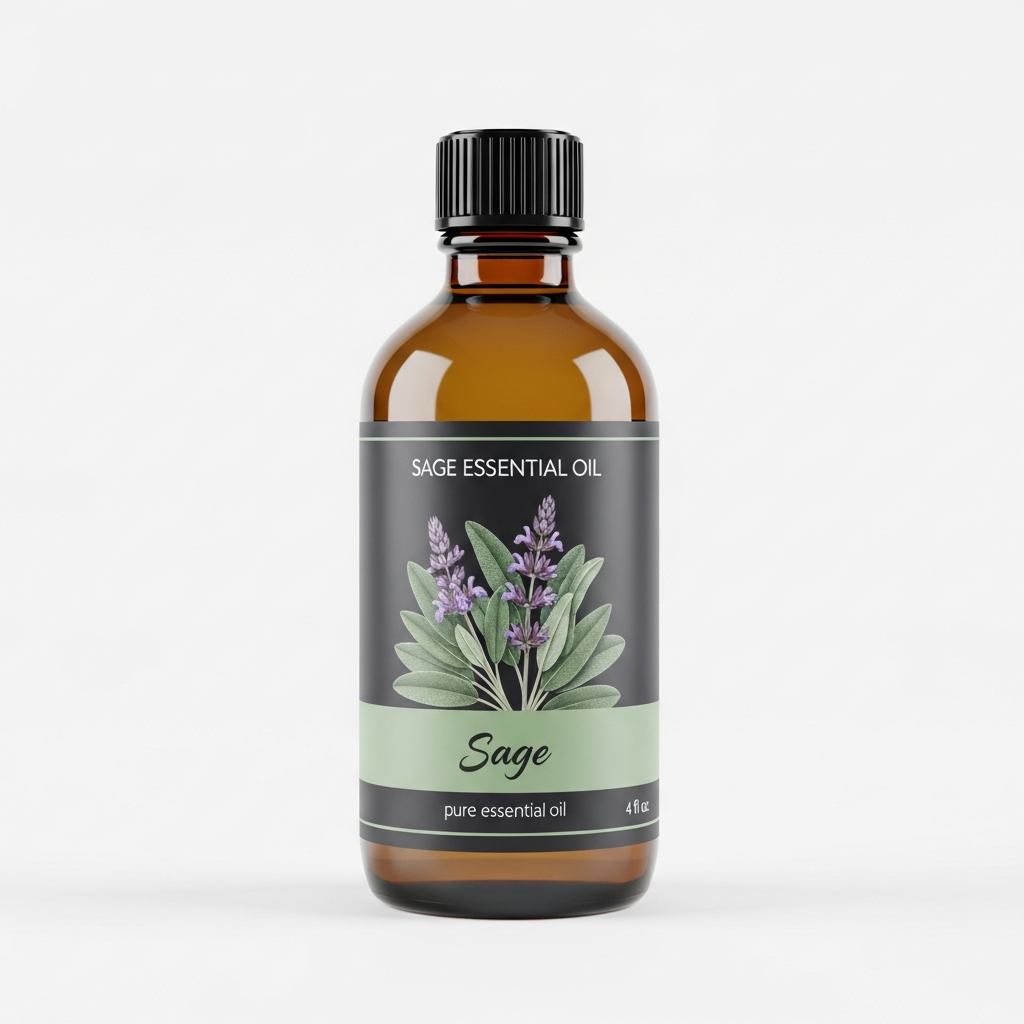
A single bottle of sage oil represents a surprisingly large amount of plant. It takes a significant quantity of dried herb to yield even a small volume of essential oil, which is one reason properly distilled sage oil is not a budget product. The concentration is also why sage oil is used sparingly: a few drops go a long way in a diffuser blend, a cosmetic formula, or a crafted candle.
The phrase "sage oil explained" shows up frequently in beginner searches, and that makes sense. The sage family is large, and many related oils share the name. Garden sage oil, clary sage oil, white sage oil, and Spanish sage oil all come from different Salvia species with meaningfully different chemical compositions and aromatic profiles. This guide focuses specifically on Salvia officinalis, the species most commonly sold as "sage essential oil" or "garden sage oil" in the North American and European markets.
Understanding what sage essential oil actually is, where it comes from, and how it is produced gives you a solid foundation for using it confidently and safely.
2. Botanical Identity: The Plant Behind the Oil
The Species
Salvia officinalis belongs to the Lamiaceae family, which also includes lavender, rosemary, peppermint, and basil. It is a perennial shrub native to the Mediterranean basin, particularly the coastal regions of the Adriatic. Today it is cultivated across southern Europe, the British Isles, North America, and parts of Central Asia for culinary, cosmetic, and fragrance purposes.
The plant grows to roughly 60 centimeters in height. Its leaves are the most immediately recognizable feature: oblong, soft, and covered in fine hairs that give them a characteristic gray-green, almost velvety appearance. Flowers emerge in mid-summer and range from pale violet to lilac, sometimes white. Both leaves and flowers contain the aromatic compounds that end up in the finished essential oil.
A Brief Word on Name and History
The genus name Salvia derives from the Latin salvere, meaning to be in good health or to be safe. Garden sage has been cultivated for centuries across Europe and the Mediterranean. If you are curious about the full story of the plant's cultural and historical journey, our article A Short History of Sage: The Garden Herb Named for Wisdom explores that ground in detail.
Salvia officinalis vs. Other Sage Species
New buyers sometimes find the sage category confusing because multiple species use the common name "sage." Here is a quick reference to orient you:
| Common Name | Botanical Name | Key Notes |
|---|---|---|
| Garden Sage (this guide) | Salvia officinalis | Camphoraceous, herbaceous, high thujone content |
| Clary Sage | Salvia sclarea | Sweeter, softer, linalyl acetate dominant, lower thujone |
| Spanish Sage | Salvia lavandulifolia | Lavender-like, much lower thujone, sometimes used as a substitute |
| White Sage | Salvia apiana | Distinct smoky-resinous character, culturally significant to Indigenous communities |
Always read the Latin name on a bottle's label. If the label only says "sage oil" without a botanical name, that is a quality flag worth noting before you buy.
3. How Sage Oil Is Made
Steam Distillation
The production method for garden sage oil is steam distillation, the same process used for most herbaceous essential oils. Plant material, usually the dried or fresh-cut leaves and sometimes the flowering tops, is packed into a distillation chamber. Steam is introduced under pressure and passes through the plant material. The heat causes the cell walls of the herb to release their volatile aromatic compounds.
The steam, now carrying those volatile molecules, travels through a condenser where it cools and returns to liquid form. The resulting liquid separates naturally: the essential oil floats on top of the hydrosol (the aromatic water below), and the two are collected separately. The sage oil is drawn off, filtered if necessary, and bottled.
Why Distillation Details Matter
Not all distillation runs produce the same oil. Pressure, temperature, and duration each influence the final chemical profile. Lower-temperature, slower distillation tends to preserve a broader range of delicate compounds. Higher heat and faster runs can produce an oil that is cheaper to make but narrower in aromatic complexity.
Harvest timing also plays a significant role. Sage harvested just before or during flowering typically yields the highest concentration of desirable aromatic compounds. Leaves harvested too early or too late in the season will produce oil with a noticeably different character.
For a thorough look at the production process, our companion article How Sage Oil Is Made: Steam Distilling a Garden Herb walks through each stage in detail, including what questions to ask a supplier about their distillation practices.
Yield and Concentration
The yield from garden sage is relatively modest. Depending on the cultivar, growing conditions, and harvest timing, it can take roughly 100 to 150 kilograms of plant material to produce one kilogram of essential oil. This concentration factor is what makes essential oils so potent and why dilution before skin application is not optional.
4. What Sage Oil Smells Like
The scent of sage essential oil is one of the most immediately recognizable in the herbaceous category. It reads as green and sharp on the opening, with a camphoraceous quality that gives it a clean, almost medicinal edge (in the aromatic sense, not any health-claim sense). As it dries down, warmer, slightly woody, and subtly spicy notes emerge.
If you have ever rubbed a fresh sage leaf between your fingers and held it to your nose, you have encountered the foundational impression of this oil. The essential oil amplifies and concentrates that experience considerably.
Fragrance Family and Blending Notes
In perfumery and fragrance blending terminology, sage oil is generally classified as a middle note, though it can behave as a top note modifier in lighter blends. It sits within the herbaceous-aromatic fragrance family.
- Opening impression: Sharp, green, camphoraceous
- Heart: Warm, herbaceous, slightly earthy
- Dry-down: Soft woody undertones, gentle spice
How It Blends with Other Oils
Sage oil is a strong personality in any blend. It tends to anchor and ground sweeter or floral notes. Common and well-regarded pairings include:
- Lavender (softens the camphor edge, adds floral warmth)
- Rosemary (amplifies the green-herbal quality)
- Cedarwood (adds depth and a woody foundation)
- Bergamot (adds citrus brightness that contrasts nicely with sage's earthiness)
- Lemon (cuts through heavier aromatic notes)
- Black pepper (adds spicy complexity)
Because sage oil is assertive, a little restraint in blending goes a long way. Starting at 5 to 10 percent of your total essential oil blend is a sensible approach before scaling up.
For a more detailed exploration of the aromatic profile, including how origin and distillation affect scent character, visit our dedicated scent guide: What Does Sage Oil Smell Like? An Herbaceous Scent Profile.
5. Chemical Profile: What's Inside the Bottle
Essential oils are complex chemical mixtures. Garden sage oil typically contains dozens of individual compounds, though a handful account for the majority of its aromatic and functional character. Understanding the key constituents helps you make sense of why safety guidelines exist and what to look for on a reputable supplier's certificate of analysis (COA).
Major Constituents
| Constituent | Typical Range | Aromatic Character |
|---|---|---|
| Alpha-thujone | 15% to 35% | Sharp, camphoraceous, herbal |
| Beta-thujone | 3% to 8% | Similar to alpha-thujone |
| Camphor | 5% to 22% | Cool, penetrating, medicinal-aromatic |
| 1,8-Cineole | 3% to 14% | Eucalyptus-like, clean, fresh |
| Alpha-humulene | 0% to 12% | Earthy, woody, subtle |
| Borneol | 1% to 7% | Woody, slightly minty |
The Thujone Conversation
Thujone is the compound that most often comes up in discussions about sage oil safety, and it is worth understanding clearly. Thujone is a naturally occurring ketone found in high concentrations in Salvia officinalis. It is also the compound responsible for much of the oil's characteristic sharp, camphoraceous scent.
At high doses and through inappropriate routes of exposure, thujone raises safety concerns. This is one of the main reasons that garden sage oil carries more significant usage cautions than lower-thujone relatives like clary sage or Spanish sage. The practical implication is straightforward: proper dilution, reasonable usage levels, and avoiding internal use entirely are non-negotiable with this oil.
Reputable suppliers publish gas chromatography/mass spectrometry (GC/MS) reports for each batch of oil. These reports detail the exact percentage of each constituent, including thujone. A quality supplier will make these available on request or post them directly on their product pages.
Chemotypes
It is worth knowing that Salvia officinalis produces different chemotypes, meaning plants of the same species can have meaningfully different chemical profiles depending on where they are grown and their genetic lineage. Some cultivars produce oil with lower thujone and higher camphor content. Others skew toward higher thujone. Geographic origin, most notably Dalmatia (Croatia), Spain, Italy, and France, influences chemotype and therefore the oil's aromatic and safety profile. This is another reason the COA from your supplier matters.
6. How to Use Sage Essential Oil
Aromatherapy and Diffusion
Diffusing sage oil is one of the most approachable entry points for beginners. In a standard ultrasonic diffuser, 3 to 5 drops in a 100ml water tank is a reasonable starting point. The scent fills a room with a distinctly herbal, grounding character that many people associate with a calm, focused atmosphere.
Sage blends well in diffuser recipes with lavender, cedarwood, or bergamot. A simple evening blend might be 3 drops sage, 4 drops lavender, and 2 drops cedarwood. Run the diffuser for 30 to 60 minute intervals rather than continuously.
Keep diffused sage oil away from pets, particularly cats and small animals. Their respiratory systems and metabolic pathways differ significantly from ours, and concentrated aromatics can be problematic for them. Diffuse in well-ventilated rooms and allow animals to leave the space freely.
Cosmetic and Skin Applications
Sage oil is used in a variety of cosmetic product categories, including:
- Hair care: Small amounts appear in shampoos, conditioners, and scalp serums. The scent is a valued component, and some formulators appreciate it as an addition to scalp-focused products.
- Body lotions and creams: Used at cosmetically appropriate concentrations, sage oil contributes a grounding, herbal scent to skin care blends.
- Facial serums: Used sparingly in professional formulations. Given the thujone content, concentration in leave-on facial products is kept very low.
- Soap making: Adds herbal fragrance; note that some aromatic character may be affected by the saponification process.
In all topical applications, sage oil must be properly diluted in a carrier oil before skin contact. It is never applied neat (undiluted). See the safety section below and our full guide to How to Dilute Sage Oil: Ratios, Carrier Oils, and Patch Tests for specific guidance.
Home Fragrance and Candle Making
Sage oil is a popular choice for candle makers, room sprays, and reed diffusers. Its strong, distinctive scent holds reasonably well in candle applications, though performance varies by wax type and the specific fragrance load used. In soy wax candles, a fragrance load of 6 to 10 percent is common, with sage oil contributing part of that blend rather than being the sole fragrance component.
For room sprays, a blend of sage oil with witch hazel and distilled water creates a simple, effective linen or space spray. Shake well before each use, as essential oils and water do not blend without an emulsifier.
Blending for Perfumery
Artisan and indie perfumers use sage oil to add herbaceous, green, and earthy character to fragrance compositions. It works particularly well in fougere (fern-like), chypre, and green accords. Given its assertive character, perfumers typically keep sage at 2 to 8 percent of the essential oil portion of a formula.
7. Safety and Dilution: What Every Beginner Must Know
Important: The information in this section is for general educational purposes. It does not constitute professional medical advice. Always consult a qualified healthcare provider before using sage essential oil, especially if you are pregnant, nursing, managing a health condition, or using it around children or pets.
Why Sage Oil Requires More Caution Than Many Oils
Garden sage oil carries a more significant safety profile than many popular essential oils, primarily because of its thujone content. Thujone is a compound that has well-documented concerns at high doses or with prolonged exposure, including through skin absorption. Regulatory bodies in the cosmetics industry, including the International Fragrance Association (IFRA) and the European Union's Cosmetic Regulation framework, have set usage limits for thujone-containing materials in finished products.
This does not mean sage oil cannot be used responsibly. It means the margin for careless usage is smaller, and beginners especially should approach it with clear information.
Who Should Avoid or Limit Sage Oil
- People who are pregnant: Sage oil is generally considered contraindicated during pregnancy due to its thujone and camphor content. Please consult your midwife or healthcare provider before any use.
- People who are breastfeeding: Avoid use until you have consulted a qualified healthcare provider.
- Young children: Not recommended for use in diffusers or topical applications on or near children, particularly infants and toddlers.
- People with a history of seizures: Camphor and thujone are compounds that some researchers flag in discussions of seizure risk. Consult a healthcare provider before using this oil.
- Pets: Keep away from cats, dogs, and small animals. Consult a veterinarian before using any essential oil around pets.
Dilution Basics
Essential oils must always be diluted in a carrier oil before any skin application. Common carrier oils include jojoba, sweet almond, fractionated coconut, and grapeseed oil. For sage oil specifically, conservative dilution is strongly recommended:
| Application Type | Suggested Max Dilution | Notes |
|---|---|---|
| Body lotion or massage blend | 0.5% to 1% | Keep to lower end for larger body surface area |
| Rinse-off products (shampoo, body wash) | Up to 1% | Short contact time reduces absorption |
| Leave-on facial product | 0.5% or lower | Facial skin may be more sensitive |
| Spot application | 1% to 2% | Small area, brief application only |
A 1% dilution means approximately 6 drops of essential oil per 30ml (one ounce) of carrier oil. A 0.5% dilution is 3 drops per 30ml.
Patch Testing
Always perform a patch test before applying a sage oil blend to a larger area of skin. Apply a small amount of your diluted blend to the inside of your wrist or elbow. Wait 24 hours. If you notice redness, itching, or any irritation, wash the area with mild soap and water and discontinue use.
Our comprehensive guide to Sage Oil Safety Basics: Dilution, Patch Tests, and Household Use covers these precautions in greater depth, including guidance on using sage oil safely in shared household spaces.
Never Ingest Sage Essential Oil
Internal consumption of sage essential oil is not appropriate for general consumers and falls outside the scope of this guide. The essential oil is far more concentrated than culinary sage, and internal use is associated with serious risks, particularly due to thujone content. This is emphatically not a situation where "natural" means safe in any quantity.
8. Buying Guide: How to Choose a Quality Sage Oil
The essential oil market ranges from high-quality, responsibly sourced products to poorly distilled, adulterated, or mislabeled oils. For a beginner, navigating this landscape is genuinely confusing. Here is a practical framework for evaluating sage essential oil before you buy.
Check the Label for These Specifics
- Botanical name: The label should clearly state Salvia officinalis. Without this, you cannot be certain what you are buying.
- Country of origin: Reputable suppliers list where the plant was grown. Dalmatian (Croatian) sage is widely regarded as producing a fine oil, as are French and Spanish sources. Origin tells you something about the likely chemotype.
- Plant part used: Should state "leaves" or "aerial parts" or "flowering tops." Vague labels are a flag.
- Extraction method: Should state "steam distilled."
- Batch or lot number: Allows traceability to a specific distillation run.
Ask for or Access the GC/MS Report
A gas chromatography/mass spectrometry report is a chemical analysis of the oil's constituent compounds. Any supplier serious about quality will have these available. The report confirms the oil is genuine Salvia officinalis and shows the percentage breakdown of compounds including thujone, camphor, and cineole. If a supplier cannot or will not provide a COA, look elsewhere.
Price as a Quality Signal
Sage oil should not be extremely cheap. Given the volume of plant material required per kilogram of oil and the cost of quality distillation, prices that seem too low often indicate adulteration (the practice of stretching essential oil with cheaper substances) or poor-quality source material. That said, very high prices are not automatically a guarantee of quality either. Use price as one factor alongside the other markers above.
Packaging Matters
Quality sage oil should be sold in dark glass bottles, either amber or cobalt blue. Clear glass or plastic packaging allows light and air to degrade the oil and signals that the seller may not understand basic preservation requirements. Bottles should have a built-in dropper insert or orifice reducer for controlled dispensing.
Certifications and Claims to Interpret Carefully
Terms like "pure," "natural," "100% essential oil," and "grade A" have no standardized legal definition in the essential oil industry in the United States. They are marketing language rather than certified quality indicators. "Certified organic" has regulated meaning when it refers to the farming practices used to grow the source plant. An organic certification addresses how the plant was cultivated, not the quality of the distillation itself. Both factors matter.
Some suppliers use terms like "therapeutic grade" as proprietary marketing language. These terms are not regulated and have no universal standard behind them. Evaluate the actual documentation (GC/MS, origin, distillation data) rather than relying on grade labels.
9. Storage and Shelf Life
Sage essential oil is composed of volatile aromatic compounds that will degrade over time when exposed to heat, light, air, and moisture. Proper storage is not complicated, but it does matter for both scent quality and safe use.
How to Store Sage Oil
- Keep bottles tightly closed when not in use. Oxidation is one of the primary culprits in oil degradation.
- Store in a cool, dark location away from direct sunlight and heat sources. A drawer, cabinet, or dedicated storage box works well.
- Avoid storing near windows, above stoves, or in bathrooms where temperature and humidity fluctuate significantly.
- Refrigeration is sometimes recommended for oils with higher thujone content. If you refrigerate, allow the bottle to reach room temperature before use to prevent condensation forming inside the bottle.
- Dark glass bottles (which quality oils already come in) provide essential light protection. If you decant into a clear container for blending, do not store in that container.
Shelf Life Expectations
Well-stored sage essential oil generally has a shelf life of 2 to 4 years. Oils high in ketones and monoterpenes, which describes sage oil reasonably well, can be more prone to oxidation than some other oil categories. An oil that has oxidized may smell sharper, more acrid, or simply "off" compared to when it was fresh. Oxidized oil should not be used on skin, as oxidation byproducts can increase the likelihood of irritation.
Noting the purchase or opening date on your bottle with a small label is a simple and genuinely useful habit. Our full article on How to Store Sage Oil: Shelf Life and Keeping the Herbal Edge covers this topic in greater detail, including how to assess whether an older oil is still suitable for use.
10. Frequently Asked Questions
Is sage essential oil the same as clary sage oil?
No. They come from different Salvia species with distinct chemical profiles and scent characters. Clary sage (Salvia sclarea) is sweeter and softer in scent and has a significantly lower thujone content. Many people find clary sage easier to work with as a beginner. Garden sage oil (Salvia officinalis) is sharper, more camphoraceous, and carries more significant safety considerations. They are not interchangeable in formulas or safety guidance.
Can I use sage oil directly on my skin?
No. Sage essential oil must always be diluted in a carrier oil before any skin contact. Applying it undiluted (neat) to skin risks irritation and is not a safe practice. See the dilution section above and our dedicated guide at How to Dilute Sage Oil: Ratios, Carrier Oils, and Patch Tests for step-by-step instructions.
Can sage oil be used in cooking?
Culinary sage (the dried herb or fresh leaves) is common in kitchens worldwide. Sage essential oil is not the same product and is not recommended as a culinary ingredient. It is far more concentrated than the herb and, given its thujone content, is not appropriate for internal use by general consumers.
What does sage oil smell like compared to fresh sage?
The essential oil takes the recognizable scent of fresh sage and intensifies it significantly. The camphoraceous and herbal notes are more pronounced. If you find fresh sage pleasant but want to explore its aromatic potential in blends and home fragrance, the oil is a compelling extension of that experience. Our guide to What Does Sage Oil Smell Like? An Herbaceous Scent Profile provides a thorough breakdown for those planning to use it in fragrance work.
How much sage oil do I add to a diffuser?
For a standard 100ml ultrasonic diffuser, 3 to 5 drops is a good starting point. Because sage oil has a strong, assertive scent, less is often more in diffusion. You can always add a drop or two more once you have assessed the strength in your specific space. Run the diffuser in intervals of 30 to 60 minutes rather than continuously, and ensure the room is well-ventilated.
Does sage oil go bad?
Yes. Like all essential oils, sage oil degrades over time through oxidation, heat exposure, and light exposure. Properly stored, it typically remains suitable for use for 2 to 4 years. An oil that has oxidized may smell noticeably harsher or simply different from when it was fresh. Oxidized oil should not be applied to skin.
Where does the best sage oil come from?
Dalmatian sage from Croatia is frequently cited by perfumers and aromatherapy practitioners as among the finest available, with a characteristic richness and aromatic complexity. French and Spanish sources are also well-regarded. That said, quality depends heavily on the specific distillery, harvest practices, and storage conditions along the supply chain. A GC/MS report from your supplier is more reliable as a quality indicator than origin alone.
Is sage oil safe around my pets?
Essential oils should be used with considerable caution around pets. Cats in particular have metabolic limitations that make many essential oil compounds problematic for them. Diffuse in well-ventilated rooms and always allow animals a free exit from the space. Consult a veterinarian before using sage oil or any essential oil in a home shared with animals.
Bringing It All Together
Sage essential oil is one of the most distinctly herbaceous, bold, and characterful oils available to formulators, fragrance blenders, and home aromatherapy enthusiasts. Its scent is immediate and memorable. Its history as a cultivated plant runs deep. And its chemical profile, particularly around thujone, makes it one of the more interesting oils to understand from a botanical and safety perspective.
For beginners, the most important habits to develop are simple: always dilute before skin contact, perform a patch test every time you try a new blend, buy from suppliers who provide GC/MS documentation, store your oil properly to extend its useful life, and consult a healthcare provider if you have any questions about whether sage oil is appropriate for your specific situation.
Start with diffusion to get familiar with the scent. Build from there into blending, crafting, or cosmetic formulation as your confidence grows. Sage oil rewards curiosity and careful attention in equal measure.