
What Does Sage Oil Smell Like? An Herbaceous Scent Profile
Sage essential oil has a scent that stops people mid-sniff. It is sharp, green, and unmistakably herbal, yet there is a warmth underneath that keeps it from feeling cold or clinical. If you have ever brushed past a sage plant in a summer garden and inhaled that released fragrance, you already have a rough map of the oil. The distilled version concentrates and deepens that experience considerably.
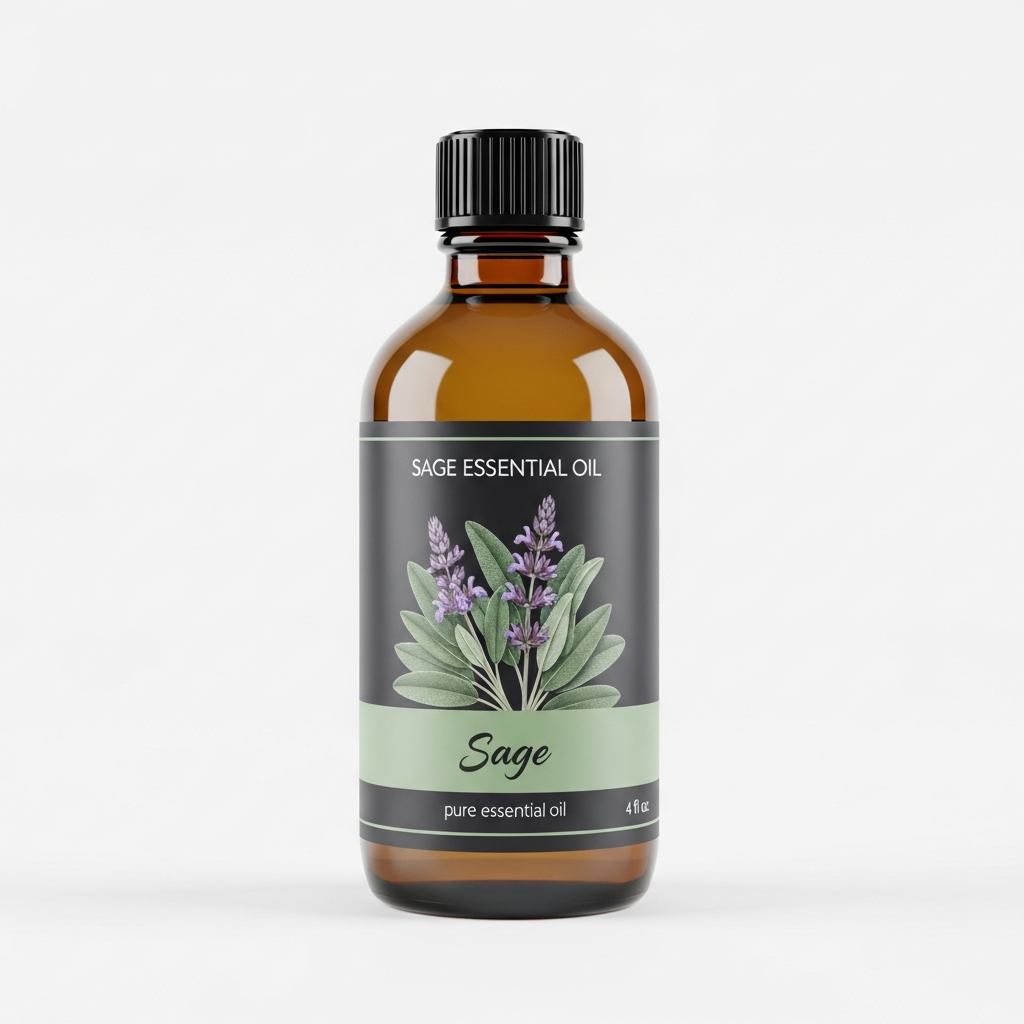
This deep dive walks through the chemistry behind the scent, what researchers have observed about its key compounds, how to assess quality by nose and by certificate, and what safety considerations anyone working with this oil should keep front of mind. For a broader orientation to the oil itself, the complete beginner's guide to sage essential oil is a useful companion read.
The Scent, Described
Perfumers and aromatherapists reach for a cluster of descriptors when characterizing sage oil: herbaceous, camphorous, earthy, slightly spicy, and faintly woody on the dry-down. There is a medicinal edge to the top note that reads almost like eucalyptus to some noses, though the two oils are chemically distinct. That edge softens as the more resinous, balsamic undertones emerge.
The herbaceous category in perfumery covers oils that smell recognizably plant-like and green without leaning toward citrus or floral registers. Sage sits near lavender, rosemary, and clary sage on that spectrum, though it is considerably more assertive than any of them. Where lavender is gentle and blending-friendly, garden sage pushes forward. It tends to anchor a blend rather than disappear into it.
Clary sage (Salvia sclarea) deserves a clear distinction here. It is softer, sweeter, and almost nutty. Garden sage (Salvia officinalis), the subject of this article, is drier and more austere. They share a name and a genus but smell notably different.
Chemical Composition: Where the Scent Comes From
Essential oil scent is not a single molecule. It is a ratio. The perceived character of any oil shifts depending on which compounds are present in what proportions, and those proportions change with geography, harvest timing, and distillation method. With garden sage, a handful of compounds consistently dominate.
Alpha- and Beta-Thujone
Thujone is the compound most strongly associated with sage's camphorous, green sharpness. In most analyzed samples of Salvia officinalis oil, thujone (combining both alpha and beta isomers) accounts for anywhere from 18 to over 60 percent of total composition depending on chemotype and origin. That wide range matters: it is one reason sage oils from different sources can smell noticeably different from one another.
Thujone is also the compound that defines sage's safety profile. More on that below.
1,8-Cineole
Also called eucalyptol, 1,8-cineole is what lends sage its fresh, slightly penetrating top note. It is the dominant compound in eucalyptus oil, which is why some people detect that association when they first smell sage. In sage, it typically appears in the 5 to 15 percent range. It rounds out the camphorous quality without overpowering the herbal character.
Camphor
Camphor contributes to the cool, slightly medicinal impression in the top notes. Research suggests it is a key driver of the "sharp" quality that many people notice on first contact with the oil. It usually appears at lower concentrations than thujone or cineole, often in the 5 to 20 percent range, but its olfactory impact is disproportionately high.
Borneol and Bornyl Acetate
These two related compounds add the earthy, woody dimension that emerges in the mid-notes and dry-down. Borneol has a damp, forest-floor quality. Bornyl acetate is slightly sweeter and more resinous. Together they soften the harsher top note and give the oil some depth and staying power in a blend.
Beta-Pinene and Other Minor Terpenes
Various monoterpene hydrocarbons, including beta-pinene and camphene, appear in smaller percentages and add woody, piney nuance. They also influence how quickly the oil evaporates, since lighter terpenes tend to top-note quickly and dissipate.
What Research Observations Tell Us About These Compounds
The chemistry of Salvia officinalis has attracted considerable scientific attention. A few observations from the published literature are worth noting, with the important caveat that these are research observations, not established conclusions about how the oil performs in everyday use.
Some studies have examined how thujone interacts with neurological systems at various concentrations, which has helped inform safety guidance around internal use and high-dose exposure. Research suggests that the ratio of alpha-thujone to beta-thujone varies by plant origin and that this ratio may influence the overall sensory character as well as the compound's activity profile.
Several aroma research studies have explored how 1,8-cineole-rich environments influence attentional states in human subjects. Sage's meaningful cineole content places it in the same general category as rosemary and eucalyptus, both of which have been examined in similar contexts. These observations are preliminary and should not be read as confirmed effects.
Borneol has been studied for its role in scent blending, with some research noting that it functions as a middle-note anchor in complex fragrance compositions. This aligns with what experienced formulators observe in practice: sage oil holds a blend together and keeps top notes from smelling thin.
Herbaceous Essential Oils as a Scent Category
Understanding sage oil's scent is easier when you place it within the broader herbaceous category. This group includes rosemary, thyme, marjoram, basil, hyssop, and clary sage, among others. What unites them is their green, leafy character and the prominent presence of terpenoid compounds derived from the aromatic herb family.
Within that group, sage is one of the more tenacious and assertive options. It has good staying power on a diffuser pad or in a blend, whereas some lighter herbaceous oils like basil dissipate relatively quickly. Sage also blends naturally with the citrus family (bergamot, lemon, grapefruit), coniferous oils (cedarwood, juniper), and florals (geranium, lavender), where it functions as an interesting contrast note.
In fragrance construction terms, sage oil is often used in the top-to-middle register. Its volatile terpenes lift off first and contribute the initial sharpness; the borneol and resinous components linger and integrate.
Sourcing and Quality Indicators
The scent of a high-quality sage oil should be immediately recognizable to anyone familiar with fresh sage leaves, but more concentrated and complex. If an oil smells flat, uniformly sharp without depth, or has a synthetic or solvent-like edge, those are signals worth investigating.
A few quality indicators to look for:
- GC/MS testing: A reputable supplier will provide a gas chromatography/mass spectrometry report for each batch. This shows the percentage composition of key compounds and confirms the oil is Salvia officinalis and not an adulterated or substituted product.
- Botanical transparency: Look for suppliers who list the country of origin, the plant part used (aerial parts, leaves), and the distillation method. For how steam distillation shapes the final oil, the article on how sage oil is made covers the process in detail.
- Chemotype disclosure: Some suppliers specify whether their oil comes from Dalmatian sage (grown in the Balkan region, typically higher thujone) or other cultivated varieties. Thujone content can vary dramatically, and that variation directly affects both scent intensity and safety thresholds.
- Color and clarity: Sage oil is typically colorless to pale yellow. A green tint may indicate adulteration with another oil or plant extract.
- Packaging: Dark glass bottles, tight seals, and cold-storage options are signs that a supplier understands oxidation management. Oxidized sage oil loses its top-note brightness and can become more irritating to skin.
Safety Profile and Contraindications
Sage essential oil is one of the more safety-sensitive oils in common use, primarily because of its thujone content. Thujone is a neurotoxic compound at sufficient concentrations, and overexposure is a genuine concern with high-thujone sage oil. This does not make the oil dangerous in normal cosmetic or aromatic use, but it does mean that the standard essential oil cautions apply with particular importance here.
Dilution
For topical use, most professional aromatherapy guidelines suggest a maximum dilution of 0.4 to 1 percent in a finished product, which is considerably lower than many other essential oils. The International Fragrance Association (IFRA) and the Research Institute for Fragrance Materials (RIFM) have published guidelines on sage compounds that inform these recommendations. For a practical guide to dilution ratios and how to calculate them accurately, the article on how to dilute sage oil walks through the process step by step.
Populations to Approach with Caution
Sage essential oil is generally considered unsuitable for use around young children, and most professional guidance suggests avoiding it during pregnancy. Individuals who experience seizure activity should consult a qualified healthcare provider before using thujone-containing oils in any form. These are not rare edge cases; they are standard guidance from established aromatherapy bodies.
Patch Testing
Always conduct a patch test before applying any diluted sage oil product to larger skin areas. Apply a small amount of the properly diluted blend to the inner forearm, leave it for 24 hours, and check for redness or irritation before proceeding.
Diffusion
For diffusion, use sage oil in well-ventilated spaces and limit sessions to 30 to 60 minutes. Prolonged exposure to high concentrations in enclosed rooms is not recommended, particularly for the sensitive populations mentioned above.
Internal Use
This article focuses on cosmetic and aromatic applications. Questions about any form of internal use should be directed to a qualified healthcare provider, not addressed through essential oil sourcing guides.
Putting the Scent to Work
Knowing what sage oil smells like is one thing. Knowing how to deploy it is another. In aromatic use, sage works well in evening wind-down diffuser blends, where its grounding herbaceous character can anchor lighter or more volatile top notes. It pairs well with lavender (which softens its assertiveness), with bergamot (which adds brightness), and with cedarwood or sandalwood (which pull out its resinous undercurrent).
In skincare formulation, sage oil appears in cleansing products, toners, and hair care blends, typically at very low percentages. Its scent is distinctive enough that a little goes a long way. Formulators who want the aromatic character without the thujone load sometimes consider other sage species with different chemotypes, though that is a separate conversation for a separate article.
The scent of sage oil is not universally loved on first encounter. Some people find it too sharp, too medicinal, or too assertive. But for those who work with herbaceous essential oils regularly, it becomes one of the more useful tools in the collection: specific, honest, and surprisingly versatile once you understand what it brings to a blend.