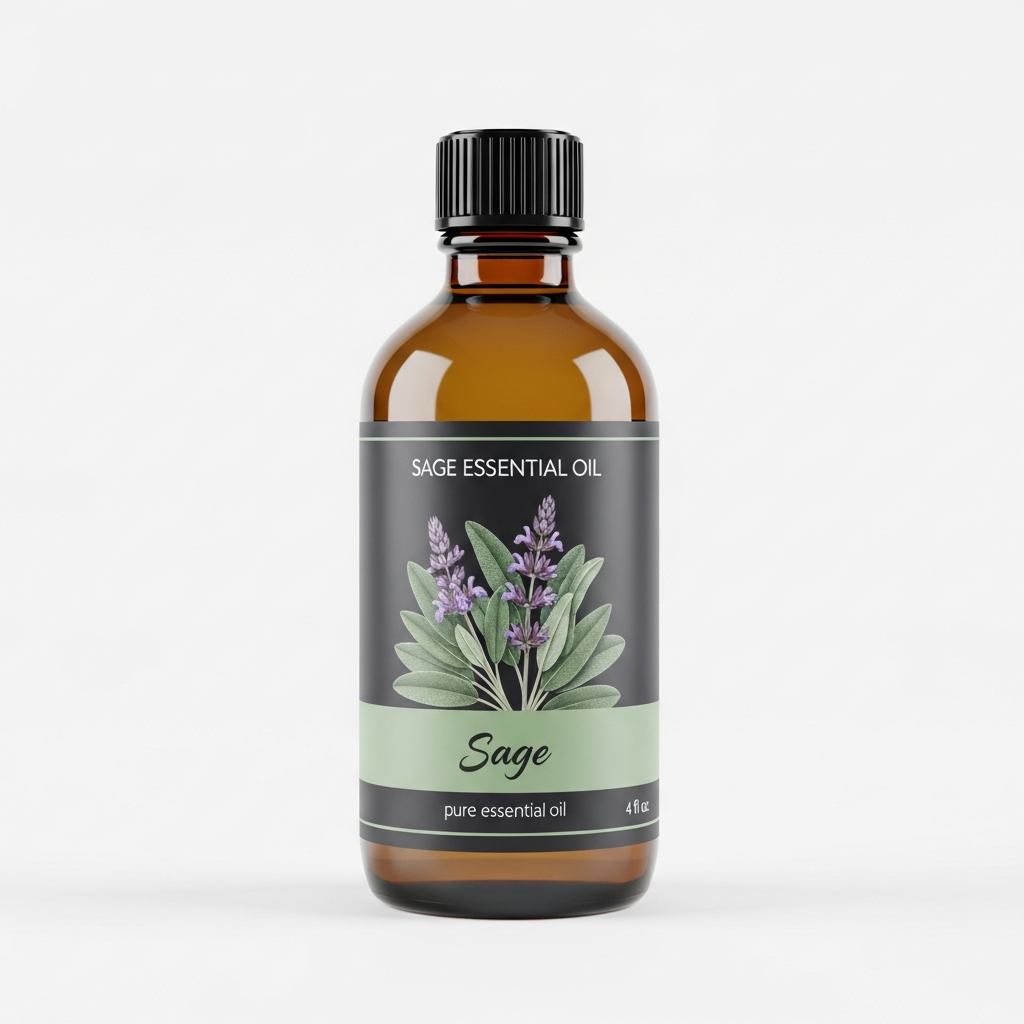
Candle and home fragrance brands buy this oil for a fresh, green, herb-garden note that sits apart from the usual lavender and rosemary lineup, and it blends cleanly into citrus and cedar accords. This page is part of our Guide to Buying Sage Essential Oil in Bulk.
Request current bulk pricing and order a sample size before your first production pour.
The aroma opens fresh and green with a peppery, camphor-tinged edge, which reads as unmistakably herbal rather than sweet or floral. That character holds up well in a diffuser blend, where a grounded, fresh-herbal profile is exactly what candle and diffuser brands are formulating toward.
It also pairs cleanly across a fragrance house's existing accords. Sage paired with citrus, cedar, and lavender gives a sense of how a single note extends a product line without forcing a full reformulation, and a soy-wax build using this oil is walked through directly in a sage and citrus candle tutorial.
Fragrance load in a poured candle or a reed diffuser base is a wax- and carrier-specific question, and it should be settled by burn-testing a small batch rather than copying a load ratio from another oil. What is consistent across the category is that a herbaceous top note like this one tends to read at a lower load than a heavy floral, since the aroma is sharp enough to carry at a modest concentration.
Run a cold-throw and hot-throw test on your own wax and wick combination before scaling. A load that reads well in a jar candle can read thin in a reed diffuser, and the reverse is just as common.
Early testing runs well on four-ounce and sixteen-ounce bottles; once a pour formula is locked, most candle and diffuser brands move to pound-tier ordering for production runs.
Sample sizes are available now; pound and drum pricing scales with your production run.