
Spanish Sage and Greek Sage: Lesser-Known Salvias Worth Smelling
Most conversations about sage essential oil begin and end with Salvia officinalis, the garden sage that has anchored European botanical traditions for centuries. That's a reasonable starting point, and if you want the full background on that species, the complete beginner's guide to sage essential oil covers it thoroughly. But the Salvia genus stretches across more than 900 species, and two of them deserve a much closer look: Spanish sage (Salvia lavandulifolia) and Greek sage (Salvia fruticosa, also called three-lobed sage). Both are distilled into essential oils with distinct chemical fingerprints, and both appear in published botanical research with enough frequency to warrant a serious, ingredient-level examination.
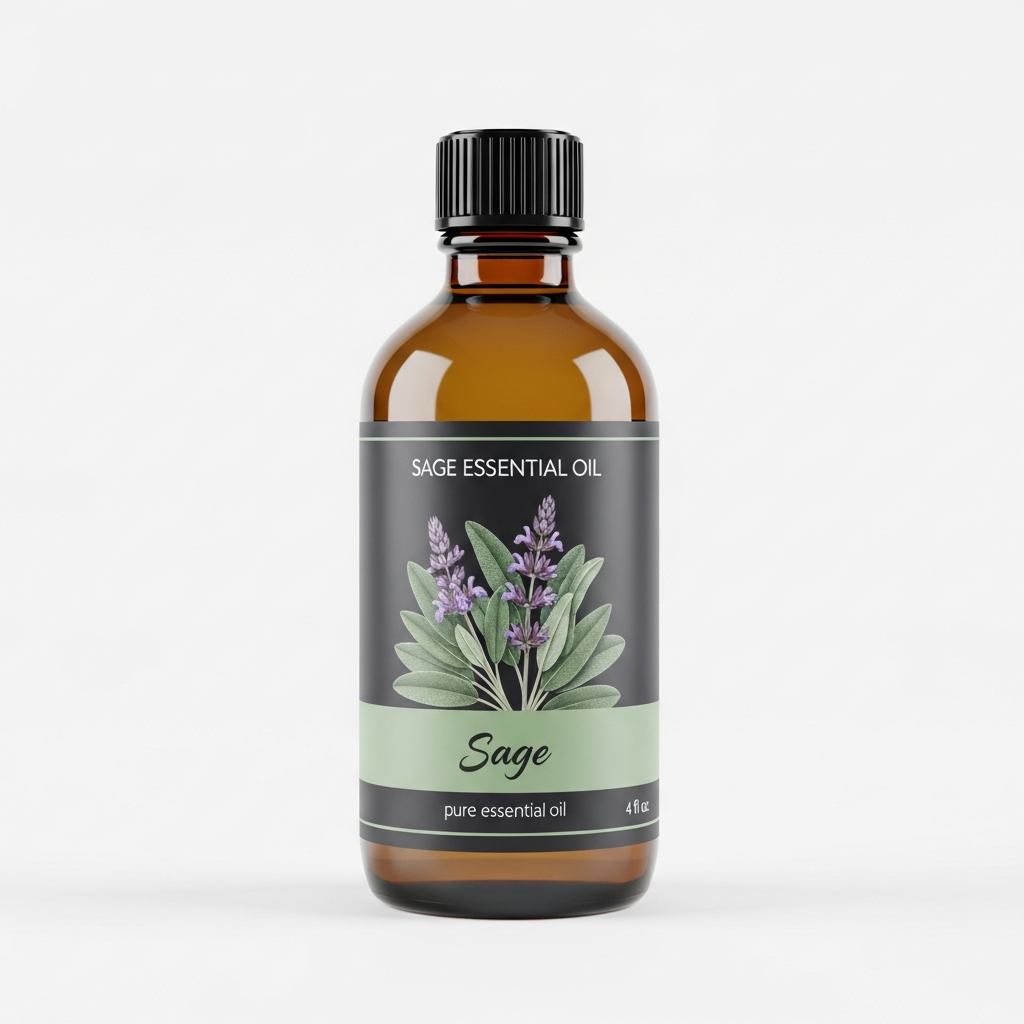
This deep dive is for formulators, curious buyers holding a spanish sage essential oil bottle and wondering what they actually have, and anyone who wants to move beyond surface-level aromatics into the compound-by-compound story.
Botanical Identity: Getting the Species Straight
Salvia lavandulifolia is native to the Iberian Peninsula, particularly Spain and the southern reaches of France. Its common name, Spanish sage, is fairly reliable, though you will occasionally see it sold under the synonym Salvia hispanica (not to be confused with chia). The species name lavandulifolia is descriptive: it means lavender-leaved, a nod to the narrow, slightly fuzzy foliage that distinguishes it from the broader leaves of garden sage.
Salvia fruticosa grows wild across the eastern Mediterranean basin, with Greece, Cyprus, and Turkey as its primary origins. It is the dominant wild sage in Greece and has been used in regional folk traditions for generations. The name fruticosa means shrubby, which fits: this is a woody perennial that can reach a meter in height under the right conditions.
Both species belong to the Lamiaceae family, sharing it with lavender, rosemary, and common thyme. That botanical kinship shows up clearly in their chemistry.
Chemical Composition: What the Gas Chromatograph Shows
Spanish Sage (Salvia lavandulifolia)
Spanish sage oil is dominated by monoterpene compounds, and the relative proportions of those compounds shift depending on geographic origin, harvest timing, and distillation method. Research published across multiple decades of phytochemical literature consistently identifies several key constituents.
- 1,8-Cineole (eucalyptol): Typically the most abundant compound, often ranging from 15 to 40 percent of the total composition. This is the same compound that gives eucalyptus and rosemary their sharp, penetrating character.
- Camphor: Present at variable levels, sometimes reaching 15 to 25 percent. Camphor is where Spanish sage diverges sharply from its garden cousin in safety profile (see below).
- Alpha-pinene and beta-pinene: These resinous, piney monoterpenes contribute to the fresh, slightly woody note in the oil and are commonly found in the 5 to 15 percent range.
- Linalool: A softer, floral compound shared with lavender. Its presence in Spanish sage is modest, usually under 10 percent, but it meaningfully rounds out the scent.
- Borneol and bornyl acetate: Earthy, herbaceous contributors that add depth and ground the sharper notes.
- Limonene and beta-myrcene: Minor constituents that add citrus and slightly green facets.
A critical point for formulators: Spanish sage contains little to no thujone, the compound responsible for much of the safety concern around Salvia officinalis. This difference is chemotypic, rooted in the species' genetics rather than growing conditions. It is one reason Spanish sage has attracted attention as a potentially more suitable botanical for certain cosmetic applications, though it should never be treated as interchangeable with Salvia officinalis without a full safety review.
Greek Sage (Salvia fruticosa)
Greek sage oil shares some chemical territory with Spanish sage but has its own distinct profile. Research published in journals including the Journal of Agricultural and Food Chemistry and Flavour and Fragrance Journal has characterized Salvia fruticosa from multiple collection sites across Greece and Cyprus.
- 1,8-Cineole: Again a dominant compound, sometimes exceeding 50 percent in some Greek populations, giving this oil a noticeably sharp, eucalyptus-forward character.
- Alpha-thujone and beta-thujone: Unlike Spanish sage, Salvia fruticosa can contain measurable thujone levels, though generally lower than Salvia officinalis. Specific percentages vary widely by chemotype and origin.
- Camphor: Present at moderate levels, typically lower than in Spanish sage.
- Alpha-pinene: A consistent contributor, often in the 5 to 12 percent range.
- Camphene: More prominent in Greek sage than in Spanish sage, adding a slightly sharp, fir-like nuance.
- Linalool and borneol: Minor contributors that soften the overall profile.
It is worth noting that Salvia fruticosa chemistry shows considerable intraspecific variation. Oils sourced from different Greek islands or mainland populations can differ meaningfully in cineole-to-thujone ratios, which reinforces the importance of reviewing a certificate of analysis (COA) for every batch.
Research Observations: What Published Studies Have Found
Research on both species has grown steadily since the 1990s, and while this body of literature is not large enough to draw sweeping conclusions, patterns do emerge.
Several in-vitro studies on Spanish sage oil and its isolated constituents have explored interactions with acetylcholinesterase, an enzyme with relevance to cognitive processes. Researchers have observed that certain compounds in Salvia lavandulifolia oil appear to interact with this enzyme in laboratory settings. These findings are preliminary, conducted largely outside living systems, and should not be interpreted as evidence that the oil affects human cognition in any direct way.
Studies on the aromatic and volatile profiles of Greek sage oil have noted its high cineole content and have characterized its sensory properties in comparison to other Mediterranean salvias. Some researchers have used Salvia fruticosa in comparative phytochemical work because its high cineole fraction makes it a useful reference point when studying eucalyptol-rich essential oils.
Olfactory research involving both Spanish and Greek sage suggests that their scent profiles, though broadly categorized as herbal, are perceived differently by trained panelists. Spanish sage tends to read as softer and slightly more floral due to its linalool content. Greek sage oil skews sharper and more medicinal-smelling (in a purely sensory sense) at higher cineole concentrations.
A useful framing from the research literature: these are botanically distinct oils with distinct chemistry, and findings from studies on one species should not be assumed to apply to the other.
Safety Profile and Contraindications
Both oils require respect, and neither should be used undiluted on the skin. Here is what the current safety literature indicates, framed as professional guidance rather than medical advice. Always consult a qualified healthcare provider before using any essential oil if you have existing health considerations.
Spanish Sage Safety
- Camphor content: The camphor levels in Spanish sage oil are a meaningful consideration. Camphor is a neurotoxic compound at sufficient doses, and oils with significant camphor percentages should be kept well away from the face of infants and young children.
- Cineole and respiratory sensitivity: High cineole oils should not be applied near the faces of young children. Undiluted application is not appropriate.
- Pregnancy and nursing: Spanish sage is generally not recommended during pregnancy. Consult a qualified healthcare provider before use.
- Epilepsy considerations: Camphor and some monoterpenes carry notes of concern for those with seizure-related conditions. A healthcare provider should be consulted.
- Recommended dilution: For cosmetic skin applications, a dilution of 0.5 to 1 percent in a carrier oil is a conservative and widely cited starting point. Patch test before broader application.
Greek Sage Safety
- Thujone variability: Because thujone levels vary by chemotype, batch-specific COA review is essential. Higher thujone batches carry greater caution requirements.
- Pregnancy and nursing: Not recommended during pregnancy, consistent with guidance for thujone-containing oils.
- Neurological sensitivity: As with Spanish sage, those with seizure-related histories should consult a healthcare provider before any use.
- Recommended dilution: Stay at or below 1 percent for skin applications. Patch testing is always advisable before incorporating a new oil into a formulation.
- Internal use: This article addresses cosmetic and aromatic use only. Neither oil is discussed here in any internal context.
For anyone newer to these species, the broader conversation about how sage oils differ from the dried culinary herb is worth reading separately. The sage oil versus dried sage comparison explains why concentration and chemistry make an extracted oil a fundamentally different ingredient than what you shake over a roasting pan.
Sourcing and Quality Indicators
Buying a spanish sage essential oil bottle without a COA is a bit like buying a wine without a vintage year. The label tells you a category, not a character. Here is what to look for when evaluating sourcing quality for either species.
Botanical Verification
Reputable suppliers list the Latin binomial on the label or product description, not just the common name. "Spanish sage" alone could, in rare cases, refer to other regional or tradename usages. Salvia lavandulifolia and Salvia fruticosa are the species-level names to verify. Some suppliers also list the chemotype, which is especially valuable for Greek sage given its intraspecific variability.
Certificate of Analysis
A gas chromatography/mass spectrometry (GC/MS) report should be available upon request and ideally batch-specific. For Spanish sage, look for cineole as the dominant peak, with camphor noted and thujone ideally near zero or absent. For Greek sage, confirm cineole dominance and review thujone levels relative to your formulation needs.
Country of Origin
Spanish sage should originate from Spain or, less commonly, southern France. Greek sage should trace to Greece, Cyprus, or Turkey. Mismatched origins are not automatically disqualifying (cultivation can shift), but they are worth questioning.
Distillation Method
Steam distillation is standard for both species. Solvent-extracted versions exist for some botanical applications, but for aromatic and cosmetic use, steam-distilled is the appropriate specification.
Organic and Wildcrafted Designations
Both species are sometimes wildcrafted from their native Mediterranean habitats. When evaluating wildcrafted greek sage oil, ask whether the supplier can confirm sustainable harvest practices. Overharvesting of wild Mediterranean sage populations is a genuine ecological concern, and responsible sourcing matters.
If you are interested in deepening your relationship with these plants beyond the bottle, it is worth knowing that some Salvia species can be grown in moderate climates. The guide to growing sage at home covers which varieties adapt well to container cultivation, though Salvia lavandulifolia specifically tends to prefer drier, Mediterranean-style conditions.
Scent Profiles for Formulators
Spanish sage reads as herbal and camphoraceous with a softer, almost floral undercurrent. It blends well with lavender, rosemary, juniper berry, and cedarwood. In perfumery, it sits comfortably in the aromatic fougere family and adds lift to green herbal compositions without the sharper edge of Salvia officinalis.
Greek sage is more assertive, leaning into its eucalyptus-like cineole character. It blends well with peppermint, cypress, and bergamot. In diffuser blends intended for focused, clear-headed morning routines, it contributes a brisk, clean note that pairs well with citrus top notes.
Both oils are interesting in small proportions within candle and room spray formulations, where their volatility and herbal sharpness can anchor a blend without overwhelming it.
A Note on Label Literacy
The essential oil market is enthusiastic but not always precise. "Sage oil" on a product label could refer to Salvia officinalis, Salvia lavandulifolia, Salvia fruticosa, or in some cases clary sage (Salvia sclarea), which is a different species with a distinctly different chemistry and scent. Checking the Latin name is not pedantry. It is the minimum verification needed to know what you are actually working with.
Spanish sage and Greek sage are genuinely worthwhile materials for anyone who works seriously with botanical aromatics. Their distinct chemical profiles, regional identities, and nuanced scent characters make them more than substitutes for common sage. They are interesting in their own right, and the published phytochemical research, though still growing, already gives formulators and curious buyers a meaningful foundation to work from.