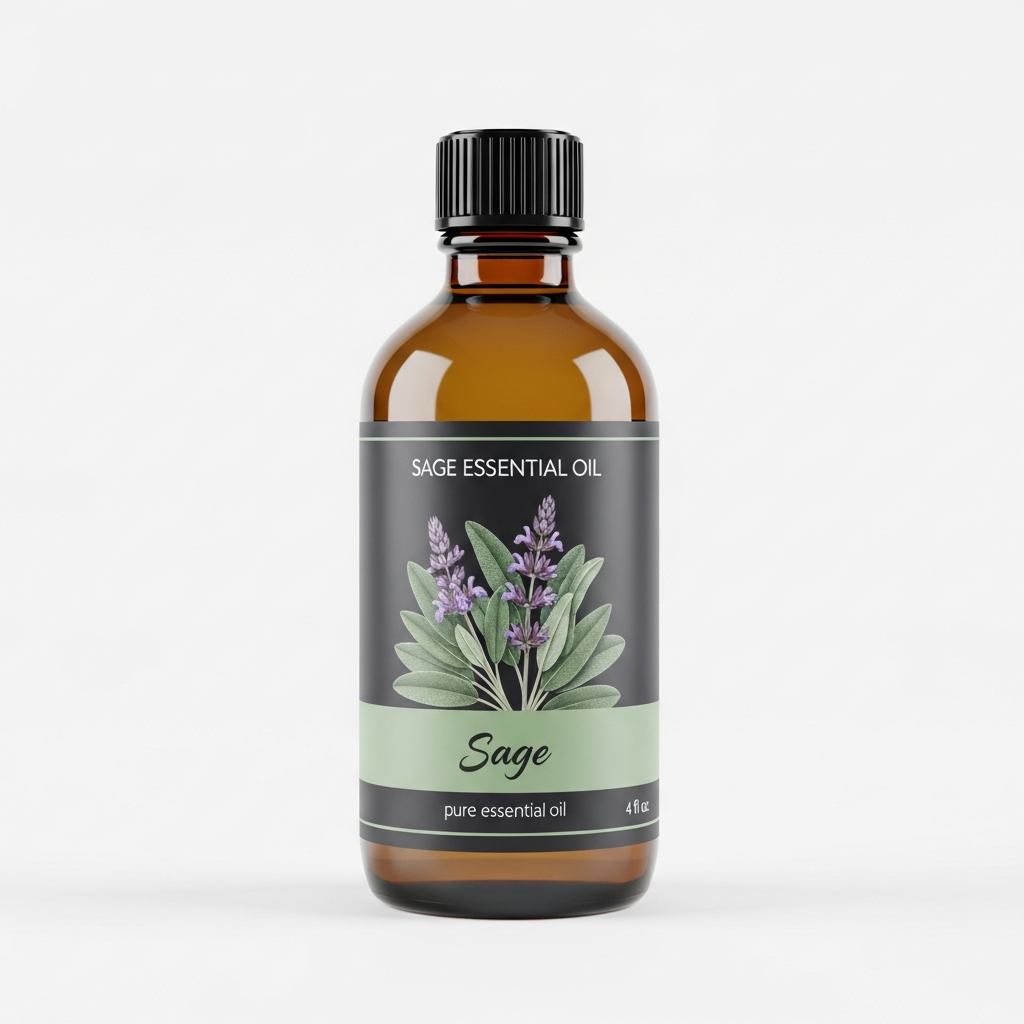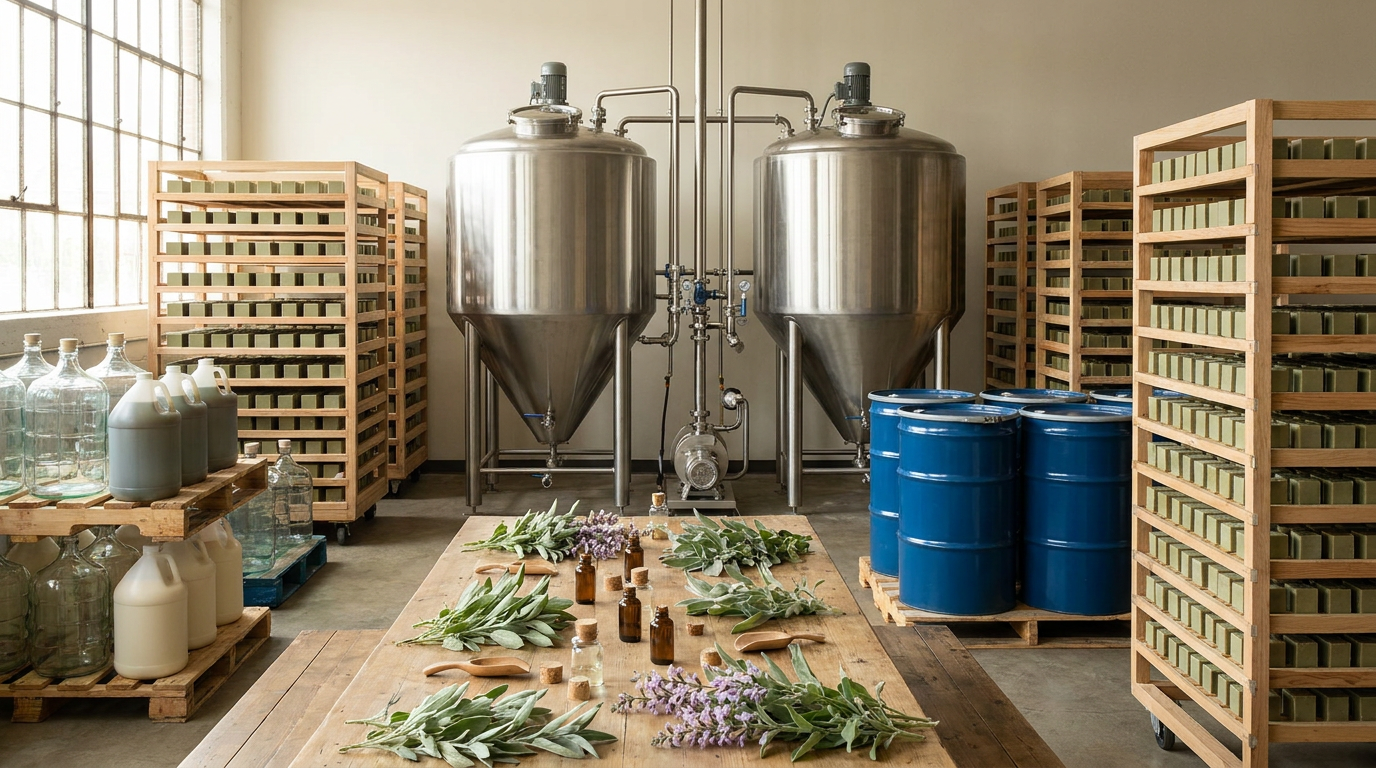
Soap makers reach for this oil when a bar needs to read as an herb-garden product rather than a floral or fruit one, and it holds its character well through both cold-process and melt-and-pour methods. This page is part of our Guide to Buying Sage Essential Oil in Bulk.
Order a sample size and confirm scent behavior through a full hardening period before scaling to production volume.
A melt-and-pour build using this oil is walked through in a herbal melt-and-pour soap project, which shows how the aroma sits on skin-facing bars once the bars have set.
On the skin side, fresh herbal notes in cleansing products covers how the oil reads once diluted into a finished cleansing bar, keeping the story cosmetic and sensory rather than suggesting any change to the skin itself.
Cold-process soap runs through an alkaline saponification step that can shift a fragrance note as the bars harden and rest, and a herbaceous oil like this one generally holds its top note better than a citrus does, though it should still be tested in the actual base rather than assumed.
Test a small batch through the full saponification, hardening, and rest period before locking a fragrance load into a production formula. Scent behavior at pour rarely matches scent behavior once the bars have fully hardened.
Bench batches run comfortably on sixteen-ounce bottles; full production runs typically move to pound and drum sizing.
From a sixteen-ounce test batch to a four-hundred-pound drum, sizing scales with your production run.