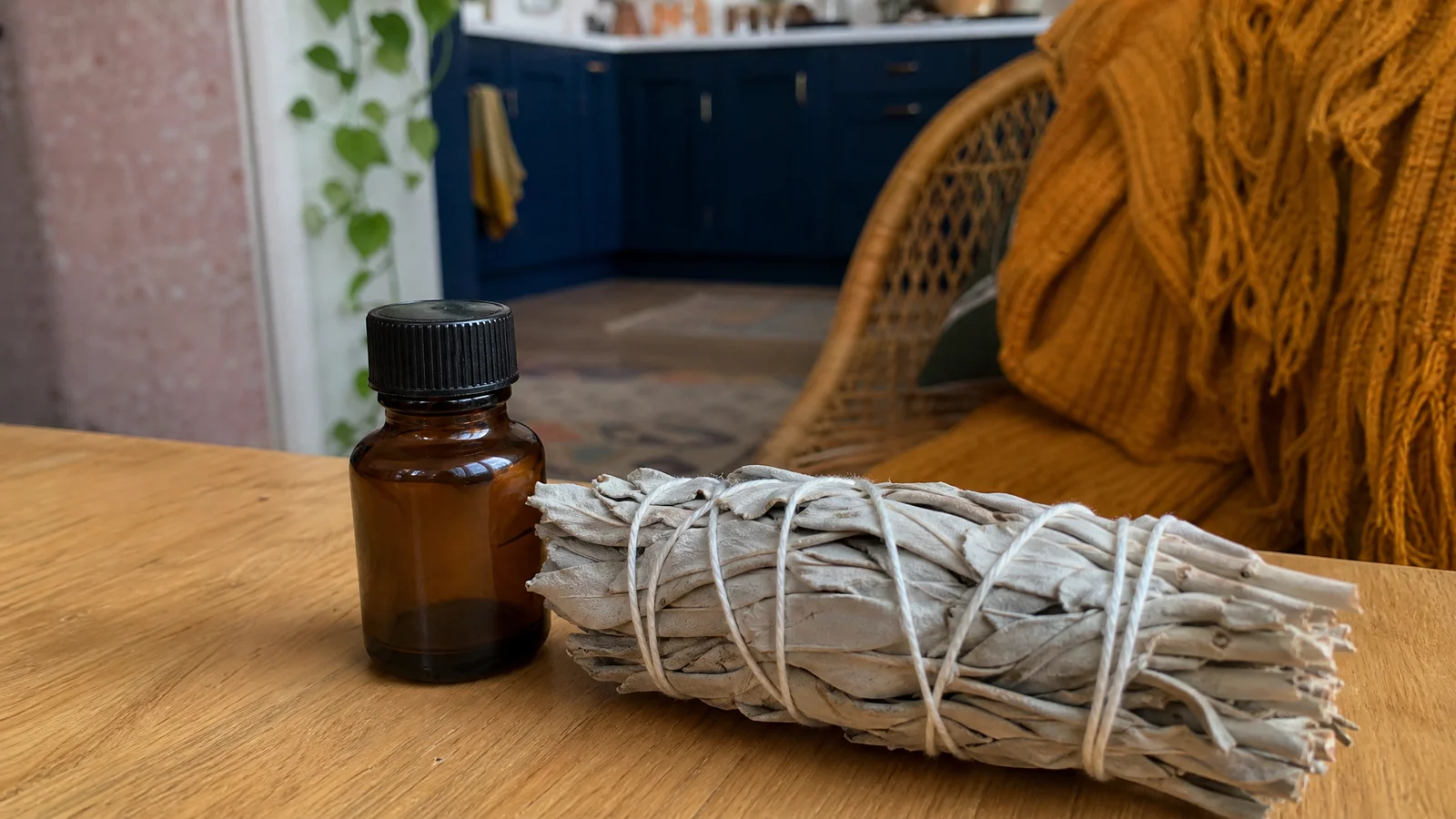
Garden Sage Oil or White Sage? How They Differ
A garden sage oil and a white sage smudge bundle can share a shelf and a word, but they are different plants, made in different ways, with very different histories. Garden sage oil is steam-distilled from Salvia officinalis and carries a lot of thujone. White sage, Salvia apiana, is a California native, and the dried plant belongs to ceremonial practices of the peoples who developed them. We sell only the first, as an oil, and we make no suggestion that it stands in for the second.
Two plants, not one with two names
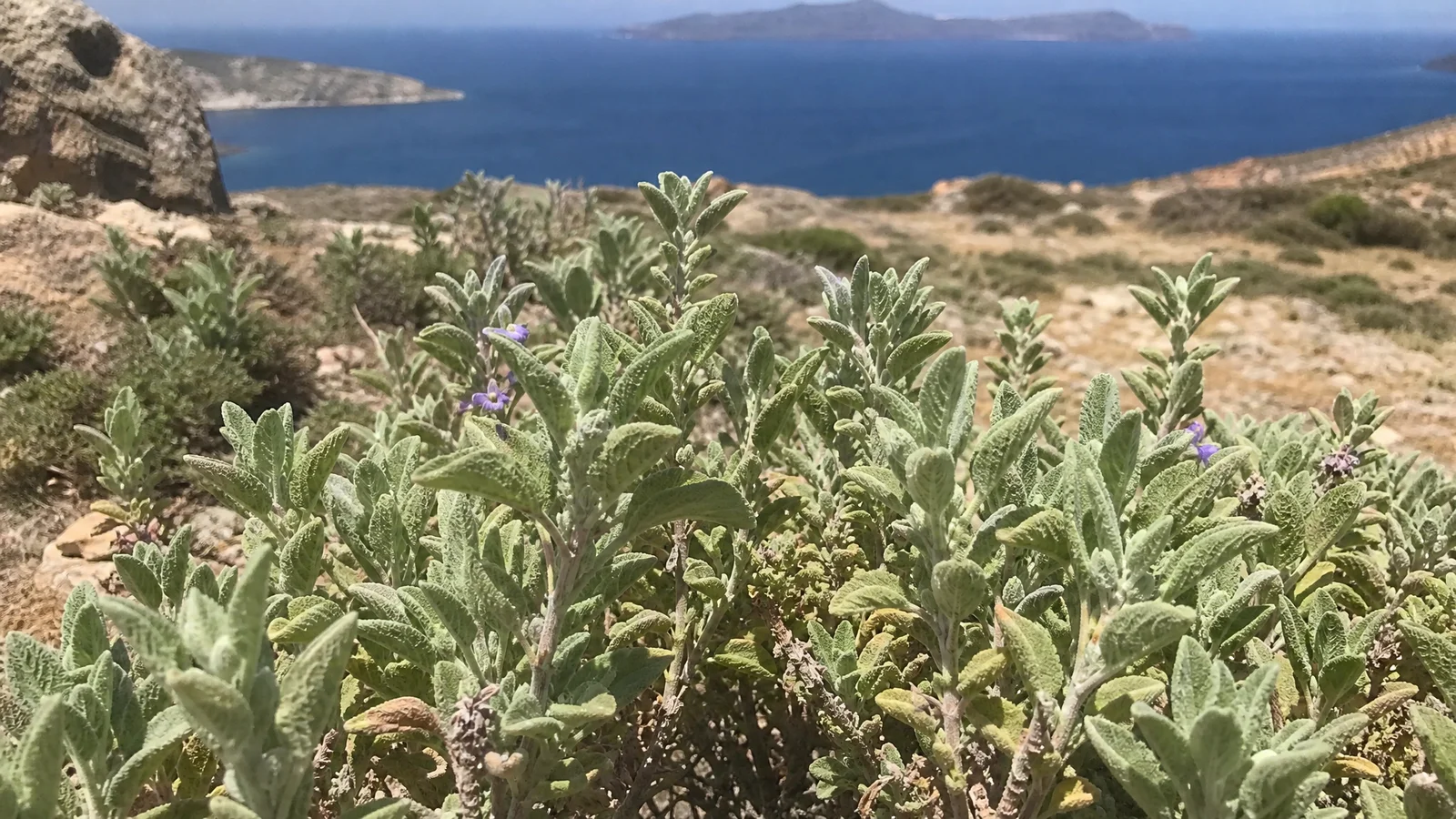
Researchers who study white sage describe it as an endemic species of the chaparral, with a range limited to the California Floristic Province, and note that the Chumash people have long used it as a medicinal and ritual plant (Krol et al.). Garden sage is a Mediterranean shrub: the European Medicines Agency describes it as a perennial subshrub native to the Mediterranean region, especially around the Adriatic Sea (EMA/HMPC). They share a genus and not much else a shopper can see on a label. The Certificate of Analysis we publish for one batch names Salvia officinalis, and a product sold only as "sage" leaves the plant open.
What the two oils are made of
The distilled oils differ in the compound that matters most for handling. EFSA characterised five batches of a garden sage oil with alpha-thujone near 25%, beta-thujone near 5.6%, camphor near 19% and 1,8-cineole near 11% (EFSA FEEDAP). White sage oil, in the study by Krol and colleagues, was mostly 1,8-cineole, beta-pinene, alpha-pinene, myrcene and camphor, and the authors write that "thujone has never been reported as a component of white sage essential oil". Their work was mainly on plants grown in bioreactor cultures rather than the commercial oil trade, so treat it as a description of composition, not of what any bottle contains.
The practical reading is modest. Lacking thujone does not make any oil fit to swallow, apply neat or diffuse around children and pets; it only means thujone is not the reason for care. We found no regulatory safety assessment of white sage oil, so we give no dilution or use guidance for it. If you are considering one, ask the seller for the Latin name, plant part and a gas chromatography report, and ask a certified aromatherapist about dilution. Our species guide lists the label checks.
An oil is distilled, a smudge is the plant
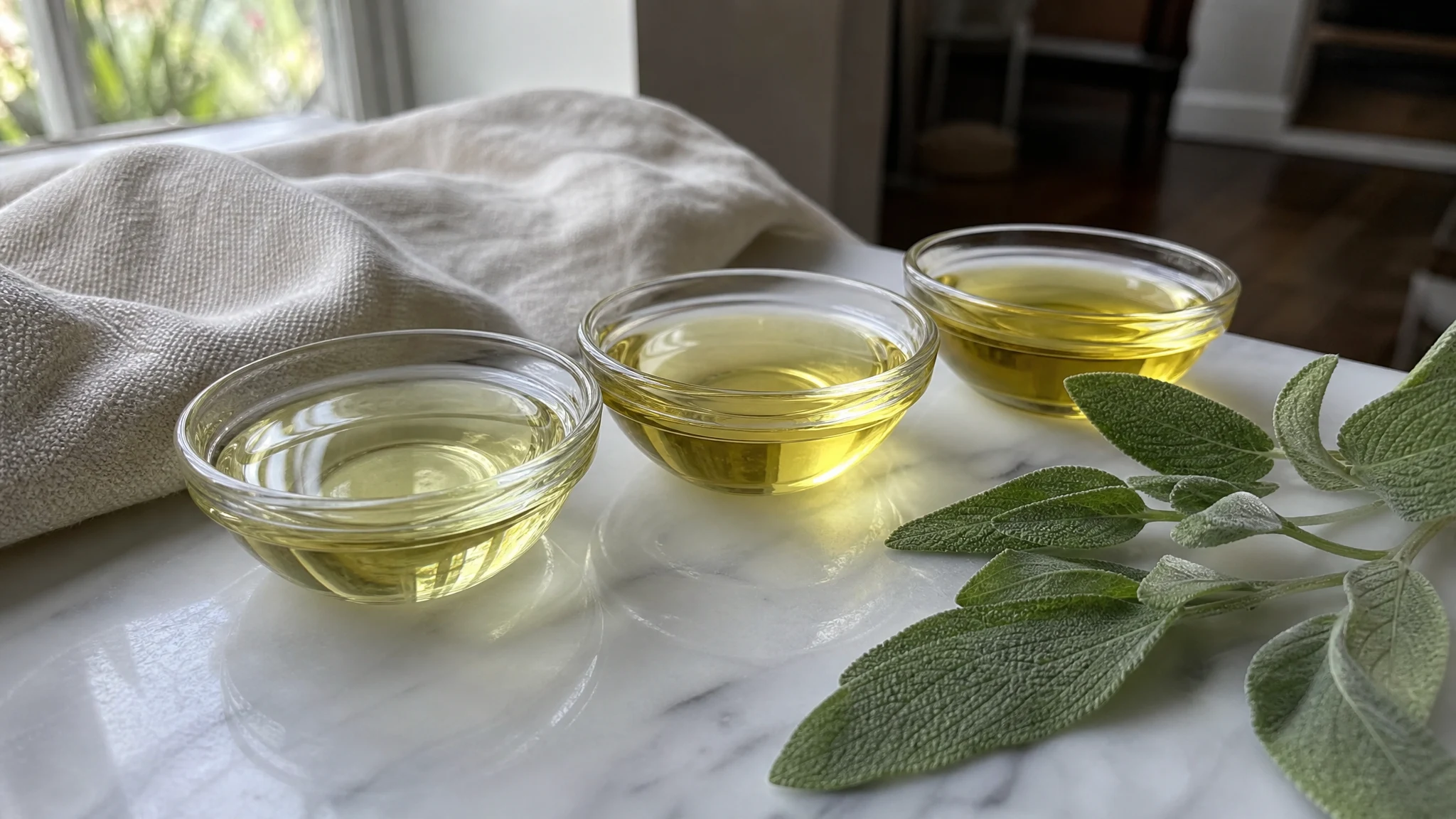
This is the point most comparisons blur. A smudge bundle is dried plant material, tied and burned. Sage oil is the volatile fraction separated by steam distillation: steam passes through the leaf, and the oil separates as it condenses. They are different products, not stronger and weaker versions of one thing. We found no study comparing the smoke of a bundle with the vapour of a distilled oil, and we are not going to guess at one. We do not sell smoke products, and we do not claim our oil cleanses a space, spiritually or physically.
The people whose practice it is
Journalist Taylar Dawn Stagner's 2020 report in High Country News is the clearest first-hand account of the white sage trade we could find. It reports that the Gabrielino-Tongva have a relationship with white sage that goes back about 7,000 years, and that to the Tongva the plant is not a commodity but a member of the family. Tongva illustrator Weshoyot Alvitre says she holds a firm stance that medicinal plants are "not to be sold: period". Susan Leopold of United Plant Savers, a nonprofit that lists California white sage as threatened, says: "There are no commercial permits for selling white sage." The article also notes that in 2018 the Rancho Cucamonga Police Department confiscated 400 pounds of illegally harvested white sage (Stagner).
That is one magazine report, and the voices in it do not all agree on what a good answer looks like. What the piece makes clear is that this is a living practice with owners, and a plant under real harvesting pressure.
So our position is plain and limited. If your interest is ceremony, the people best placed to say how to take part, and whether to buy anything at all, are the communities whose practice it is, not an oil company. If you do buy white sage, ask where it was grown and treat a vague sustainability line with some scepticism.
How the two look and smell
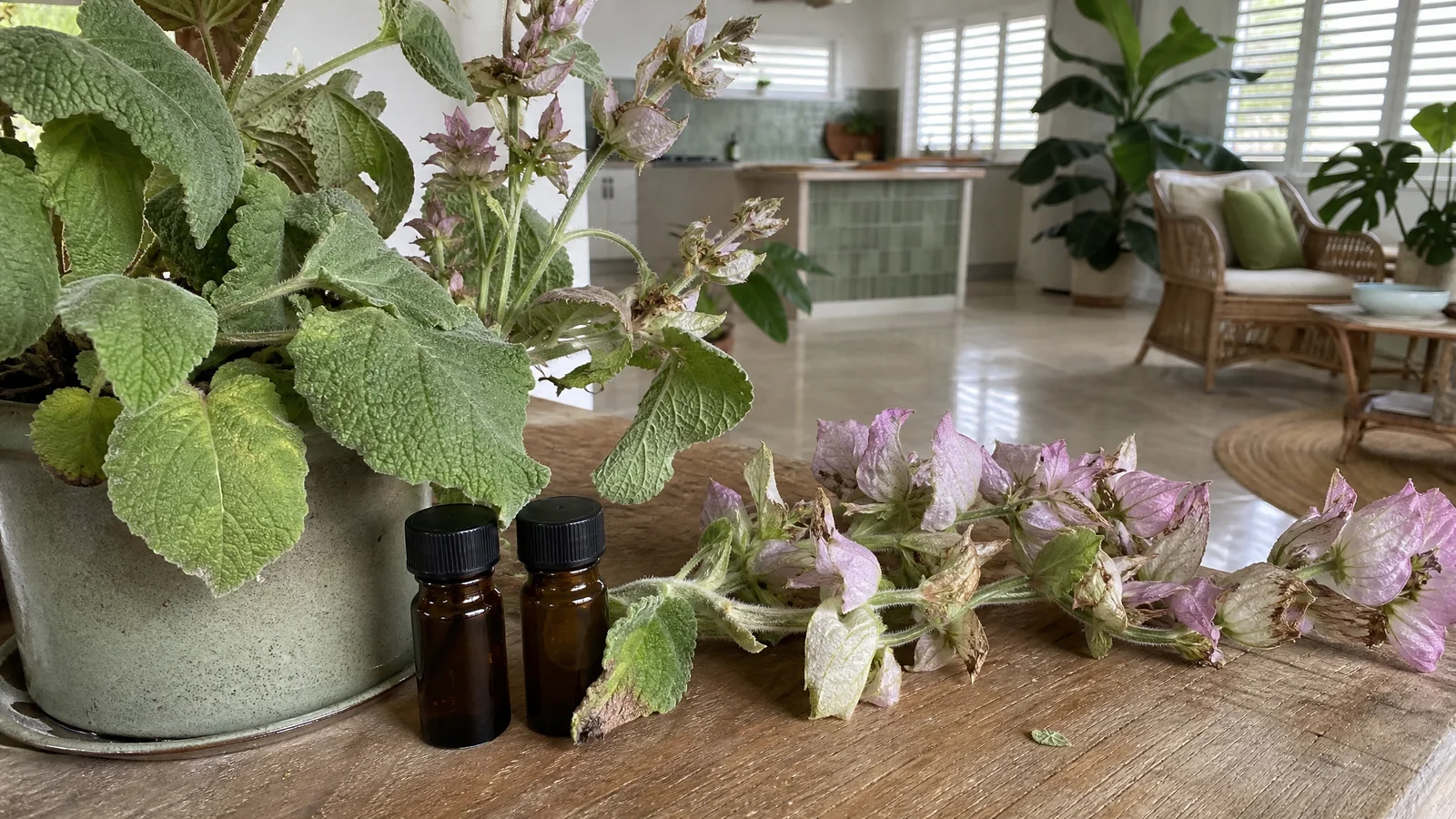
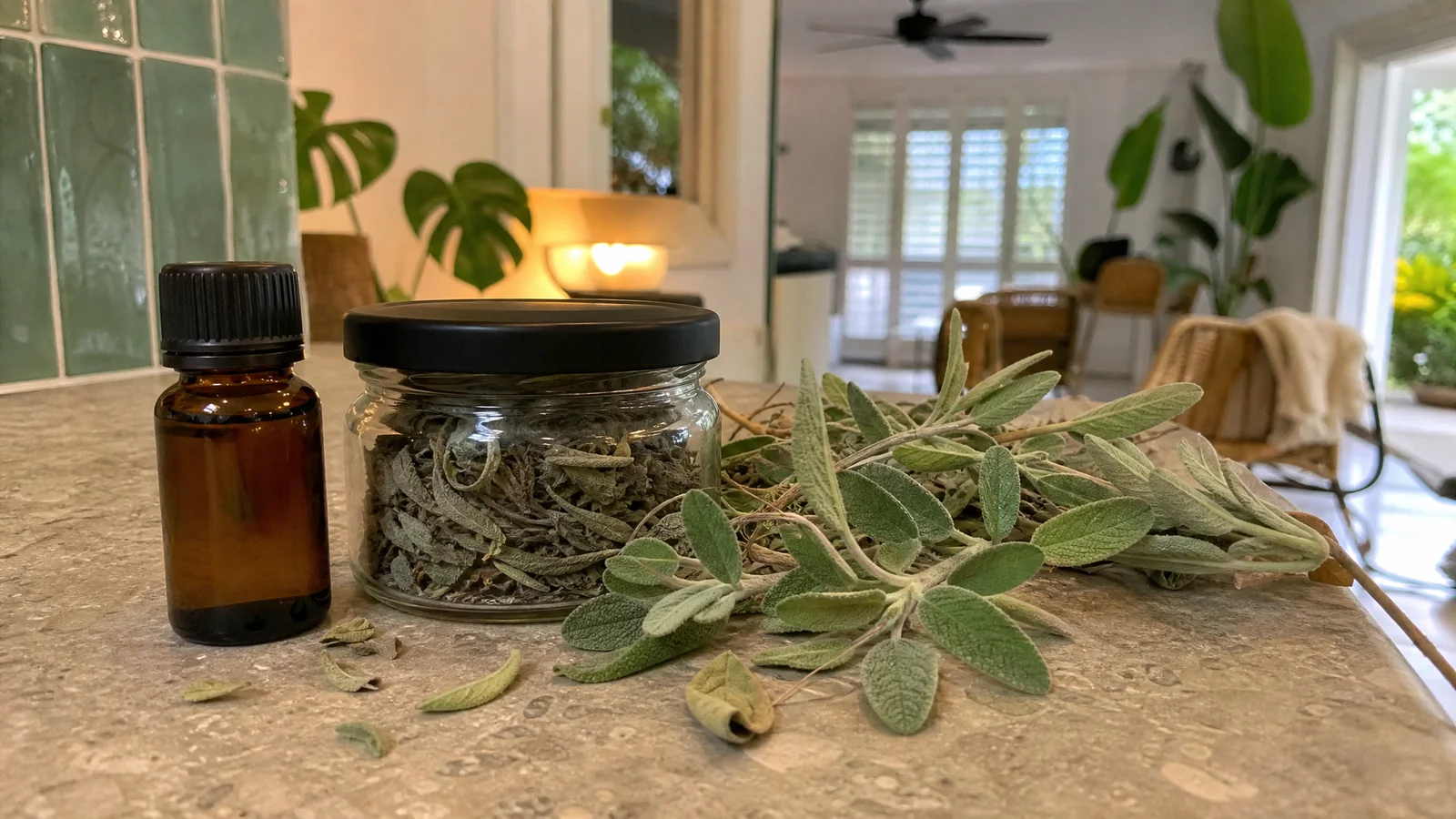
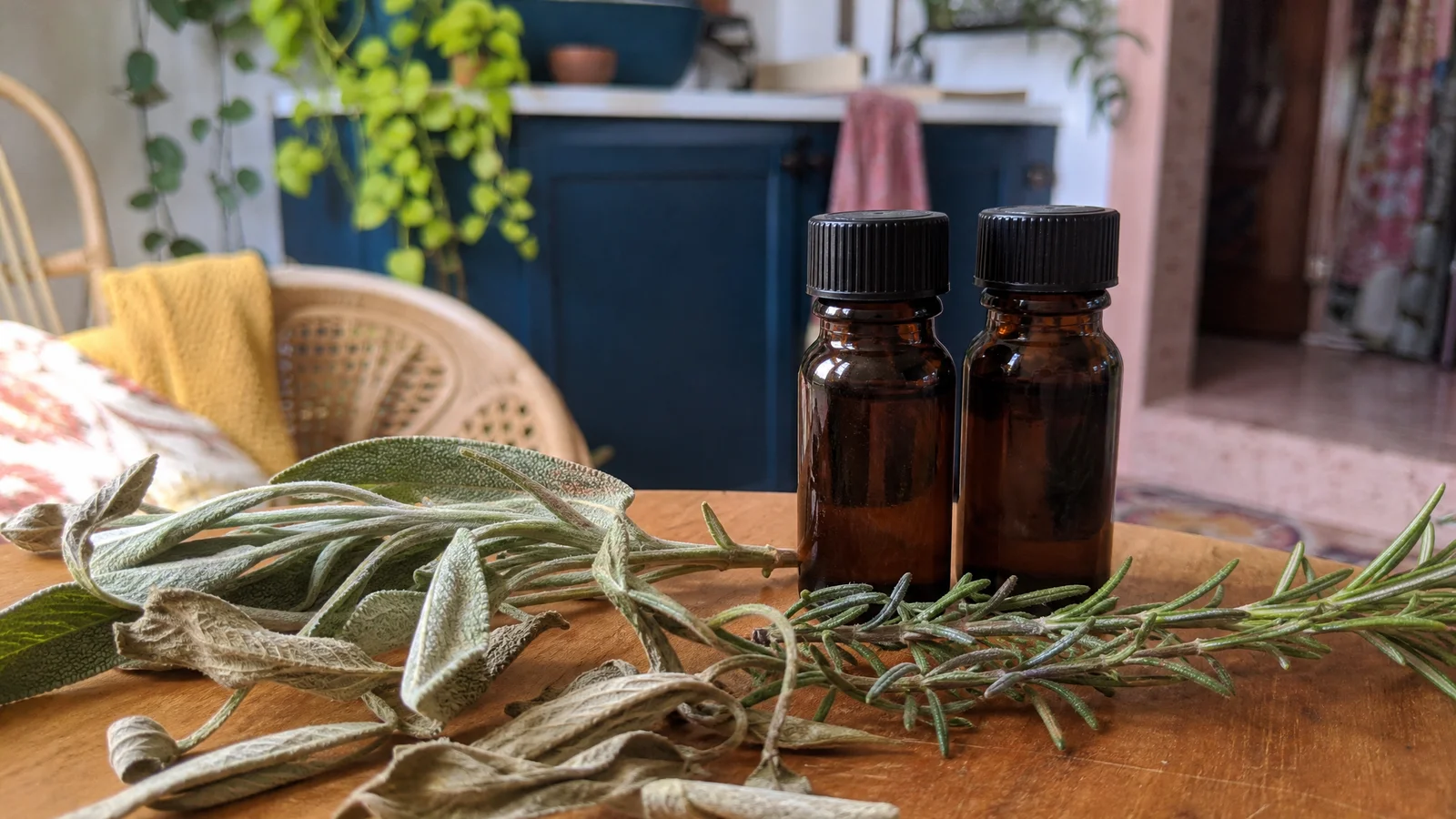
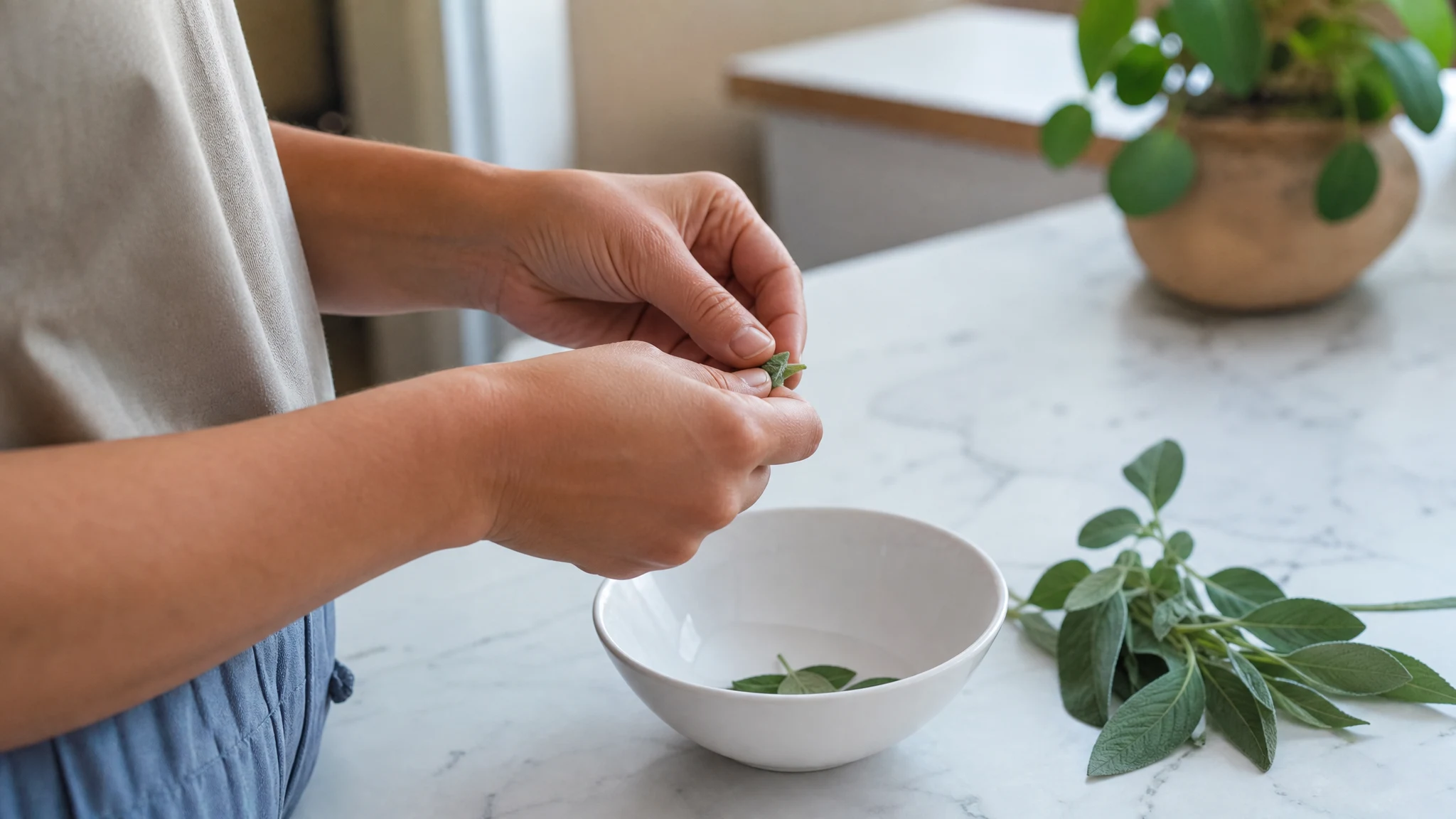
Seen side by side, the plants are easy to tell apart. Garden sage has soft, grey-green, slightly wrinkled leaves and the familiar kitchen-herb scent. White sage has pale, silvery leaves that look almost frosted, and a stronger, more resinous aroma that many people recognise as smoke before they ever see the plant. The names overlap, but the experience of each is different from the first sniff.
If you came here wanting the smell of a smouldering bundle, our oil will not give you that. It smells of the garden herb: dry, green and camphor-edged. We would rather tell you that now than have you open a bottle and feel let down.
A short way to decide
- You want the smell of sage in a room. Garden sage oil, used with a light hand in a diffuser, works for households with no one pregnant, no young children, no one prone to seizures and no pets sharing the space. Our reasoning is in our diffuser article. The herb itself is another option.
- You want to take part in a smudging ceremony. Speak to the community whose practice it is. No oil substitutes for that, and we do not offer one as a substitute.
- You want a white sage oil. Look for a Latin name, plant part, origin and a gas chromatography report. We do not sell it.
- You want to know if our oil is the same as either. It is neither. The certificate names Salvia officinalis; our GC-MS article explains what it does and does not cover.
Garden sage oil has its own place: dry, green and camphor-edged, and best enjoyed on its own terms.
Sage Essential Oil
Sage Essential Oil from our own shop, in sizes from 0.5 oz to bulk.
From $13.99
Shop Now →Sources & Further Reading
- Krol A et al., 2023, Evaluation of the yield, chemical composition and biological properties of essential oil from bioreactor-grown cultures of Salvia apiana microshoots, Scientific Reports
- Stagner TD, 2020, Sage advice, High Country News
- EFSA FEEDAP Panel, 2024, Safety and efficacy of a feed additive consisting of an essential oil derived from the leaves of Salvia officinalis L. (sage oil) for use in all animal species (FEFANA asbl)
- EMA/HMPC, 2016, Assessment report on Salvia officinalis L., folium and Salvia officinalis L., aetheroleum