Can You Swallow Sage Oil? Why Herb and Oil Differ
Sage lives in the spice rack, so it is fair to wonder whether the oil is just the same thing turned up. It is not. The oil is the concentrated aromatic fraction of the leaf, and our sage oils are sold for external, aroma and body-oil use, never for swallowing. Here is why the herb and the oil sit so far apart, and what to do if a bottle ever gets into the wrong hands.
What the food listing covers
Federal food regulations include sage among essential oils generally recognized as safe for their intended use: Salvia officinalis L., along with Greek sage, Spanish sage and clary sage (21 CFR 182.20, Essential oils, oleoresins (solvent-free), and natural extractives (including distillates)). The words that matter are "intended use". That entry is about sage as a food flavoring, made and labeled as food, at flavoring amounts. It says nothing about a bottle sold as an aroma oil, about drops, or about what anyone swallows in a day. We sell no food-grade sage oil, and our Certificate of Analysis, which covers one batch, says nothing about food use.
One drop is a lot of leaf
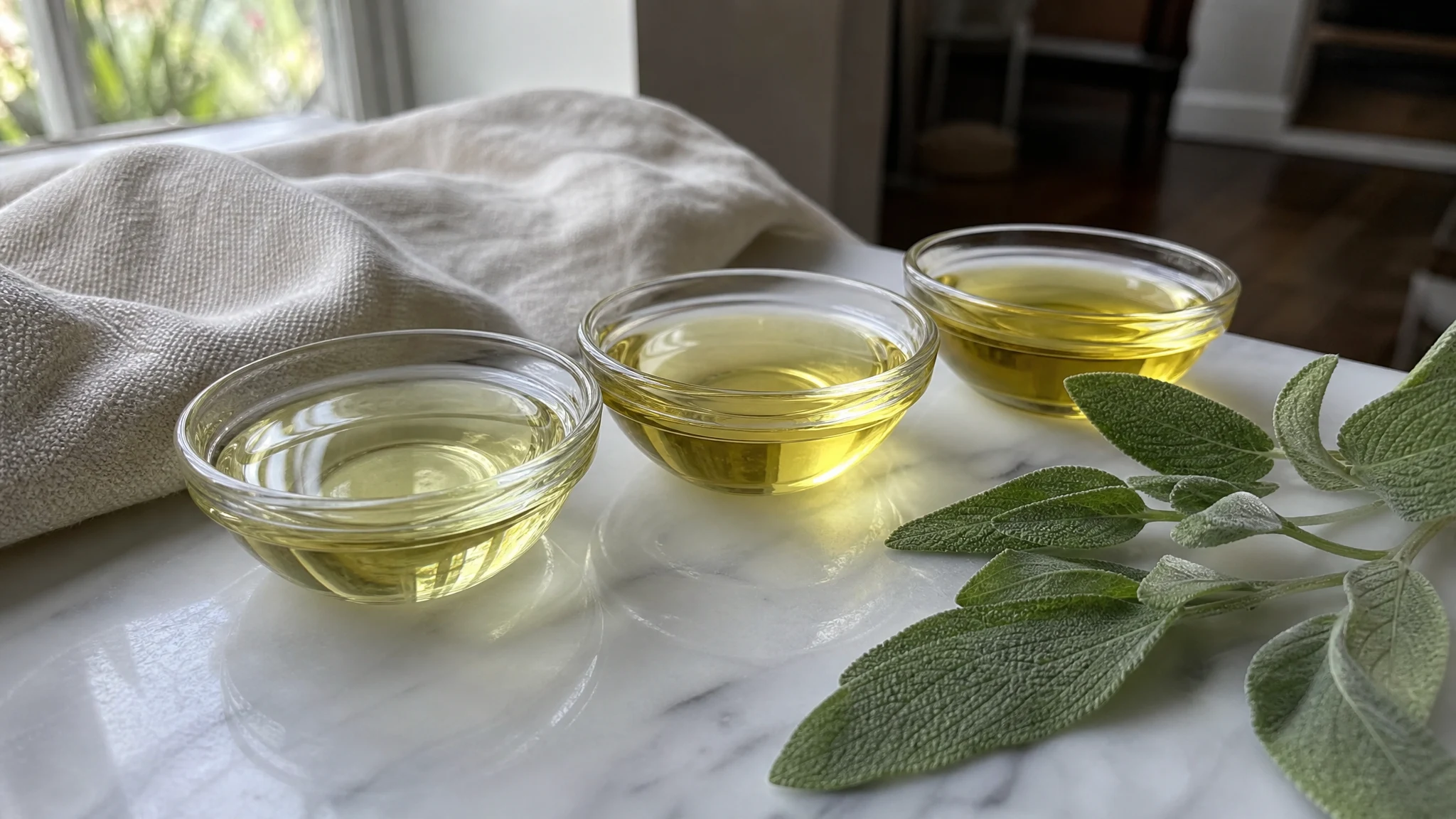
This is the part that surprises people. The European Medicines Agency's assessment report notes that the European Pharmacopoeia requires whole sage leaf to contain at least 12 mL of essential oil per kilogram, which works out to roughly 83 g of leaf for every mL of oil (Assessment report on Salvia officinalis L., folium and Salvia officinalis L., aetheroleum). A drop is about 0.05 mL, so by our arithmetic one drop of oil stands for the volatile part of around 4 g of leaf, taken all at once and without the rest of the plant to dilute it.
Sage oil is also rich in thujone. EFSA's 2024 opinion on a sage oil measured about 30.6% alpha and beta thujone together (EFSA feed additive opinion on sage oil, 2024). At our certificate's density of 0.915, one drop weighs about 46 mg, so by our arithmetic it carries something like 13 to 15 mg of thujone. The EMA's limit for sage leaf preparations is 6.0 mg of thujone per person per day, for no more than two weeks, and its public statement says that consuming sage oil as a single-ingredient product involves a high risk of exceeding that limit and that thujone is toxic and may cause seizures at high doses (Public statement on Salvia officinalis L., aetheroleum). The 6.0 mg limit is for leaf preparations, not oil, so we offer the sum for scale and not as a threshold. We do not know the thujone content of our own oil, since our certificate has no figure for it.
What has happened to people who swallowed it
The medical literature has real cases. A 2011 report described a newborn and a toddler who had generalized tonic-clonic seizures after accidental exposure to sage oil, and both recovered (Toxicity of Salvia officinalis in a newborn and a child: an alarming report). The National Capital Poison Center names sage oil specifically, saying that swallowing more than a very small amount has caused seizures in children (Essential oils: Poisonous when misused). The National Center for Complementary and Integrative Health makes a quieter point about the herb itself: sage is likely safe in the amounts found in food, may be unsafe in high doses or when taken for long periods, and its thujone can be toxic in large amounts (Sage: Usefulness and Safety). That page is about the herb and does not discuss the oil.
Where the herb shines
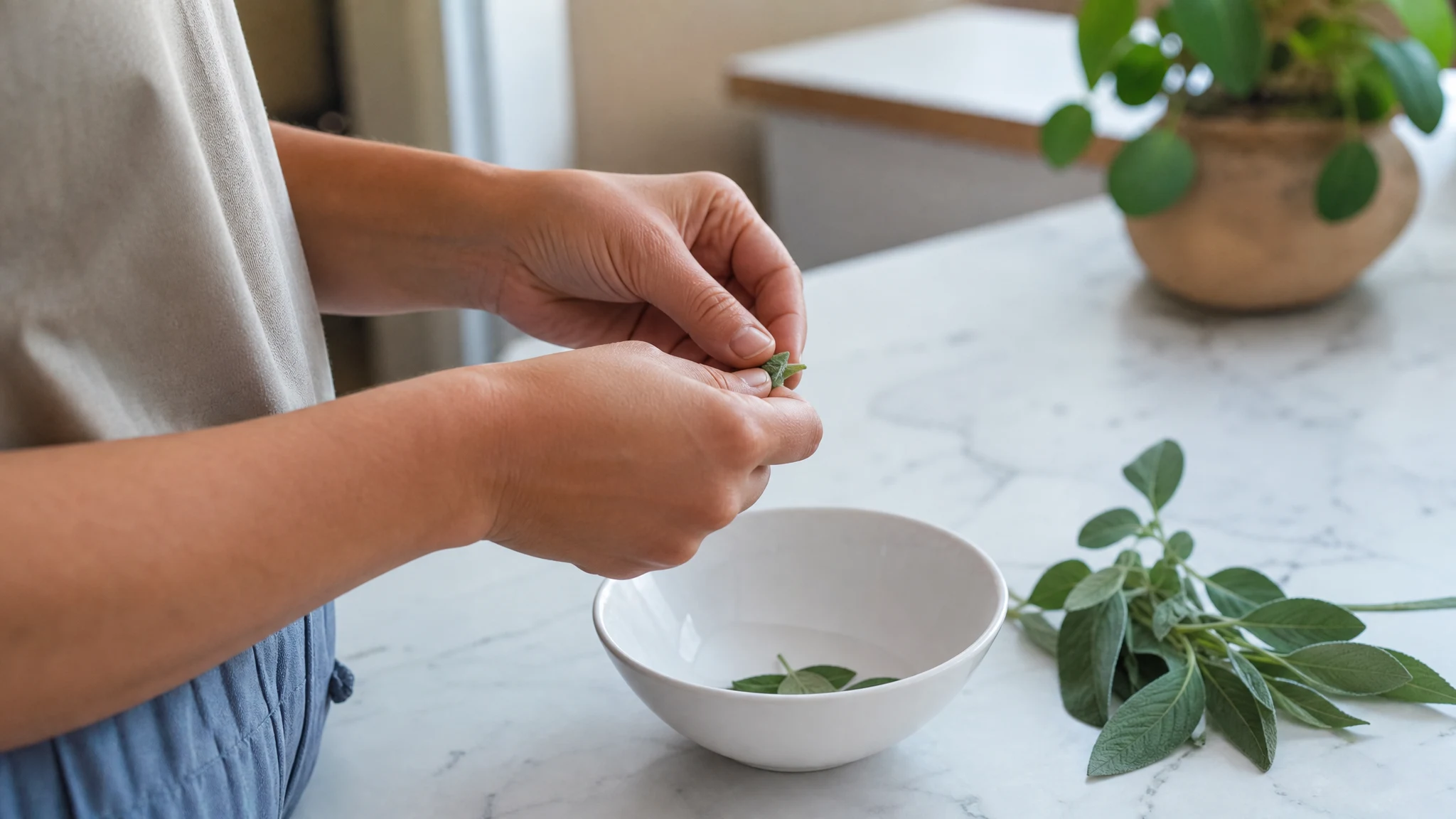
None of this is a case against sage in the kitchen. A handful of whole leaves fried briefly in butter until they crisp is one of the best things you can do to a plate of pasta or roast squash, and a bundle tucked into the cavity of a chicken perfumes the whole dish. Rub a leaf between your fingers first and you will smell exactly what the oil is made of, only gentle, with the rest of the leaf softening it. That softness is the point. Cooking uses the whole leaf, a pinch at a time, and nothing in a recipe was ever written around a bottle of oil.
Keeping the bottle where it belongs
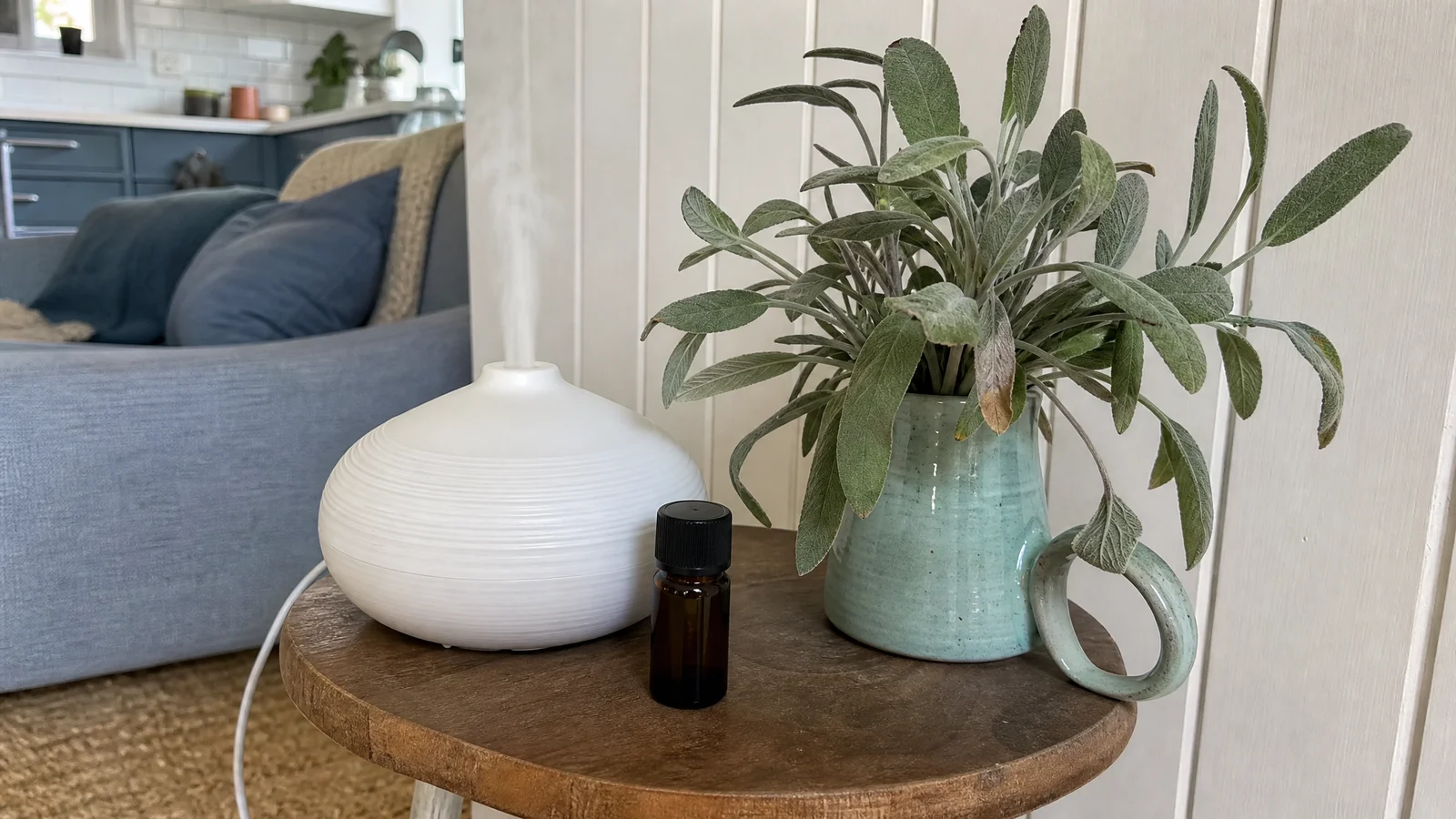
It is easy to forget that a small bottle can hold a great deal of leaf. A few habits help it stay out of trouble:
- Keep it on a high shelf or in a locked box, away from the spice rack, so it is never mistaken for a kitchen ingredient.
- Leave the original label on. If you decant any into another container, label that too, in full.
- Cap it as soon as you have finished with it, and wipe the neck so nothing is left on the outside of the bottle.
What we would do instead
If you love sage in cooking, use the herb from the grocery store and enjoy it. If you love sage oil, enjoy it where it belongs: as an aroma, diluted for the skin, handled with the light touch described in our dilution guide, and stored out of reach of children and pets. We recommend avoiding it during pregnancy and breastfeeding and with a seizure disorder, and our article on children covers the household side.
If anyone does swallow an essential oil, call Poison Help at 1-800-222-1222 or use the poison center's online tool, and call emergency services for a seizure, trouble breathing or unresponsiveness. For any health question about sage, a physician or pharmacist is the right person to ask. Our oils are external-use cosmetic products, and we make no claims about what they do inside the body.
Enjoy the herb in your cooking and the oil as an aroma, and let each do the job it suits.
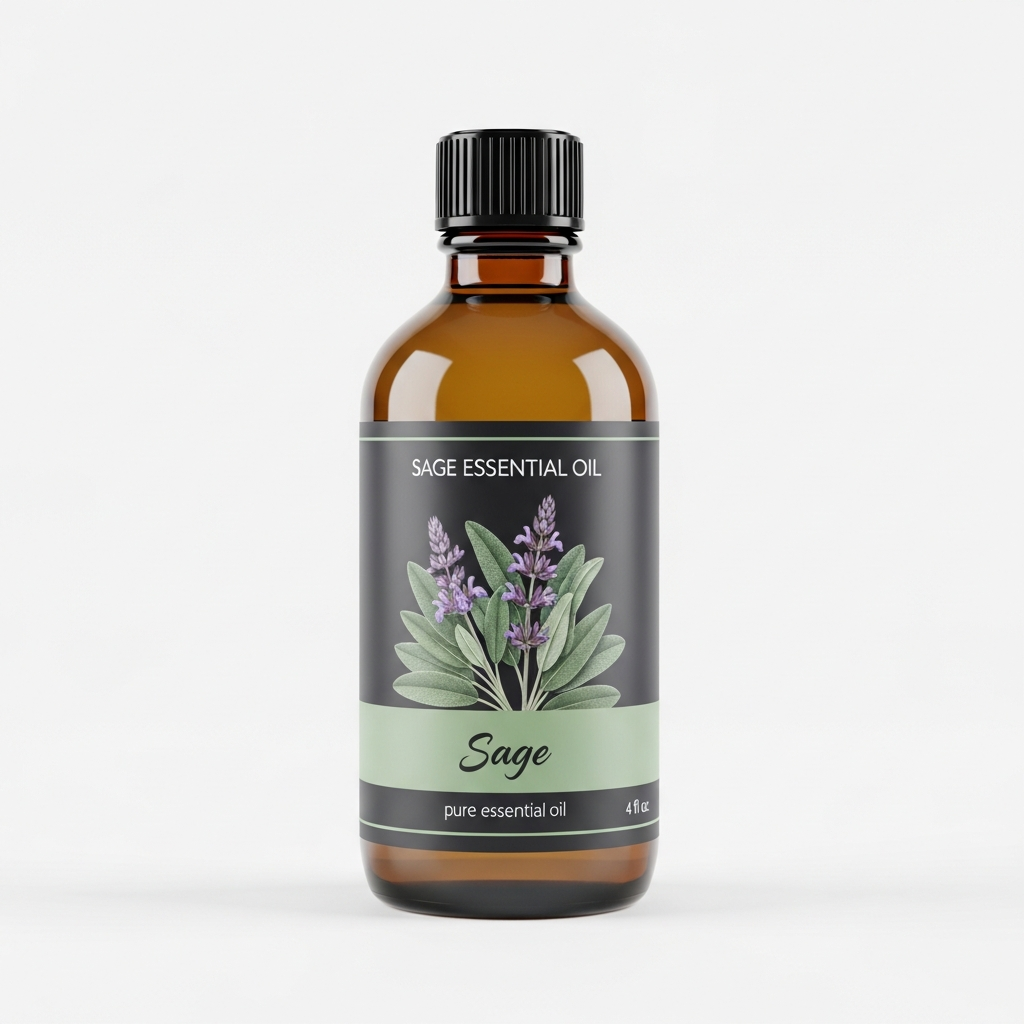
Sage Essential Oil
Sage Essential Oil from our own shop, in sizes from 0.5 oz to bulk.
From $13.99
Shop Now →Sources & Further Reading
- 21 CFR 182.20, Essential oils, oleoresins (solvent-free), and natural extractives (including distillates)
- European Medicines Agency, Assessment report on Salvia officinalis L., folium and Salvia officinalis L., aetheroleum (2016)
- European Medicines Agency, Public statement on Salvia officinalis L., aetheroleum
- Safety and efficacy of a feed additive consisting of an essential oil derived from the leaves of Salvia officinalis L. (sage oil) for use in all animal species (FEFANA asbl), EFSA Journal, 2024
- Halicioglu et al., Toxicity of Salvia officinalis in a newborn and a child: an alarming report (Pediatric Neurology, 2011)
- National Capital Poison Center, Essential oils: Poisonous when misused
- NCCIH, Sage: Usefulness and Safety