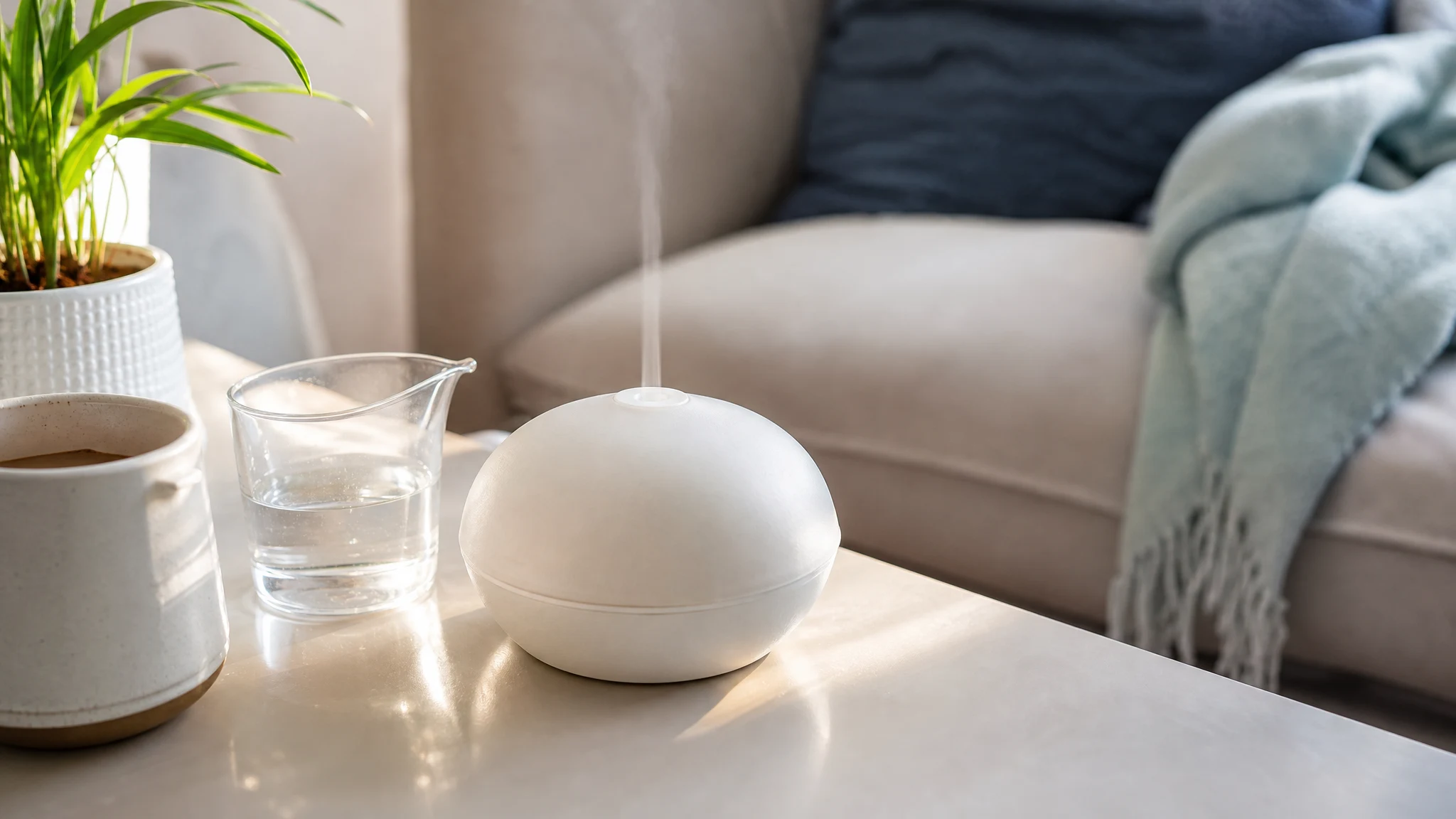
How Many Drops of Oil in a Diffuser?
Ask five people how many drops belong in a diffuser and you will hear five numbers, which is a clue that the question has no single answer. The right amount depends on your machine's water tank, how long it runs and how strong the oil is, not on the size of the room. A good habit beats a magic number: start at the low end, run it on a schedule, and add a drop only if you cannot smell it after you have stepped away and come back.
The tank sets the dose, not the room
Ultrasonic diffusers hold a small reservoir of water, often 100 to 120 mL, and the drops you add are spread through that water. Because oil floats rather than dissolving, the sums are rough, but they give the order of magnitude. Two drops is about 0.1 mL, so in 100 mL of water that is around 0.1% oil by volume, and 10 drops in the same tank is five times that. Nebulizers have no water at all and use neat oil, so a drop count from an ultrasonic recipe does not transfer to them. Droppers vary as well; we use 0.05 mL per drop as a working figure. If you want to check yours, twenty drops of an oil with the density on our certificate (0.915) should weigh about 0.9 g.
The Tisserand Institute gives no drop count either. It says that very low levels of diffusion, so that the oil is barely noticeable, are fine anywhere for any length of time, and it defines intermittent diffusion as 30 to 60 minutes on, then 30 to 60 minutes off (Safety guidelines for diffusing essential oils at home). Your nose adapts quickly to a scent, so a room can smell fainter to you than it does to someone walking in. Stepping out and coming back is the fairest test.
What air measurements show
Research on what diffusers release is still young. A 2025 pilot simulation in a household setting used tea tree oil and compared an ultrasonic diffuser with a heat diffuser. Terpene levels from the ultrasonic unit stayed below the applicable exposure limits, while the heat diffuser produced levels about an order of magnitude higher, with some terpenes above long-term derived no-effect levels (Volatile organic compound and particle emissions from the use of tea tree oil in essential oil diffusers). That was one oil in one simulated home, so it does not tell you a number for sage. It does support two easy habits: ventilate, and do not run any diffuser around the clock.
Notice, then adjust
The best test of "enough" is your own nose, and the trick is to judge it the right way. Walk out of the room, spend a minute somewhere else, then step back in. If you catch the scent straight away, that is plenty; if you have to hunt for it, you might add a drop next time. Your nose gets used to a smell within minutes, so the person who has been sitting in the room is the worst judge of it. Ask someone who has just walked in.
Once you find a level you like, write it down. A sticky note on the diffuser with the date and the number of drops makes it easy to repeat, and easy to nudge up or down by one next time.
A lighter hand for sage
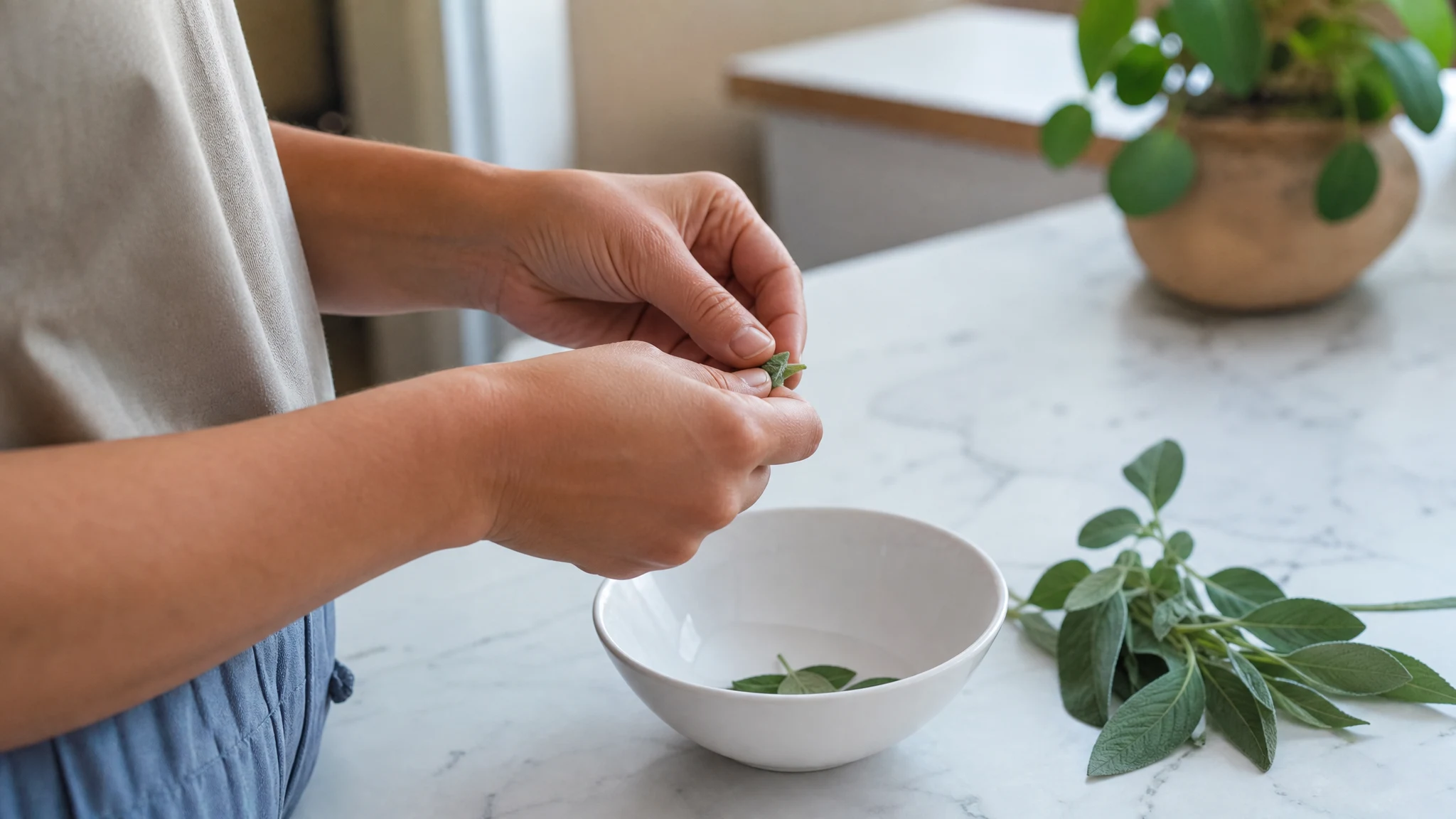
Sage oil is high in thujone and is not an oil for casual, generous use, and we say plainly that diffusing it needs a lighter hand than you would use with a mint or a citrus. Our suggestion, which is reasoning and not a measurement, is one or two drops in an ultrasonic unit holding about 100 to 120 mL, run intermittently. That is roughly 0.04% to 0.1% of the water by volume.
No category limit helps here, since IFRA's guidance puts aromatherapy applications outside the scope of its standards (Guidance for the Use of IFRA Standards), so a modest amount and good ventilation are the sensible guide. For scale, a single drop weighs about 46 mg at our certificate's density. EFSA's 2024 analysis of five sage oil batches found about 30.6% thujone in total (EFSA feed additive opinion on sage oil, 2024), which would mean roughly 14 mg of thujone per drop. Only part of what you add leaves the tank as mist, and no source we read converts that into an inhaled dose. Our certificate does not carry a thujone figure; if you want to plan around one, ask us in writing before ordering.
Who should skip sage in the diffuser
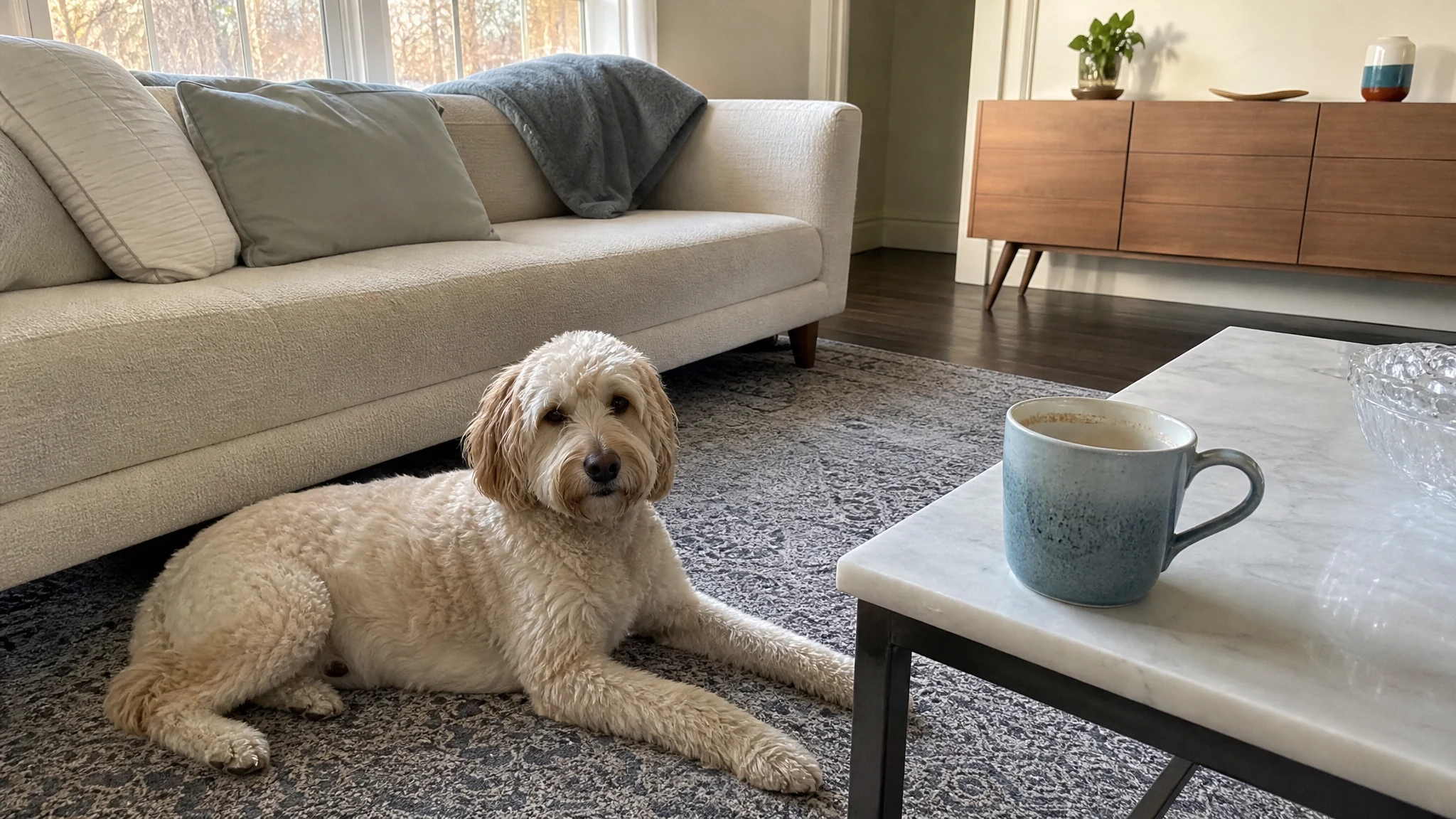
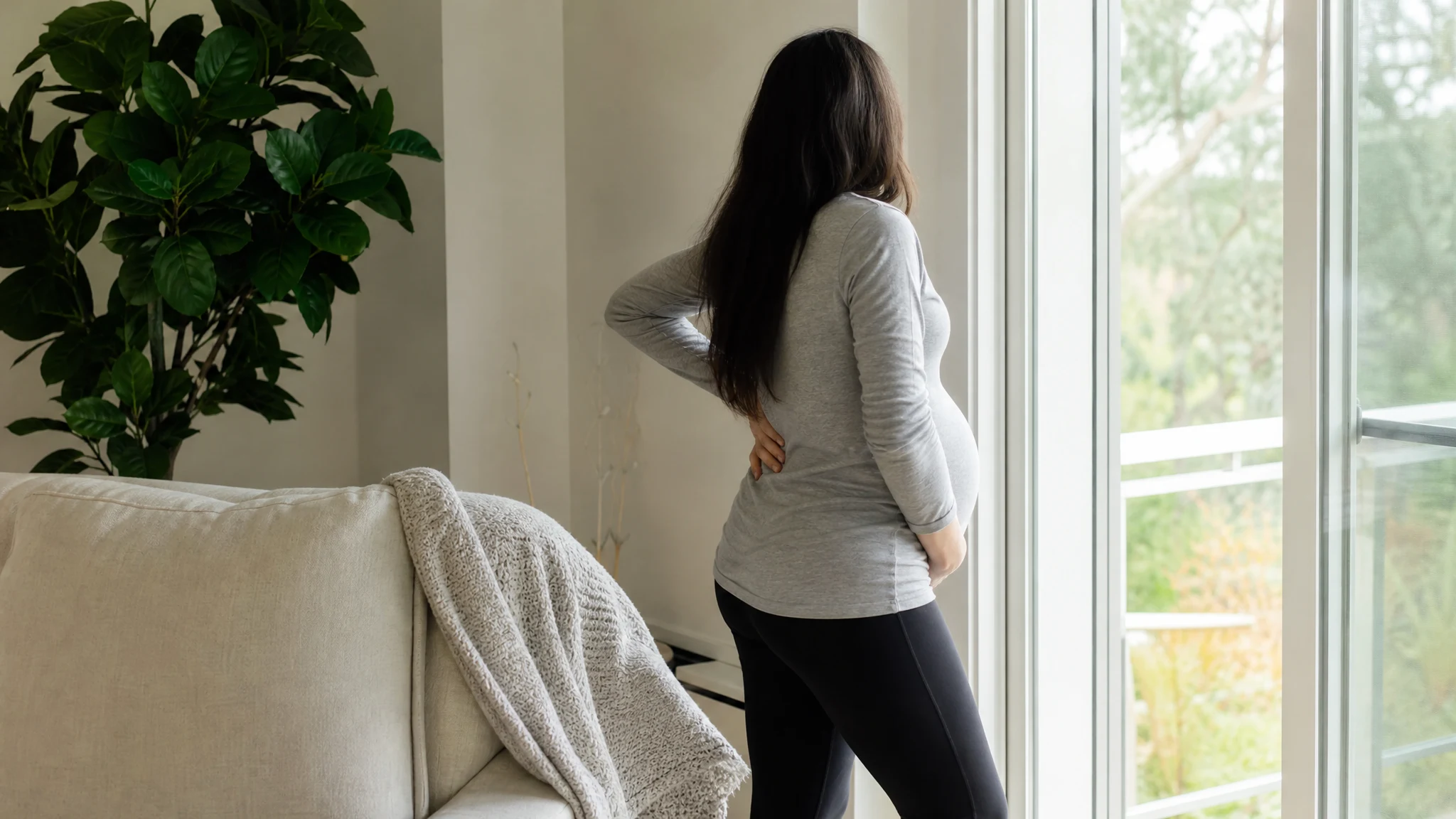
We recommend not diffusing sage during pregnancy or breastfeeding, with a seizure disorder, or where children or pets spend time. The ASPCA notes that cats are especially sensitive to essential oils and that inhaling them could lead to aspiration pneumonia; it would not recommend using any essential oils where pets have access unless they are supervised or a veterinarian approves (Pet Poisons: Be Mindful of these Household Products and Cleaning Agents). Keep the bottle capped and out of reach.
We sell sage oil only, so the diffuser itself comes from a general store. Our diffuser setup guide and overview of diffuser types help you choose one, and our safety article goes deeper on the air studies. A drop or two, a timer and an open window will serve a sage lover well.
Sage Essential Oil
Sage Essential Oil from our own shop, in sizes from 0.5 oz to bulk.
From $13.99
Shop Now →Sources & Further Reading
- Tisserand Institute, Safety guidelines for diffusing essential oils at home
- Volatile organic compound and particle emissions from the use of tea tree oil in essential oil diffusers (2025)
- Guidance for the Use of IFRA Standards (June 30, 2023)
- Safety and efficacy of a feed additive consisting of an essential oil derived from the leaves of Salvia officinalis L. (sage oil) for use in all animal species (FEFANA asbl), EFSA Journal, 2024
- ASPCA, Pet Poisons: Be Mindful of these Household Products and Cleaning Agents