How to Use an Essential Oil Diffuser Safely
The best diffuser instructions are the ones printed in the manual that came with yours, and the second best is a timer. Water volume, drop count and run time all change from model to model, so the numbers you see in blog posts are mostly averages of nothing. What carries over from one machine to the next is a short routine: read the manual, fill, start low, run in short spells, and think about who shares the room.
Start with the manual's number
Look at how different the instructions are. The NOW Foods ultrasonic diffuser holds 120 mL, runs for up to five hours and is rated by its maker for coverage of up to 1,000 square feet. Its own recipe card uses between one and fifteen drops of a single oil, and it states no drops-per-volume rule. A nebulizing diffuser works another way entirely, with undiluted oil in a glass reservoir and no water at all. Same hobby, very different instructions, because the machines are different. Our articles on how many drops to use and the types of diffuser sort through the conversions.
Set it up where it can do no harm
Stand the unit on a hard, level surface you do not mind wiping. The NOW manual warns that oil mist can damage wooden and painted surfaces and asks you to wipe up residue promptly, so a tray under the diffuser is a good habit. Keep cords, hot surfaces and small hands out of reach; the manual says to keep the unit away from children and pets.
Water is where the manuals and the health agencies part company. The NOW manual asks for room-temperature tap water and says not to use distilled or purified water, and lists distilled water as a cause of a unit that will not mist. The EPA, writing about humidifiers in general, points out that distilled water releases less mineral dust than tap water, and the CDC suggests distilled or boiled-and-cooled water. We cannot settle that for your model. Follow your manual, and if you see a white film around the diffuser, that is the mineral dust the EPA describes.
Start with fewer drops than you think
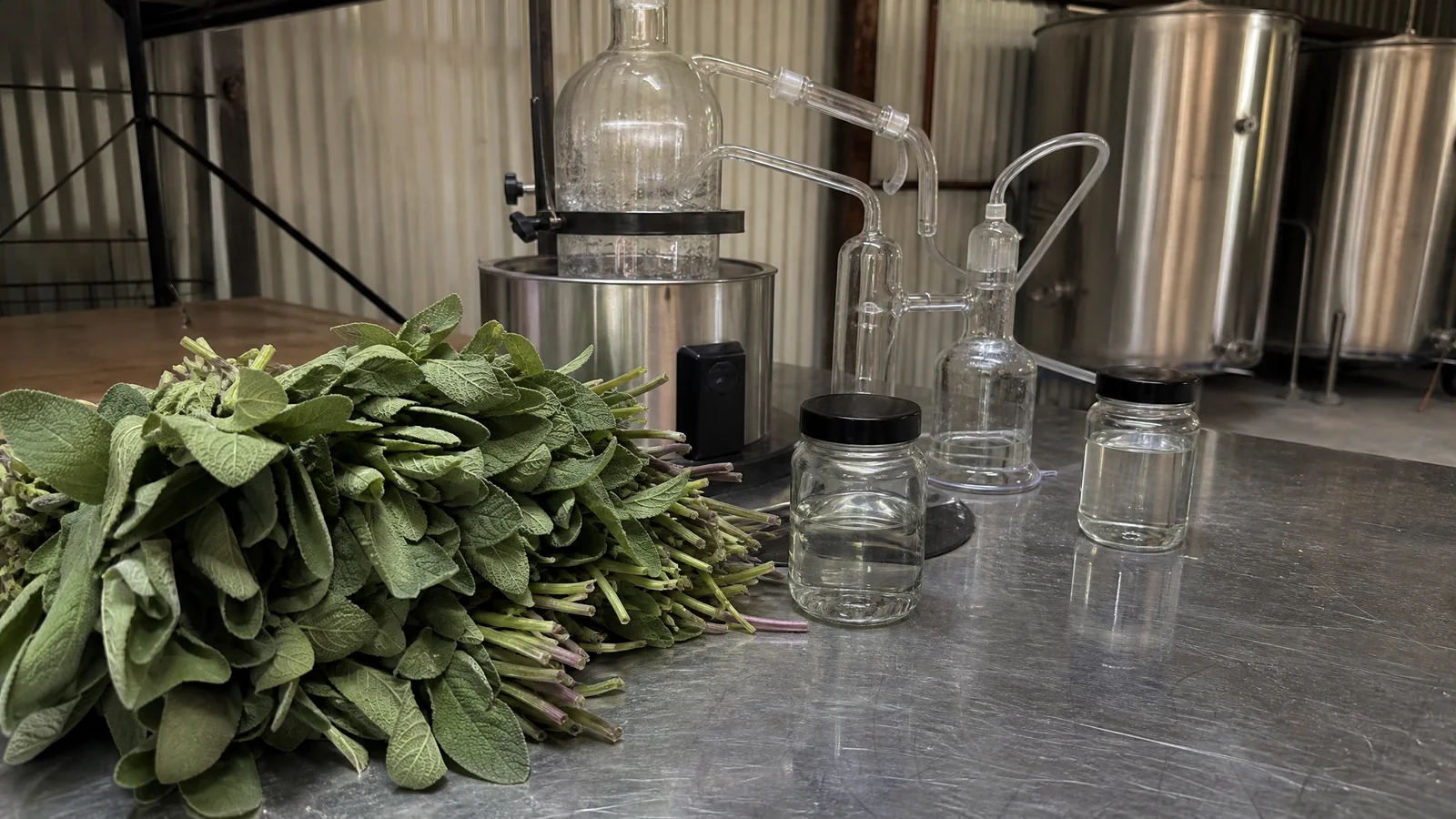
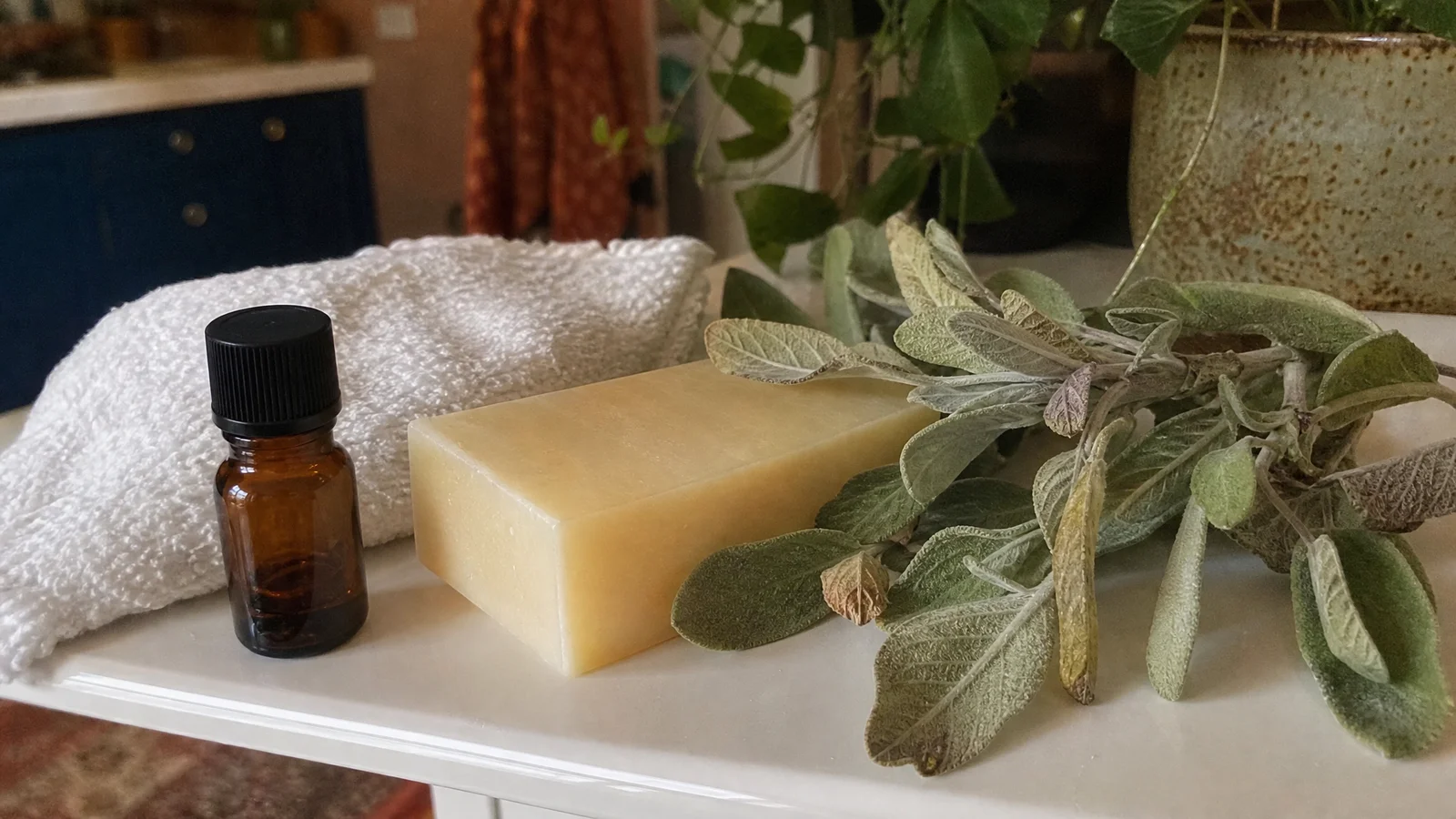
Most overdoing starts with a quiet kind of mistake. After a while you stop noticing a smell you are sitting in, so you add drops to a room that smells of nothing to you. The Tisserand Institute's diffusion guidance makes the same point, noting that people become nose blind to a running aroma pretty quickly. Judge your dose by walking back into the room from somewhere else, not by what you smell next to the machine. Sage is a good oil to practise this with. It is dry, green and camphoraceous, with an herbal edge that carries well, and our process page asks for a lighter hand with it than you would use with a mint or a citrus.
The coverage figure on a box is not a dose, either. A rating of 1,000 square feet describes how far a unit can push mist, and nothing in the manual links floor area to a drop count. Begin with the low end of what the manual shows.
Run it in short spells
Robert Tisserand's guideline is intermittent diffusing: 30 to 60 minutes on, then 30 to 60 minutes off. It is one practitioner's guidance and not a regulation, but it fits what air measurements show. In a two-week office test of a commercial diffuser, emissions of limonene and the pinenes were highest right after switch-on and tapered off, and within two hours indoor levels were several times the background. A household study of tea tree oil found terpene levels from an ultrasonic diffuser below applicable exposure limits, and levels from a heat diffuser about ten times higher. Neither study used sage and neither measured thujone, so we read them as support for ordinary good habits: open a window now and then, and choose a diffuser with a timer or automatic shut-off so you are not relying on memory.
A small ritual that helps
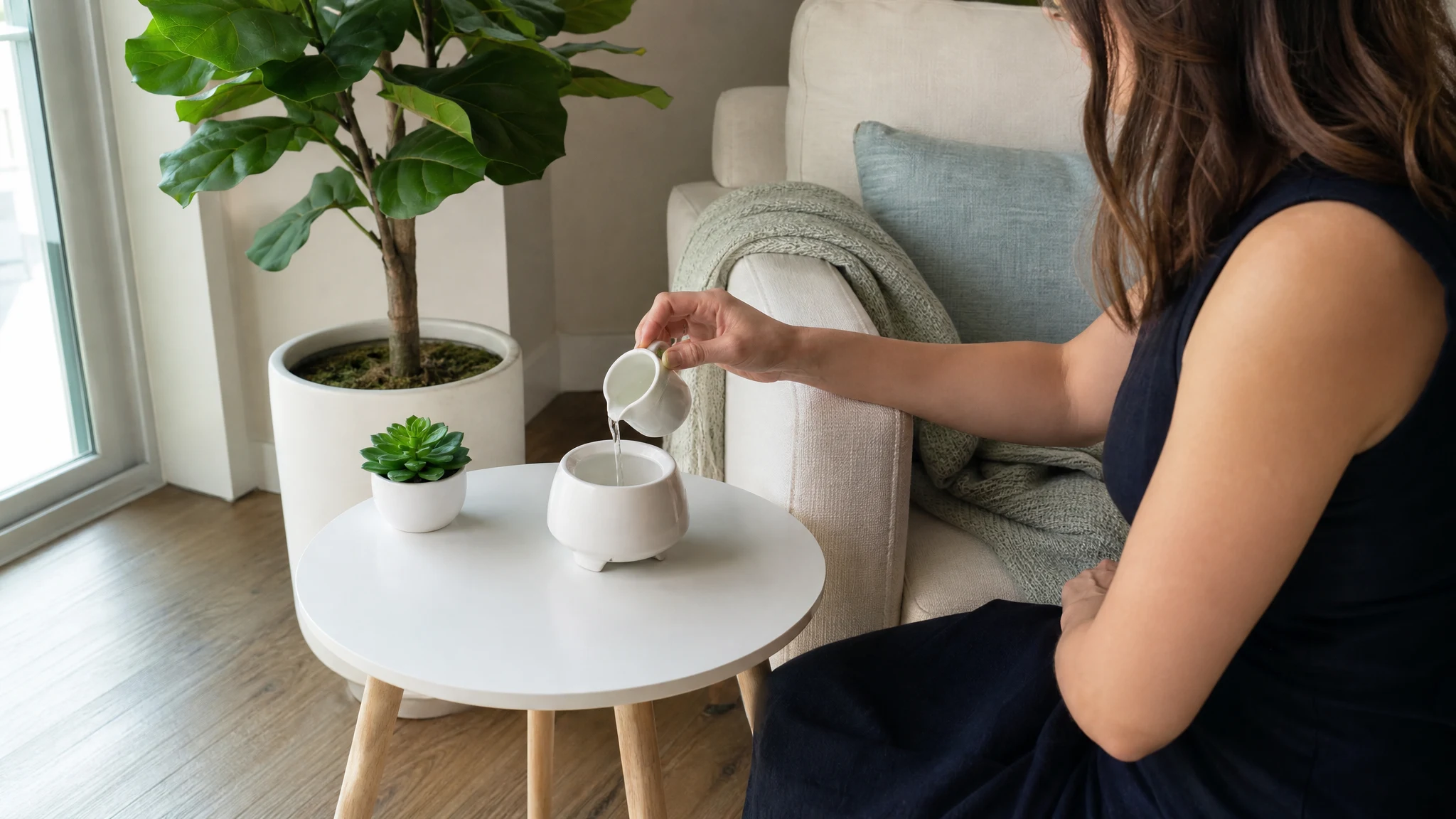
We like to think of using a diffuser as a short routine, not a switch. Wipe the unit out, fill it with the amount of water the manual asks for, add a modest number of drops, set the timer and open a window a hand's width. Then walk away and do something else. When you come back after a while, the scent should be faint, a hint in the air rather than a wall. If you can still smell it strongly the moment you walk in, that is your cue to use fewer drops next time.
It also helps to keep a small note by the diffuser with the oil, the drops and the time you ran it. After a few sessions, you will have your own reference and you will not need to rely on anyone's averages.
When the scent seems to disappear
If you notice you cannot smell the oil anymore, resist adding more. Step outside for a minute or two, take a breath of fresh air, and come back in. A reset like that is usually all it takes to find out what the room actually smells like.
Who is in the room
Sage asks for a little more thought than most oils here. Our position, taken from our process page, is to avoid sage oil in pregnancy and while breastfeeding, not to use it on or around children, and to leave it alone with a seizure disorder. If any of that describes your household, choose a different aroma for the diffuser. The Poison Control page on essential oils adds that bottles of essential oil must be locked up, out of sight and reach of children and pets. Our guide to whether diffusing is safe goes through what air studies have measured.
Once you have a routine, keeping the machine clean is the part that makes it last, and we cover that in cleaning a diffuser. A tidy unit, a modest dose and a timer are really all it takes.

Sage Essential Oil
Sage Essential Oil from our own shop, in sizes from 0.5 oz to bulk.
From $13.99
Shop Now →Sources & Further Reading
- NOW Solutions Ultrasonic Oil Diffuser, model 7512 manual
- Use and Care of Home Humidifiers | US EPA
- Preventing Waterborne Germs at Home | Drinking Water | CDC
- Diffusion guidelines (Tisserand Institute)
- Time-dependent emission characteristics of terpenes from an essential oil diffuser and indoor exposure assessment using a wearable passive sampler (Kim and Kwon, 2026)
- Volatile organic compound and particle emissions from the use of tea tree oil in essential oil diffusers (Zisook et al., 2025)
- Essential oils: Poisonous when misused | Poison Control