Patch Test for Sage Oil: Steps and What It Misses
A patch test is one of those small habits that feels fussy until the day it earns its keep. Done at home, it will catch an oil that irritates skin quickly. What it cannot do is promise that you will never react, because allergy can take days to appear and can build with repeated use. Knowing the difference helps you read the result for what it is.
Two kinds of reaction
The NHS draws a clear line. Irritant contact dermatitis comes from a substance that directly damages the outer layer of skin; allergic contact dermatitis comes from a substance that makes the immune system respond in a way that affects the skin. Either usually shows up within a few hours or days. Irritation depends on the dose on the day. Allergy depends on whether your immune system has learned the substance, which can take repeated contact, and after that a very small amount can set it off.
For sage oil, the documents we read point in the same direction. The European Medicines Agency's assessment report says sage oil is reported to be a moderate skin irritant. The Cosmetic Ingredient Review's scoping document on sage-derived ingredients, drawing on older industry data, reports that undiluted sage oil was moderately irritating to rabbit skin under occlusion, and that 8% sage oil in petrolatum did not sensitise 25 people in a maximisation test. Neither tells you how common a reaction is for the general public. Together they say what our dilution guidance already assumes: sage oil goes on skin well diluted, never neat.
What a clinic does differently
The American Academy of Dermatology describes the professional version. A dermatologist places small amounts of allergens on your skin under patches, which stay on for 48 hours, and you return to have them removed. Then, as the AAD puts it, after 4 to 7 days you see the dermatologist again, because it can take time for an allergic reaction to develop. If you remove, loosen or wet the patches, results are likely to be inaccurate.
A home test differs in four ways: the preparation is whatever you mixed, the spot gets damp and rubbed, nobody expert reads it, and most people stop looking after the first day. That last point is the one to fix.
The home routine we would follow
These steps are our adaptation of the clinic timetable, not a published protocol, and your doctor's advice for your own skin comes first.
- Mix the blend you actually plan to use, not neat oil. Our general guidance for diluted skin use is 0.5% to 2% in a carrier, but with sage we begin at about 0.17%, which is one drop in an ounce of carrier. Our dilution guide shows the arithmetic and why.
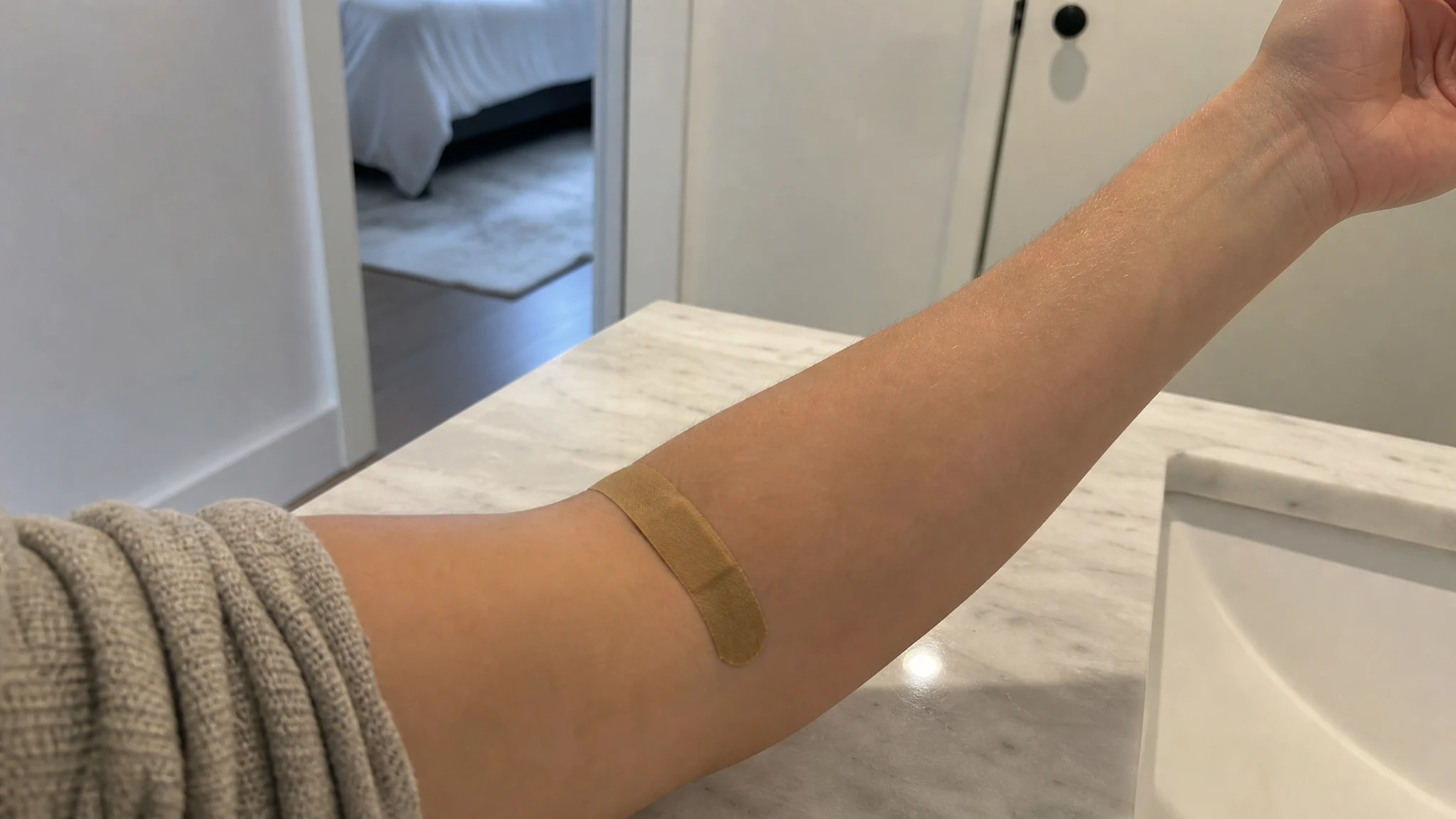
- Put a small amount on the pad of an adhesive bandage and stick it to the inner forearm. Keep it dry.
- Take it off straight away if it itches, burns or stings. There is no prize for waiting.
- If nothing happens, leave it for 48 hours, as the clinic does, then check again at day 4 and day 7. Redness, bumps or itching that arrives late counts.
- Repeat on a fresh patch of skin before committing to regular use, since a first exposure may not be the one that matters.
Choosing your spot and your timing
Pick a day when your skin is quiet: not straight after a hot shower, a shave or a day in the sun. The inner forearm is the usual choice because the skin there is thin and easy to watch. Write the date and exactly what you mixed on a sticky note or in your phone, because a week from now you will not remember.
Reading what you see
Look in good light, and compare with the same spot on your other arm. The tape itself can make skin pink, which can fool you, so it helps to put a second bandage beside the first with only plain carrier oil on the pad. What you are watching for is redness, bumps, itching or warmth that sits where the sage blend was and not where the tape was.
A quick photo each day makes the comparison easier than memory does. If you are unsure what you are looking at, treat it as a reaction and leave the blend off.
What the test does not cover
A clear forearm says nothing about thujone, which is sage oil's larger consideration and has nothing to do with skin reactions. The IFRA standard limits thujone in finished products because of neurotoxicity, and our guide to sage oil and thujone explains what that number means and who avoids the oil entirely. Our process page asks that sage be avoided in pregnancy and breastfeeding, kept away from children, and left alone with a seizure disorder. A patch test cannot clear anyone for those.
See a doctor or dermatologist if a patch leaves a blistered, weeping or spreading rash, or if a reaction recurs. After a bad reaction, hold on to the bottle so you can show them what it was. An old bottle also deserves a fresh test before it goes on skin again, and our note on storing sage oil explains why.
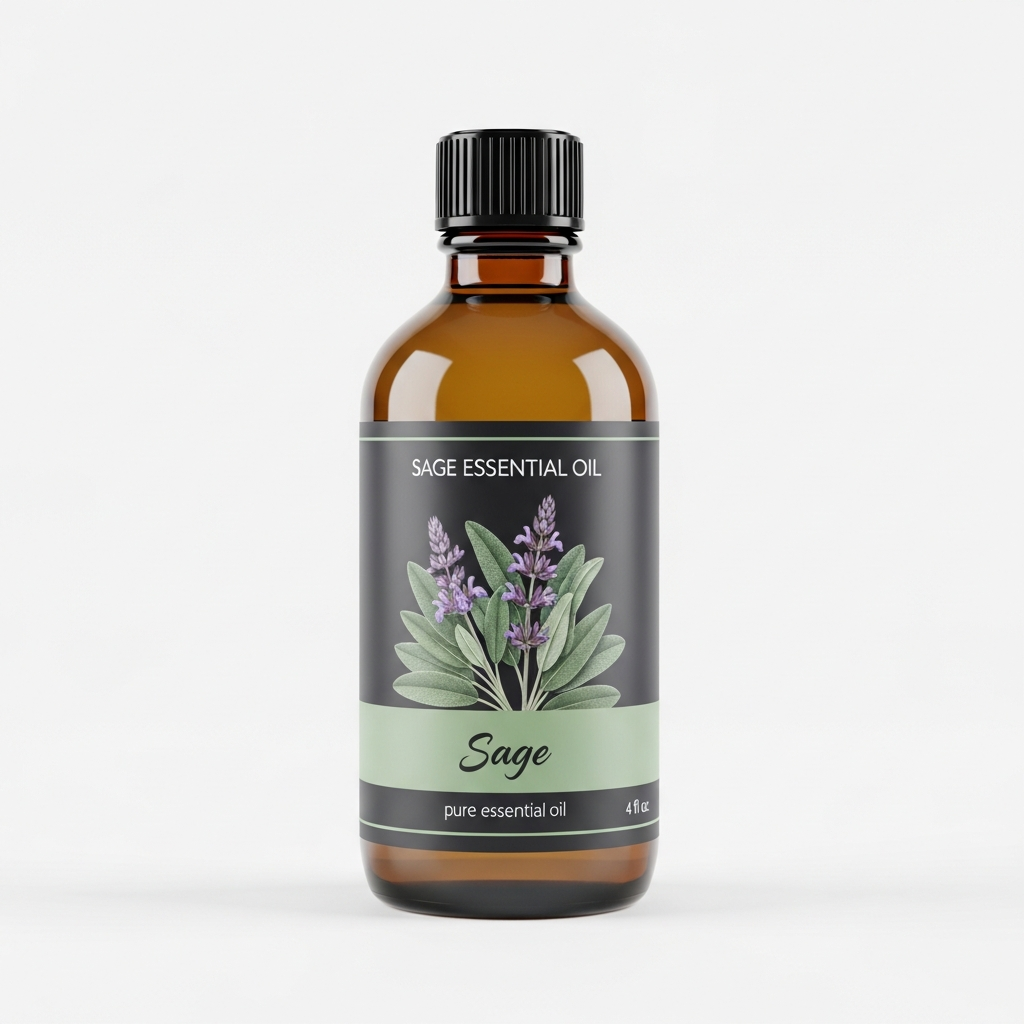
Sage Essential Oil
Sage Essential Oil from our own shop, in sizes from 0.5 oz to bulk.
From $13.99
Shop Now →Sources & Further Reading
- Contact dermatitis - NHS
- Patch testing can find what's causing your rash (American Academy of Dermatology)
- Assessment report on Salvia officinalis L., folium and Salvia officinalis L., aetheroleum (EMA/HMPC/150801/2015)
- Safety Assessment of Salvia officinalis (Sage)-Derived Ingredients as Used in Cosmetics (Cosmetic Ingredient Review, 2020)
- IFRA Standard: Thujone, 2020 (Amendment 49)