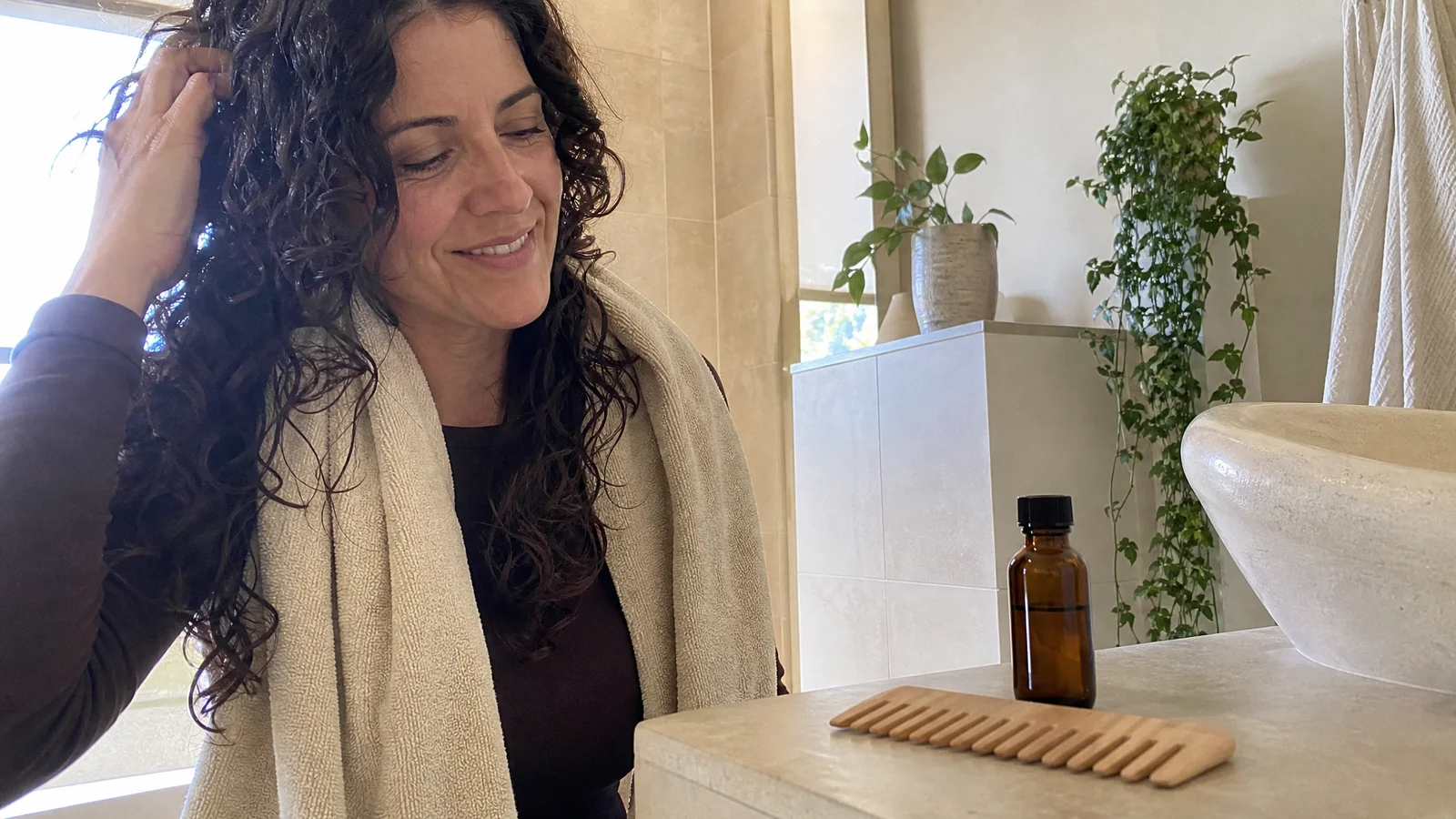
Sage Oil for Hair: How Little a Product Can Hold
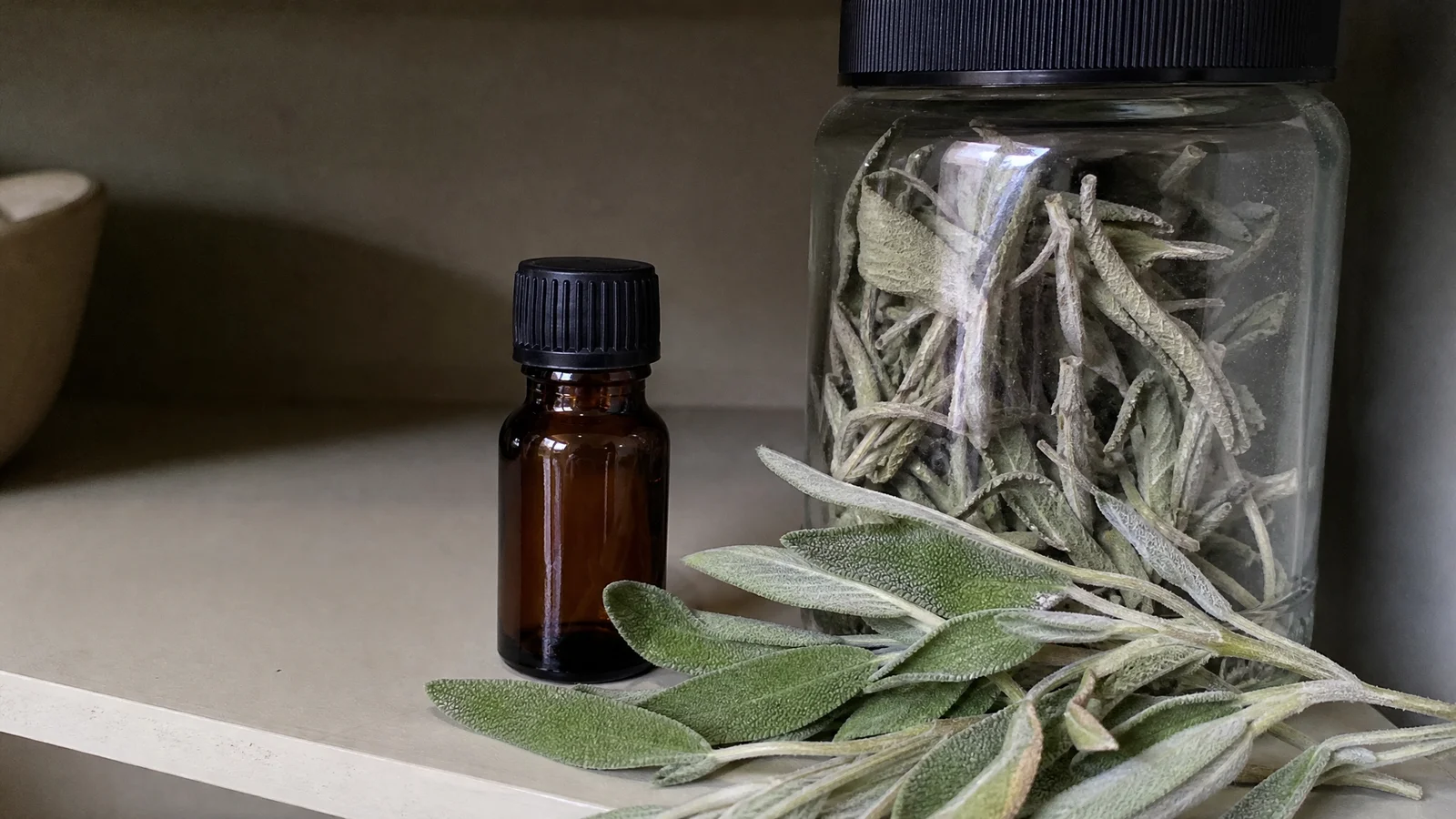
A few drops of an herbal oil in a rinse or a scalp massage is an appealing idea, and sage has the right credentials as a kitchen-garden plant with a dry, green, camphoraceous aroma. We sell sage oil neat and for its scent, and we make no claims about what it does for hair. What we can do is show how much of it a hair product can reasonably hold, because with sage the answer is a very small amount.
Why sage needs a lighter hand
Roughly a third of a typical sage oil is thujone. The fragrance industry's IFRA standard limits thujone in finished products by category, and it names neurotoxicity as the reason. The limits for hair care are 0.24% thujone for leave-on and rinse-off hair products (categories 7B and 7A) and 0.13% for shampoo and rinse-off conditioner (category 9). IFRA's guidance does not list a pre-wash scalp oil, so we take the stricter figure as our yardstick.
To turn a thujone limit into an amount of oil, you need the oil's thujone share. One European Food Safety Authority analysis of a sage oil found about 30.6% thujone, and the European Medicines Agency's assessment report cites literature ranges that work out to roughly 14% at the low end and 96% at the high end. This is our arithmetic, not IFRA's instruction, since the standard is written for industry fragrance mixtures. The results:
| Product type | Oil limit at 30.6% thujone | At the 96% extreme |
|---|---|---|
| Leave-on or rinse-off hair product | about 0.79% | about 0.25% |
| Shampoo or rinse-off conditioner | about 0.43% | about 0.135% |
Our certificate of analysis for one batch lists density, refractive index and optical rotation, and it does not give a thujone figure. If you need one for a formulation, ask us in writing through the contact page before you order. Without one, the right-hand column is the careful choice.
What that means in practice
For a scalp oil, we would use the same figure we recommend for body oil: one drop in an ounce of carrier, which is about 0.17%. That sits under the leave-on hair limit in every column above. Our general dilution guidance for skin is 0.5% to 2%, but for sage we start at the lower figure, and the reasons are set out in our dilution guide. Carrier oils are not something we sell, so you will find them at a craft shop, pharmacy or grocery.
If you would like to scent a bought, unscented shampoo, the arithmetic for 100 g of shampoo at the rinse-off limit is about nine drops at the average thujone share and about three at the high end. Three is the figure to begin with. A drop is roughly 0.05 mL, or about 0.046 g given the density on our certificate, and the numbers work out to 0.43 g and 0.135 g respectively. Keep the lather away from the eyes, as you would with any scented shampoo.
The rinse that will not mix
Herbal rinse recipes often tell you to drip essential oil into a jug of water. Oil and water do not mix. The Tisserand Institute states that essential oils are not water soluble and that oil dropped straight into water leaves a film on the surface. Its bath guidance suggests dispersing oils first with Solubol or polysorbate 20 or 80. In a rinse jug, that means your first pour is mostly oil and the last is nearly plain water, and neat oil near the scalp and eyes is exactly the exposure the dilution arithmetic was meant to avoid. If you want the plant itself in a rinse, a cooled sage-leaf infusion from your own herb garden brings the herbal character without concentrated oil. Our bath guide covers the same dispersal problem for water.
Keeping the scent in perspective
It helps to picture what those few drops actually do. Sage is a strong, dry, green aroma, and at these amounts in a bottle of shampoo it is a whisper: a faint herbal edge you catch as the lather builds, and mostly gone once you rinse. We think that is a good thing. A scent that announces itself from across the room is the one most likely to be too much.
It also helps to remember sage is only one voice. We describe our Botanical listing as sitting well with lavender, rosemary and cedarwood, and our Purity listing with lemon, bergamot and rosemary. A scent built mostly from a gentler oil with a trace of sage behind it can read as rounder than sage on its own. Those partners come from a craft or supply shop, since we sell sage only, and each has limits of its own to check before it goes into the bottle.
A few habits that keep it simple
- Weigh, do not eyeball. A small kitchen scale that reads to 0.1 g takes the guesswork out of a drop count, because droppers differ from bottle to bottle.
- Make small amounts. A bottle of shampoo or scalp oil that you finish in a few weeks never has time to go stale, and a mistake costs you very little.
- Label what you made. Write the date and the number of drops on the bottle. When you come back to it, you will not have to remember.
A quick word on scalp health
A scented oil is a pleasant extra, not a treatment. If your scalp itches, flakes or feels tender, or you are concerned about your hair, that is a question for a dermatologist. And before you use any new blend regularly, patch test it first; our guide to patch testing sage oil explains how.
Keep the dose tiny, mix it evenly and enjoy the herbal scent for what it is.
Hair care is a place where less really is more with sage, and that is a lesson that carries over to nearly everything else you might make with it.
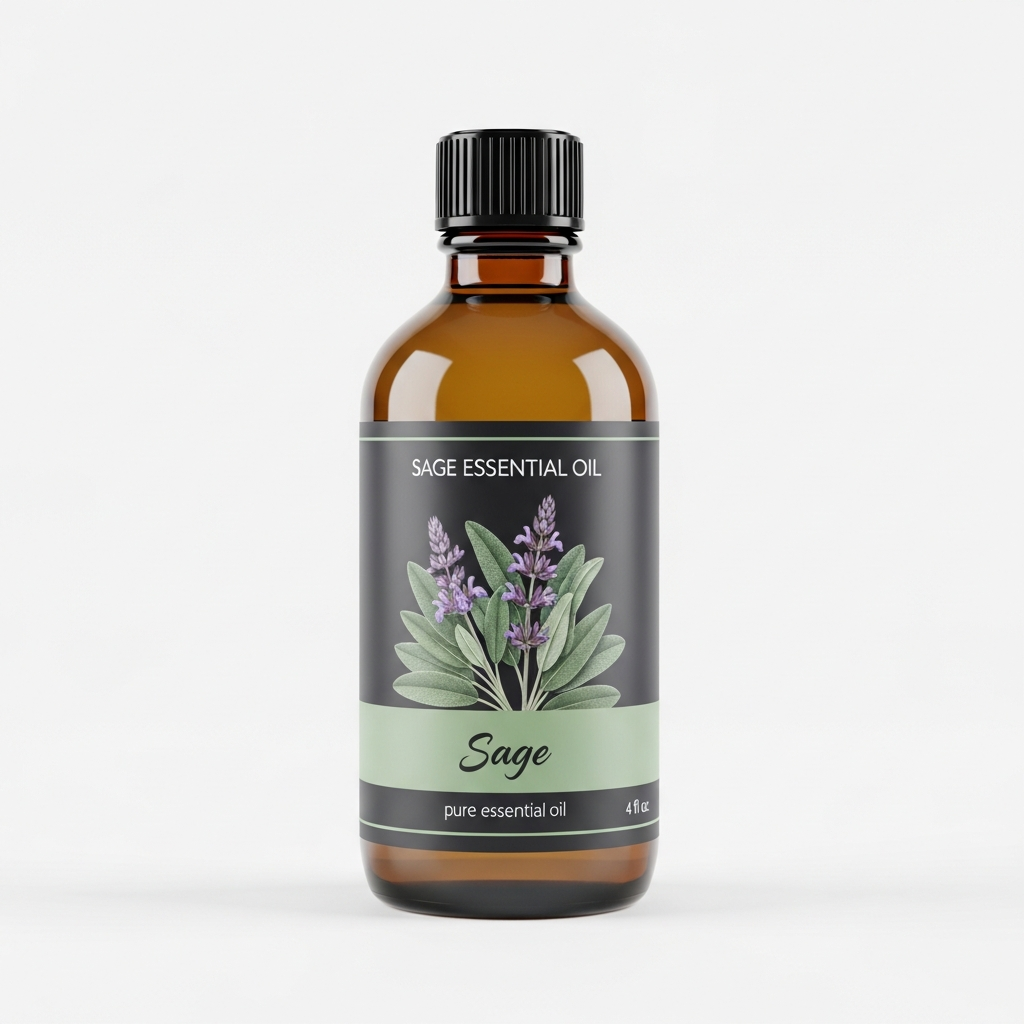
Sage Essential Oil
Sage Essential Oil from our own shop, in sizes from 0.5 oz to bulk.
From $13.99
Shop Now →Sources & Further Reading
- IFRA Standard: Thujone, 2020 (Amendment 49)
- Guidance for the Use of IFRA Standards (51st Amendment)
- Safety and efficacy of a feed additive consisting of an essential oil derived from the leaves of Salvia officinalis L. (sage oil) for use in all animal species (FEFANA asbl)
- Assessment report on Salvia officinalis L., folium and Salvia officinalis L., aetheroleum (EMA/HMPC/150801/2015)
- Bath Safety: how to use essential oils safely in the bath (Tisserand Institute)