How to Clean an Essential Oil Diffuser Each Week
Open the base of a diffuser that has been running all winter and you will usually find two things: a faint oily film on the little ceramic disc, and a ring of scale where the water sits. They have different causes, and they call for different cleaning rhythms. Sorting them out takes about five minutes a week and keeps the mist coming.
The oil film and the water are separate jobs
The film is the maker's concern. The manual for the NOW Foods ultrasonic model asks you to clean it every time you change oils, and gives the reason in a single line: oils are corrosive and build up on the ceramic parts. Its troubleshooting table lists oil clinging to the ceramic disc or sensor as the first thing to check when you get little or no mist.
The water is a health agency's concern. The US Environmental Protection Agency, writing about home humidifiers, notes that ultrasonic and impeller models can disperse minerals and microorganisms from their tanks into the air, and that microorganisms often grow where water stands. Its routine is to empty the tank, wipe it dry and refill it daily, then scrub it every third day to remove scale, deposits and film. The CDC says much the same: germs can live in humidifiers and spread through the mist, so drain the unit daily and let it dry in the open air.
Both agencies are talking about humidifiers. A water-based diffuser is a small cousin of one, so carrying their advice over is our reasoning rather than their instruction. We think it is sound reasoning, because you cannot see into the base while it runs and scale does not care what you drop in the tank.
A rhythm you can actually keep
| When | What to do |
|---|---|
| After each session | Pour out the water, wipe the tank dry, leave it open to the air |
| Whenever you switch oils | Rinse, dry, and clean the mist disc and sensor gently with a cotton swab |
| Every third day of regular use | Scrub the tank to lift scale and film, then rinse thoroughly |
If you diffuse a few evenings a week, that is more cleaning than most manuals ask for, and we think it is the right amount. The first row is the one that matters most and takes thirty seconds.
The steps, in order
- Unplug the unit before you do anything else.
- Pour out any water and oil that remain.
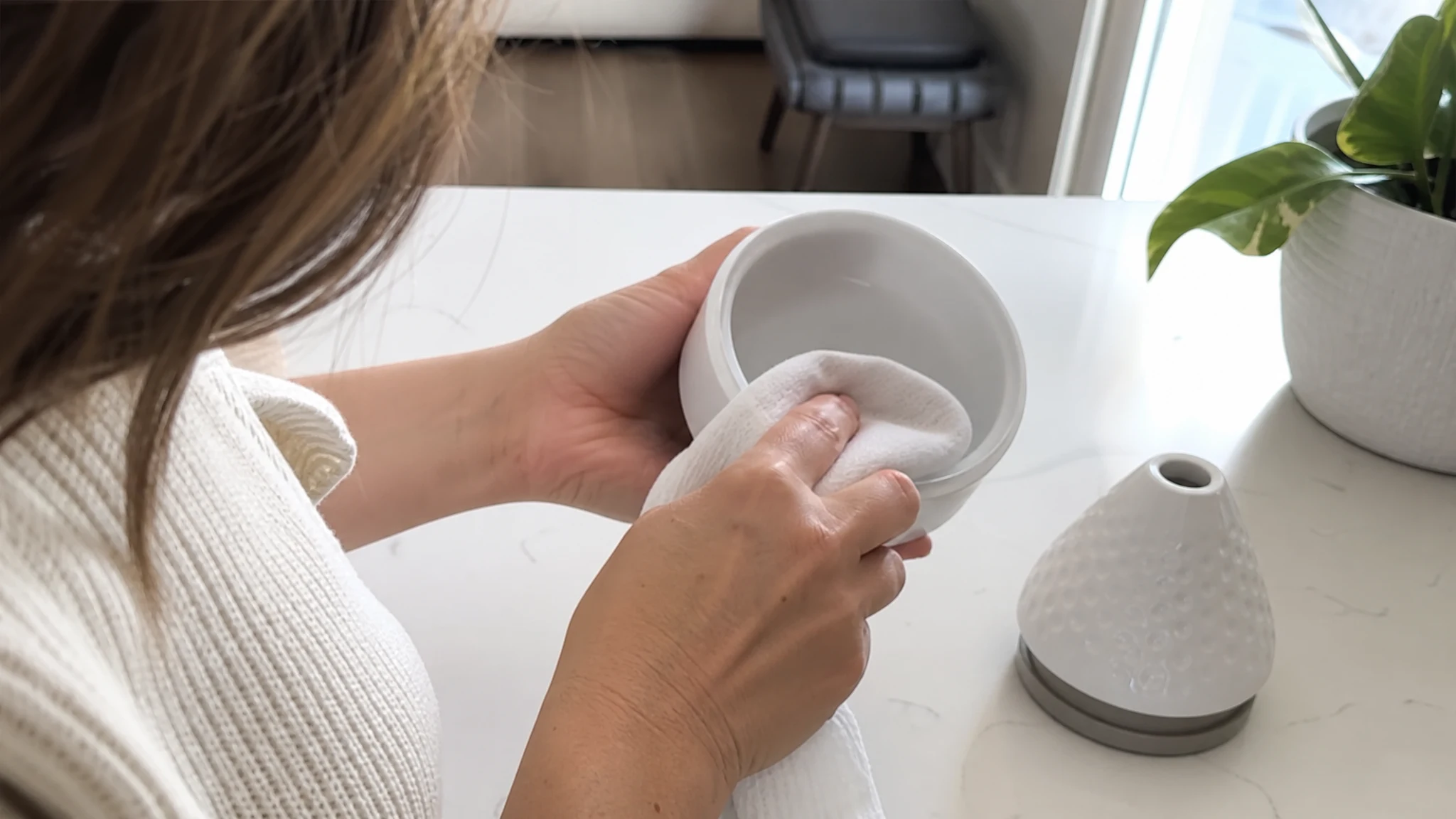
- Rinse the tank with clean water and wipe it dry with a soft cloth.
- Clean the ceramic disc and the water-level sensor with a cotton swab or soft brush, gently, since these are the delicate parts. The NOW manual also says never to use corrosive solvents on the unit, so if a cleaning product is not named in your own manual, skip it.
- Rinse again. The EPA is explicit that if you do use a cleaning or disinfecting agent, the tank should be rinsed thoroughly so no chemical is released into the air.
- Let everything dry before you put the dome back on.
Your own manual outranks any general article, ours included. Makers differ on which cleaners their parts can take, and a swab and clean water are the safe common ground.
A few small rules worth knowing
If a unit tips over while it is running, the NOW manual says to unplug it, empty the water and set it aside in a ventilated place for three days before reusing it. Keep your hand off the ceramic disc while it works. And wipe up mist residue promptly: the same manual warns that oil mist can damage wooden and painted surfaces, which is a good reason to stand a diffuser on a tray or a hard, wipeable surface.
Nebulizing diffusers have no water, so they clean differently, and reed diffusers have no tank at all. Our guide to the different types of diffuser explains what each one involves, and how to use a diffuser covers filling and run times.
Make it a habit you will keep
The cleaning that actually happens is the cleaning that is easy. Keep a soft cloth and a few cotton swabs in the same drawer or basket as the diffuser, so the tools are in reach the moment you need them. Pick a regular moment, such as the evening you take out the bins, and tie the cleaning to it. When you finish, lean in and smell the empty tank. If it still smells of last week's blend, give it another rinse; a clean one should smell of almost nothing. That quiet check is one we like, because a neutral tank means the next oil will smell the way it is meant to.
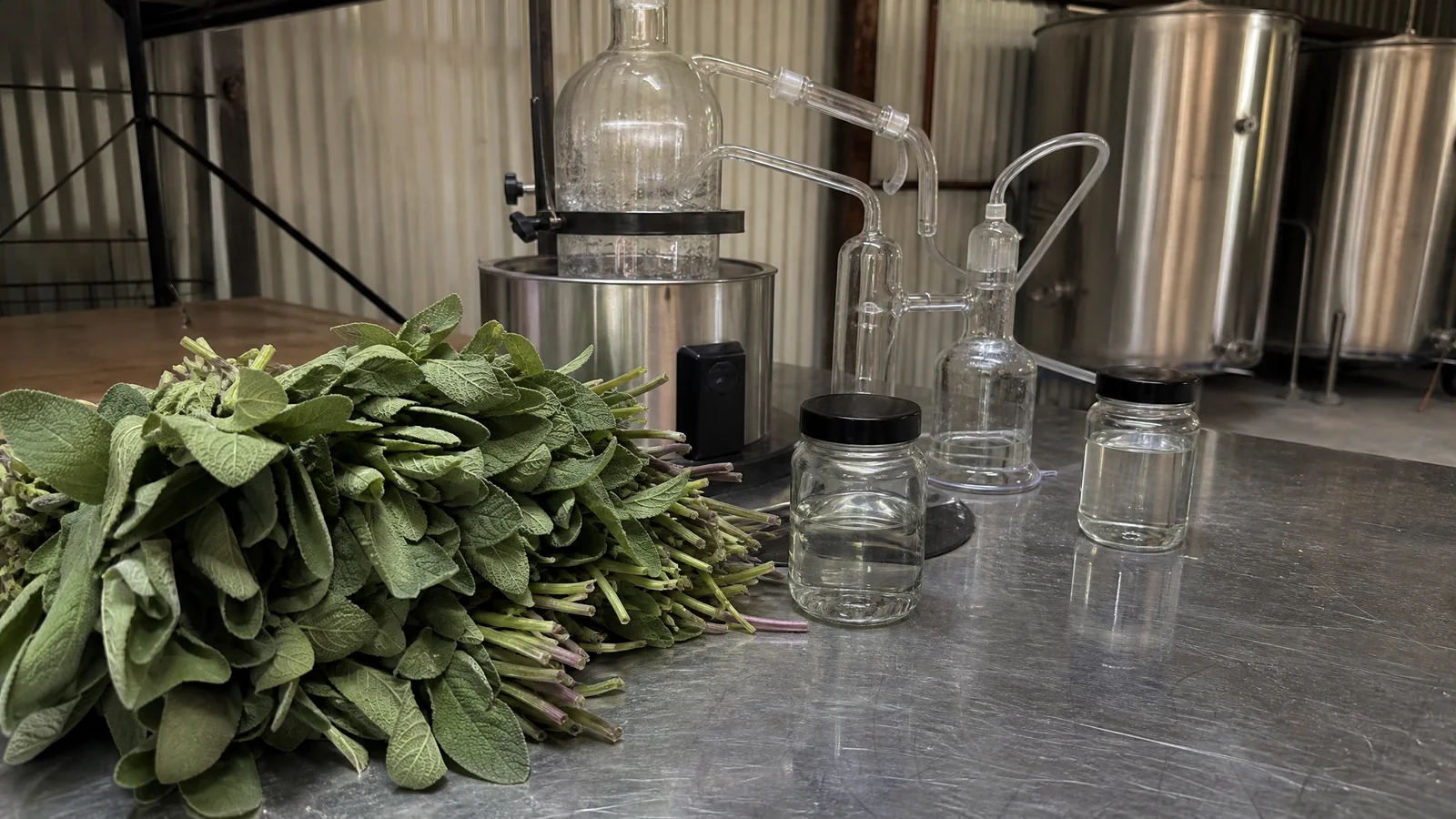
If you are switching from one oil to another, give the base an extra wipe first. Sage is dry, green and a little camphoraceous, and it deserves a clear stage.
Does the oil keep the tank clean?
It is a fair question, since oils smell clean. We found nothing in the EPA guidance or in the manual to suggest that what you add to the water changes the cleaning schedule, and sage oil is a scent for us, not a cleaner. Clean the tank as you would with plain water and enjoy the aroma. If you are choosing what to put in a freshly cleaned diffuser, our note on how many drops to use is a good next stop.
A clean base also helps a gentle herbal oil like sage show up as it should: dry, green and a little camphoraceous, instead of muddied by last week's blend.

Sage Essential Oil
Sage Essential Oil from our own shop, in sizes from 0.5 oz to bulk.
From $13.99
Shop Now →