How Sage Oil Is Made: From Leaf to Still to Bottle
Sage oil is made by passing steam through sage leaf and catching what condenses, and the surprise is the scale. A half-ounce bottle represents more than a kilogram of dried leaf, sometimes several kilograms of fresh. Once you know that, a lot about why sage oil is so aromatic, and so concentrated, falls into place.
Start with the ratio
The European Pharmacopoeia sets a floor for dried sage leaf of not less than 12 mL of essential oil per kilogram, or 10 mL for cut leaf, as quoted in the European Medicines Agency's assessment report. Recent papers land around or above that. A Transylvanian team distilled the dried, ground herb in the laboratory and got 11.14 mL per kilogram, while a semi-industrial unit working on fresh sage recovered 2.93 mL per kilogram (Léva and Gál, 2026). Another study measured 0.37 to 0.64 mL per 100 g of fresh leaf and 1.48 to 2.00 mL per 100 g of dried leaf (Soltanbeigi, 2026).
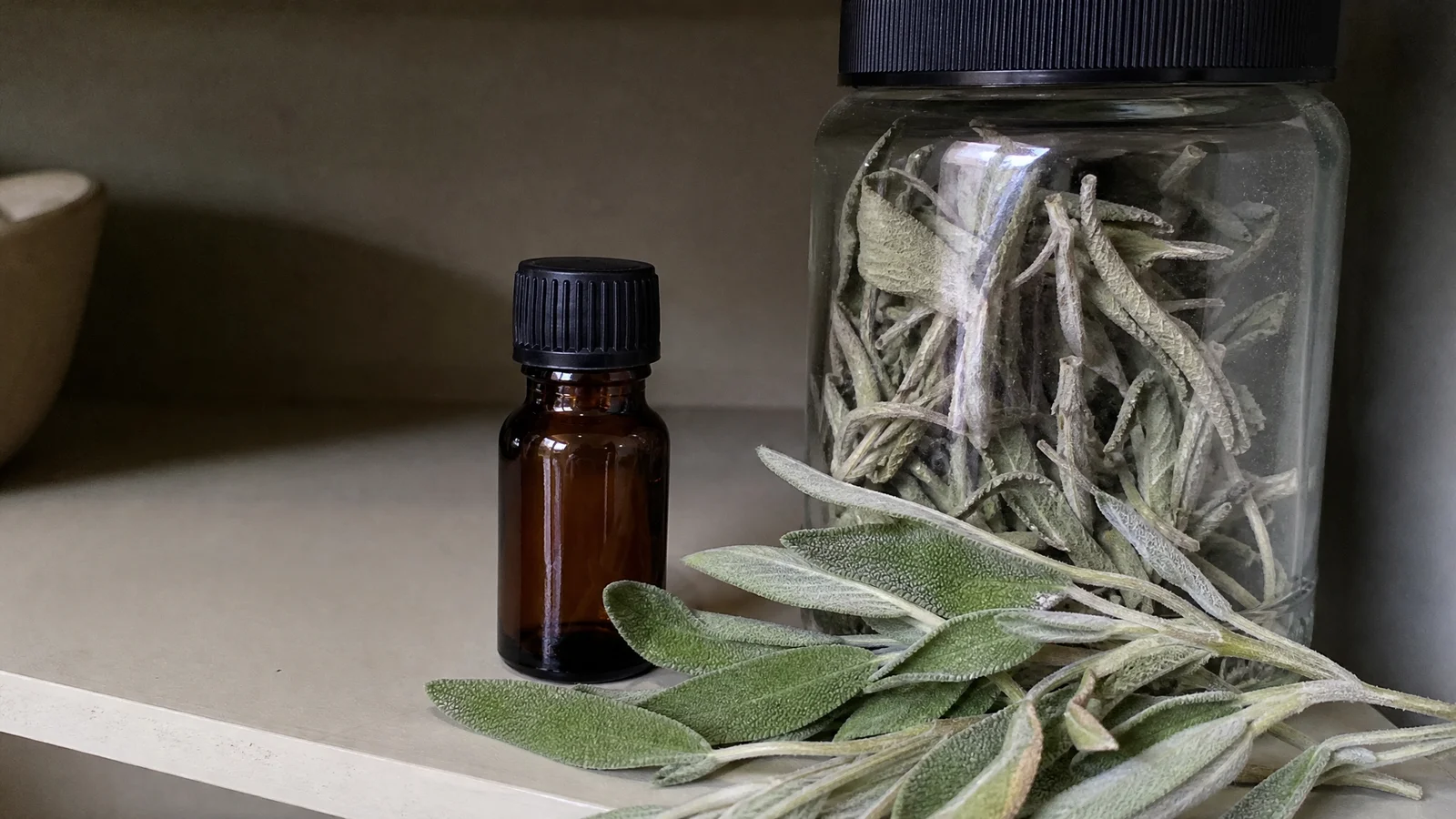
Our arithmetic from those figures: a 0.5 oz bottle holds about 14.8 mL, which needs around 1.2 kg of dried leaf at the pharmacopoeia floor, or roughly 2.3 to 5 kg of fresh leaf. Every drop is a small piece of a big harvest, which is why we describe sage oil as a concentrate. Growing sage at home shows the same sum from the gardener's side.
How the still works
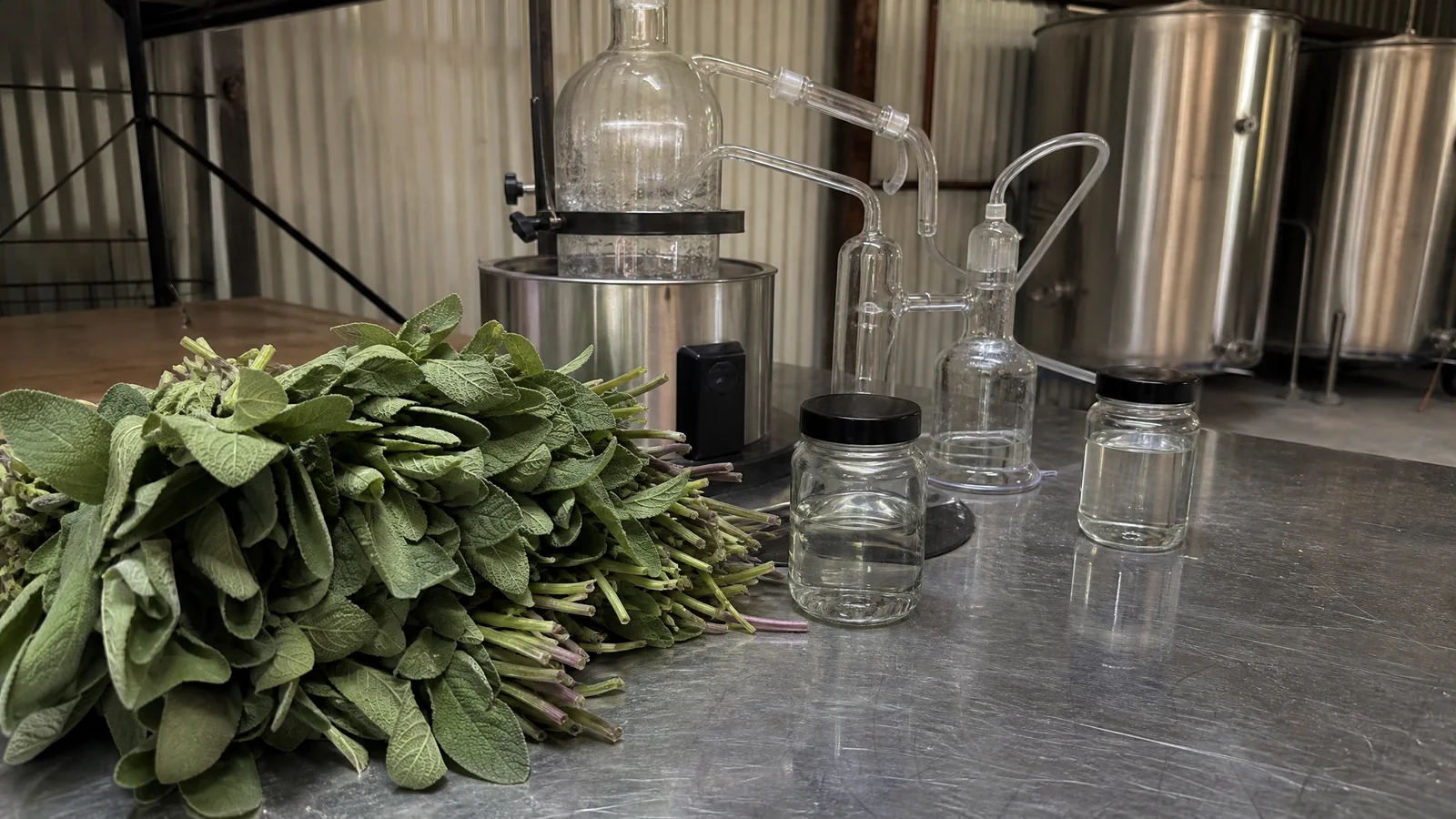
The principle is wonderfully simple. EFSA describes a sage oil as extracted from the leaves by steam distillation: the volatile constituents are carried off in the steam, condensed back into liquid, and then separated from the water by decantation. Oil and water do not mix, so the oil floats and can be drawn off. What remains in the pot is spent leaf and water.
The oil we sell is described in the same terms. Our home page explains that the leaf is sorted and briefly wilted before the still, that steam passes through it, that the oil separates as it condenses, and that the finished oil is kept away from heat and light. The Certificate of Analysis we publish for one batch names Salvia officinalis, lists the part used as leaf and the extraction as steam distilled, and records a relative density of 0.915, a refractive index of 1.469 and an optical rotation of minus 10 degrees against the ranges it prints.
Steam or boiling water?
Laboratories often use a Clevenger apparatus, where the leaf sits in boiling water, which is called hydrodistillation. Industrial stills more often pass dry steam through fresh material. The Transylvanian authors compared the two on the same plantation and found the sage thujone content close, about 17.7% in the steam-distilled oil and 19.2% in the hydrodistilled one. They also caution that scale, fresh versus dried leaf and how finely the leaf was chopped all differ between the systems, so the method alone cannot be given the credit or the blame.
What the clock does
Time in the still shapes the oil. When Soltanbeigi distilled sage for one to five hours, the yield from dried leaf rose with time, but most of it came out within about three hours. The share of alpha-thujone, the most-discussed constituent, drifted down as the run lengthened, from around 25% at one hour to about 17% at five hours for fresh leaf. The author offers several explanations, including the simple fact that percentages are shares: as more of other compounds arrive, the share of an early compound falls.
The EMA report says the same in broader terms, noting that the water's pH and the duration of distillation influence the result. Our reading of the two together is that a distiller who stops early collects a different cut from one who runs long, and that neither is doing anything wrong. It is a craft with choices in it.
Why two sage oils are never identical
The literature range for sage oil is wide: alpha-thujone of 10 to 60% and beta-thujone of 4 to 36%, according to the EMA's summary of the reference books. EFSA's five characterised batches sat near 25% and 5.6%. Growing season, harvest date and still all play a part, which is why a sage oil's composition cannot be read from the word "sage" on a label. The certificate we publish carries physical measurements for one batch rather than a constituent breakdown, so if you need a specific figure, such as thujone, for your own purposes, ask us in writing through the contact page before ordering. The thujone article explains why that number matters.
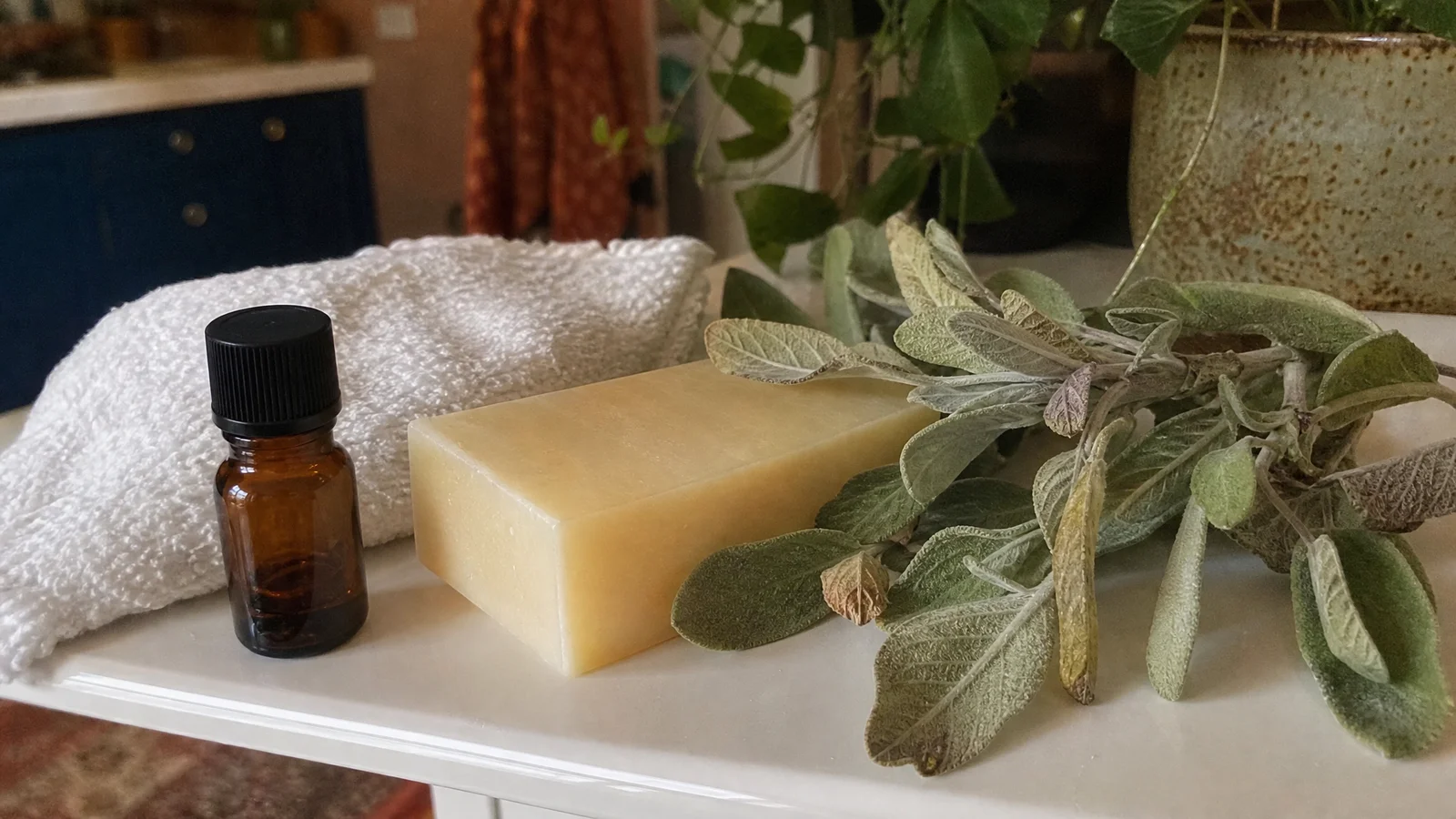
A simple way to hold the ratio in your head: picture a big armful of leaf for every half-ounce bottle. It makes the oil on your shelf feel like something worth handling with care, and that is exactly the right instinct with an oil this strong.
Why we leave the still to the professionals
It is tempting to wonder about distilling your own. The output is a few drops per plant, and the composition moves with the run time and the plant material, so you would not know what you had made. The EMA describes sage oil as characterised by high levels of thujone, which may cause seizures at high doses, and concludes that the benefit-risk balance of sage oil as a herbal medicine is negative. It is a lovely oil to enjoy as an aroma in a diluted form, and a poor candidate for experiments at the kitchen stove. If you are curious how the oil compares with the herb you cook with, read sage oil versus dried sage.
Each bottle is the end of a long chain, from garden to condenser, and knowing the chain makes you a better shopper for any botanical oil.
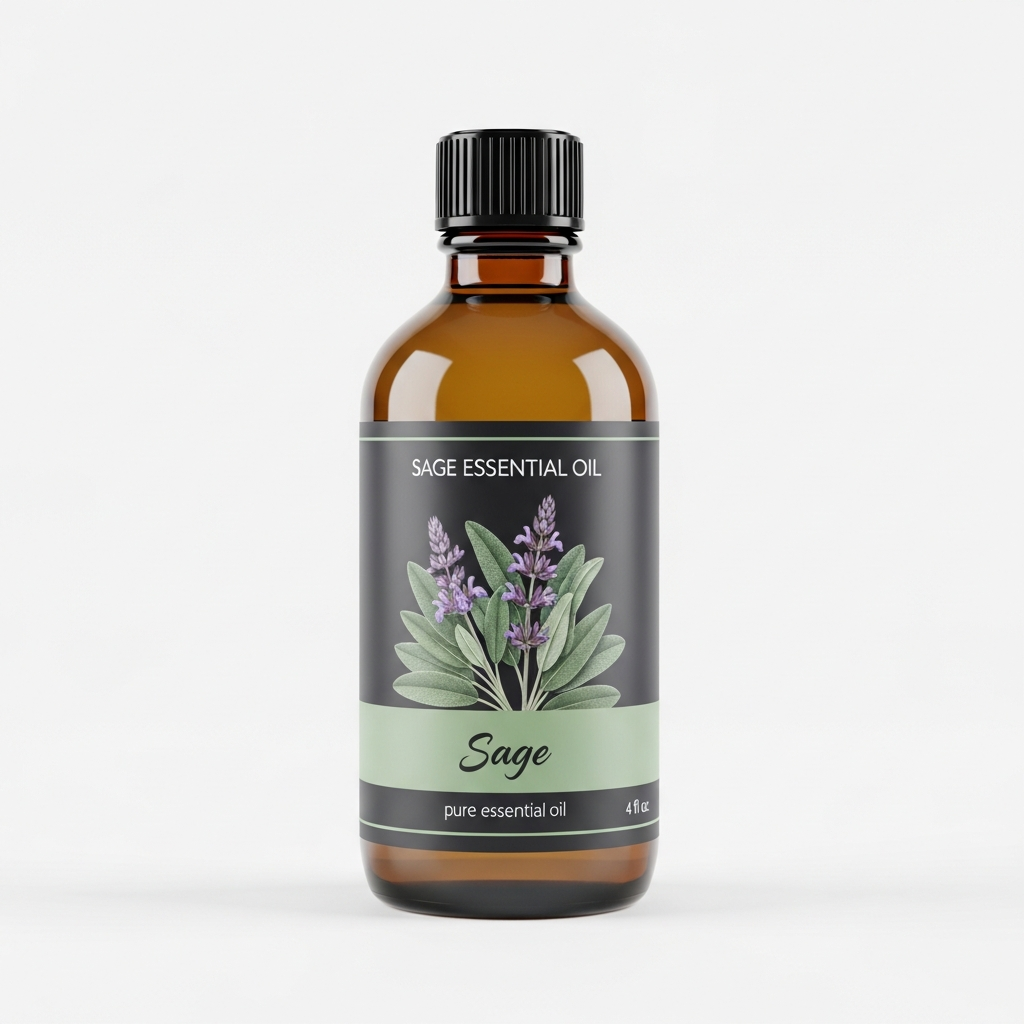
Sage Essential Oil
Sage Essential Oil from our own shop, in sizes from 0.5 oz to bulk.
From $13.99
Shop Now →Sources & Further Reading
- EMA/HMPC, 2016. Assessment report on Salvia officinalis L., folium and Salvia officinalis L., aetheroleum. ema.europa.eu
- EMA/HMPC, 2016. Public statement on Salvia officinalis L., aetheroleum. ema.europa.eu
- EFSA FEEDAP Panel, 2024. Safety and efficacy of a feed additive consisting of an essential oil derived from the leaves of Salvia officinalis L. (sage oil) for use in all animal species (FEFANA asbl). EFSA J. PMC11656093
- Léva N, Gál E, 2026. Impact of Extraction Scale and Method on the Chemical Profile of Essential Oils: A Comparative Study Between Laboratory Hydrodistillation and Semi-Industrial Dry Steam Distillation. Molecules. PMC13305851
- Soltanbeigi E, 2026. Hydrodistillation time-dependent variations in the volatile oil characteristics of fresh and dried Salvia species. Sci Rep. PMC13009210