How to Grow Sage at Home in a Sunny Pot
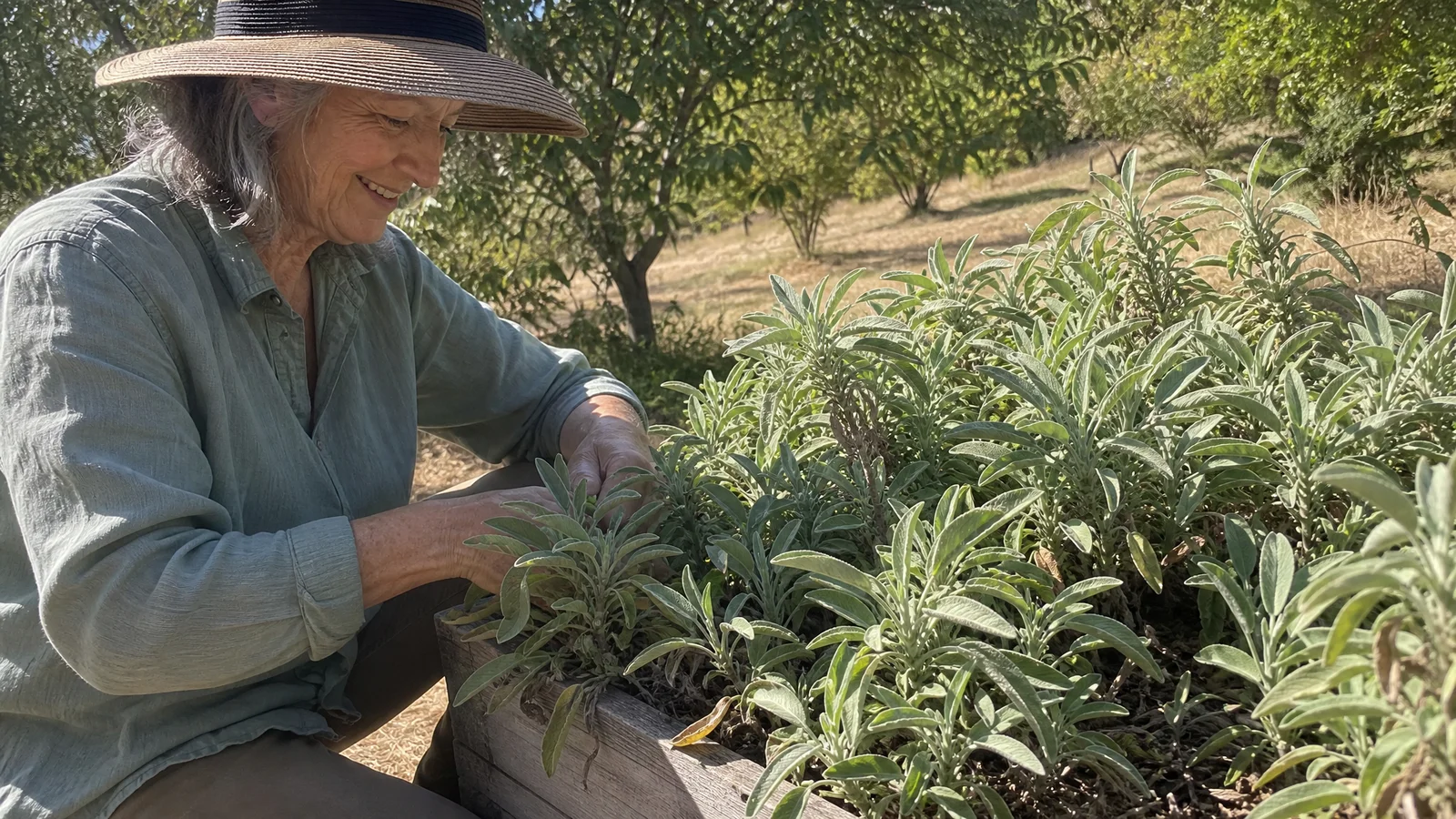
Garden sage is one of the most forgiving herbs you can grow: give it sun, give it drainage, and it comes back for years, scenting the whole windowsill whenever you brush past. It also happens to be the plant behind the oil we sell, which makes a pot of it a lovely way to see where that dry, green, camphor-edged aroma starts.
Sun and drainage come first
The Royal Horticultural Society's guide boils sage care down to one idea: keep the roots out of standing water. Pick a sunny, sheltered spot with free-draining soil, or use a raised bed or container if your ground stays wet. Leave about 30 cm between plants. In a pot, choose one at least 30 cm wide and deep with plenty of drainage holes, filled with peat-free soil-based compost mixed with horticultural grit, up to 25% by volume. Move containers to a sheltered spot, such as the rain shadow of a wall, for winter, because wet roots in the cold are what do the damage.
If you have to choose between a richer compost and a gritty one, our advice is the gritty one. Sage prefers to be a little neglected.
Plant in spring once the soil is warming. Sage from seed needs at least a year to reach harvesting size, so a young plant from a nursery or a softwood cutting taken in late spring gets you picking sooner.
What to notice when you brush past
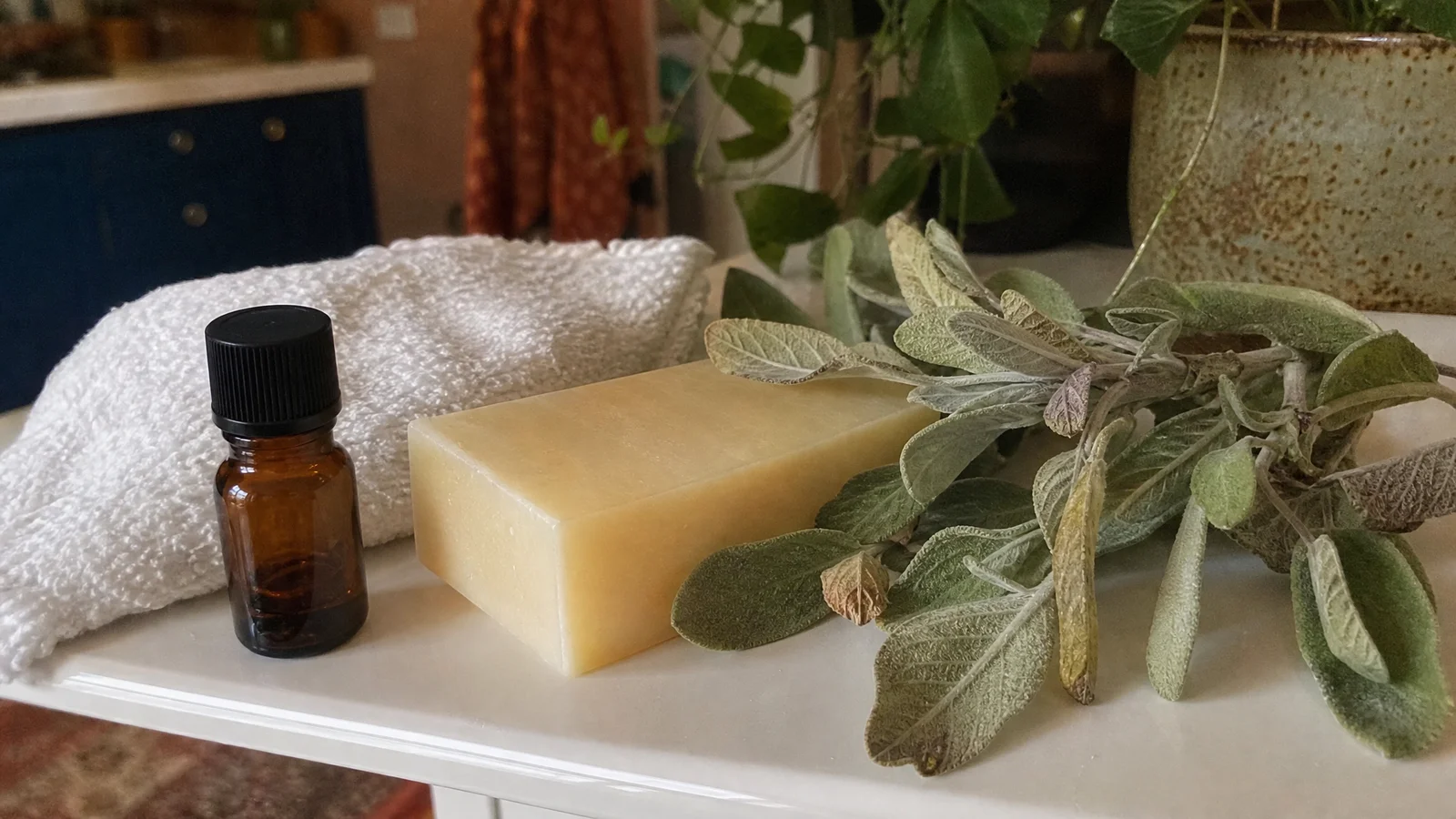
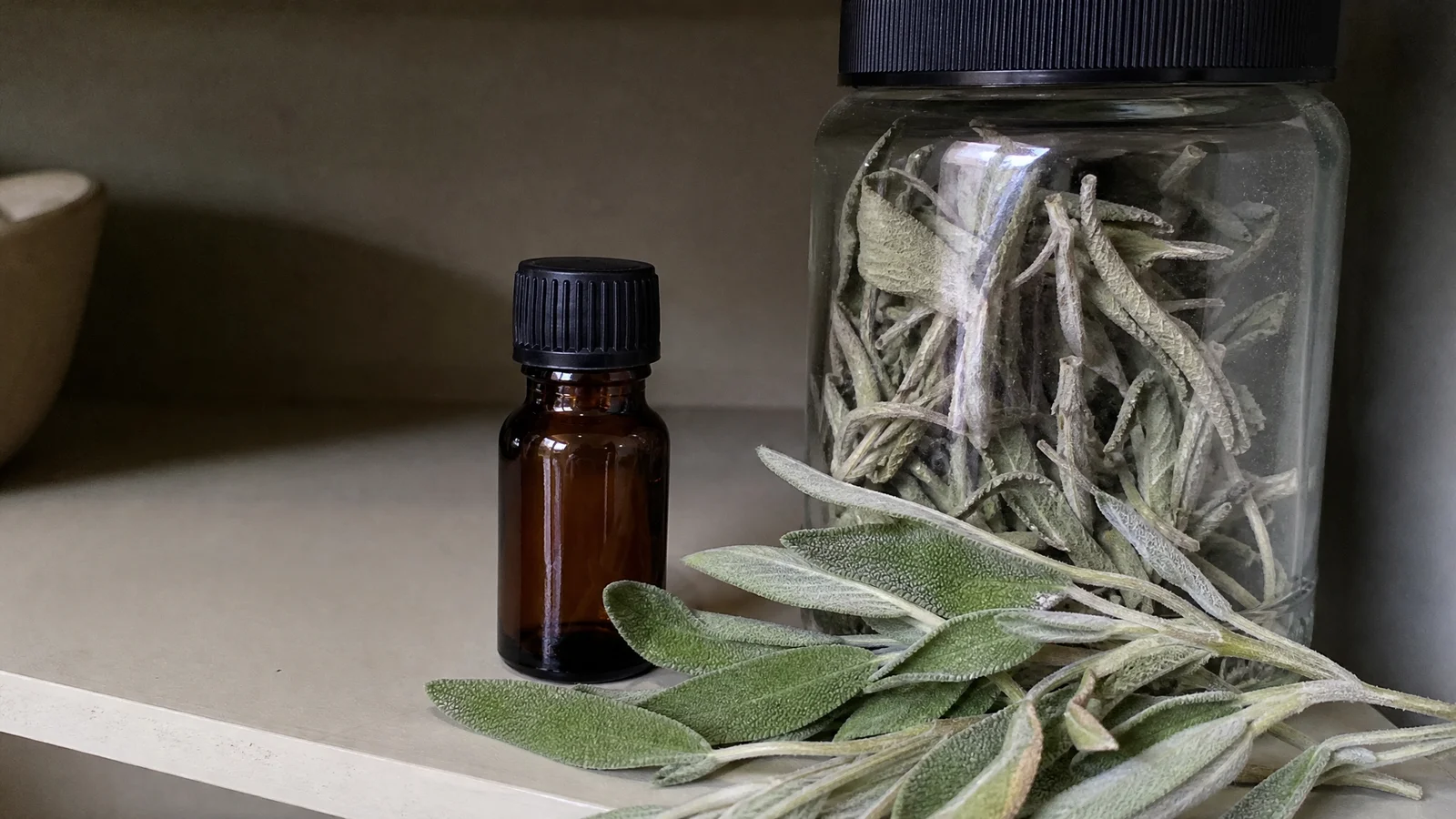
Sage leaves are softer than you might expect, grey-green and faintly velvety, with a quilted, veined surface. Rub one between your fingers and the scent arrives at once: dry, green and a little camphor-sharp, quite unlike the mellow smell of the dried jar in the cupboard.
Try it in the cool of a morning and again on a warm afternoon, and see whether the plant smells different to you. It is a lovely way to train your nose, and a good habit before you ever open a bottle of the oil.
Picking, pruning and drying
Leaves can be picked all year, and the soft growth of spring and summer is the tastiest. Regular picking of young shoots keeps the plant bushy. Give it a light prune each year in mid to late spring, trim faded flower stems in late summer, and avoid cutting hard into bare wood, since older stems may not regrow. Sage gets woody and straggly after six or seven years, so it pays to start a few cuttings before that.
To dry a harvest, hang sprigs somewhere warm, dark and airy, then store the leaves in an airtight jar. Fresh or dried, it belongs with butter, beans and roast vegetables, in the amounts you would use for food. The US National Center for Complementary and Integrative Health calls sage likely safe in the amounts commonly found in foods, while noting that thujone, a natural compound in the plant, can be toxic if consumed in large amounts.
How many plants make a bottle of oil?
This is the part that surprises people. Take a Serbian field trial that cut third-year sage plants at full flowering: each plant gave roughly 120 to 135 g of fresh above-ground growth, which our arithmetic puts near 30 g once dried (Milenkovic and colleagues, 2026). A laboratory study that distilled sage leaf in a Clevenger apparatus recovered about 1.5 to 2 mL of oil per 100 g of dried leaf (Soltanbeigi, 2026). Multiply those together and a whole plant's first cut yields about half a millilitre, or nine to twelve drops, under good laboratory conditions.
A 0.5 oz bottle holds about 14.8 mL. At that rate it needs roughly 25 to 33 plants' first cut, and about 40 plants at the European Pharmacopoeia's minimum oil content for sage leaf, a figure quoted in the European Medicines Agency's assessment report. A potted plant on a windowsill will give less. So when you hold a small bottle of sage oil, you are holding the harvest of a good-sized patch.
That arithmetic is also why we suggest growing sage for the kitchen and the garden, and buying the oil if you want the oil. The same field trial found that cut date and growing conditions shifted both the yield and the make-up of the oil, so a homemade extract would be an unknown, concentrated product. Our article on how sage oil is made follows the leaf through the still.
Home-grown does not mean thujone-free
The leaf carries thujone too, just far less per serving than the oil. A German survey of 86 sage products found 944 to 1,353 mg of thujone per kg in three brands of dried culinary sage (Walch and colleagues, 2011). That is why we describe sage as a lovely cooking herb and a concentrated oil, and why our comparison of sage oil and dried sage sets them side by side. NCCIH advises that sage may be unsafe in high doses or when taken for long periods, and pregnant people should check with a health care provider.
Enjoying the harvest
- Cook with it fresh or dried, as food.
- Hang bundles in the kitchen for their scent. A dried leaf releases far less aroma than a drop of oil, which is part of its charm.
- If you want the oil, start with what sage essential oil is. Our process page says it is not an oil for casual, generous use, and it should be avoided in pregnancy and breastfeeding, kept away from children and left alone with a seizure disorder.
A pot of sage by the back door is a small thing that rewards you every time you pass it, whether or not it ever becomes anything more than a handful of leaves for the pan.
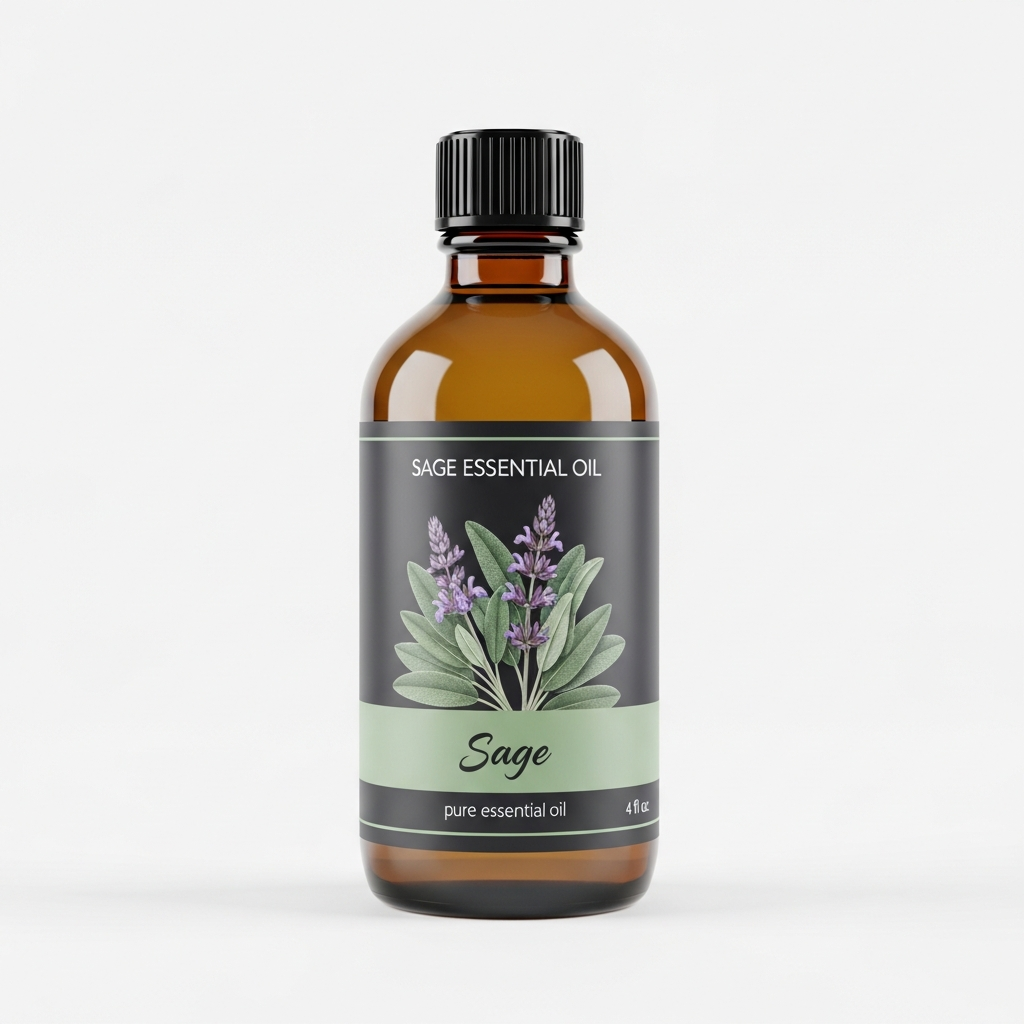
Sage Essential Oil
Sage Essential Oil from our own shop, in sizes from 0.5 oz to bulk.
From $13.99
Shop Now →Sources & Further Reading
- Royal Horticultural Society. How to grow Sage. rhs.org.uk
- Milenkovic L et al., 2026. Influence of Shading on Essential Oil Quantity and Quality of Sage (Salvia officinalis L.) at Different Harvest Times. Plants (Basel). PMC13259298
- Soltanbeigi E, 2026. Hydrodistillation time-dependent variations in the volatile oil characteristics of fresh and dried Salvia species. Sci Rep. PMC13009210
- EMA/HMPC, 2016. Assessment report on Salvia officinalis L., folium and Salvia officinalis L., aetheroleum. ema.europa.eu
- Walch SG et al., 2011. Determination of the biologically active flavour substances thujone and camphor in foods and medicines containing sage (Salvia officinalis L.). Chem Cent J. PMC3155476
- NCCIH, 2025. Sage: Usefulness and Safety. nccih.nih.gov