Is Diffusing Essential Oils Safe? What Air Studies Show
Switch a diffuser on and the room changes quickly. In one two-week office study, the air held about three times the usual limonene and more than ten times the usual pinene within the first two hours, and then the readings settled. That burst at the start is the most useful thing the research has taught us about diffusing, and it shapes everything we suggest below.
The first hour is the busy one
Korean researchers ran a commercial diffuser in an office for two weeks and tracked three terpenes, the aromatic molecules that give citrus and pine oils their character. Emissions peaked right after the unit was first set up and eased off from there. Within two hours, limonene climbed about threefold, alpha-pinene about thirteenfold and beta-pinene about fourteenfold over the room's background level (Kim and Kwon, 2026). The numbers are small in absolute terms, a few micrograms per cubic metre, but the pattern is clear: a diffuser is loudest when it starts.
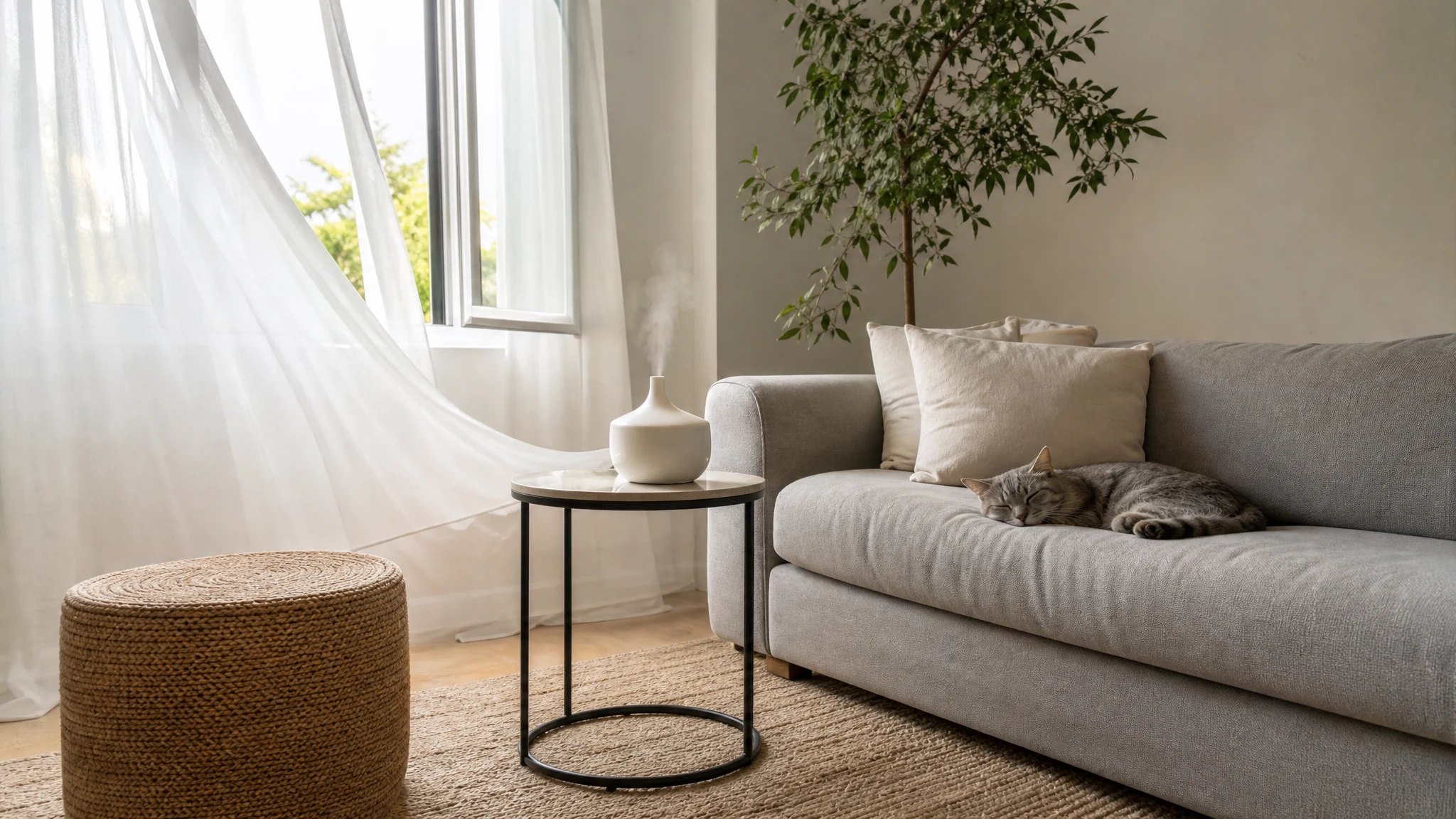
The practical lesson is easy and free. Start with the door ajar or a window cracked, use the smallest amount your unit's manual allows, and let a timer do the work instead of leaving it running all evening.
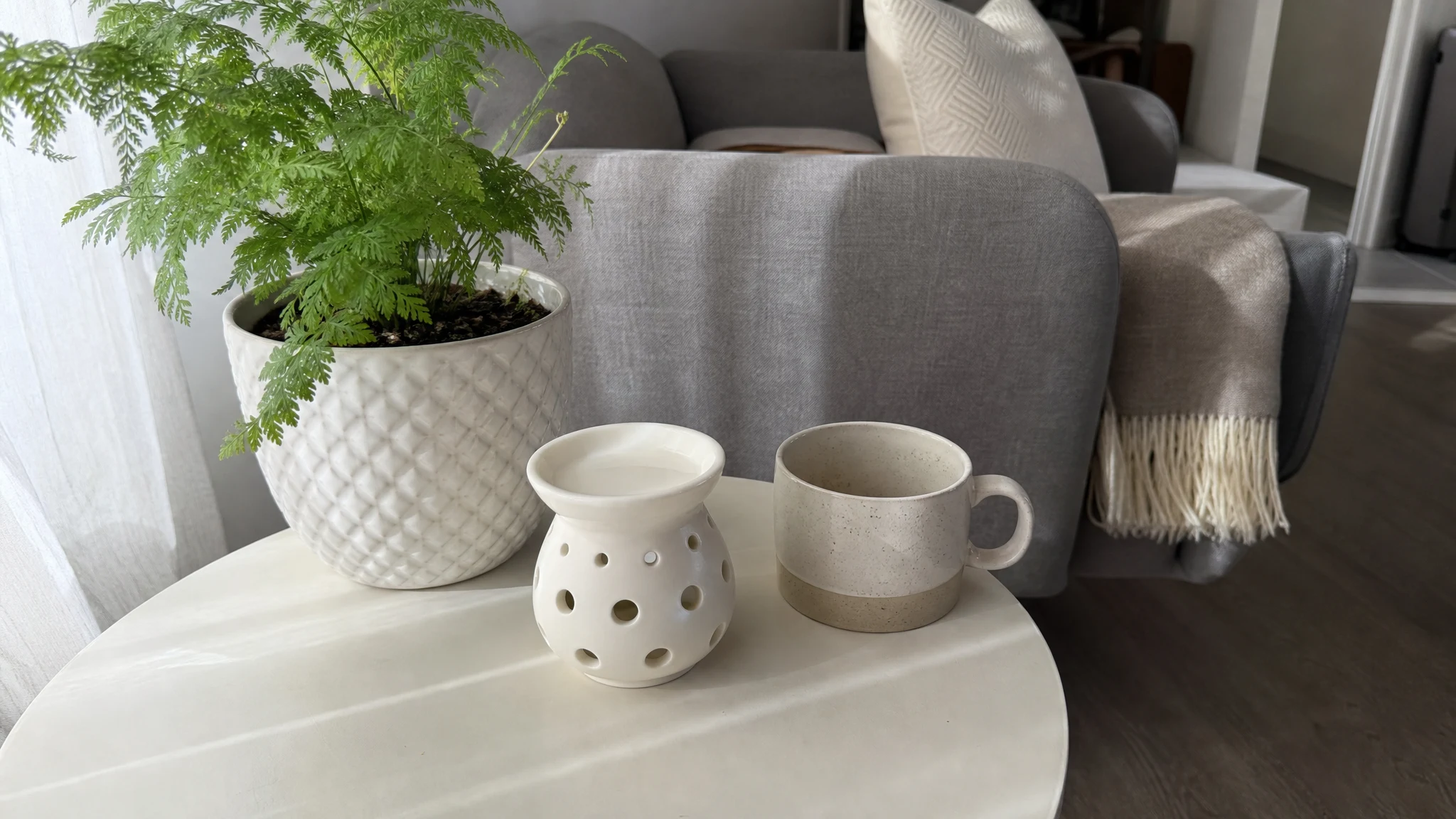
Water or heat?
A US team simulated a household and ran tea tree oil first through an ultrasonic diffuser, then through a heat diffuser. Total volatile compounds rose well above the 200 to 300 ppb background either way, but the terpene readings from the ultrasonic unit stayed under the exposure limits the authors applied. The heated unit put out roughly ten times more, and several terpenes passed long-term reference levels (Zisook and colleagues, 2025). That is one oil in one simulated home, so we would not call it a universal rule. It does give a sensible tie-breaker if you are choosing between a cool-mist ultrasonic model and a heated one for a room where people sit.
We do not sell diffusers, so your unit's manual is the authority on how much oil and water it wants. Our diffuser setup article and the drops-per-tank arithmetic walk through the sizing.
What has not been measured yet
Both studies used everyday oils, tea tree and a commercial blend. When we searched the Europe PMC index on 5 November 2026 for sage together with diffusers or indoor air, we found no published measurement of diffused sage oil, so we will not hand you a minutes-per-day number for it. What we can offer is the way we treat it ourselves. Our process page says sage is not an oil for casual, generous use and that diffusing it needs a lighter hand than you would use with a mint or a citrus. Sage oil is rich in thujone, and the European Medicines Agency describes thujone as a compound that may cause seizures at high doses (EMA public statement, 2016). That statement is about taking sage oil by mouth, not breathing it, but it is the reason we ask for a light touch: one or two drops in a small tank, a short run, a ventilated room.
Who shares the room
Anyone with asthma. An allergist answering a reader's question for the American Academy of Allergy, Asthma and Immunology said that diffusers release volatile compounds associated with increased asthma symptoms and recommended that patients exercise caution. Your own physician and asthma plan decide whether a diffuser belongs in your home.
Children. The poison centre guidance is about the bottle more than the vapour: oils belong locked up and out of sight and reach, and children have thin skin and immature livers that may make them more susceptible than adults (Poison Control). Our process page says not to use sage on or around children, so a home with young children is a home where we would choose a different scent for the diffuser. Poison Control adds that reed diffuser liquid is essential oil dissolved in rubbing alcohol and belongs out of children's reach too. More in our article on sage and children.
Pets. The ASPCA notes that cats are especially sensitive to essential oils and does not recommend using any in areas where pets have access, unless they are supervised or your veterinarian approves. Pet Poison Helpline puts cats and birds at greatest risk. Neither page singles out diffusers, so applying that advice to a diffuser is our reading, but it is a cautious one. Our pets article has the detail.
Pregnancy and nursing. We recommend avoiding sage oil entirely, diffused or otherwise; see our pregnancy and breastfeeding article.
Treat it like a candle
Think of diffusing the way you would think of lighting a candle: something you do for an hour with a purpose, not something left running all day. Pick the moment, such as the start of an evening at home, set a timer, and when it clicks off, open a window and let the room breathe. You'll notice the scent feels fresher each time you come back to it than it would if it never stopped. Keep the bottle capped between uses and put it where little hands and paws cannot reach.
A short, sensible routine
- Run it in bursts on a timer rather than all day, and air the room afterwards.
- Use the least oil your manual allows; a stronger smell is not a better one.
- Rinse and wipe the tank as the manual says between oils.
- Stop if you notice a headache, cough or watery eyes, and open a window.
- Call Poison Help at 1-800-222-1222 if a child has swallowed oil or tank liquid. Seizures or difficulty breathing are an emergency-services call.
Diffusing is a pleasant way to scent a room, and a little care at the start, when the air is changing fastest, covers most of what the research can tell us today.
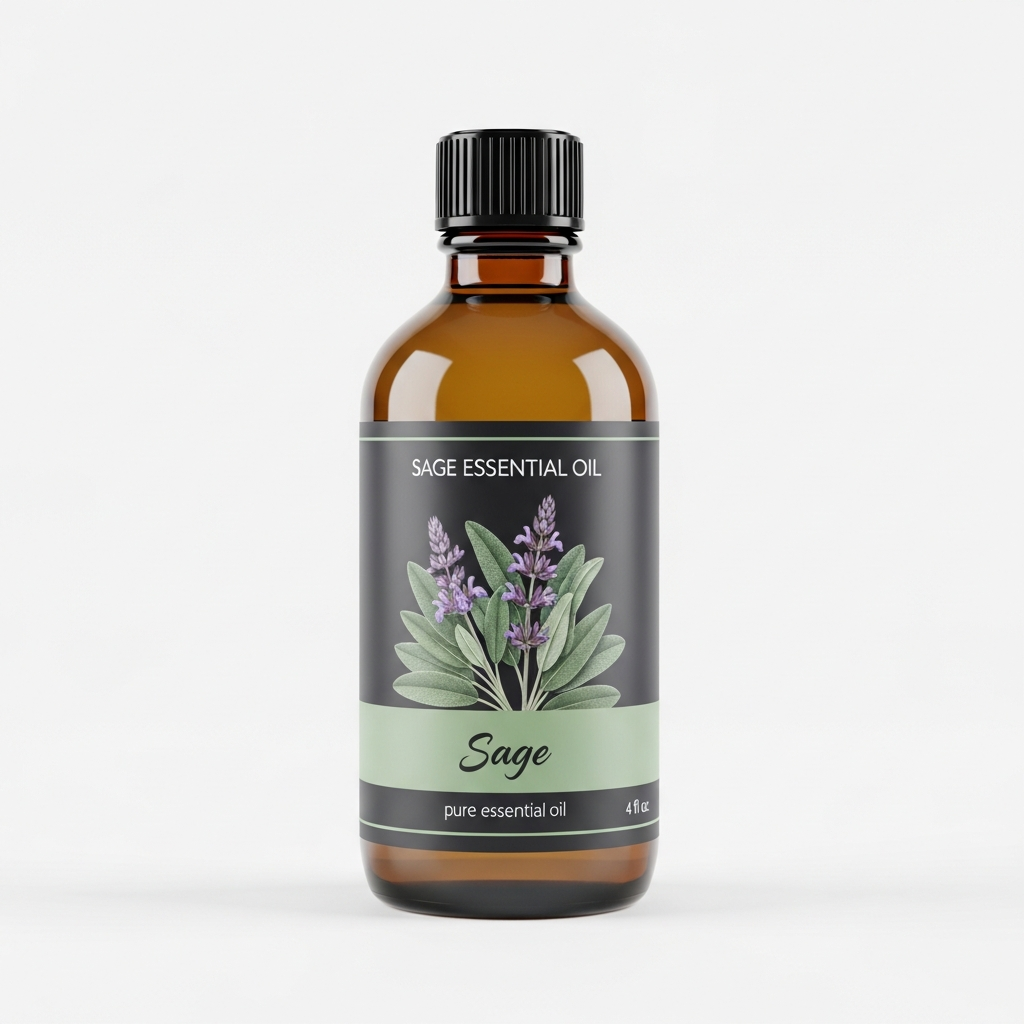
Sage Essential Oil
Sage Essential Oil from our own shop, in sizes from 0.5 oz to bulk.
From $13.99
Shop Now →Sources & Further Reading
- Kim PG, Kwon JH, 2026. Time-dependent emission characteristics of terpenes from an essential oil diffuser and indoor exposure assessment using a wearable passive sampler. J Environ Sci Health A. PubMed 41805452
- Zisook RE et al., 2025. Volatile organic compound and particle emissions from the use of tea tree oil in essential oil diffusers. J Occup Environ Hyg. PubMed 41004428
- AAAAI. Essential oil diffusers and asthma. aaaai.org
- Poison Control. Essential oils: Poisonous when misused. poison.org
- ASPCA. Pet Poisons: Be Mindful of these Household Products and Cleaning Agents. aspca.org
- Pet Poison Helpline. Essential Oils. petpoisonhelpline.com
- EMA/HMPC, 2016. Public statement on Salvia officinalis L., aetheroleum. ema.europa.eu