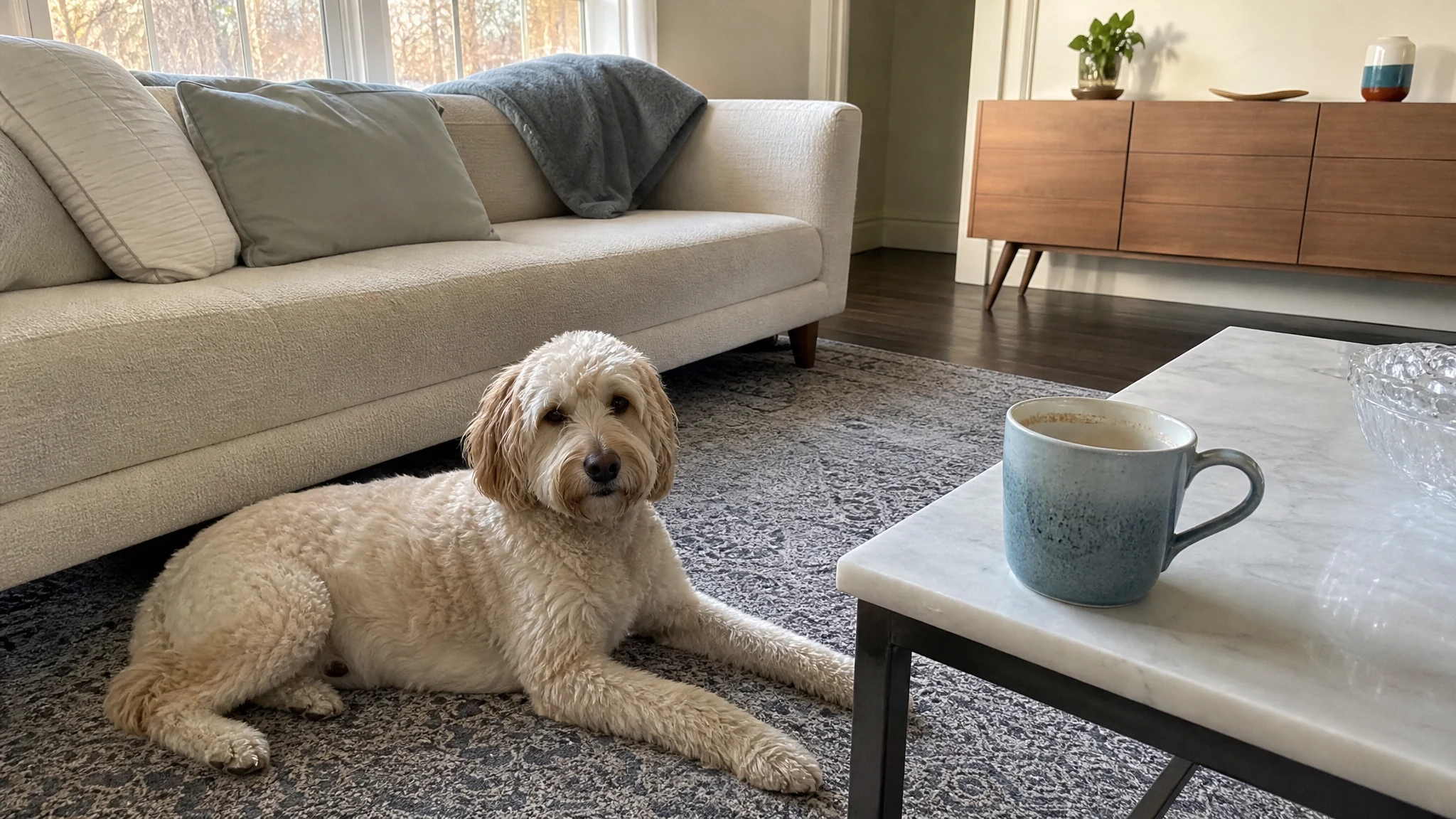
Sage Oil and Pets: Why Cats Need Extra Care
Cats are a little different from the rest of the household: they cannot process some aromatic compounds the way people and dogs do. That one biological fact explains most of what veterinary poison services say about essential oils, and it is why our advice on sage oil is to keep it well away from the animals you live with.
What the poison services say
Pet Poison Helpline, a veterinary poison service, states that essential oil toxicosis can affect all species but that cats and birds are at the greatest risk, and it lists sage among the oils that can cause poisoning, alongside cedar, cypress, some junipers and tarragon. It gives no dose for any of them. The ASPCA's Animal Poison Control team does not name sage, but says cats are especially sensitive to essential oils, that inhaling them could lead to aspiration pneumonia, and that because toxicity varies among oils it would not recommend using any essential oils in areas where pets have access, unless the pets are supervised or your veterinarian has approved the use.
Put together, one service names sage specifically and the other advises caution with everything. Neither publishes a safe number, so any drop count you see quoted for cats is not coming from either of them.
Why cats are different
A 2011 genetic study found that the gene for a key detoxifying enzyme, UGT1A6, is a non-functional pseudogene in every cat species it checked. The authors connect that to cats' known sensitivity to drugs like acetaminophen and aspirin (Shrestha and colleagues). That research is about medicines, not sage oil, so it is background rather than a verdict on our oil. The European Food Safety Authority applied the same idea directly when it assessed sage oil as a feed additive in 2024. It noted that cats have an unusually low capacity for glucuronidation, a detox pathway that handles many aromatic compounds, and raised the safety margin it required for thujone to 500 for cats, against 100 for most other species (EFSA FEEDAP, 2024). That is a feed additive eaten daily, so it is not a diffuser scenario, but it shows a regulator treating thujone as the limiting factor for animals.
Diffusers, sprays and skin
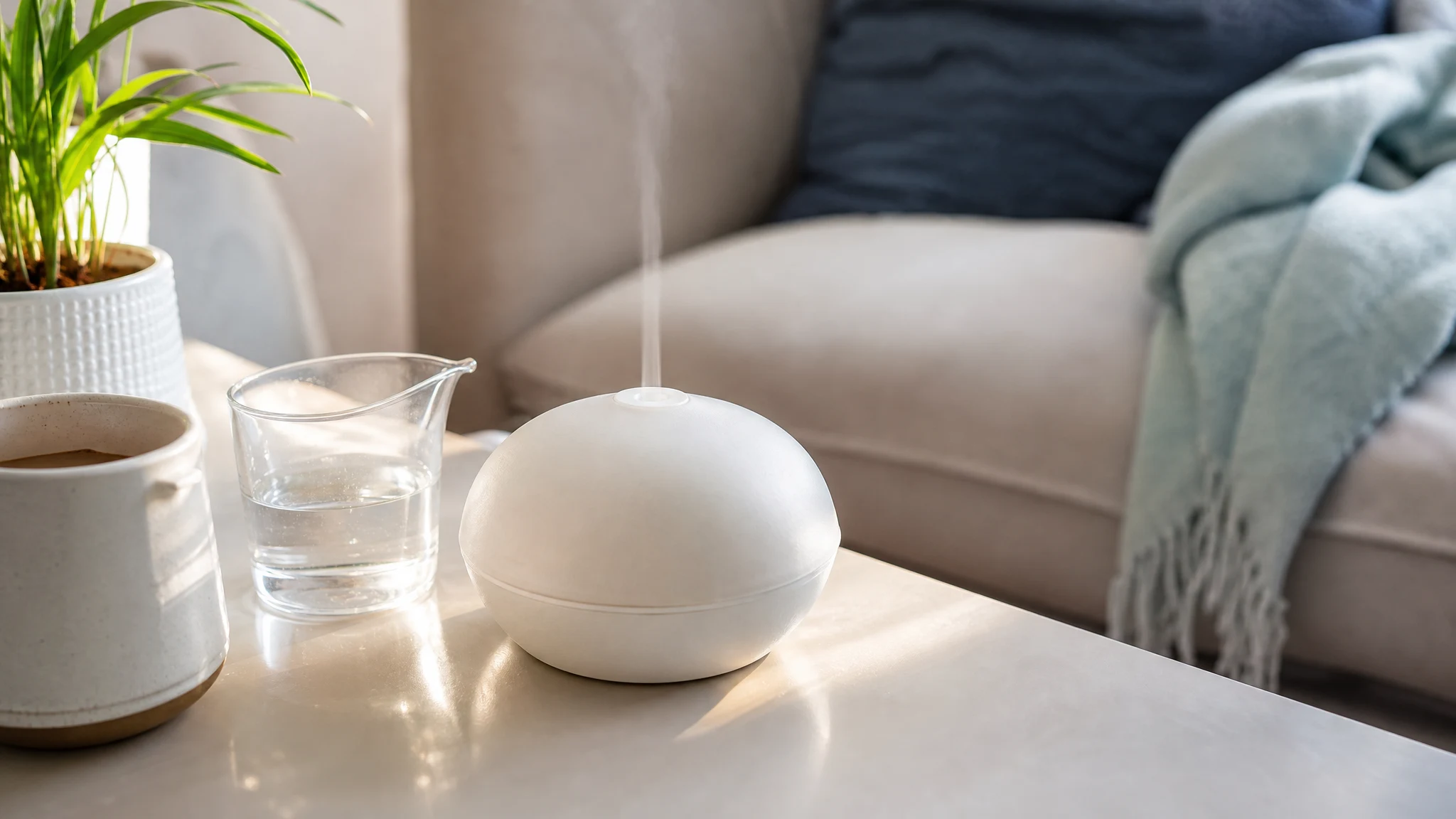
The documented advice for diffusers is the ASPCA's general caution about essential oils where pets have access. We found no study of sage oil vapour and pets, so our guidance is reasoning from that caution. A diffuser also leaves tiny droplets on surfaces, coats and bedding, and a cat that grooms swallows what lands on its fur. A cat in the next room still shares the air. Our own shop guidance says to keep sage oil away from pets, and our process page asks for a light hand even for people.
For skin, our dilution range of 0.5% to 2% is for adult human skin. We have no pet dilution and will not invent one. Please do not put sage oil on an animal, in its bedding, near its water bowl or in the area around a bird cage.
Keeping the bottle where animals cannot reach it
Treat the bottle like a medication: lid on, in a closed cupboard that a curious paw cannot open. Wipe spills with a paper towel and bin it straight away. The same habits protect children, and our articles on sage and children and diffusing safely go into the household side. For the compound behind it all, see our thujone article.
Thinking about the whole household
Pets are good at finding things. A cat will happily reach a shelf you thought was out of bounds, and a bird in the next room shares the air with the whole house. If you decide to keep a bottle of sage oil at all, think about where each animal goes in a normal day and keep the oil well away from those routes.
Wash your hands after handling the bottle before you stroke a pet, and bin any cloths or paper towels you used for spills. If a friend's home has cats or birds, leave sage out of whatever you bring along. These are small habits, and they cost nothing. If you are ever unsure, the kindest default is to leave the bottle on its shelf and enjoy a different scent in rooms the animals use.
If your animal has been exposed
Call first and search later. The ASPCA Animal Poison Control Center is at (888) 426-4435, and Pet Poison Helpline lists 800-213-6680 in its article. Contact your own veterinarian or an emergency clinic too, and keep the bottle and label to hand. Pet Poison Helpline's veterinary guidance for essential oils includes:
- Do not induce vomiting, because of the risk of aspiration.
- For skin exposure, bathing with liquid dishwashing detergent.
- For inhaled oil, moving the animal to fresh air.
The same page says signs usually develop within 6 to 8 hours, so a quiet animal is not necessarily a fine one. Your veterinarian or the poison line decides what happens next, with the product, the amount and the animal's weight in front of them.
If you share your home with a cat or a bird and love the herbal scent of sage, talk it over with your veterinarian first. Our recommendation is to leave sage oil out of those homes and choose a fragrance for the rooms they use that does not come from this bottle.
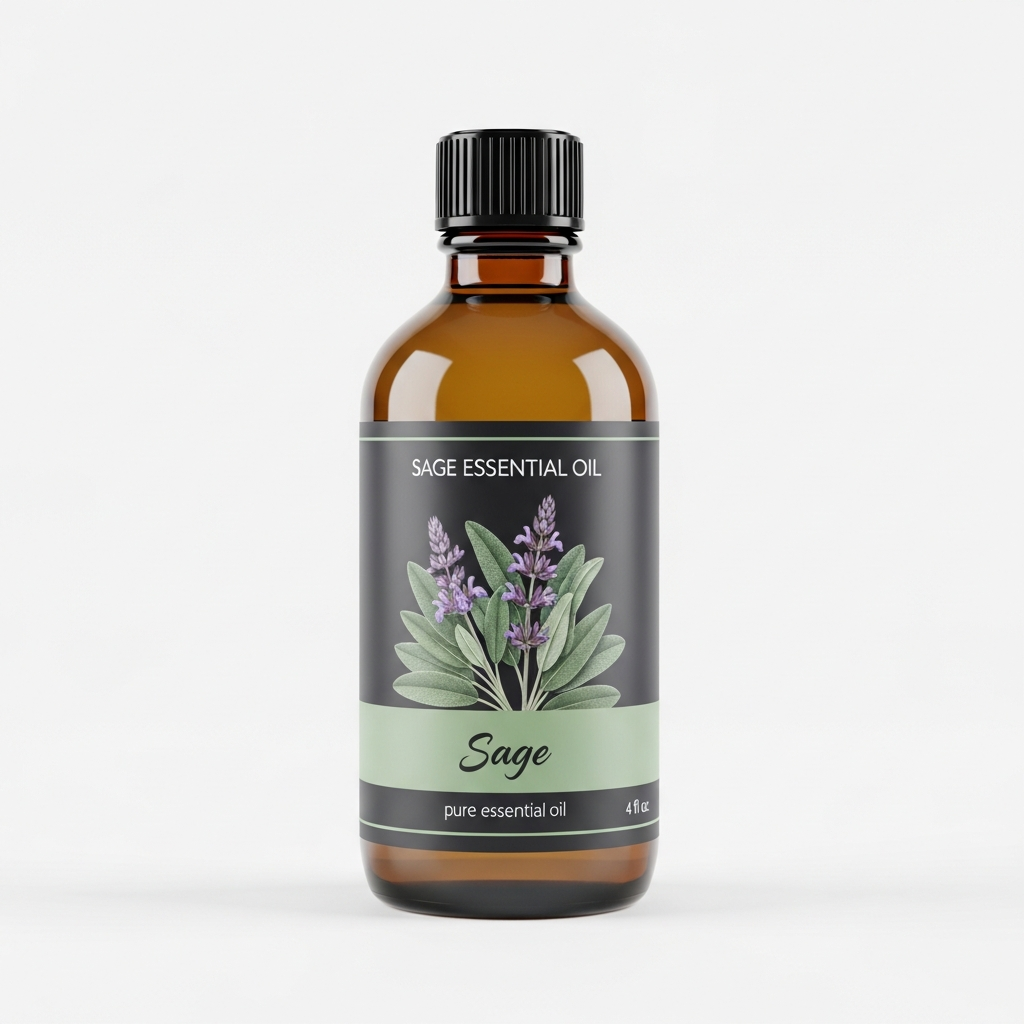
Sage Essential Oil
Sage Essential Oil from our own shop, in sizes from 0.5 oz to bulk.
From $13.99
Shop Now →Sources & Further Reading
- Pet Poison Helpline. Essential Oils. petpoisonhelpline.com
- ASPCA. Pet Poisons: Be Mindful of these Household Products and Cleaning Agents. aspca.org
- Shrestha B et al., 2011. Evolution of a major drug metabolizing enzyme defect in the domestic cat and other felidae: phylogenetic timing and the role of hypercarnivory. PLoS One. PubMed 21464924
- EFSA FEEDAP Panel, 2024. Safety and efficacy of a feed additive consisting of an essential oil derived from the leaves of Salvia officinalis L. (sage oil) for use in all animal species (FEFANA asbl). EFSA J. PMC11656093