Phototoxic Essential Oils: IFRA Limits and Where Sage Stands
A phototoxic essential oil does not cause a reaction on its own: it needs ultraviolet light on skin that carries the oil, and the damage looks like a burn, sometimes with blistering and pigment that lingers. The limits that exist are set by IFRA, the fragrance industry's standard body, for a short list of oils, and sage is not on that list. That is a fact about the list, not a finding that sage oil is harmless in sun, and this article is careful to keep the two apart. We sell only sage (two listings), no citrus oils, no carriers and no bottles.
The mechanism: a molecule, a wavelength and a DNA bond
The main culprits are furanocoumarins, molecules built from a coumarin with a furan ring attached. The Tisserand Institute explains that once one reaches a skin cell's nucleus, UVA light drives it to bond to the cell's DNA, which can kill the cell and cause inflammation and pigmentation; without UV the molecule leaves the cell and nothing happens. Coumarin alone is not phototoxic. Bergamot oil is the standard example, with expressed bergamot containing roughly 0.11 to 0.33% bergapten, while bergapten-free "Bergamot FCF" is considered non-phototoxic. Angelica root and cumin seed oils can carry furanocoumarins over in distillation, and the page notes some non-furanocoumarin phototoxic constituents (Tisserand Institute). Its practical advice is to keep the treated skin out of UV for at least 12 hours; a reaction can follow UVA exposure any time in the next 12 hours, possibly longer. If you will sunbathe or use a tanning bed, avoid phototoxic oils altogether.
The FDA makes the same point for the cosmetic trade: certain citrus oils used in food can be harmful in cosmetics, particularly on skin exposed to sunlight (FDA, aromatherapy page, content current as of 8 September 2023).
The IFRA limits, with the arithmetic
IFRA's furocoumarin standard (Amendment 49, 2020) names eight oils: angelica root, bergamot expressed, bitter orange expressed, cumin, grapefruit expressed, lemon cold pressed, lime expressed and rue. Where the bergapten content of the oils in a product is known, the standard recommends that products applied to skin exposed to UV light not exceed 0.0015% (15 ppm) bergapten in total; where it is not, the per-oil limits apply (IFRA Standard 089, 2020). The per-oil caps, which apply across most leave-on product categories (the standards show "no restriction" for a few categories, which the PDFs do not define):
| Oil (IFRA standard) | Maximum in finished product | Drops in 1 oz (29.57 ml) of carrier at that cap |
|---|---|---|
| Bergamot expressed (087) | 0.40% | about 2 to 3 |
| Lime expressed (093) | 0.70% | about 4 |
| Lemon cold pressed (092) | 2.0% | about 12 |
| Grapefruit expressed (091) | 4.0% | about 24 |
Sources: IFRA 087, 093, 092, 091. The drops column is our arithmetic at about 20 drops per ml: 0.4% of 29.57 ml is 0.118 ml, and so on. These are limits for fragrance in finished products, not recipes, and weighing beats counting drops.
The bergamot figure shows how the two rules fit. At the 0.40% cap, expressed bergamot at the Tisserand range of 0.11 to 0.33% bergapten contributes 0.00044% to 0.00132% bergapten, under the 0.0015% total. A bergamot oil at the top of that range would reach the 0.0015% total at about 0.45%, so the per-oil cap sits just below it. IFRA also says furocoumarin oils add up: express each oil's concentration as a percentage of its own limit, and the sum must not exceed 100. Worked example: 0.20% bergamot is 50% of its limit, and 0.35% lime is 50% of its limit, so together they are at exactly 100 and no more oil of either can be added. Three more oils named in the standard, petitgrain mandarin, tangerine cold pressed and parsley leaf, carry small furocoumarin amounts (50, 50 and 20 ppm) that need no restriction alone but count toward the 15 ppm total in combination.
Where sage stands
Sage oil is not on IFRA's list of furocoumarin oils, and not among the three small-amount oils either. Beyond that the record we could read is thin: the Tisserand phototoxicity article does not mention sage, the FDA page names citrus only, and the CIR draft safety review of sage-derived cosmetic ingredients (23 November 2020) that we read did not discuss phototoxicity of the oil; it does record that undiluted sage oil was moderately irritating to rabbit skin and that a professional aromatherapist reacted to sage oil at 1% and 5% in a patch test (CIR, 2020 draft). We also could not read the Tisserand and Young reference entry for sage.
So the accurate statement is: no source we read lists sage oil as phototoxic, and no source we read tested it and said it is not. We will not tell you it is non-phototoxic. The reasoning is chemical and labelled as such: IFRA's list is built around furocoumarin-containing oils, and thujone, camphor and cineole are not furocoumarins, but that is an inference from structure, not a test result for sage oil in sun.
The more useful point is the other limit. We recommend that adults using sage on the body stay at or below about 0.2%, roughly one drop per ounce of carrier, because of thujone (see the thujone article). That is far below every cap in the table, so for sage alone the sun rule would rarely be the one that decides. The place the sun rule bites is in a blend: sage with bergamot, lime, lemon or grapefruit. Check the partner oil's own label for whether it is expressed or distilled, because IFRA's limits name "expressed" and "cold pressed" oils, and the Tisserand note on FCF bergamot shows the same plant can come in both forms.
A sun routine for leave-on blends
- Check each oil in the blend against the table above; sum the percentages of limits if there is more than one.
- Keep treated skin covered or indoors for at least 12 hours, the Tisserand Institute's figure; the page says sunscreen helps somewhat.
- Do not apply any blend before sunbathing or a tanning bed.
- Patch test first, away from sun, as in the patch test article.
- The NHS says to ask for an urgent GP appointment or call NHS 111 if sun-exposed skin is blistered or swollen, or if the person has a very high temperature, dizziness, nausea, headache or muscle cramps, or if a baby or young child is sunburned (NHS, sunburn). That page does not cover reactions to skin products; a dermatologist or pharmacist is the person to ask about those.
What this means for our oils
We sell sage oil neat, so the dilution is yours to calculate; our shop copy says 0.5% to 2% for body oils, and we recommend going lower. Our certificate reports density, refractive index and optical rotation for one batch and contains no constituent data, so it cannot tell you whether anything in the bottle absorbs light in a way that matters. If you plan blends with citrus, a candle or soap project, or a dilution for sun-exposed skin, our dilution guide and the blends article are background reading, and the partner oil's supplier is the authority on its own furocoumarin content.
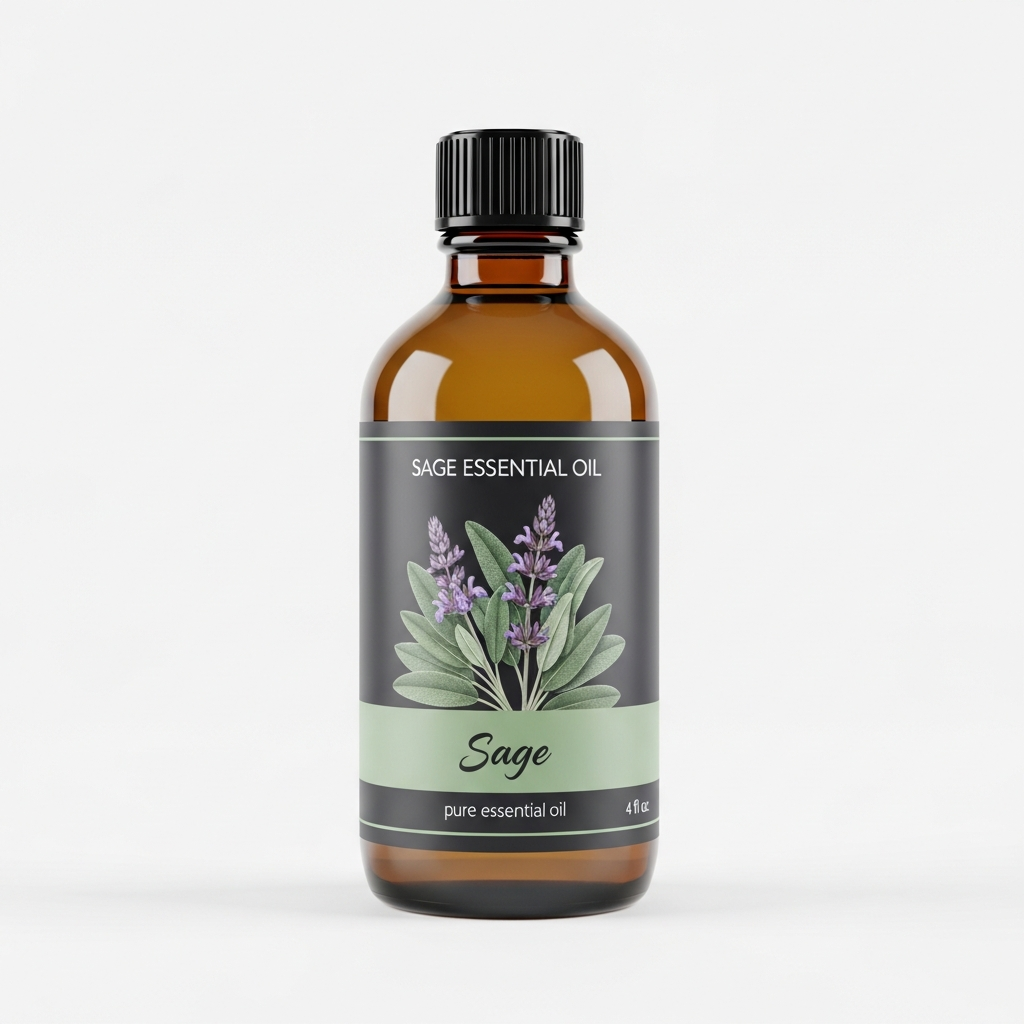
Sage Essential Oil
Sage Essential Oil from our own shop, in sizes from 0.5 oz to bulk.
From $13.99
Shop Now →Sources & Further Reading
- Tisserand Institute. Phototoxicity: essential oils, sun and safety. tisserandinstitute.org
- IFRA, 2020. IFRA Standard: Citrus oils and other furocoumarins containing essential oils, Amendment 49. ifrafragrance.org/IFRA_STD_089
- IFRA, 2020. IFRA Standards: Bergamot oil expressed (087), Grapefruit oil expressed (091), Lemon oil cold pressed (092), Lime oil expressed (093), Amendment 49. ifrafragrance.org/IFRA_STD_087
- US FDA. Aromatherapy (content current as of 09/08/2023). fda.gov/aromatherapy
- Cosmetic Ingredient Review, 2020. Safety assessment of Salvia officinalis (sage)-derived ingredients as used in cosmetics, draft for public comment. cir-safety.org
- NHS. Sunburn. nhs.uk/conditions/sunburn