Peppermint Aroma and Nausea: What the Studies Found
Here is a number worth carrying around: 0.6. It is the average gap on a 0 to 10 nausea scale that a 2025 pooled analysis of inhaled peppermint found after surgery, compared with control groups. The same paper cites the smallest change a patient would actually notice as about 1.5. Peppermint is by far the most studied aroma for nausea, and the way those numbers line up is a handy lesson in how to read any claim about it.
What the big review pooled
A Cochrane review looked at aromatherapy for nausea and vomiting after surgery, gathering 16 studies and 1,036 people. It covered inhaled peppermint, vapour from an alcohol pad held under the nose, and blended aroma products. On how bad nausea felt at the end of treatment, aroma was not clearly different from placebo: the standardised difference was -0.22, with an interval running from -0.63 to 0.18, six studies, low-quality evidence. People who had aroma were somewhat less likely to ask for rescue anti-sickness medicine (risk ratio 0.60, interval 0.37 to 0.97, seven trials), again with low-quality evidence (Aromatherapy for treatment of postoperative nausea and vomiting).
The strongest signal in that review came from isopropyl alcohol vapour compared with standard medicine, which is a different material from an essential oil. The reviewers' summary is honest and measured: aroma may work about as well as placebo for severity, but the evidence is weak.
Peppermint on its own
A 2025 analysis pooled randomised trials of inhaled peppermint only: 19 trials in three settings, with the oil delivered in different ways, for example as drops on a cotton ball. After surgery, nausea was lower by 0.60 points two to six hours later. In pregnancy, three studies found differences of 0.51 points at 48 hours and 0.68 at 96 hours. For chemotherapy the difference was larger, around 2.2 points at 48 hours, though from just three trials. The authors judged the certainty low in every setting, and they note that the postoperative and pregnancy gaps were generally below that 1.5-point threshold for a difference patients notice (Inhaling Peppermint Essential Oil as a Promising Complementary Therapy in the Treatment of Nausea and Vomiting).
So the fair reading is "promising, modest, and not settled". There is also a built-in puzzle: it is hard to blind a trial when one group is breathing something that obviously smells like peppermint, which makes it difficult to separate the oil from expectation.
What a positive trial looks like
A single study shows how encouraging a trial can look on its own. Sixty cardiac surgery patients received nebulised peppermint oil before their breathing tube was removed. In the first four hours the treated group averaged a nausea severity of 2.43 against 4.61 for the control group, and 0.17 vomiting episodes against 0.73 (The effect of aromatherapy with peppermint essential oil on nausea and vomiting after cardiac surgery: A randomized clinical trial). Those are big relative gaps, in a small hospital trial in one specialised group, using one oil by one route. They tell us about that setting, not about a bottle on a nightstand.
The human version of the numbers
Numbers like these can feel dry, so here is the plain version. A change of 0.6 on a ten point scale is small; most people would not notice it from one hour to the next. That does not make a scent worthless. Plenty of people simply like the smell of mint, and that is a fine reason to keep a bottle. It just means the smell is a pleasure rather than a plan.
If you feel unwell, sit somewhere with fresh air, sip water slowly, and do not hold an open bottle under your nose, because strong scents can be too much when your stomach is unsettled. Nausea that is severe or does not go away is a reason to call a doctor or pharmacist, not to look for a better oil.
Where sage comes in
None of these studies used sage. What we can say about sage is that the authorities are cautious around pregnancy, which is also when morning sickness appears. The EMA assessment report lists sage as contraindicated in pregnancy and lactation and describes its thujones as abortifacient (Assessment report on Salvia officinalis L., folium and Salvia officinalis L., aetheroleum), and the NIH says sage may be unsafe to use during pregnancy (Sage: Usefulness and Safety). Those statements mostly concern leaf preparations taken by mouth, but they match our own position: we say to avoid sage oil entirely during pregnancy and while breastfeeding. Our pregnancy and breastfeeding article lists what authorities say in full.
We sell one oil, garden sage, as a cosmetic and aroma oil. It is not a nausea product and we make no claim for it. For everyday queasiness the NHS suggests fresh air, small sips of a cold drink, and ginger or peppermint tea, and it recommends seeing a GP if you feel sick for more than a few days or it keeps coming back. In pregnancy, it asks you to call your midwife, GP or 111 if you cannot keep food or fluids down for 24 hours, are very weak or dizzy, have tummy pain or a high temperature, or vomit blood (Feeling sick (nausea); Vomiting and morning sickness).
If you enjoy reading how aroma research is put together, our overview of what the trial reviews conclude pairs well with this one, and so does the companion piece on headache trials. Remember the two numbers, 0.6 and 1.5, and you will read most of these headlines with a calmer eye.
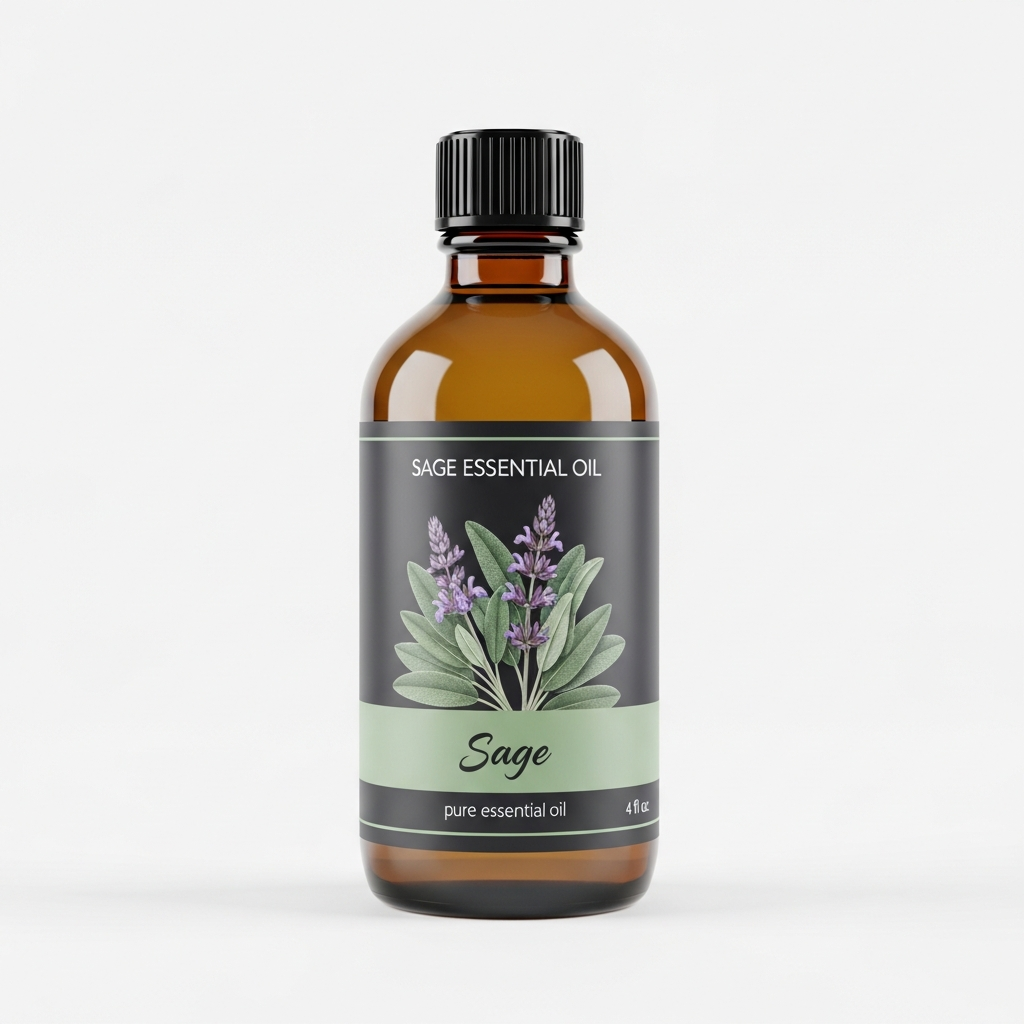
Sage Essential Oil
Sage Essential Oil from our own shop, in sizes from 0.5 oz to bulk.
From $13.99
Shop Now →Sources & Further Reading
- Aromatherapy for treatment of postoperative nausea and vomiting (Hines et al., Cochrane Database Syst Rev, 2018)
- Inhaling Peppermint Essential Oil as a Promising Complementary Therapy in the Treatment of Nausea and Vomiting (J Clin Med, 2025)
- The effect of aromatherapy with peppermint essential oil on nausea and vomiting after cardiac surgery: A randomized clinical trial (Maghami et al., Complement Ther Clin Pract, 2020)
- Assessment report on Salvia officinalis L., folium and Salvia officinalis L., aetheroleum (EMA/HMPC/150801/2015)
- Sage: Usefulness and Safety (NCCIH)
- Feeling sick (nausea) (NHS)
- Vomiting and morning sickness (NHS)