Essential Oils and Headaches: Two Trials Examined
Most headaches are ordinary and pass, but a few are not, and the NHS draws the line clearly. Call 999 or go to A&E if a headache comes with a seizure, numbness or weakness in the face or body, trouble speaking or seeing, drowsiness or confusion, a rash that does not fade under a rolled glass, a very high temperature with a stiff neck, or if it began suddenly and is extremely painful (Headaches). With that said, two small studies come up again and again whenever oils and headaches are mentioned, and they are worth reading closely, because each tested something narrower than the headlines suggest.
Peppermint on the forehead, in a laboratory
The first is a 1994 experiment. Thirty-two healthy volunteers took part in a double-blind crossover design, and four preparations were smoothed over the forehead and temples with a sponge. A mix of peppermint oil and ethanol reduced sensitivity to headache-related pain in the lab measurements. A mix of peppermint, eucalyptus and ethanol did something different: it increased cognitive performance and had a muscle-relaxing and mentally relaxing effect, but had little influence on pain sensitivity (Effect of peppermint and eucalyptus oil preparations on neurophysiological and experimental algesimetric headache parameters).
The people in that study did not have headaches. They were volunteers in a pain model, so what it tells us is how a preparation behaved on a laboratory measure. The abstract does not give the strength of the oil in the ethanol, so it is best not to quote a recipe from it.
Lavender and migraine, by inhalation
The second is a trial in 47 people with a confirmed diagnosis of migraine. During an attack, one group inhaled lavender oil for 15 minutes and the other inhaled liquid paraffin, and they recorded severity every 30 minutes for two hours. Severity fell by 3.6 points on a visual analogue scale with lavender and 1.6 with paraffin, and 92 of 129 lavender attacks responded fully or partly, against 32 of 68 with paraffin (Lavender essential oil in the treatment of migraine headache: a placebo-controlled clinical trial).
It is a lovely result for a first trial, and the authors say as much, describing it as the first placebo-controlled trial of its kind. It also has features worth keeping in mind: the ratings were self-reported, and lavender is easy to tell from paraffin by smell, so people probably knew which group they were in. That last point is our reasoning rather than the paper's. A result like this is a good reason to run a bigger trial.
Sage and the temples
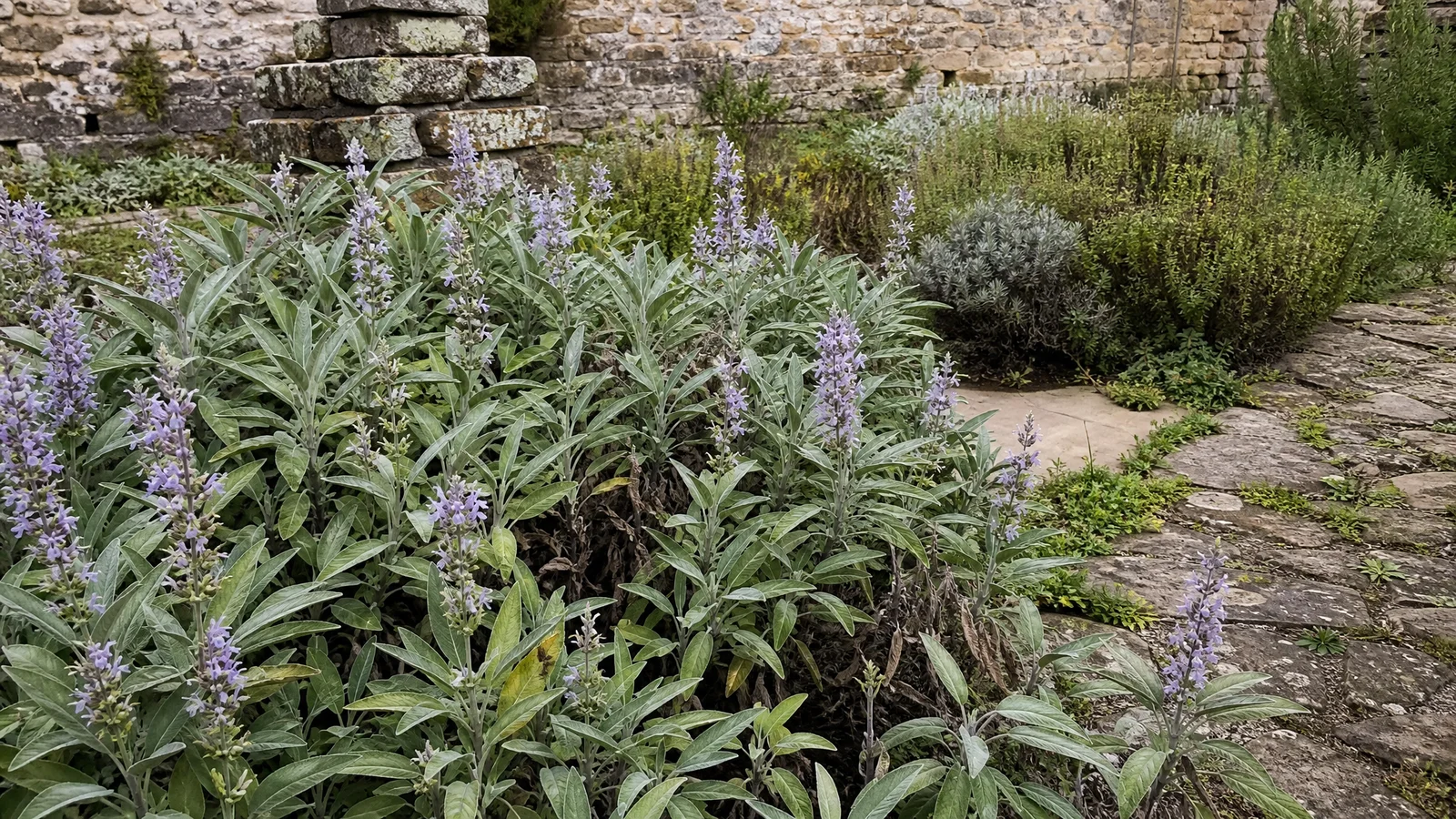
Neither study used sage, and temples are exactly where we would keep it away from. They sit close to the eyes, and the European Food Safety Authority classes sage oil as an irritant to skin and eyes and a dermal and respiratory sensitiser. It measured an average of about 25% alpha-thujone and 5.6% beta-thujone in the batches it assessed (Safety and efficacy of a feed additive consisting of an essential oil derived from the leaves of Salvia officinalis L. (sage oil) for use in all animal species (FEFANA asbl)). The EMA's herbal committee describes thujone as toxic and capable of causing seizures at high doses (Public statement on Salvia officinalis L., aetheroleum).
Our general dilution guidance for skin is 0.5% to 2% in a carrier oil, and we start at the low end. For the face we would go lower still. IFRA's thujone standard allows 0.032% thujone in a finished face moisturizer (Category 5B), and at the thujone level EFSA measured that works out to roughly 0.1% sage oil, by our arithmetic (IFRA Standard, Thujone, 2020 (Amendment 49)). IFRA's guidance puts aromatherapy applications outside its scope, so treat the figure as a reference point, but it is well under our lowest number. So we do not suggest a dab on the temples with sage, and we keep it away from children altogether.
Small children are the reason for that second rule. Doctors described a newborn and a toddler who had generalised seizures after accidental exposure to sage oil; both recovered well (Toxicity of Salvia officinalis in a newborn and a child: an alarming report).
A calm way to read the headlines
Headline claims about oils and pain tend to be much bigger than the trials behind them. A good habit is to find out how many people took part, which oil was used, and how it was applied, then compare that with the headline. If a story does not tell you, assume the claim is smaller than it sounds. We say this as people who sell an oil: we would rather you read carefully than simply believe us.
If headaches are a regular part of your life, a simple log of when they come, along with sleep and meals, can help you and a clinician see a pattern. A small notebook is all it takes.
What we sell, and where to go next
We sell garden sage oil only, as an aroma and cosmetic oil, and we make no headache claim for it. We do not sell peppermint or lavender; if you want those, a reputable supplier should be able to name the species on the label. For recurring headaches, the person to ask is a physician or pharmacist. If you would like to see how our own dilution maths works, start with how to dilute sage oil, and for the wider research picture see what trial reviews conclude about aromatherapy and our stress and anxiety article.
Two trials, two oils, two different questions. Read the small print first, and the headlines usually get a lot more modest.
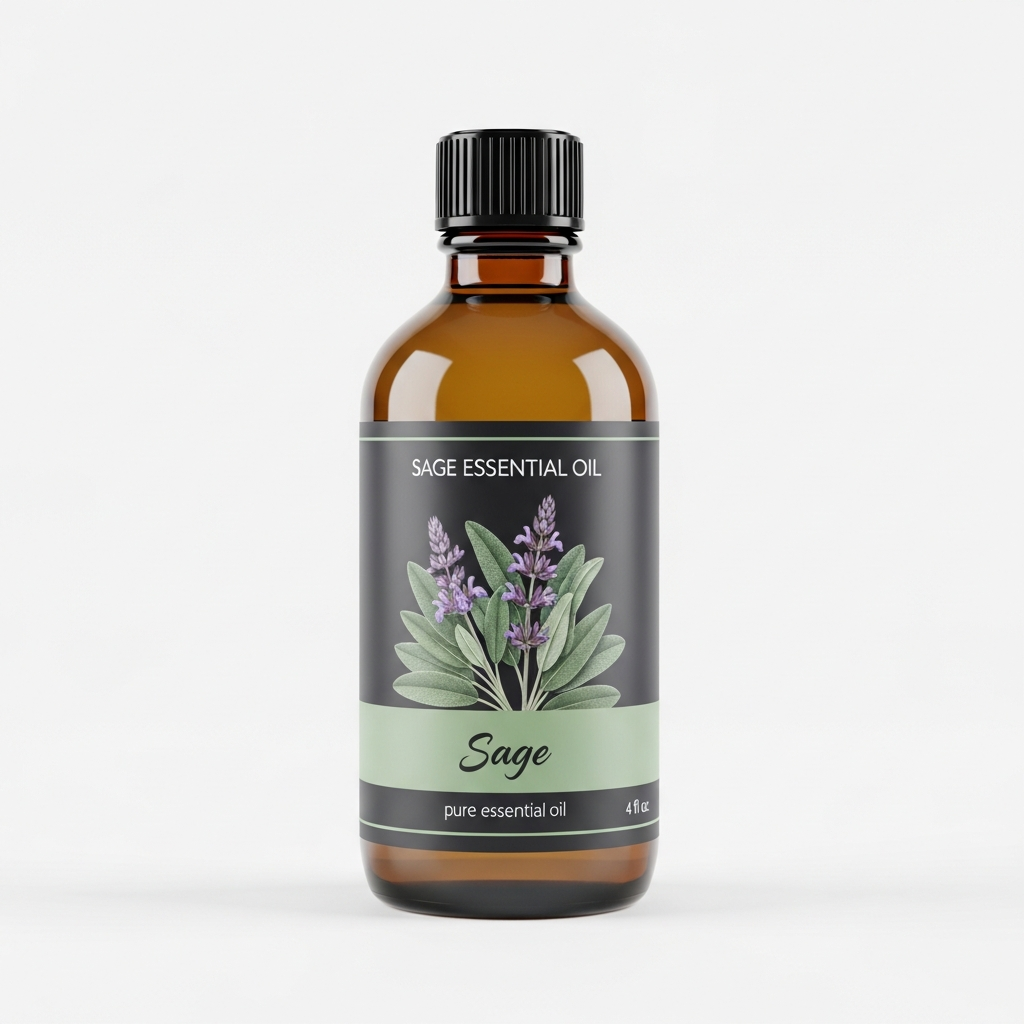
Sage Essential Oil
Sage Essential Oil from our own shop, in sizes from 0.5 oz to bulk.
From $13.99
Shop Now →Sources & Further Reading
- Headaches (NHS)
- Effect of peppermint and eucalyptus oil preparations on neurophysiological and experimental algesimetric headache parameters (Göbel, Schmidt and Soyka, Cephalalgia, 1994)
- Lavender essential oil in the treatment of migraine headache: a placebo-controlled clinical trial (Sasannejad et al., Eur Neurol, 2012)
- Safety and efficacy of a feed additive consisting of an essential oil derived from the leaves of Salvia officinalis L. (sage oil) for use in all animal species (FEFANA asbl) (EFSA FEEDAP Panel, EFSA Journal, 2024)
- Public statement on Salvia officinalis L., aetheroleum (EMA/HMPC/41843/2009 Corr. 1)
- IFRA Standard, Thujone, 2020 (Amendment 49)
- Guidance for the use of IFRA Standards (IFRA, 51st Amendment, June 2023)
- Toxicity of Salvia officinalis in a newborn and a child: an alarming report (Halicioglu et al., Pediatr Neurol, 2011)