What Does Organic Mean on Essential Oil Labels?
Pick up two bottles of essential oil, one marked organic and one not, and the word on the label is easy to take as shorthand for "better". It is really a narrower and more interesting promise: a statement about how the plant was grown and how the oil was handled, backed by paperwork that someone has inspected. Knowing exactly what that paperwork covers, and what it leaves alone, makes you a sharper buyer of any oil.
What the word commits a seller to
Under the USDA organic regulations, a production or handling operation that sells products as organic must be certified, with a few listed exemptions (7 CFR 205.100 - What has to be certified). Certification is not a one-off stamp. A certified operation maintains a yearly organic system plan with an accredited certifying agent, allows on-site inspections that include its non-certified areas, keeps records for at least five years, and must tell the certifier immediately if a prohibited substance touches any part of the operation (7 CFR 205.400 - General requirements for certification). That paper trail is what makes the claim checkable.
The label tiers, and why an oil is simpler
The regulations set three composition levels, counted by weight or fluid volume without water and salt: "100 percent organic", "organic" (not less than 95%) and "made with organic" ingredients (at least 70%) (7 CFR 205.301 - Product composition). For a single-ingredient oil, our reading is that there is not much to argue about in the middle: either the plant material and the handling were organic or they were not. A blend or a product with a carrier is a different story, because the carrier counts toward the percentage.
The seal is also not the whole test. A packaged product labelled organic must name the certifying agent that certified the handler of the finished product, on the information panel under the handler's name, with wording such as "Certified organic by" (7 CFR 205.303 - Packaged products labeled "100 percent organic" or "organic."). Reasoning from that, a farm's certificate does not stand in for the bottler's, so the useful question is which operations a certificate covers. The certifier's name next to a certificate you can request is a much stronger signal than a green leaf on the box.
The very small producer
There is one more wrinkle. An operation whose gross income from organic sales is five thousand dollars a year or less is exempt from certification, though it still has to follow the production and labeling rules (7 CFR 205.101 - Exemptions from certification). That is a rule about paperwork, not about quality, and many small growers are excellent. For a buyer, it simply means asking whether a seller is certified or exempt.
What organic does not tell you
Residues. Organic is a threshold system, not a promise of zero. A product is excluded from organic sale when testing finds a prohibited substance above 5 percent of the EPA tolerance for that residue (7 CFR 205.671 - Exclusion from organic sale). For that reason we make no claim either way about residues in sage oil.
Composition. The rules we read govern growing and handling. None sets a thujone, camphor or cineole level, and that is the part of sage that moves. The EMA calls the oil's composition very variable with source and harvest (Assessment report on Salvia officinalis L., folium and Salvia officinalis L., aetheroleum), so an organic oil and a conventional one could each land at either end. If composition matters to you, our guide to reading a GC-MS report shows how to ask for it, and the thujone article explains why it counts.
Safety. The FDA notes that it has no regulations defining "natural" or "organic" for cosmetics, and that all cosmetic products and ingredients must meet the same safety requirement regardless of their source (Aromatherapy). A plant being organic does not change how strong its oil is. The cautions we give for sage, including avoiding it in pregnancy and breastfeeding, around children and with a seizure disorder, apply to any sage oil.
A short list for the next bottle
When you are comparing two bottles, a few plain questions go a long way.
- Is the word organic only on the front, or is a certifier named near the seller's details?
- Will the seller show you the certificate if you ask?
- Does the label give the Latin name and the part of the plant used?
- Does the seller say plainly what they do not know?
A seller who enjoys answering these is usually one worth spending time with. A shrug is information too.
About our oils
We do not make an organic claim for our sage oils, and the Certificate of Analysis we publish for one batch covers physical constants rather than organic status. If organic matters to you, say because you plan to label a finished product organic, please ask us in writing through the contact page before ordering, and check anything you receive with the certifier named on it. Wholesale and private-label buyers can start from our wholesale page. Our buying guide covers the other questions worth asking, such as the Latin name.
A good decision order is simple. Decide whether you need the claim or just prefer it, ask for the certifier's name and the certificate if you need it, and ask for composition separately, because organic and potent are two different questions.
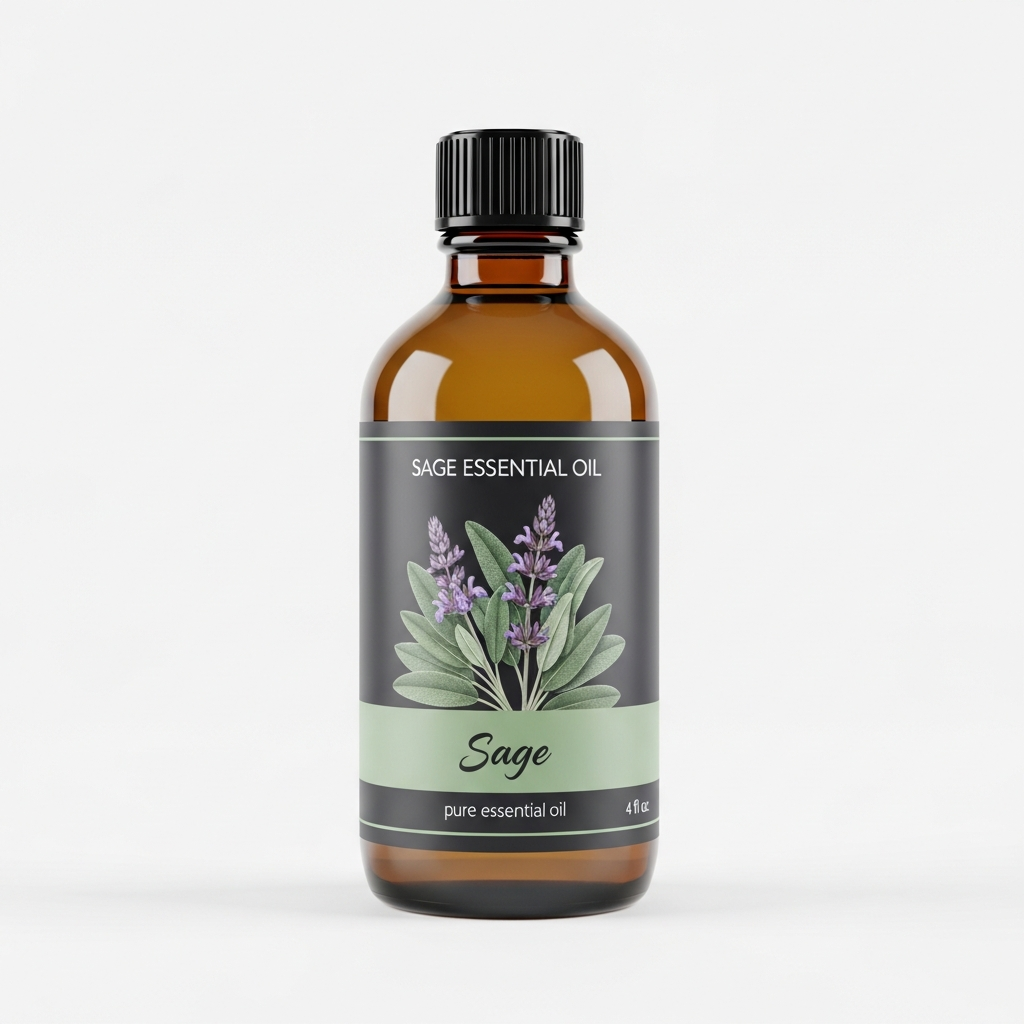
Sage Essential Oil
Sage Essential Oil from our own shop, in sizes from 0.5 oz to bulk.
From $13.99
Shop Now →Sources & Further Reading
- 7 CFR 205.100 - What has to be certified (eCFR via Cornell LII)
- 7 CFR 205.400 - General requirements for certification (eCFR via Cornell LII)
- 7 CFR 205.301 - Product composition (eCFR via Cornell LII)
- 7 CFR 205.303 - Packaged products labeled "100 percent organic" or "organic." (eCFR via Cornell LII)
- 7 CFR 205.101 - Exemptions from certification (eCFR via Cornell LII)
- 7 CFR 205.671 - Exclusion from organic sale (eCFR via Cornell LII)
- Assessment report on Salvia officinalis L., folium and Salvia officinalis L., aetheroleum (EMA/HMPC/150801/2015)
- Aromatherapy (FDA)