The History of Sage and the Greek Sage Mix-Up
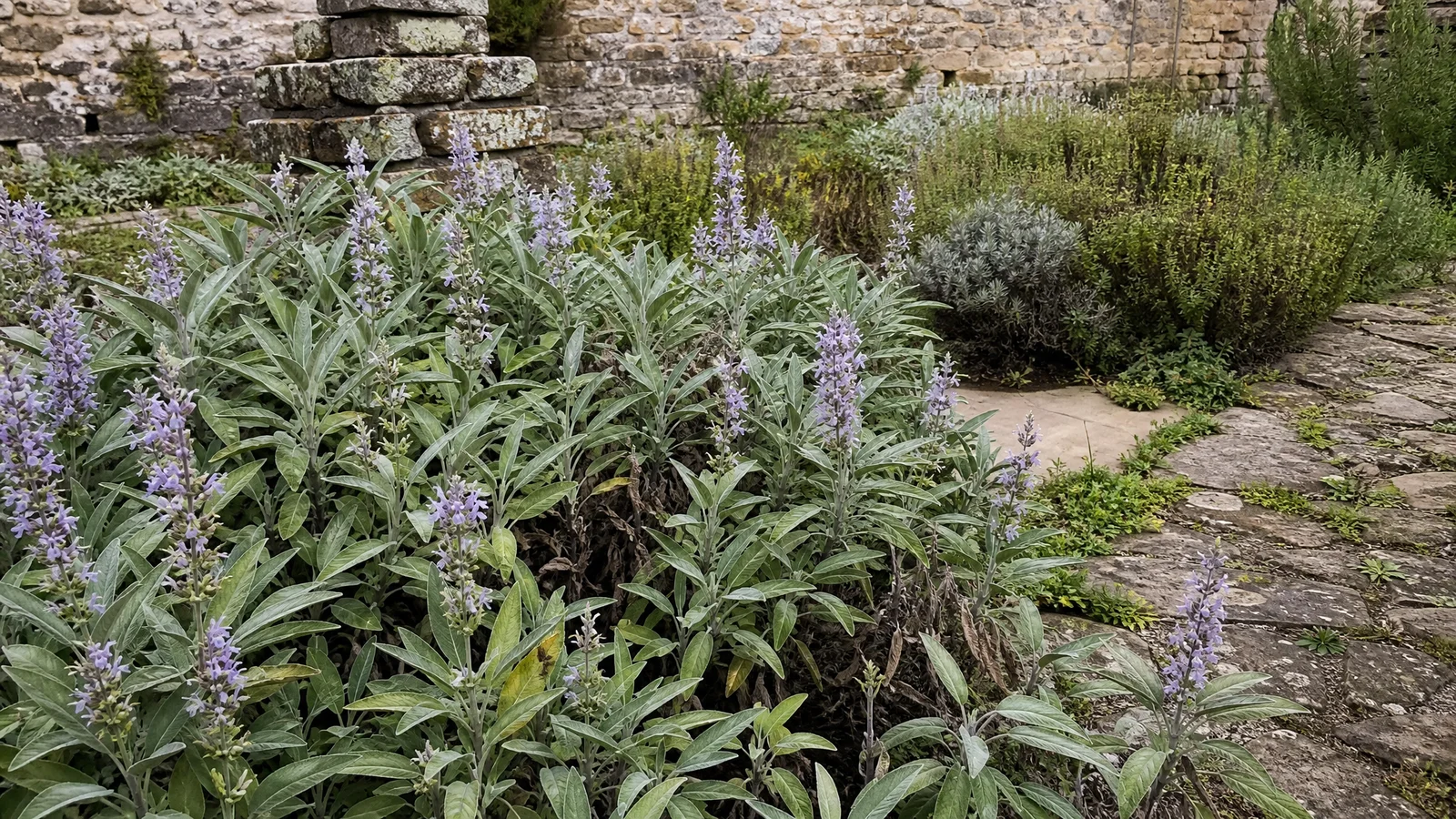
Say the word sage and most of us picture a kitchen herb, grey-green and a little fuzzy, going into stuffing at Thanksgiving. The plant's name carries a bigger promise than that. Salvia comes from the Latin salvere, "to be in good health", and the story of how sage earned that name, and who may have been quietly given credit that belonged to a cousin, is more interesting than the tidy version usually told.
A name that promises good health
The botanical garden of the University of Molise traces the genus name to salvere and explains that the species name officinalis marks plants that were sold in the officinae, the old pharmacies (Salvia officinalis L. - Giardino della Flora Appenninica). So both halves of garden sage's Latin name say the same thing: this was a plant people kept close at hand.
It also has a lot of relatives. A 2017 review puts the genus at nearly 900 species, with Salvia officinalis native to the Middle East and the Mediterranean and now naturalised across much of the world (Pharmacological properties of Salvia officinalis and its components). That crowded family tree matters in a moment.
What the reference books record
The European Medicines Agency's assessment report has a section on historical use, and it reads like a roll call. Sage leaf turns up in the writings of Hippocrates, Paracelsus and Hildegard von Bingen, among others. The report says cultivation reached northern Europe in medieval times and North America in the 17th century, and that sage appeared in ancient Egyptian, Greek and Roman medicine, from a role as a fertility drug in Egypt to Greek gargles for sore mouths and throats. The same traditions travelled east into Ayurvedic, Siddha and Unani practice (Assessment report on Salvia officinalis L., folium and Salvia officinalis L., aetheroleum).
It is a record of how people used and talked about the leaf, which is a lovely thing to know about a plant. It is not a record of what the leaf, let alone the oil, did.
The Greek sage mix-up
Here is the twist. In a separate EMA report on Salvia fruticosa, the Greek sage, the authors write that archaeological evidence supports this shrub, hidden among ancient authors under the name "elelisphakon", having been used medicinally since about 1400 BC. They add that translators who read that word narrowly as garden sage probably explain why Greek sage lost its reputation and why garden sage was handed uses that were most likely meant for its cousin (Assessment report on Salvia fruticosa Mill., folium).
That is one draft report's reading, but it is a fun one: part of the "ancient history of sage" may belong to a Mediterranean shrub native from Sicily and southern Italy to western Syria, with a different oil. Our piece on Spanish sage and Greek sage shows how those oils differ from garden sage. The practical lesson for anyone buying sage oil is that the word "sage" alone does not name a plant. The Latin name does.
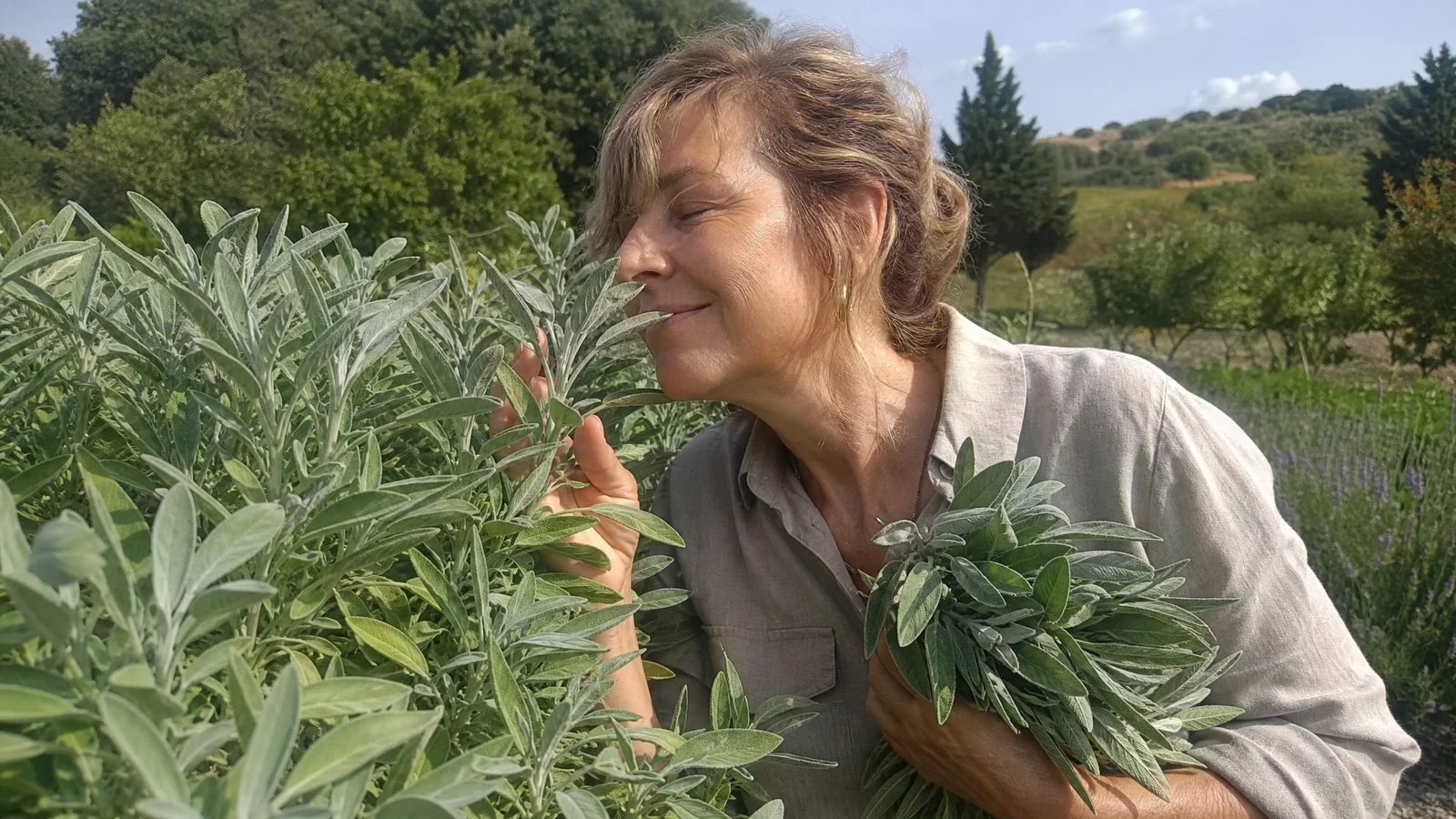
If all this history has you curious, the simplest way to meet it is to rub a leaf between your fingers. A pot on the windowsill does the job, and our growing guide covers how to start one. Smelling the plant that so many writers argued about is a nice reminder that the story began in a garden, long before anyone thought to bottle it.
From leaf to bottle
Oil was never the headline of this history. It is, however, a measurable part of the leaf: the European Pharmacopoeia, as the EMA report quotes it, asks for at least 12 ml of essential oil per kilogram of whole dried sage leaf. Distillation takes that small fraction and concentrates it, and the result smells like the garden gone to a warmer, sharper place. Perfumers have a word for it. In a 2002 trade article, Michael Britten-Kelly describes the "thujonic" odor type as herbaceous, minty, camphoraceous, green, warm, fresh and spicy, with sage among the oils perfumers think of first (New Aroma Chemicals: Thujone Alternatives).
Concentration is also why centuries of seasoning and tea do not translate into a dose of oil. The NIH describes sage as likely safe in the amounts found in food and notes that thujone can be toxic in large amounts (Sage: Usefulness and Safety), and the EMA's herbal committee describes sage oil as high in thujone (Public statement on Salvia officinalis L., aetheroleum). That is the reason we ask you to dilute our oil and to keep it away from children, pets and pregnancy. Our articles on sage oil versus dried sage and on thujone go into the numbers.
Where our oil fits
We sell garden sage oil. The Certificate of Analysis we publish for one batch names Salvia officinalis, leaf, steam distilled, and lists its density, refractive index and optical rotation. It is an external cosmetic and aroma oil, and we make no health claims for it. Sage smudging, by the way, belongs to white sage, a different plant with a living tradition of its own; we wrote about the difference in sage oil versus white sage smudge.
If you like a plant with this much backstory, you are in good company. Garden sage has been admired for a very long time, and it is still a pleasure to grow, smell and read about.
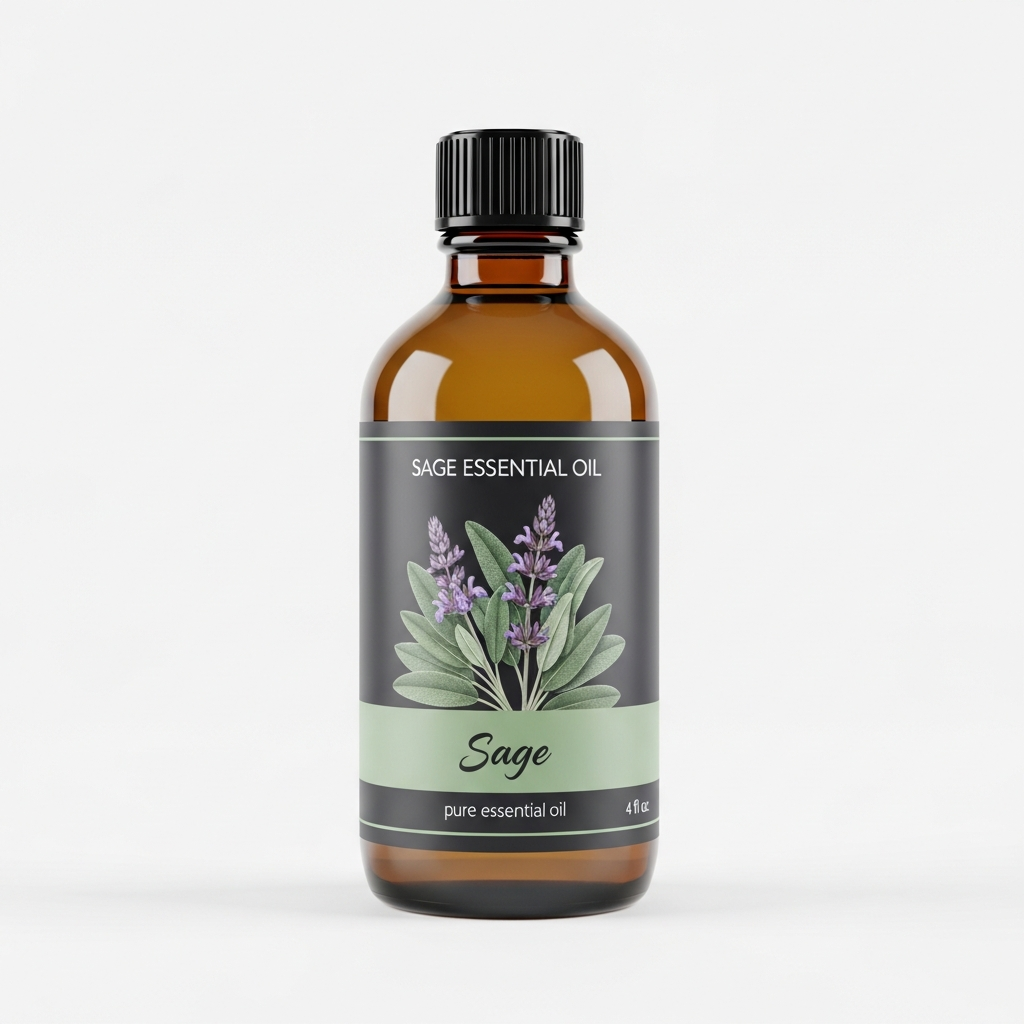
Sage Essential Oil
Sage Essential Oil from our own shop, in sizes from 0.5 oz to bulk.
From $13.99
Shop Now →Sources & Further Reading
- Salvia officinalis L. - Giardino della Flora Appenninica (University of Molise)
- Pharmacological properties of Salvia officinalis and its components (Ghorbani and Esmaeilizadeh, J Tradit Complement Med, 2017)
- Assessment report on Salvia officinalis L., folium and Salvia officinalis L., aetheroleum (EMA/HMPC/150801/2015)
- Assessment report on Salvia fruticosa Mill., folium (EMA/HMPC/599992/2014, draft, 24 November 2015)
- Public statement on Salvia officinalis L., aetheroleum (EMA/HMPC/41843/2009 Corr. 1)
- New Aroma Chemicals: Thujone Alternatives (Britten-Kelly, Perfumer & Flavorist 27, 2002)
- Sage: Usefulness and Safety (NCCIH)