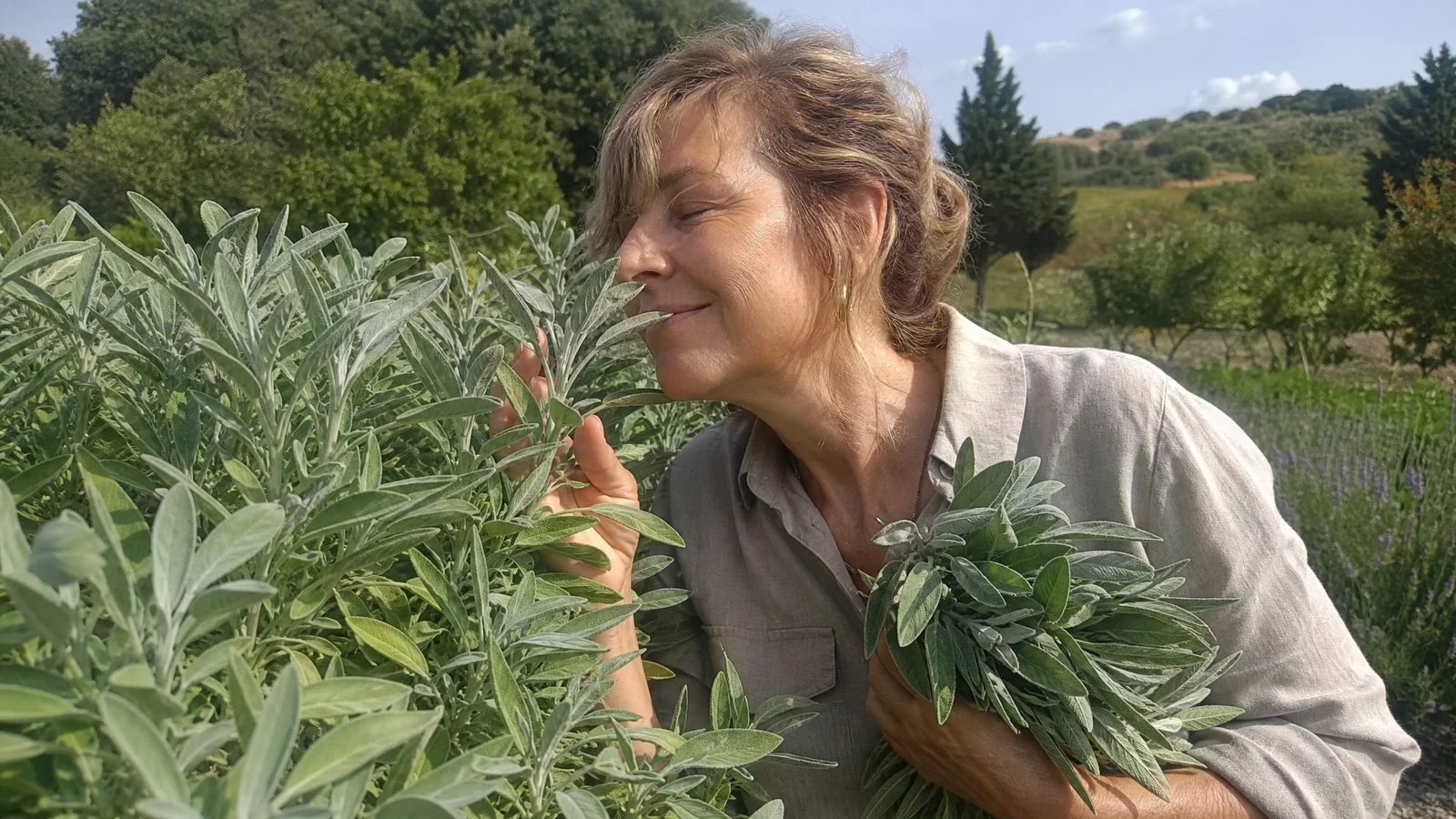
What Does Sage Oil Smell Like? A Scent Guide
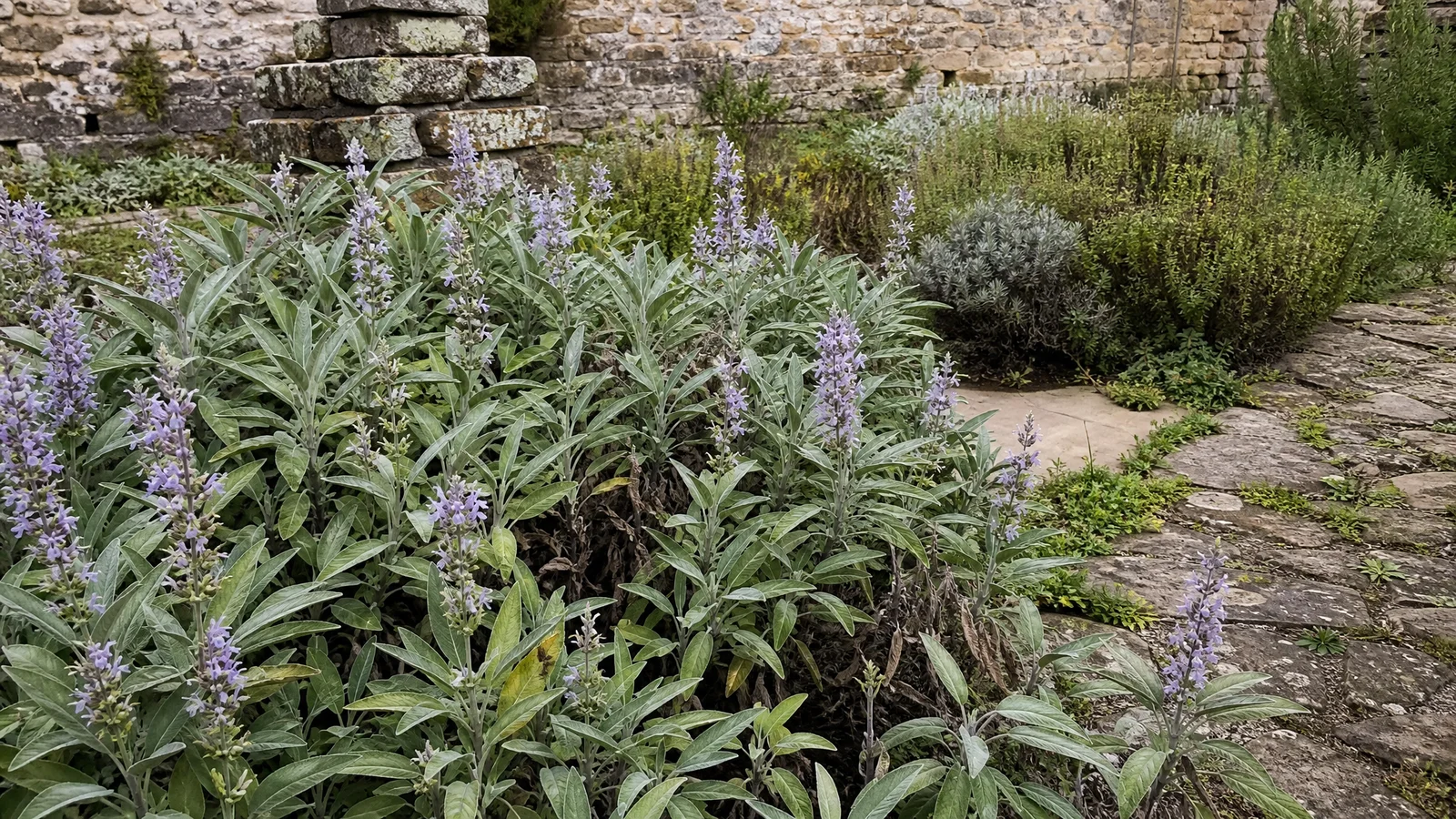
Garden sage oil is nothing like the sweet, soft clary sage people sometimes expect. It is dry and green, with a camphor sharpness running through it. The more interesting question is why, and what the word "sage" is actually describing when a perfumer uses it.
How we describe our two listings
We sell garden sage oil in two listings and describe them a little differently. Our Botanical listing is herbaceous, earthy and camphoraceous, with a dry green character, and we place it as a middle note. Our Purity listing is fresh, green and herbaceous, with a peppery edge and soft camphor and pine undertones, which we place from top to middle. The Certificate of Analysis we publish for one batch lists the smell standard as "Herbal, Earthy, Fresh" and the result as "Complies", which is a judgment against a stated standard rather than an instrument reading.
Independent sources fit with that picture. EFSA's 2024 opinion on a sage oil sourced from Ukraine describes a colourless to yellow liquid with "a characteristic camphoraceous odour, with a spicy note."
The perfumer's word: thujonic
Perfumers use "thujonic" for an odour family, and sage sits right in the middle of it. Michael Britten-Kelly, writing in Perfumer & Flavorist in 2002, says the thujone impression refers broadly to an odour type in which herbaceous, minty, camphoraceous, green, warm, fresh and spicy are all featured to some degree. He names cedarleaf, sage and armoise oils as the ones a perfumer's memory summons. He also makes a point that people rarely hear: the smell of thujone itself seems inseparable from the oils that contain it, so "thujone-like" describes an interwoven group of notes, not a single molecule.
It is a tidy way to think about sage: it belongs to the dry, minty, camphor-edged green family, alongside a handful of other oils.
Which molecules carry which note
Garden sage oil is a mixture. In the five batches EFSA analysed, alpha-thujone averaged about 25%, camphor 19%, 1,8-cineole 11% and beta-thujone under 6%, together about 60% of the oil. PubChem records the odours of the single compounds: camphor as "fragrant and penetrating", 1,8-cineole as "camphor-like", and borneol, a close relative, as "piney, camphor-like". There was no odour entry for thujone itself. Reasoning from those entries, the camphor and pine impressions in our descriptions plausibly come from camphor, cineole and their relatives, while thujone supplies the minty green backbone. No source maps notes to molecules for sage oil, so that is a sensible reading, not a finding.
Why two bottles can differ
The variation starts in the plant. The European Medicines Agency's assessment report describes a sage leaf sample with considerable inhomogeneity, with some leaves showing more 1,8-cineole than thujone and camphor, and notes that from the top to the base of one plant the relative thujone content falls while camphor, alpha-pinene, camphene and borneol rise. Across suppliers, origins and harvest times the swings widen. Karalija and colleagues' 2022 review reports that thujone levels differ significantly within garden sage depending on where it grew.
So a description of what sage smells like is a description of a typical profile, and a particular bottle may sit on either side of it. The batch on our published certificate does not include constituent figures, so it can confirm a batch complies with its smell standard but cannot tell you where a bottle falls.
Sage and its relatives
Clary sage is the one most often confused with it. EFSA's opinion on clary sage oil reports a profile dominated by linalyl acetate, 68.28% on average, with linalool at 14.81% and thujones not detected. PubChem describes linalyl acetate's odour as sweet, floral-fruity, recalling bergamot and pear. Different chemistry, different smell, different plant, and our comparison of clary sage and common sage oil goes into detail. We sell only garden sage. Spanish and Greek sage lean more heavily on cineole, which we cover in our article on the lesser-known Salvias.
A little tasting-notes practice
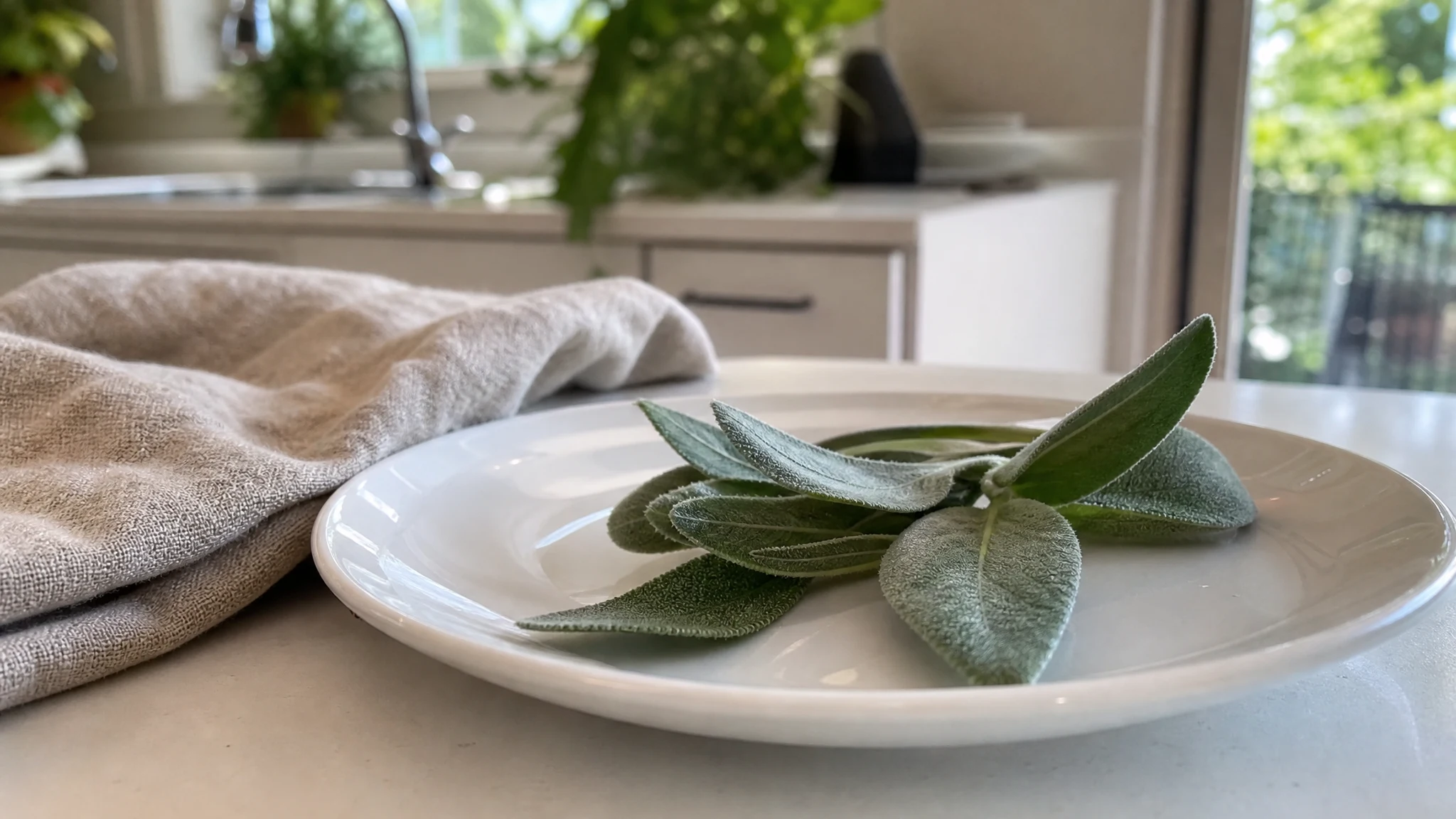
If you have never smelled sage oil beside the herb, it is worth doing once. Crush a fresh or dried sage leaf, smell it, then wave the open bottle of oil toward you from a distance. You will notice the leaf is softer and a touch sweet, while the oil is drier, sharper and more camphor-edged, as though someone had taken the leaf and turned the volume up. Neither is better. They are the same plant telling two different stories.
Smell the oil on a paper strip rather than straight from the bottle, and come back to the strip after ten minutes and again after an hour. The opening is usually the sharpest part, and what lingers is the green, herbal middle. That change over time is how we think about the notes we list for each of our listings.
It also helps to put words to what you find. Is it more like a hedge after rain, a spice drawer, or a pine bough? Everyone's list comes out a little different, and writing yours down gives you a vocabulary for choosing partners later.
Smelling it sensibly
Sage oil is concentrated, so open the bottle at arm's length, wave it toward you instead of inhaling deeply, and keep it away from eyes. Our process page notes that diffusing it needs a lighter hand than you would use with a mint or a citrus, and that it should be avoided during pregnancy and breastfeeding, around children, and with a seizure disorder. Cap the bottle between sniffs and keep it, and any smelling session, away from children and pets.
Blends that suit the scent
Because sage is dry and camphor-edged, partners that add sweetness or brightness make sense. For our Botanical listing we suggest lavender, rosemary, cedarwood, bergamot, lemon and frankincense. For our Purity listing we suggest lemon, bergamot, rosemary, cedarwood, lavender and pine. Small proportions go a long way, and any blend containing sage carries sage's limits with it. Our blending article shows how to let the most restricted oil set the ratio.
Sage Essential Oil
Sage Essential Oil from our own shop, in sizes from 0.5 oz to bulk.
From $13.99
Shop Now →Sources & Further Reading
- EFSA FEEDAP Panel, 2024. Safety and efficacy of a feed additive consisting of an essential oil derived from the leaves of Salvia officinalis L. (sage oil) for use in all animal species (FEFANA asbl). EFSA Journal. PMC11656093
- EFSA FEEDAP Panel, 2024. Safety and efficacy of a feed additive consisting of an essential oil derived from the flowering stems of Salvia sclarea L. (clary sage oil) for use in all animal species (FEFANA asbl). EFSA Journal. PMC11561422
- Britten-Kelly M, 2002. New Aroma Chemicals: Thujone Alternatives. Perfumer & Flavorist 27(3). perfumerflavorist.com
- EMA/HMPC, 2016. Assessment report on Salvia officinalis L., folium and Salvia officinalis L., aetheroleum (EMA/HMPC/150801/2015). ema.europa.eu
- Karalija E et al., 2022. Influence of Climate-Related Environmental Stresses on Economically Important Essential Oils of Mediterranean Salvia sp. Front Plant Sci. PMC9114806
- PubChem, Odor sections for Camphor (CID 2537), 1,8-Cineole (CID 2758), Borneol (CID 64685) and Linalyl Acetate (CID 8294). pubchem.ncbi.nlm.nih.gov