Essential Oils and Congestion: What Research Shows
Anyone who has sucked on a menthol lozenge with a head cold knows the trick: a minute later the nose feels wide open. What is surprising is what happens when researchers put a measuring instrument inside the nose. The feeling and the airflow turn out to be two separate things, and sorting them out is the quickest way to read any claim about oils and congestion.
Menthol changes how air feels
In a double-blind trial, 62 people with a cold-related blocked nose took either a lozenge with 11 mg of menthol or a plain candy placebo. The team measured nasal airway resistance with rhinomanometry and asked people to rate how freely air seemed to flow. Resistance did not differ between the two groups at any point during the two hours. The menthol group, though, reported a marked improvement in the sensation of airflow starting about 10 minutes after the lozenge (The effects of oral administration of (-)-menthol on nasal resistance to airflow and nasal sensation of airflow in subjects suffering from nasal congestion associated with the common cold).
That is a nice piece of sensory science. Cool receptors in the nose fire, the brain reads it as open air, and the experience is genuine. It is simply not the same as more air moving through. It was also a lozenge, so it tells us about menthol in the mouth, not about a scent in the room.
Cineole was tested as a capsule
The best-known positive result for 1,8-cineole came from a trial of 152 adults with acute sinus inflammation, split evenly between cineole and placebo. The cineole group swallowed two 100 mg capsules three times a day for a week. Their symptom score fell from 15.6 to 3.0, while the placebo group's fell to 9.2 (Therapy for acute nonpurulent rhinosinusitis with cineole: results of a double-blind, randomized, placebo-controlled trial).
It is a measured, swallowed dose of a single compound, and it is worth seeing how far that is from a bottle of oil. Sage oil does contain 1,8-cineole. The European Food Safety Authority measured about 10.7% in the sage oil batches it assessed, alongside roughly 30% thujone and about 19% camphor (Safety and efficacy of a feed additive consisting of an essential oil derived from the leaves of Salvia officinalis L. (sage oil) for use in all animal species (FEFANA asbl)). By our arithmetic, 600 mg of cineole at that share would mean about 5.6 g of oil, well over a hundred drops, and all of it carrying that thujone and camphor. So the capsule result belongs to the capsule. It does not transfer to anything you would dilute and scent a room with.
Steam is the old favorite
Breathing hot steam is the household classic. A Cochrane review of heated, humidified air for the common cold pooled six trials and 387 people. Depending on how two of the studies were analysed, steam either helped or made no significant difference, so the reviewers called it uncertain, and found no sign that it made symptoms worse (Heated, humidified air for the common cold). Those trials used a heated-air device, with no essential oil.
The NHS suggests sitting in the bathroom with a hot shower running and says not to let children breathe steam from a bowl of hot water, because of the risk of scalding (Common cold). A bowl of hot water is also where oils tend to get spilled, so we would leave them out of it.
A word about little noses
Poison Control notes that children have thin skin and immature livers, which may make them more susceptible to toxic effects than adults, and that even a small swallowed amount of camphor is dangerous, with seizures that can begin within minutes (Essential oils: Poisonous when misused).
Sage oil carries camphor too, and that is one reason we say not to use it on or around children. For a child with a blocked nose, the NHS points to a pharmacist or GP and notes that decongestants should not be used under age 6. Our article on sage oil and children covers the household side.
Keeping scent in its place
A scent is a lovely thing to have in the room, and it is worth enjoying for its own sake. When you are unwell, the plain comforts matter more than anything in a bottle: a warm drink, fresh air, a rest. If you do like an aroma while you have a cold, keep any diffuser light, keep the room aired, and do not let a pleasant smell talk you out of asking a pharmacist or doctor when something does not clear. A tissue box, a glass of water and an open window nearby make the scent an extra rather than the plan.
Where sage fits
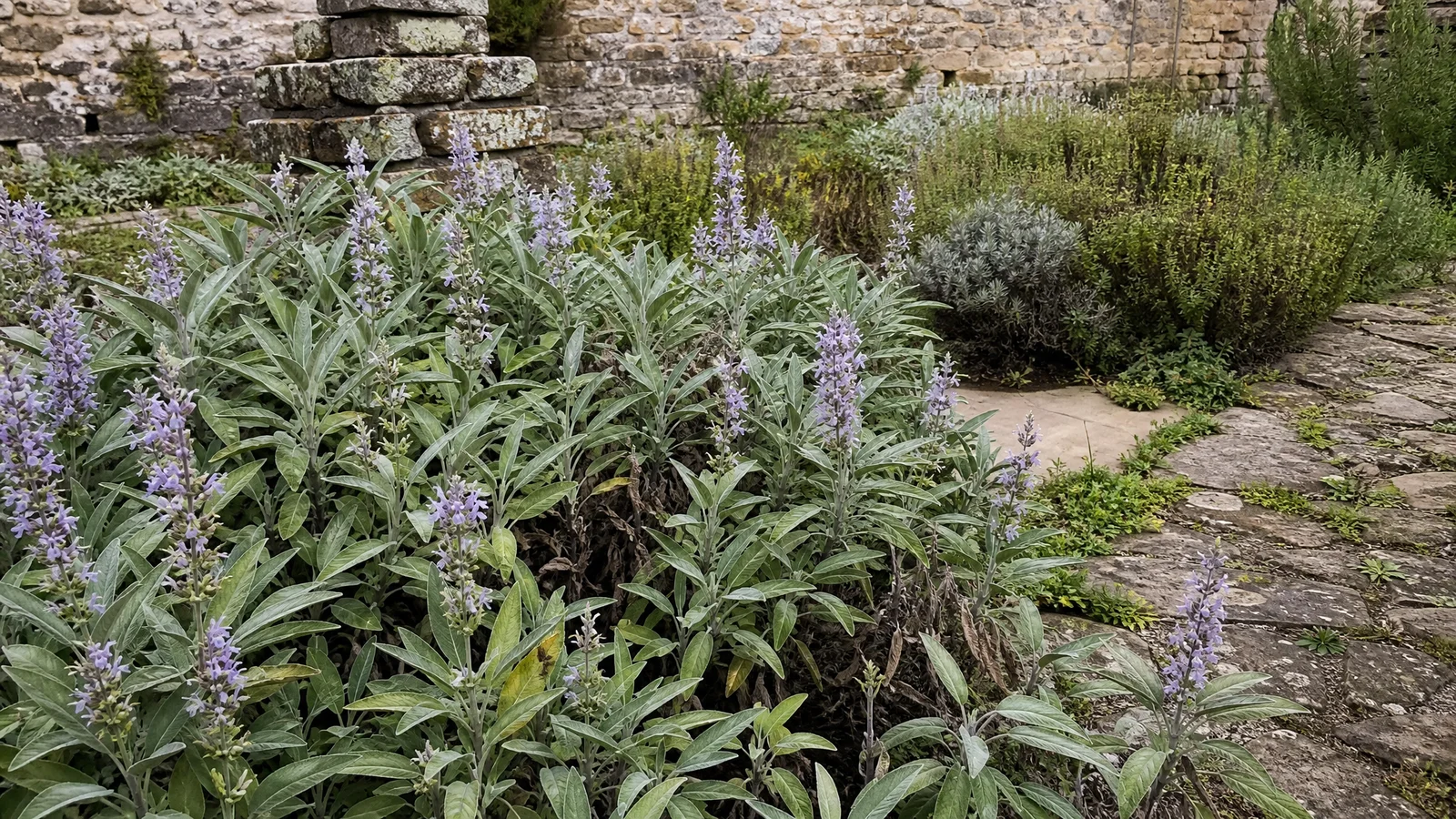
We sell one oil, garden sage, and it is a cosmetic and aroma oil with an herbaceous, earthy, camphoraceous scent. It is not a congestion product, and nothing above suggests it should be treated as one. If you diffuse any oil around someone who is unwell, the room matters more than the bottle: ventilation, short sessions and who else is breathing the air, which we cover in our diffusing safety article.
The NHS advice for a cold that lingers is simple: see a GP if it has not improved after 10 days or if you are short of breath. If anyone has swallowed an essential oil, Poison Control is at 1-800-222-1222.
Menthol feels like clearing, capsules are medicine and steam is a mixed bag. A scent is something to enjoy for itself, and that is a perfectly good reason to keep a bottle on the shelf.
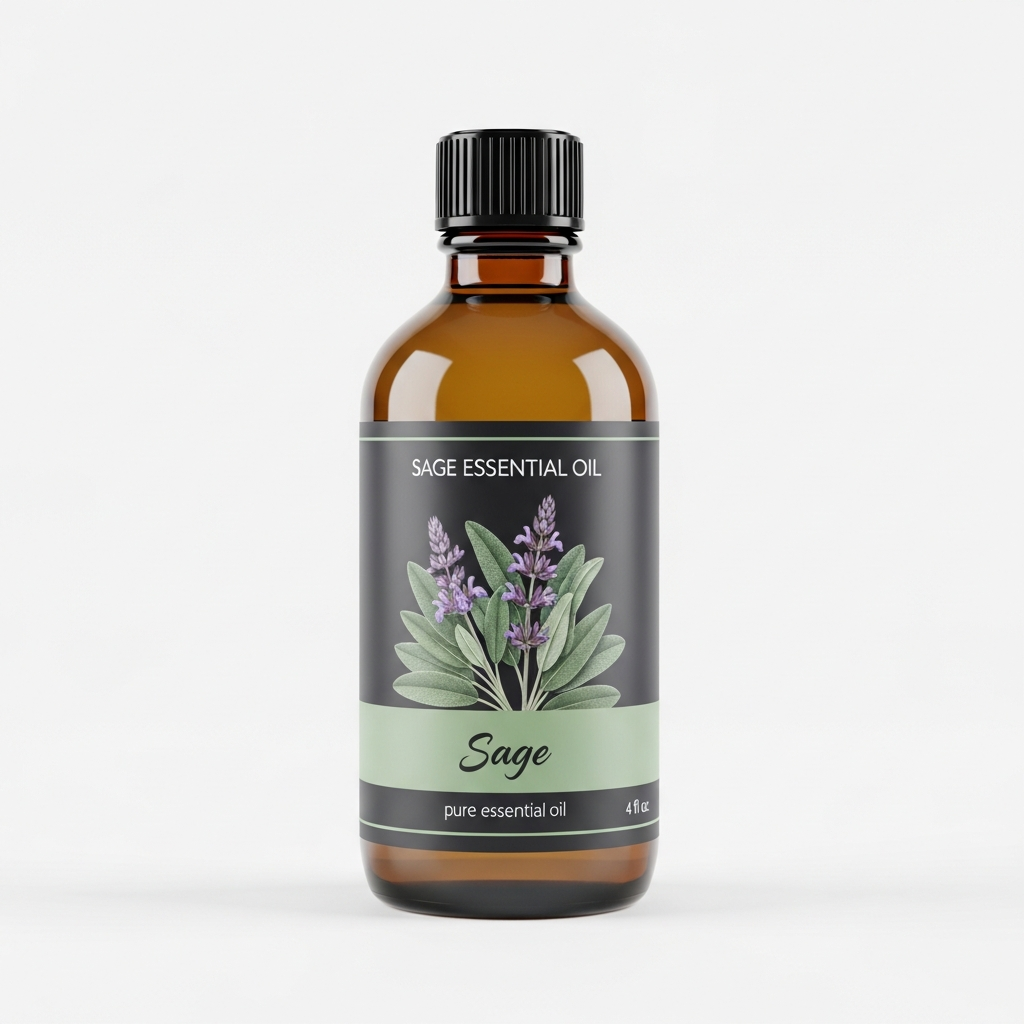
Sage Essential Oil
Sage Essential Oil from our own shop, in sizes from 0.5 oz to bulk.
From $13.99
Shop Now →Sources & Further Reading
- The effects of oral administration of (-)-menthol on nasal resistance to airflow and nasal sensation of airflow in subjects suffering from nasal congestion associated with the common cold (Eccles, Jawad and Morris, J Pharm Pharmacol, 1990)
- Therapy for acute nonpurulent rhinosinusitis with cineole: results of a double-blind, randomized, placebo-controlled trial (Kehrl, Sonnemann and Dethlefsen, Laryngoscope, 2004)
- Heated, humidified air for the common cold (Singh et al., Cochrane Database Syst Rev, 2017)
- Common cold (NHS)
- Essential oils: Poisonous when misused (Poison Control)
- Safety and efficacy of a feed additive consisting of an essential oil derived from the leaves of Salvia officinalis L. (sage oil) for use in all animal species (FEFANA asbl) (EFSA FEEDAP Panel, EFSA Journal, 2024)