Essential Oils and Sleep: What the Research Says
A little scent at bedtime is one of life's simple rituals: a clean pillowcase, a dim lamp, something pleasant in the air. Whether any particular aroma changes how well people sleep is a narrower question, and it is the one researchers have actually tried to answer. The short version is that the studies are encouraging, hard to compare, and silent about sage.
What the pooled review found
The most-cited summary is a 2015 systematic review and meta-analysis of aromatherapy and sleep quality. The authors screened 245 publications from 2000 to August 2013, found 13 that met their criteria, and pooled 12. Overall the results favoured aromatherapy (95% confidence interval 0.540 to 1.745), and inhalation did better than massage, with intervals of 0.792 to 1.541 and 0.128 to 2.166 respectively. The authors concluded that aromatherapy appeared to help and that specific guidelines for use need to be developed (The effects of aromatherapy on sleep improvement: a systematic literature review and meta-analysis).
Two things are worth noticing. The abstract does not say which oils were used, so you cannot read "lavender" or "sage" into it. And the two intervals overlap heavily, so "inhalation beat massage" is a tendency rather than a ranking. The US National Center for Complementary and Integrative Health puts the overall picture simply: aromatherapy is sometimes used for insomnia, but little rigorous research has been done, so it is not known whether it is helpful (Aromatherapy, updated January 2020).
What the guidelines put first
For long-lasting insomnia, the American College of Physicians recommends cognitive behavioural therapy for insomnia as the initial treatment for all adults, a strong recommendation based on moderate-quality evidence (Management of Chronic Insomnia Disorder in Adults: A Clinical Practice Guideline From the American College of Physicians). In the UK, the NHS says insomnia usually improves by changing sleeping habits, and its list is refreshingly practical: go to bed only when sleepy, keep the same wake-up time, wind down for at least an hour, and make the bedroom dark and quiet. It suggests seeing a GP if habit changes have not helped or if trouble sleeping has gone on for months (Insomnia).
A pleasant scent fits comfortably into a wind-down routine, and nothing says you cannot enjoy one. It just should not stand in for the basics.
What sage studies exist
We are not aware of a trial that tested sage oil on sleep. The nearest inhalation study is a Romanian hospital trial in which a cotton disc with two drops of sage oil sat on patients' pillows for at least 30 minutes a day. It measured how patients rated hospital services, not how they slept, and the difference between groups was not significant (Salvia officinalis L. Essential Oil: Characterization, Antioxidant Properties, and the Effects of Aromatherapy in Adult Patients). Nothing in it speaks to sleep.
Sage in the bedroom
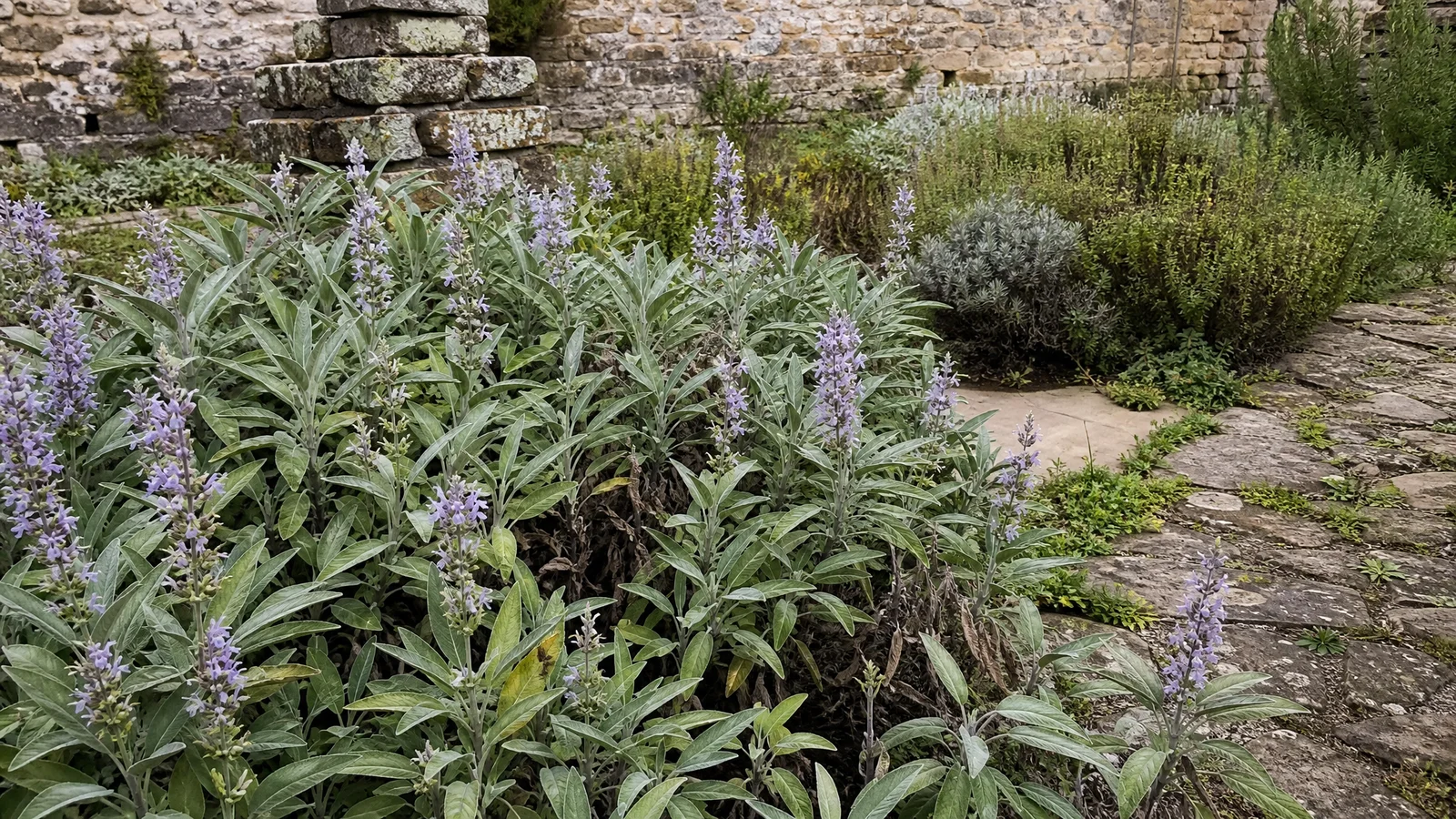
Sage is a strong oil with a distinct personality, and it is not one we would put beside a bed. The EMA's herbal committee describes sage oil as high in thujone, which it says is toxic and may cause seizures at high doses (Public statement on Salvia officinalis L., aetheroleum). That is why our own guidance is to leave sage oil alone if you have a seizure disorder, to avoid it in pregnancy and breastfeeding, to keep it away from children, and to diffuse with a lighter hand than you would use with a mint or a citrus oil. Bedrooms are sometimes shared with small children, and doctors have described a newborn and a toddler who had generalised seizures after accidental exposure to sage oil, both recovering well (Toxicity of Salvia officinalis in a newborn and a child: an alarming report). Those were accidents, so they do not show what a diffuser does, but they explain why we are careful.
If anyone has a medical reason to question sage, such as one of the situations above, ask us in writing through the contact page about thujone before ordering, and take the answer to your doctor. The Certificate of Analysis we publish for one batch lists density, refractive index and optical rotation rather than constituents.
Keeping the bedroom simple
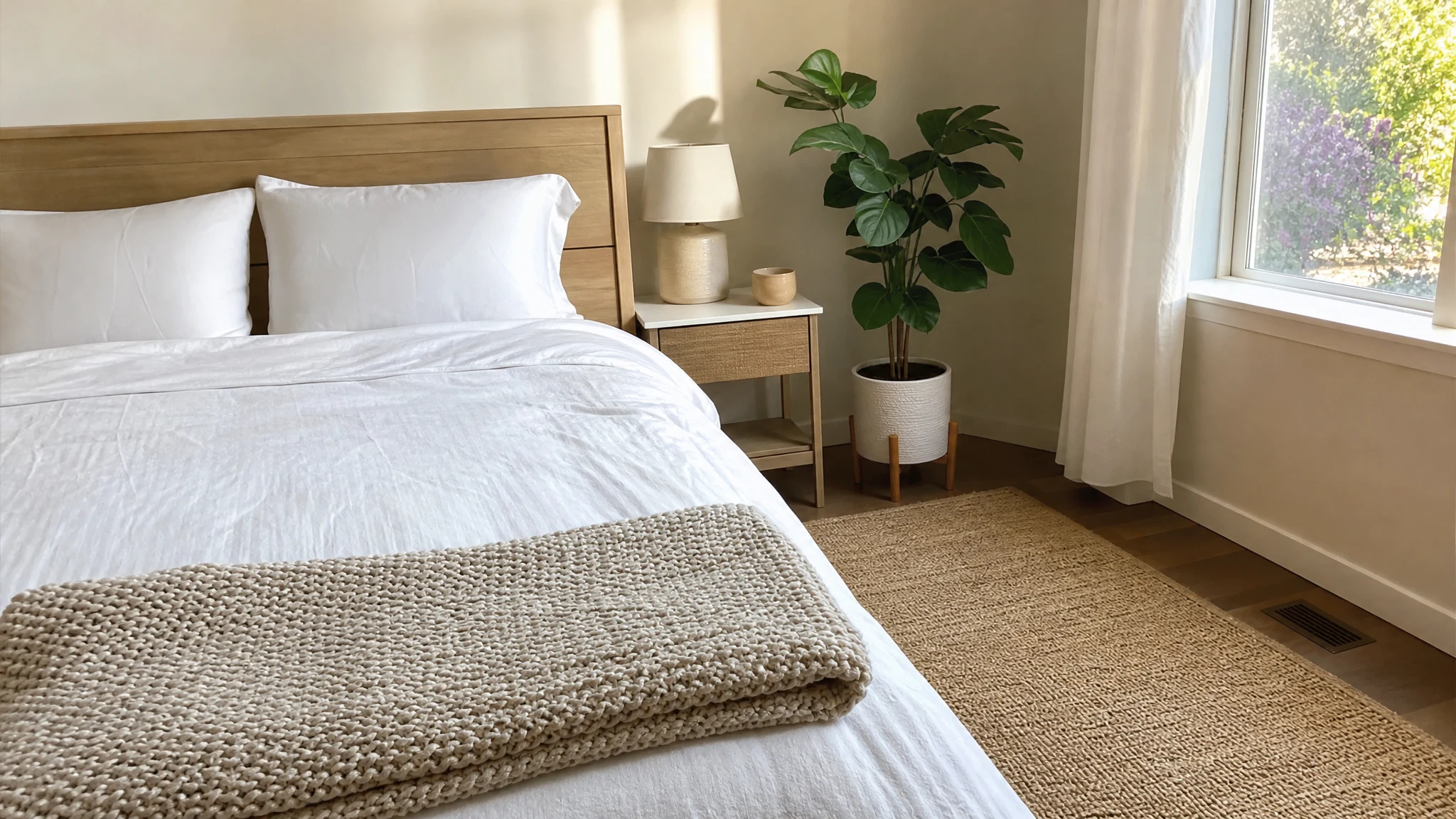
If a scent is part of your evening, keep it modest. Turn any diffuser off before you get into bed, open the window a crack, and leave the bottle capped and out of reach of children and pets. Try a new scent earlier in the evening first, so you know whether you like it before it becomes part of your bedtime. Most of what makes a bedroom feel inviting is ordinary: fresh sheets, a dim lamp, a tidy bedside table.
What we sell, and what we do not
We sell garden sage oil as an aroma and cosmetic oil. It is not a sleep product and we make no claim that it helps anyone sleep. If you want a scent you enjoy in a room you are awake in, our diffuser article covers sage with the cautions above, and our overview of aromatherapy research puts the wider studies in context. For sleep that is not coming, a physician is the right first call, and they will most likely start with habits and CBT-I.
A good night is mostly made of dark rooms, regular hours and a quiet mind, and the nicest scent in the world is an accessory to that, not a substitute.
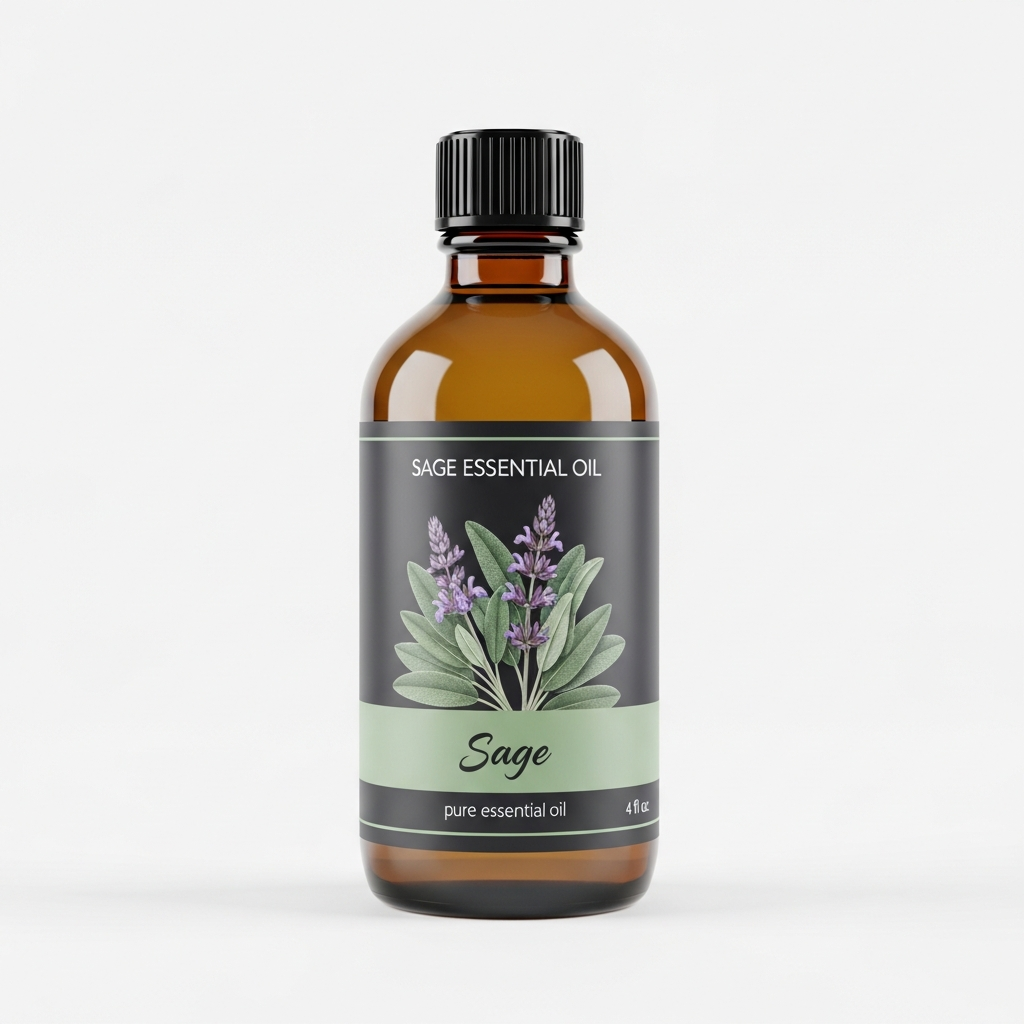
Sage Essential Oil
Sage Essential Oil from our own shop, in sizes from 0.5 oz to bulk.
From $13.99
Shop Now →Sources & Further Reading
- The effects of aromatherapy on sleep improvement: a systematic literature review and meta-analysis (Hwang and Shin, J Altern Complement Med, 2015)
- Aromatherapy (NCCIH, January 2020)
- Management of Chronic Insomnia Disorder in Adults: A Clinical Practice Guideline From the American College of Physicians (Qaseem et al., Ann Intern Med, 2016)
- Insomnia (NHS)
- Salvia officinalis L. Essential Oil: Characterization, Antioxidant Properties, and the Effects of Aromatherapy in Adult Patients (Mot et al., Antioxidants, 2022)
- Public statement on Salvia officinalis L., aetheroleum (EMA/HMPC/41843/2009 Corr. 1)
- Toxicity of Salvia officinalis in a newborn and a child: an alarming report (Halicioglu et al., Pediatr Neurol, 2011)