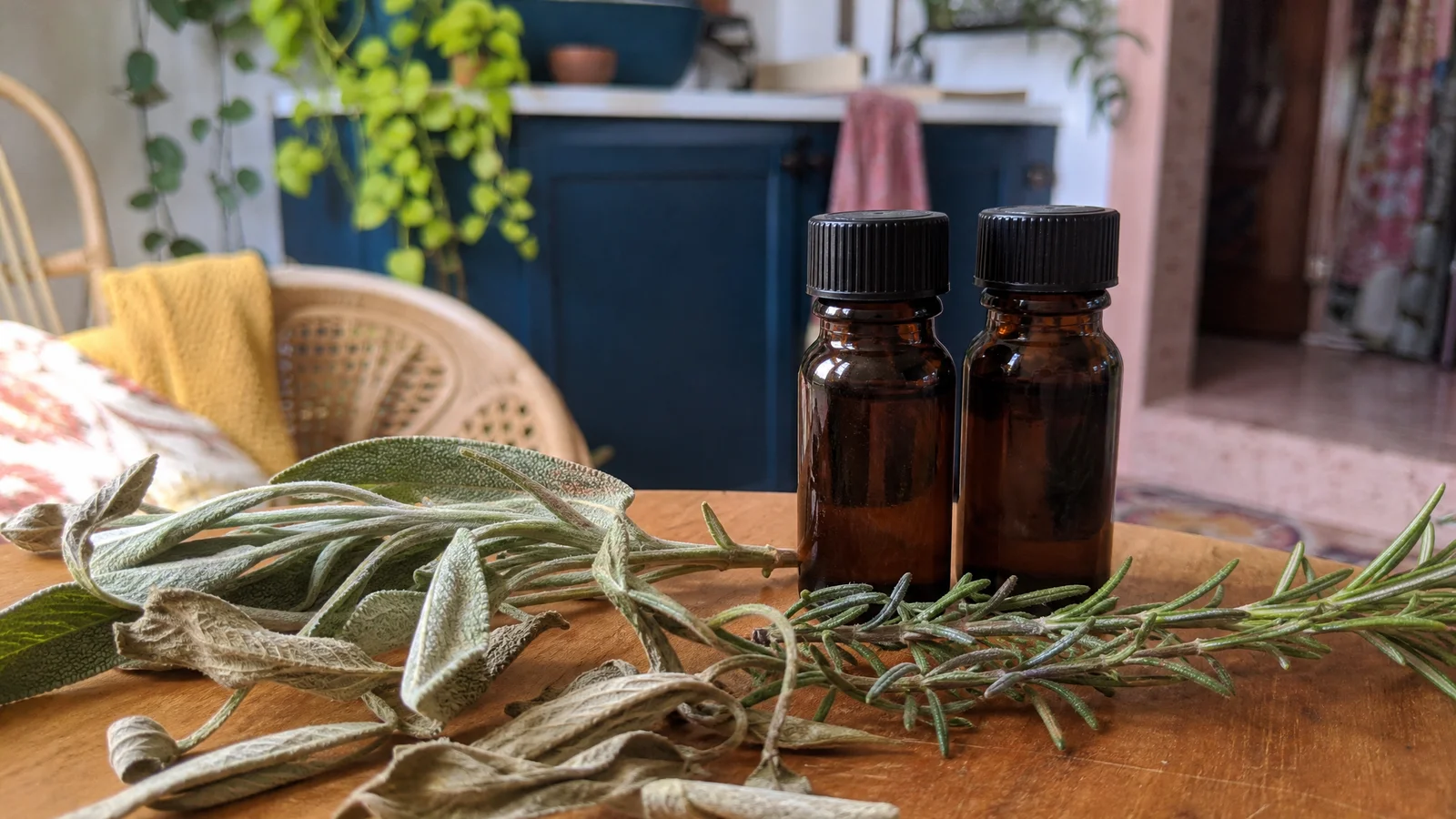
Sage Oil vs Rosemary Oil: Which Is Which?
Rosemary is now officially a sage. Botanists have moved it into the genus Salvia, so the two garden herbs on your windowsill are cousins in the strictest sense. Their oils share a green, camphor-edged family resemblance, but one chemical sets them apart: sage oil carries a great deal of thujone, and the rosemary oil analysis we read lists none. That single line shapes how each oil should be handled.
A genus reshuffle worth knowing about
EFSA's 2025 opinion on rosemary oil notes that the old name Rosmarinus officinalis is no longer accepted by the botanical community, and the species is now Salvia rosmarinus Spenn. (EFSA FEEDAP, rosemary oil). So a label reading "Rosmarinus officinalis" and one reading "Salvia rosmarinus" can describe the same plant. Garden sage, Salvia officinalis, is a different species in that genus, which is why a Latin name on a label is worth having. We cover how to read it in our species guide.
What each oil was found to contain
EFSA published gas chromatography results for both oils in the same format. The rosemary oil came from flowering aerial parts sourced from Spain, Tunisia, Morocco and India; the sage oil came from leaves sourced from Ukraine (EFSA FEEDAP, sage oil). These are the applicants' products and small batch counts, but the contrast is clear.
| Rosemary oil (10 batches) | Sage oil (5 batches) | |
|---|---|---|
| 1,8-Cineole | 34.0% (17.4 to 48.8) | 10.70% |
| Camphor | 14.7% (9.0 to 23.0) | 18.74% |
| Alpha-pinene | 16.7% (10.7 to 22.2) | not in the specification table |
| Alpha-thujone | no thujone figure listed | 24.96% |
| Beta-thujone | no thujone figure listed | 5.60% |
Put in plain terms, rosemary oil is led by cineole and sage oil by thujone, with camphor high in both. Even rosemary is not one fixed thing: cineole ran from 17.4 to 48.8 percent across ten batches. And the European Medicines Agency's wider range for sage, 10 to 60% alpha-thujone and 4 to 36% beta-thujone (EMA/HMPC), is a reminder that "sage oil" is also a spread. The density on the Certificate of Analysis we publish for one batch of our garden sage, 0.915, sits in EFSA's sage range and above its rosemary range, but densities overlap across oils and one number cannot identify a plant.
Where handling differs
The fragrance industry's thujone standard is the practical dividing line. It caps thujone in finished products from 0.0053% up to 9.5% depending on the product category (IFRA), which is why we start sage at roughly one drop per ounce for the body and leave it off the face. For rosemary, look up a current dermal limit from IFRA or ask a certified aromatherapist rather than relying on us; we sell sage only.
The skin wording is similar for both. EFSA says sage oil should be considered an irritant to skin and eyes and a dermal and respiratory sensitiser, and the rosemary opinion classifies the oil as a skin irritant with the same sensitiser conclusion. Both want a carrier and a patch test, and the limits of a patch test are in our patch test article.
Smelling the difference
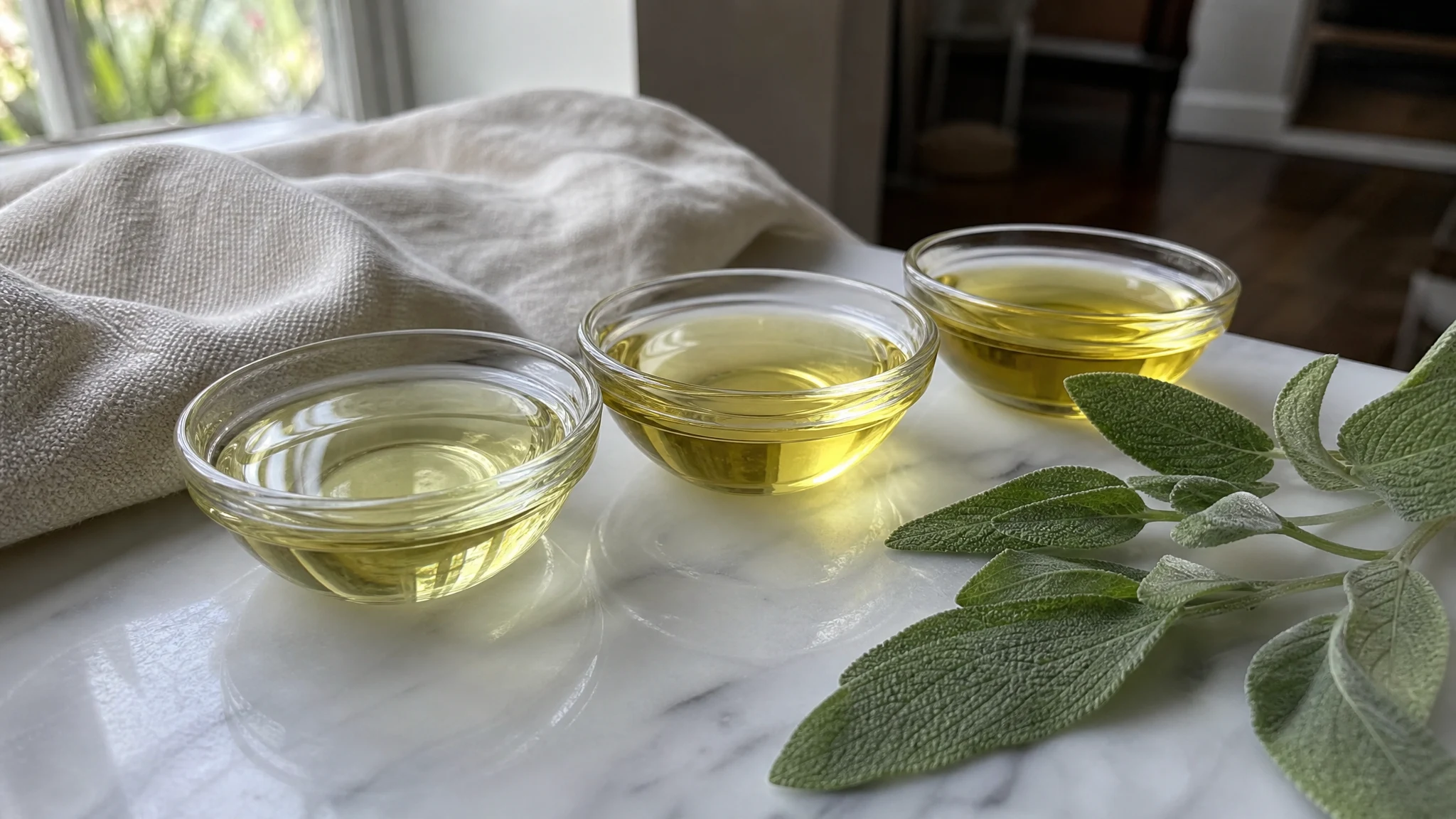
Hold a rosemary sprig in one hand and a sage leaf in the other and rub both. Rosemary is resinous and pine-like, with a bright, clean sharpness. Sage is softer at first, then drier and more earthy, with a green, slightly dusty edge. The oils follow the same pattern. Put a drop of each on a separate paper strip and wave them under your nose a few centimetres away: you will notice rosemary tends to feel sharper and more open, while sage feels denser and more herbal.
Neither is a better scent, only a different mood. Many people find they favour one over the other at once, and it takes about thirty seconds to find out which camp you are in.
A garden-bed view
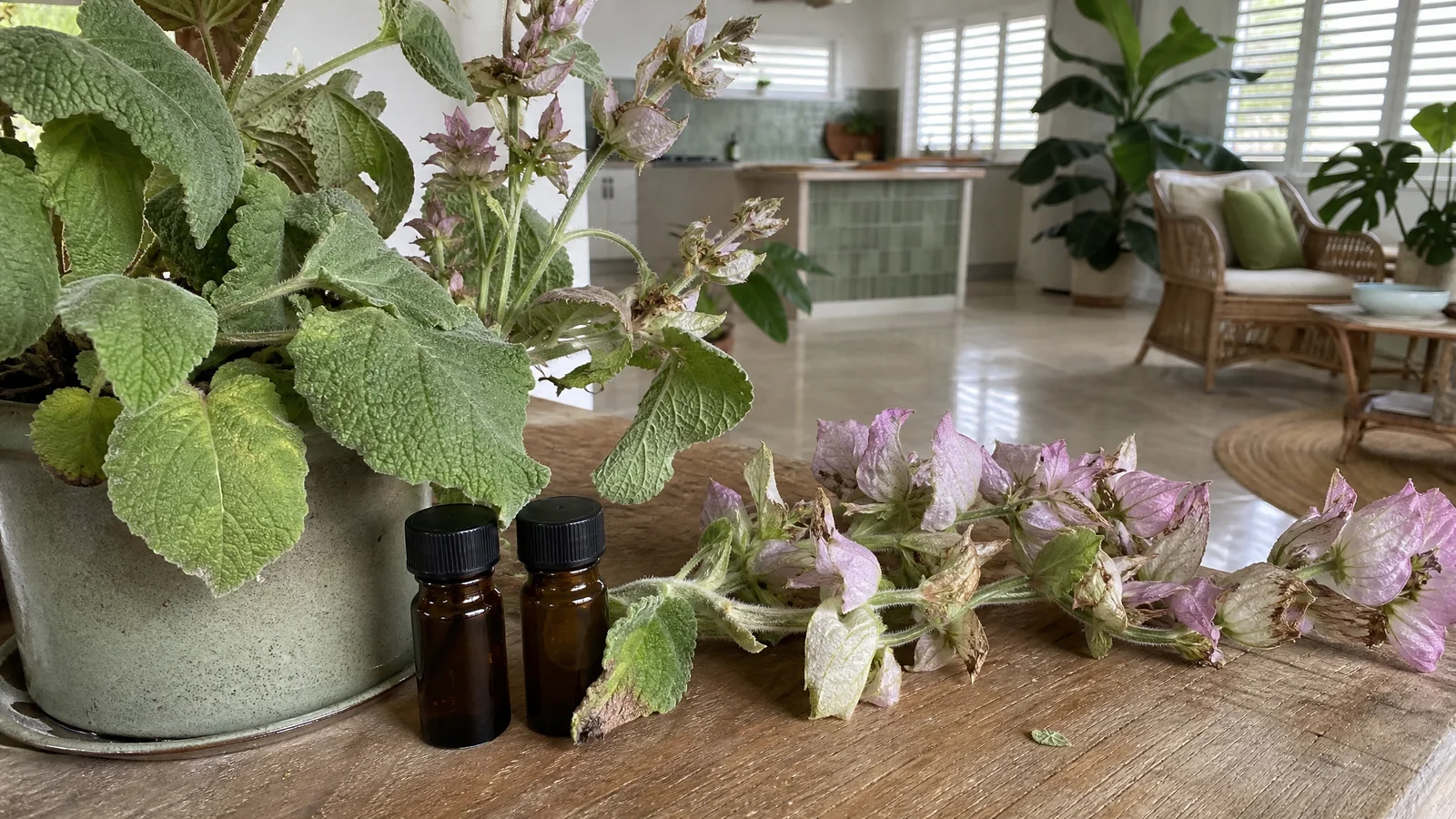
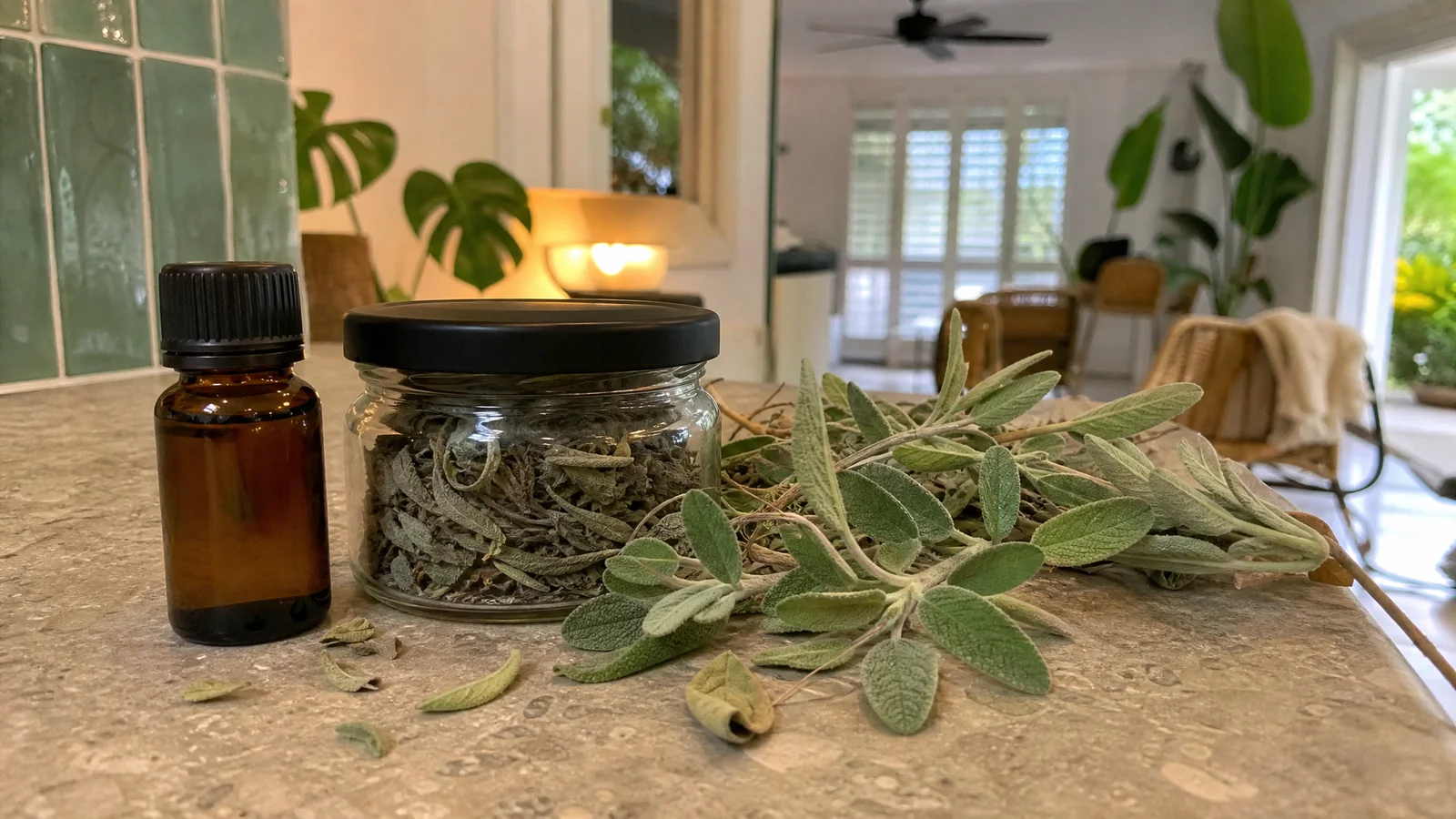
If you grow both, you will see how different they are in the garden too. Rosemary is stiff, needle-leaved and evergreen. Sage is soft, grey-green and slightly velvety. Looking at the plants can help you remember which is which, and the oils follow suit.
Seizures, put calmly
A 2019 systematic review of 64 articles on essential oils and seizures (Bahr et al.) mentions both oils, on very different evidence. For sage it cites repeated human case reports of seizures after swallowing small amounts, especially in children. For rosemary it cites a single case, a person seizure-free for eight years who had a seizure after a massage with a blend that included rosemary, with camphor suspected. Neither is a controlled trial. In both cases the sensible step for anyone with epilepsy or a seizure disorder is to ask a neurologist or pharmacist first, and our own position on sage is to leave it alone in that case.
Choosing between them
- A fresh, camphor-and-pine herbal note in a room. Rosemary is the lower-thujone option on the evidence above. Our sage listings are described as herbaceous, earthy and camphoraceous, or fresh, green and peppery with soft camphor and pine undertones.
- A leave-on body product. Sage has a thujone allowance that works out lower than our general 0.5% to 2% skin line, so the thujone and dilution articles show the sums: thujone and dilution.
- Anything involving pregnancy, babies or young children. Sage is out, as our pregnancy article explains. For rosemary, ask an obstetrician, midwife or paediatrician.
- Blending the two. Work the sage share against its own thujone allowance, not the whole blend's.
We sell sage oil only, in two listings sold neat. If rosemary is what you want, an aromatherapy or craft supplier is the place, and the same questions about batch paperwork apply.
Two herbs from the same family, two different personalities, and plenty to enjoy in both once you know which is which.
Sage Essential Oil
Sage Essential Oil from our own shop, in sizes from 0.5 oz to bulk.
From $13.99
Shop Now →Sources & Further Reading
- EFSA FEEDAP Panel, 2025, Safety and efficacy of a feed additive consisting of an essential oil derived from the flowering aerial parts of Salvia rosmarinus Spenn. (rosemary oil) for use in all animal species (FEFANA asbl)
- EFSA FEEDAP Panel, 2024, Safety and efficacy of a feed additive consisting of an essential oil derived from the leaves of Salvia officinalis L. (sage oil) for use in all animal species (FEFANA asbl)
- EMA/HMPC, 2016, Assessment report on Salvia officinalis L., folium and Salvia officinalis L., aetheroleum
- IFRA, Thujone, 2020 (Amendment 49), IFRA Standard
- Bahr TA et al., 2019, The Effects of Various Essential Oils on Epilepsy and Acute Seizure: A Systematic Review, Evidence-Based Complementary and Alternative Medicine