Therapeutic Grade Oils: Does the Label Mean Anything?
The label "therapeutic" looks like a ranking, the way "Grade A" looks on an egg carton. It is not one. No government agency or standards body awards it, and the phrase is better understood as a seller's word. The good news is that sage oil does have a real quality standard, and reading it teaches you more about buying oil than any grade label can.
What the agencies say about grade words
The FDA's aromatherapy page says that how these products are regulated depends mainly on their intended use, that cosmetics need no FDA approval before sale, and that "natural" and "organic" have no FDA definitions for cosmetics. It describes no grade of essential oil at all (Aromatherapy). Where a seller pairs a grade word with a health promise, the FDA reads the promise. A 2020 warning letter about coronavirus claims quoted a company's wording that its products were "tested for their . . . therapeutic quality" among statements the agency called misleading (Hopewell Essential Oils - 607088 - 04/27/2020). We do not make health claims for our oil, and we do not use a medical grade word for it.
Why the word is so tempting
It is easy to see why grade words work. Shopping for an oil can feel like standing in front of a wall of small brown bottles, each promising something, and a word that sounds official gives you somewhere to rest your eye. We understand the pull. We would rather you rest your eye on a plant name, a part used, a batch number and a document you can read than on an adjective.
Think of how you shop for other things you care about. You look at the ingredients, you check where it came from, you ask someone who knows. Oil deserves the same attention, and the effort pays off quickly, because once you know what to look for the labels sort themselves into the helpful and the decorative.
What a real standard looks like
For sage, there is ISO 9909, covering oil of Dalmatian sage (Salvia officinalis L.). It does not rank oils. It sets a window of measurements an oil should fall inside, including a gas chromatography profile for the main components (Oil of Dalmatian sage (Salvia officinalis L.), ISO 9909:1997). Its camphor limits run from 4.5% to 24.5%, and its carbonyl value allows from 28% to 78% of carbonyl compounds expressed as thujone.
Look at how roomy that is. Its thujone-based carbonyl allowance spans nearly threefold, so two oils can both meet the standard while one holds far more thujone than the other. "Meets ISO 9909" tells you an oil is inside the window, not where in the window it sits. And where it sits matters, because thujone is the compound behind sage's safety limits, which we explain in our thujone article. Real batches vary too. In EFSA's 2024 opinion on a sage oil, five commercial batches averaged about 25% alpha-thujone, 18.7% camphor and 10.7% cineole (EFSA feed additive opinion on sage oil, 2024), and the European Medicines Agency describes the composition in the literature as strongly dependent on source and harvest (Assessment report on Salvia officinalis L., folium and Salvia officinalis L., aetheroleum).
How we use the word "grade"
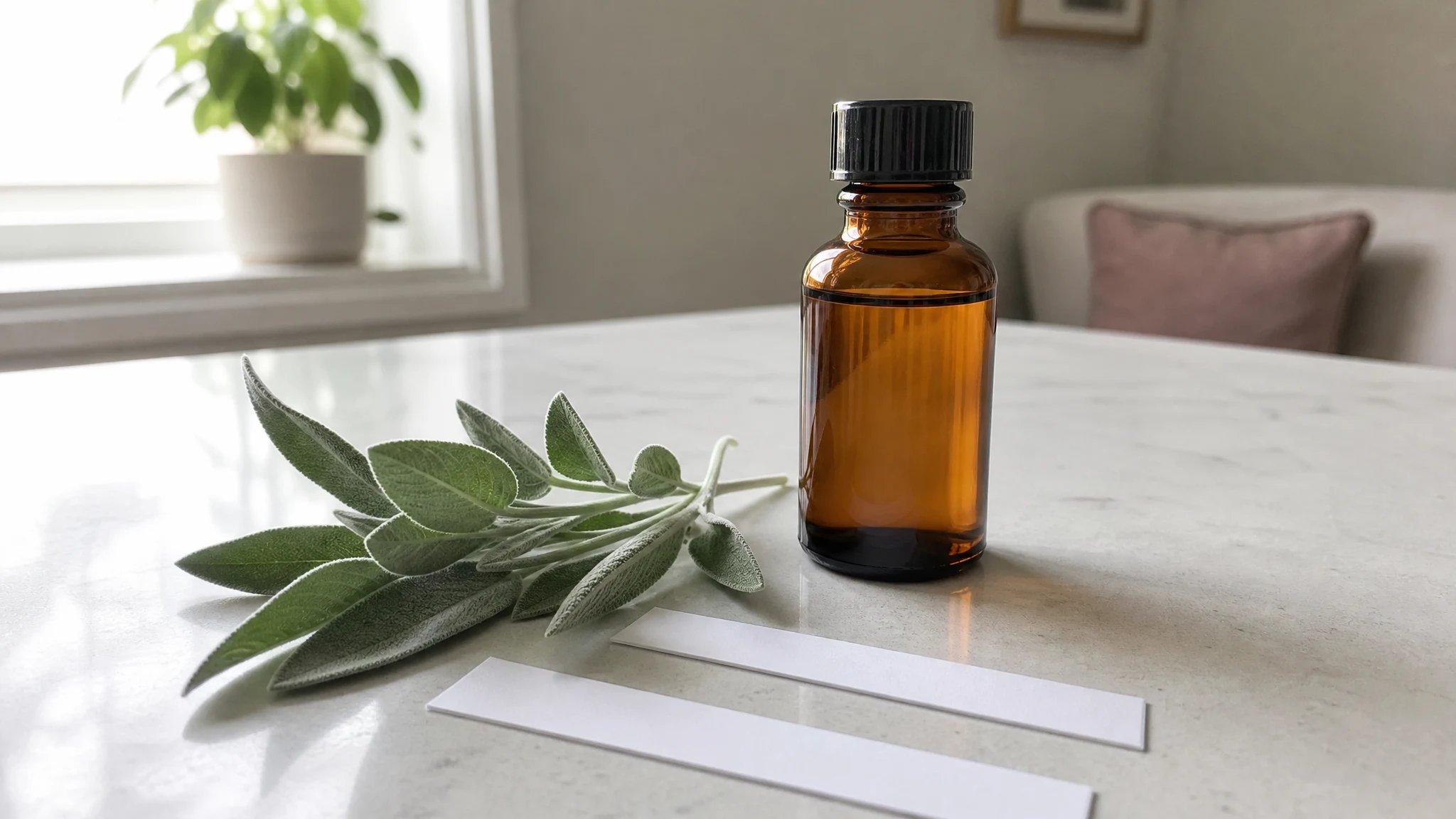
We sell sage oil in two listings, both sold neat, and we describe one of them as botanical grade. We want you to know that "botanical grade" is our own descriptor. No outside body awards it, and we do not offer it as proof of anything beyond what we say about the oil. What we can show is the Certificate of Analysis for one batch. It names Salvia officinalis, leaf, and steam distillation, and lists relative density, refractive index and optical rotation at 20 C. It does not include a gas chromatography breakdown, so it has no thujone, camphor or cineole figures, and it describes one batch only. If you need a constituent figure for your own formula, ask us in writing through the contact page before you order.
A shopper's habit worth building
When you pick up any oil, start by turning the bottle around. Does it name the plant in Latin, the part used and the origin? Does it show a batch number? These details cost a seller nothing to print and tell you a great deal about how seriously they take the oil. Labels full of adjectives and short on facts are worth a second look.
It is also fine to ask questions and to wait for the answers. Any seller who cares about their product will be glad to be asked, and we are always glad to hear from someone who has read the paperwork closely.
Four questions that beat any grade word
- Which document stands behind the word, and does it name a standard and a batch?
- Does it include a gas chromatography table with the compounds you care about, or only physical constants?
- Who ran it, and can you have the report in writing?
- Does the seller attach a health promise to the word? If so, the FDA material above applies to the seller.
Those questions work for any oil on any shelf. Our GC-MS guide shows how to read the report once you have it, and the sage buying guide covers species and labels. A grade word is where a conversation about quality can start, but the paperwork behind it is the actual answer.
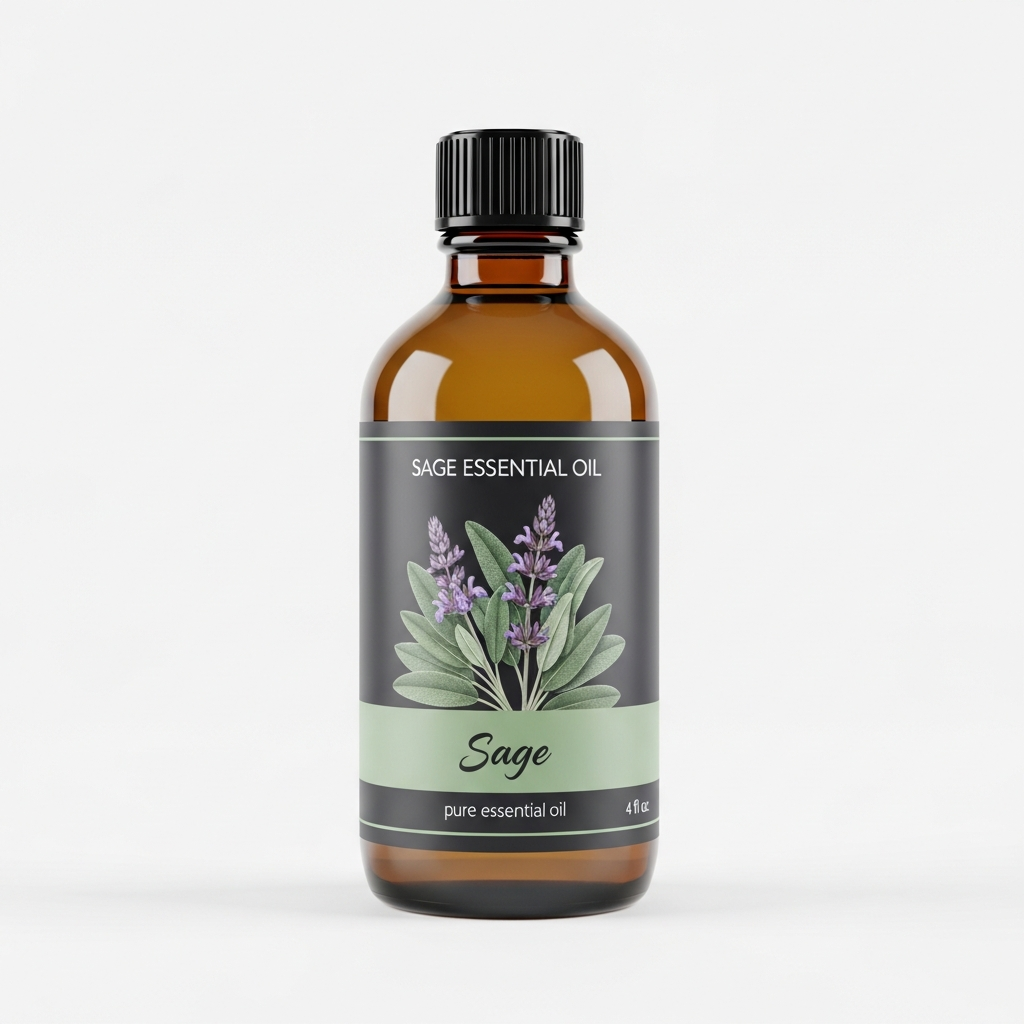
Sage Essential Oil
Sage Essential Oil from our own shop, in sizes from 0.5 oz to bulk.
From $13.99
Shop Now →Sources & Further Reading
- FDA, Aromatherapy
- FDA, Hopewell Essential Oils - 607088 - 04/27/2020
- ISO 9909:1997, Oil of Dalmatian sage (Salvia officinalis L.)
- Safety and efficacy of a feed additive consisting of an essential oil derived from the leaves of Salvia officinalis L. (sage oil) for use in all animal species (FEFANA asbl), EFSA Journal, 2024
- European Medicines Agency, Assessment report on Salvia officinalis L., folium and Salvia officinalis L., aetheroleum (2016)