Sage Essential Oil vs Fragrance Oil: Reading Labels
Pick up two bottles that both say "sage" and you may be holding very different things: one is oil distilled from the leaves of the plant, the other a fragrance mixture built to smell like it. Both can be lovely, and the label may not tell you which is which. The more useful comparison is not natural against synthetic. It is how much paperwork travels with the bottle.
What a fragrance label is allowed to leave out
The FDA says that under U.S. rules, fragrance and flavor ingredients can be listed on a cosmetic label simply as "Fragrance" or "Flavor", and that it does not have the same authority to require allergen labeling for cosmetics as it does for food. The same page says the law treats ingredients from plants the same as those from any other source (Fragrances in Cosmetics). FDA's soap page adds that the laws it enforces have no definitions of "natural" or "organic" (Frequently Asked Questions on Soap). So "botanical" on one front label and "sage scent" on another are both words nobody has officially defined. We sell the first kind, so we would rather help you read labels well than pretend the gap does not exist.
Where the same rule reaches both bottles
Sage's signature safety question is thujone, and IFRA's thujone standard limits it in finished products by category, from 0.0053% in some leave-on products up to 9.5% in candles (IFRA Standard: Thujone, 2020 (Amendment 49)). IFRA's guidance says its standards apply whether a restricted substance is added directly or indirectly to a fragrance mixture, so thujone arriving through a natural oil counts, just as it would from any other source (Guidance for the Use of IFRA Standards). Thujone is thujone.
What differs is the starting point. A fragrance house that makes a sage-type mixture controls the recipe and can stay inside the limits, then tell you a maximum use level. A sage essential oil has no recipe to adjust, because the thujone is the plant's own. EFSA's 2024 analysis of five batches of a sage oil found alpha-thujone near 25%, beta-thujone near 5.6%, camphor near 18.7% and 1,8-cineole near 10.7% (EFSA feed additive opinion on sage oil, 2024). Those compounds are what a sage smell is made of, which is why a fragrance mixture can echo it. For a buyer who wants to calculate a safe amount, a measured thujone figure is the important number.
What a certificate can and cannot tell you
IFRA describes the Certificate of Conformity that a fragrance supplier issues to say a mixture meets the standards for a stated use. It is prepared by the fragrance manufacturer, IFRA is not involved in preparing it, and IFRA takes no responsibility for certificates issued by companies. So the paper is as good as the company behind it. Even so, a certificate that names a category and a maximum level gives you a number to formulate to.
Our Certificate of Analysis covers one batch of our sage oil. It names the botanical, Salvia officinalis, and steam distillation, and lists density, refractive index and optical rotation, all within the ranges printed beside them. It does not give a constituent breakdown or a thujone figure. If you need one, ask us in writing through the contact page before ordering.
| You want to know | Sage-scented fragrance oil | Our sage essential oil |
|---|---|---|
| What is inside | May read just "Fragrance" | One botanical, Salvia officinalis on the certificate |
| Thujone figure | Ask the supplier | Ask us in writing before ordering |
| Use level by category | Supplier's IFRA certificate, if issued | Work it out from the limit |
How the two smell different
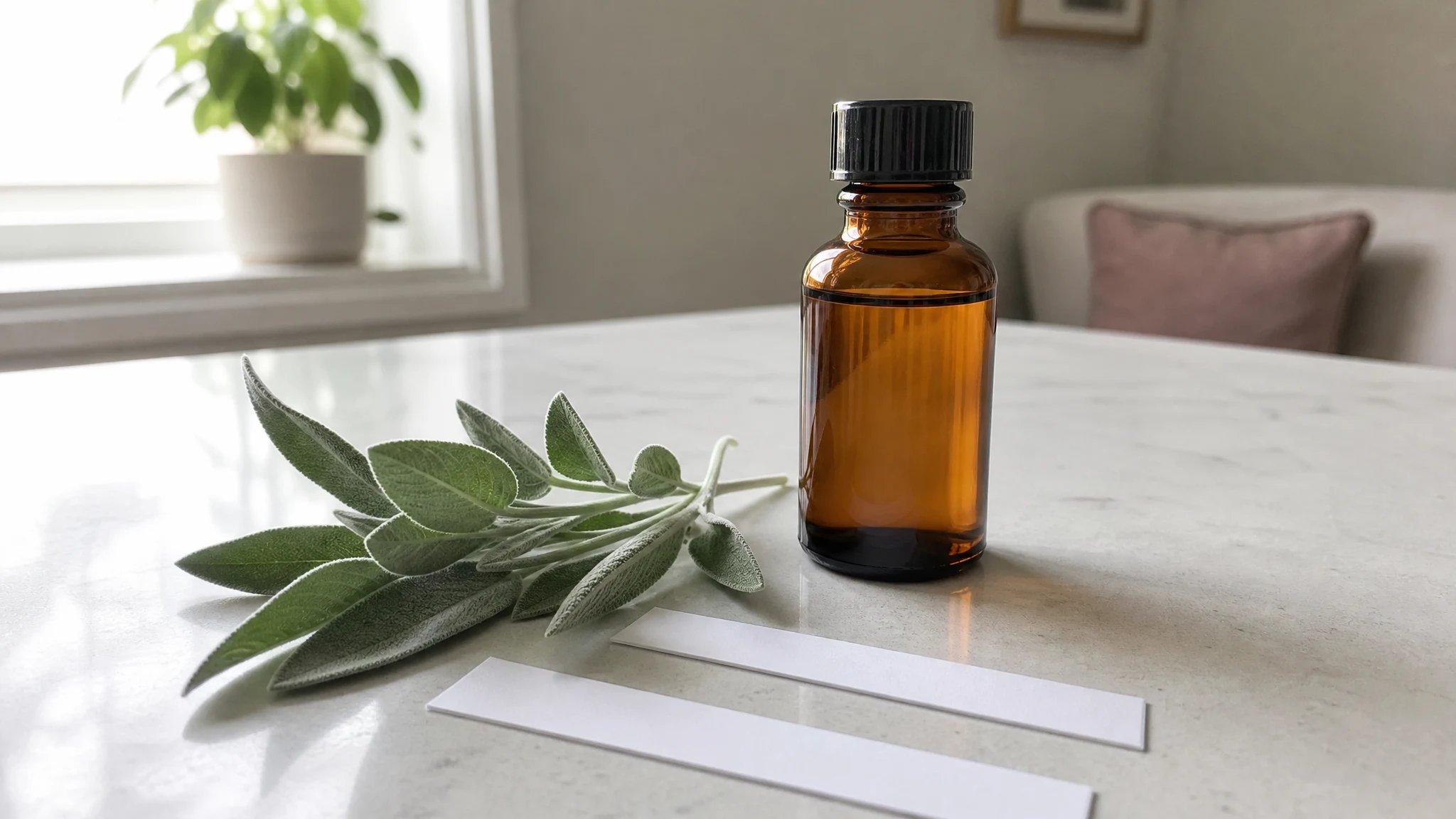
A sage-type fragrance oil is designed, and it tends to be tidy, with a consistent character from one bottle to the next. A real sage essential oil is a plant product and comes with a plant's irregular edges: a little more camphor in one bottle, a little more green in another. Some people love that texture and some prefer the polish of a designed scent. Smell both on paper strips and let them settle for ten minutes, because the opening can differ from the dry-down.
Questions worth asking any seller
- What exactly is in this bottle, and can I see that in writing?
- Which documents come with it, and which batch do they cover?
- What is the maximum use level for the product I am making?
Those three questions work whether you are choosing a fragrance oil, an essential oil or something in between, and a seller who is happy to answer them is a seller worth keeping.
Choosing between them
If you love the plant itself, the green, camphoraceous character of real sage oil, choose the essential oil, ask about its thujone, and size your project to the lowest limit for its category. Our thujone article shows the sums and our GC-MS guide explains how to read a report. If all you want is a herbal note for a candle or soap batch, a fragrance oil sold with a proper certificate is a fair choice, and we do not sell one; you would find it at a craft or supply shop. Nothing we fetched says synthetic is safer or more harmful than natural, so we would not choose on that basis.
Whichever you pick, a Latin name on a label tells you the species and not the composition. We cover that in our sage buying guide, along with the other questions worth asking a seller.
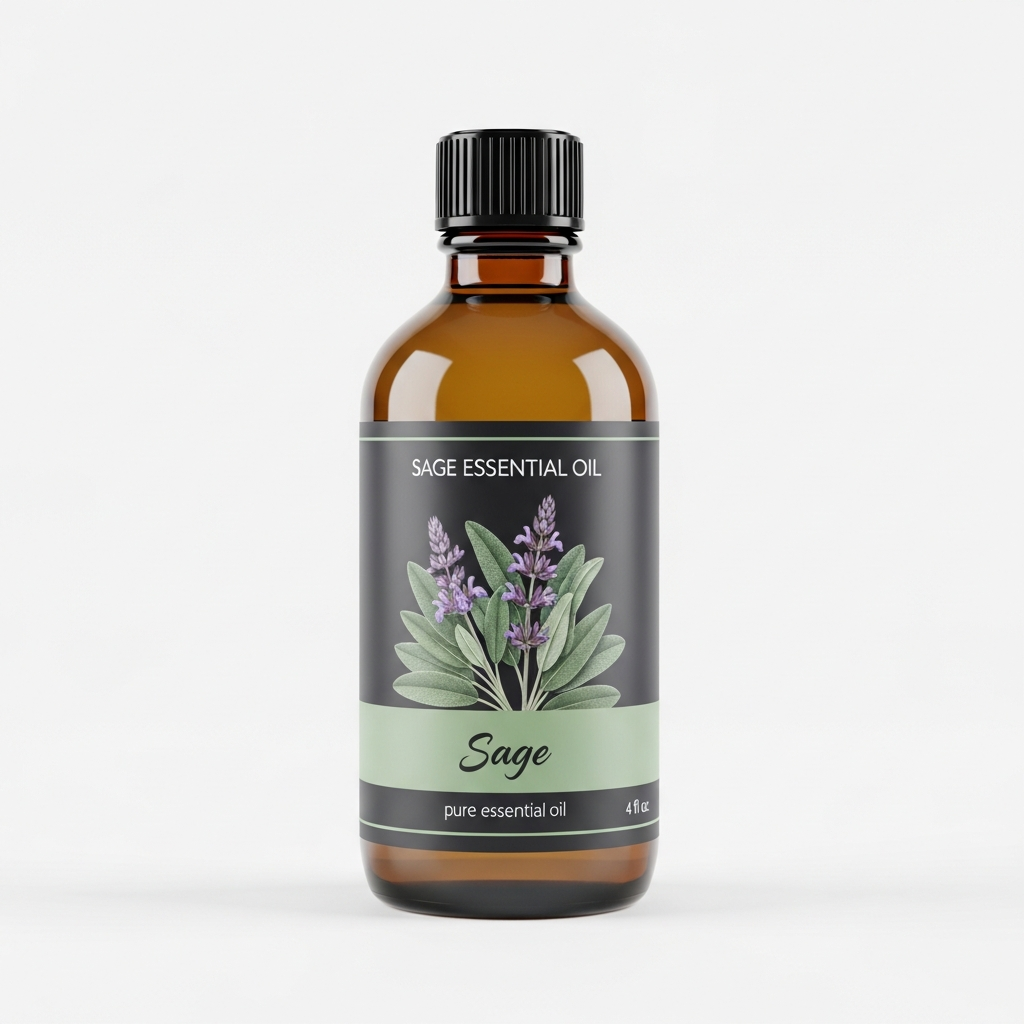
Sage Essential Oil
Sage Essential Oil from our own shop, in sizes from 0.5 oz to bulk.
From $13.99
Shop Now →Sources & Further Reading
- FDA, Fragrances in Cosmetics
- FDA, Frequently Asked Questions on Soap
- IFRA Standard: Thujone, 2020 (Amendment 49)
- Guidance for the Use of IFRA Standards (June 30, 2023)
- Safety and efficacy of a feed additive consisting of an essential oil derived from the leaves of Salvia officinalis L. (sage oil) for use in all animal species (FEFANA asbl), EFSA Journal, 2024