How to Choose Clary Sage Oil: Labels and Reports
Clary sage and the garden sage in our bottles share a first name and very little else. We sell garden sage only, so we are not the place to buy clary, but we do know how to read an oil label and a batch report, and those skills carry across every Salvia on the shelf. Here is what a good clary sage oil should tell you before you buy it.
Start with the Latin name
A bottle that says only "sage" or "clary" leaves the plant open. The botanical name settles it: Salvia sclarea L. is clary sage, Salvia officinalis L. is garden sage. The US list of essential oils recognised as safe for their intended use in food gives them separate entries, along with Greek sage (Salvia triloba) and Spanish sage (Salvia lavandulaefolia) (21 CFR 182.20). So at least four different oils can sell under a "sage" name, and the Latin name is how you tell them apart.
Next, look for the plant part and the method. The clary oil that EFSA assessed in 2024 came from flowering stems by steam distillation (EFSA FEEDAP). An oil from another part or made another way is not automatically a problem, but the seller should be able to say what it is.
What the chemistry should look like
Garden sage is built on thujone and camphor. Clary is a different animal: its two marker compounds are linalyl acetate and linalool. EFSA lists a specification of 55 to 78% linalyl acetate and 6.5 to 25% linalool, and the three batches it examined averaged 68.28% and 14.81%. Those are one applicant's batches, not a promise about every bottle, but they give you a sensible target when you open a report.
The spread between suppliers can be wide. A 2023 study of a clary oil bought from a Slovak supplier found 49.1% linalyl acetate and 20.6% linalool (Kačániová et al.), which sits below EFSA's range for the first compound. That study was looking at the oil's biological activity and was not a quality test, so it proves nothing about the seller. It does show why the report in front of you matters more than the name on the front.
The thujone line
EFSA noted that thujones were not detected in the clary oil it assessed (limit of detection 0.001%), and that the European Pharmacopoeia limits thujones in clary sage oil because of concerns about adulteration. We read that as useful buying logic. Garden sage oil is rich in thujone, about 30.6% in the five batches EFSA characterised (EFSA FEEDAP), so a clary report that shows a thujone figure of any size is worth asking about. The head-to-head is in our clary versus garden sage article.
Reading the whole report
A gas chromatography report is the only document that shows what is actually in the bottle. A few habits make it more useful:
- Check that the batch number on the report matches the bottle in your hand.
- Look for the laboratory, the date and the method, and whether the percentages are peak areas from a flame ionisation or mass spectrometer detector.
- Make sure the listed compounds add up to most of the oil. A report with only two lines tells you less than it seems to.
Be realistic about what a report cannot do. Gas chromatography describes chemistry, not geography, so an origin printed on a label rests on the seller's paperwork. Organic status is a separate question that needs its own certificate. For a deeper look at how these reports read, our GC-MS article uses a sage report as the example.
Physical constants are a helpful cross-check when a seller has no chromatogram. EFSA's three clary batches had a specific gravity of 0.895 to 0.900 at 20 C, lighter than the 0.915 to 0.916 it reported for garden sage. Constants alone cannot prove a bottle is genuine, but a density that belongs to a different oil is a reason to ask more questions.
Questions worth asking a seller
- What is the botanical name, the plant part and the distillation method?
- Can I see a gas chromatography report for the batch I am buying, listing linalyl acetate, linalool and thujone?
- Does the batch number on the report match the bottle?
- Is every size the same batch, or do sizes differ?
We apply the same list to ourselves. The Certificate of Analysis we publish for one batch of our garden sage gives a batch number, botanical name, best-by date, appearance, smell and three physical constants. If you need gas chromatography data on our oil, ask us in writing through the contact page before ordering.
Smell it properly
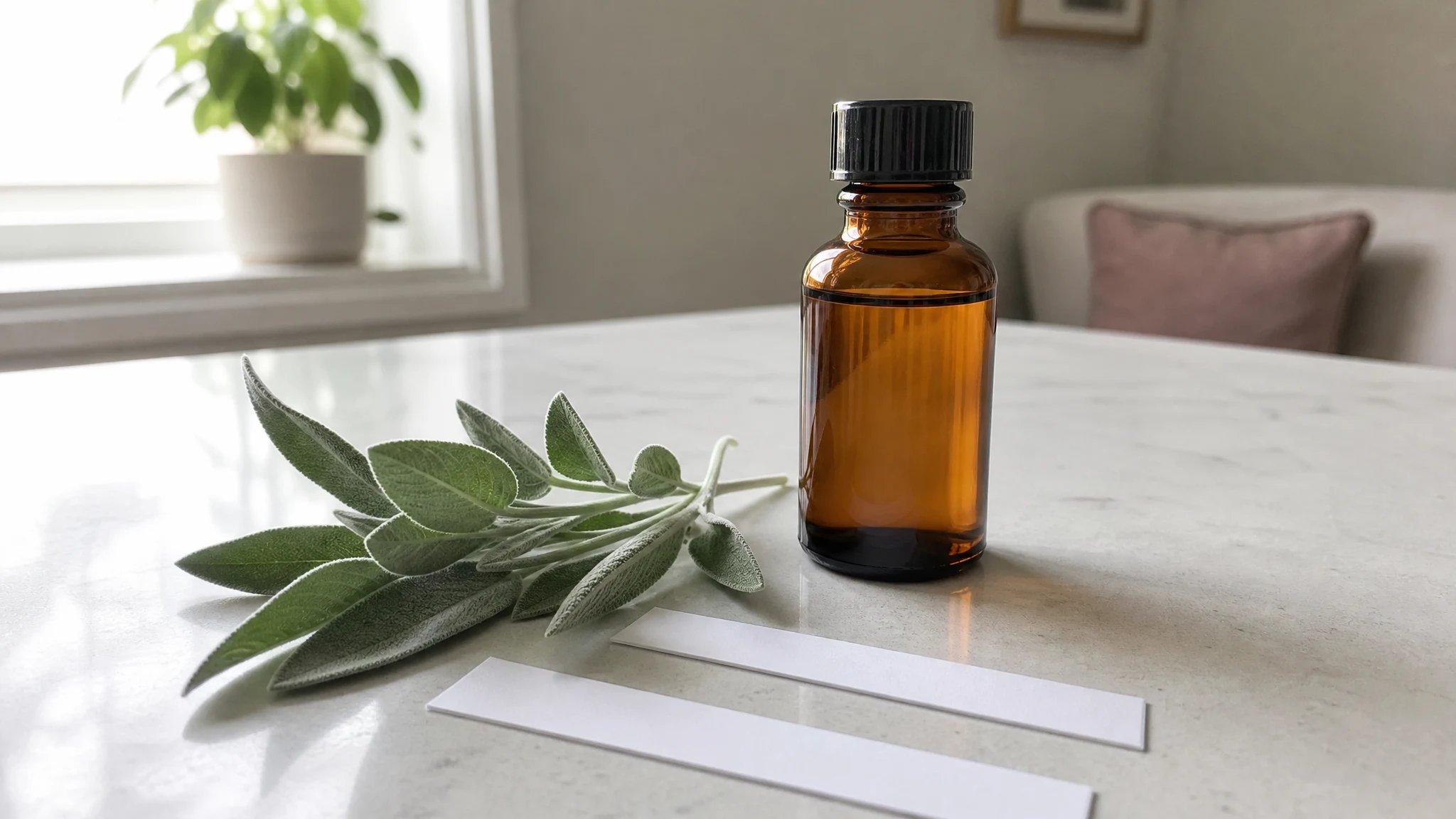
When your clary sage arrives, put a drop on a paper strip and smell it over an hour rather than straight from the bottle. Expect something warm and herbal, quite unlike the dry, camphoraceous character of the garden sage we sell. If it smells harsh, flat or oddly sharp, go back to the seller with your batch number and ask.
Safety comes after the name
EFSA's wording for clary is that it should be considered an irritant to skin and eyes and a dermal and respiratory sensitiser, a conclusion that rests on the applicant's safety data sheet. We have no clary dilution figure or pregnancy statement to give you, so for dilution ask a certified aromatherapist, for pregnancy ask an obstetric clinician or midwife, and patch test either way as described in our patch test article. If a seller tells you clary is "safe in pregnancy" or "safe for children", ask them for the source.
Once you know the plant, the part and the numbers, choosing between clary oils becomes a matter of aroma and budget, which is the fun part.
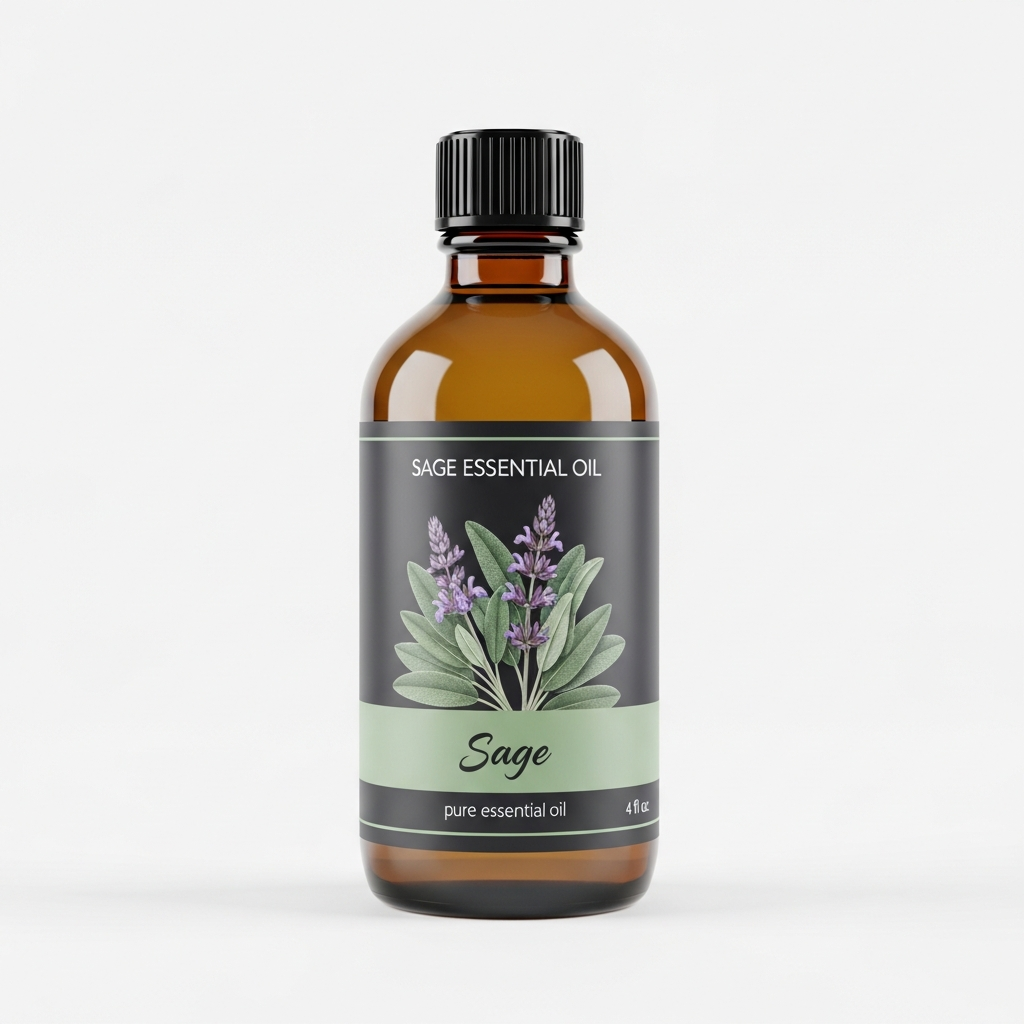
Sage Essential Oil
Sage Essential Oil from our own shop, in sizes from 0.5 oz to bulk.
From $13.99
Shop Now →Sources & Further Reading
- EFSA FEEDAP Panel, 2024, Safety and efficacy of a feed additive consisting of an essential oil derived from the flowering stems of Salvia sclarea L. (clary sage oil) for use in all animal species (FEFANA asbl)
- EFSA FEEDAP Panel, 2024, Safety and efficacy of a feed additive consisting of an essential oil derived from the leaves of Salvia officinalis L. (sage oil) for use in all animal species (FEFANA asbl)
- Kačániová M et al., 2023, Salvia sclarea Essential Oil Chemical Composition and Biological Activities, International Journal of Molecular Sciences
- US Government, 21 CFR 182.20: Essential oils, oleoresins (solvent-free), and natural extractives (including distillates)