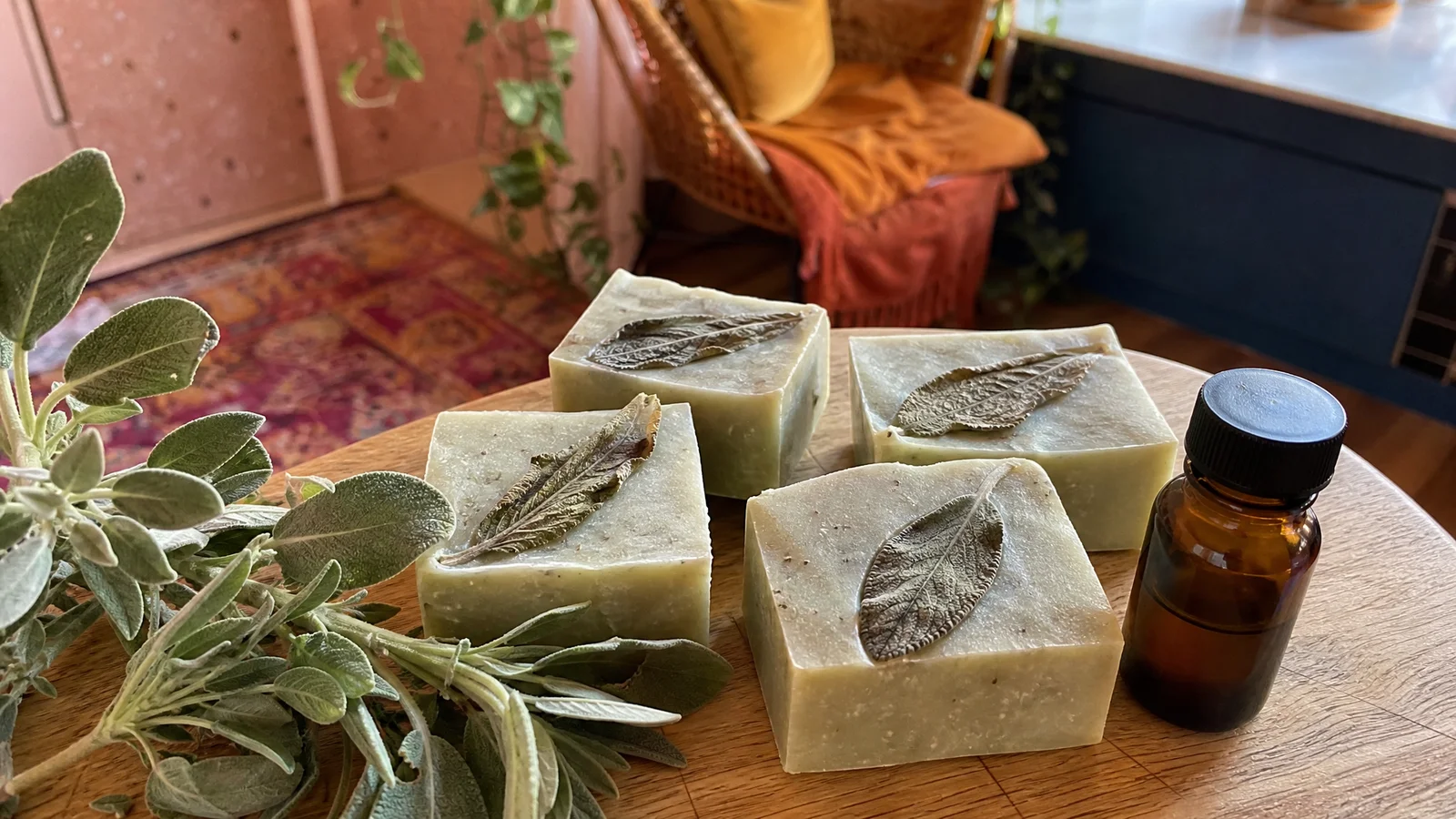
Sage Melt and Pour Soap: How Much Oil to Use
Melt-and-pour soap is one of the friendliest ways to meet sage oil. You melt a ready-made base, stir in a little scent, pour, and a few hours later you have a bar that smells like a herb garden after rain. The trick is that "a little" has to be weighed, and the right amount is smaller than most soap recipes assume.
Start from the weight of the base
With melt-and-pour, the only decision that is yours is how much oil goes in per gram of base, so settle that before you open the bottle. IFRA's thujone standard sets a limit for each product category, and bar soap, shampoo and rinse-off face cleanser sit together in Category 9, where the finished product may hold 0.13% thujone (IFRA Standard: Thujone, 2020 (Amendment 49); Guidance for the Use of IFRA Standards). That is four times the allowance for a face moisturizer, which reflects the fact that soap is rinsed away. The standard is written for industry fragrance mixtures, so using it for a home batch is our own arithmetic.
Turning a thujone limit into an oil amount needs the thujone share of the oil. EFSA's 2024 opinion on a sage oil analysed five batches and found about 30.6% thujone in total (EFSA feed additive opinion on sage oil, 2024), so 0.13% thujone allows about 0.425% sage oil. Published figures for sage oil run wider, and at the thujone-rich end the allowance shrinks to roughly 0.135%. The Certificate of Analysis we publish for one batch lists density, refractive index and optical rotation but no thujone, so for planning we use the cautious end. One drop is about 0.05 mL, or about 0.046 g at our certificate's density of 0.915.
| Base | Typical sage oil | Cautious plan |
|---|---|---|
| 100 g bar | 0.43 g, about 9 drops | 0.14 g, about 3 drops |
| 454 g (1 lb) of base | 1.9 g, about 42 drops | 0.6 g, about 13 drops |
Our suggestion is to plan on the cautious column and move up only if you have a thujone figure in writing. If you want that figure, ask us through the contact page before ordering. Our 0.5% to 2% guidance is for sage diluted in a carrier for skin, and it does not carry over to soap: 0.5% of a 100 g bar is already 0.5 g.
At the bench
- Weigh the base you are actually pouring, since bars shrink and moulds vary.
- Multiply by the percentage from the cautious column: 0.135% of 454 g is 0.6 g.
- Weigh the oil into a small cup on a scale reading to 0.01 g. Droppers differ, and one extra squeeze in a single bar would be a third of the cautious amount.
- Stir it in at the temperature your base maker recommends, pour, and write the batch weights on a label.
We sell sage oil only, so the soap base, moulds and scale come from a craft or supply shop. If your base maker publishes a fragrance maximum, use whichever figure is lower.
Making the bar pleasant
Warm soap can smell stronger than the finished bar will, so wait until a bar has cooled and set before judging the scent. Sage in soap tends to read softer and greener than it does from the bottle, which suits a bar by the sink.
A few small habits help. Keep a note of the weight of base, the weight of oil and the date for every batch. Make a small first pour, one or two bars, before you commit to a big mould. And once the bars are set, wrap them in plastic wrap or paper so the scent stays where you put it. Hold back one bar from each batch for your own use, so you learn how it feels in a real routine.
Soap, or cosmetic?
If you only make bars for your own household, the label question never comes up. If you plan to sell them, it helps to know that FDA defines soap narrowly: mainly alkali salts of fatty acids, those salts as the only cleaning agent, and marketing only as soap. A product that contains synthetic detergents is a cosmetic, and so is one intended to make the user smell nice (Frequently Asked Questions on Soap). Many melt-and-pour bases therefore fall on the cosmetic side, and the base maker can tell you which. Labeling is the seller's responsibility, and a regulatory consultant is the right person to ask about your own products.
Who should leave sage out of the soap dish
We recommend avoiding sage oil entirely during pregnancy and breastfeeding and with a seizure disorder, and keeping it away from children. A bar by the sink is exactly the kind of thing small children pick up and mouth, and the National Capital Poison Center reports that swallowing more than a very small amount of sage oil has caused seizures in children (Essential oils: Poisonous when misused). Our articles on sage oil around children and pregnancy and breastfeeding go through what authorities say. If you have eczema or sensitive skin, check with a dermatologist before adding a fragrance oil to any soap.
For more on how sage oil is used in skin products, our face cleanser article does the same sums for a rinse-off cleanser. A few drops, weighed carefully, is all a good sage bar needs.
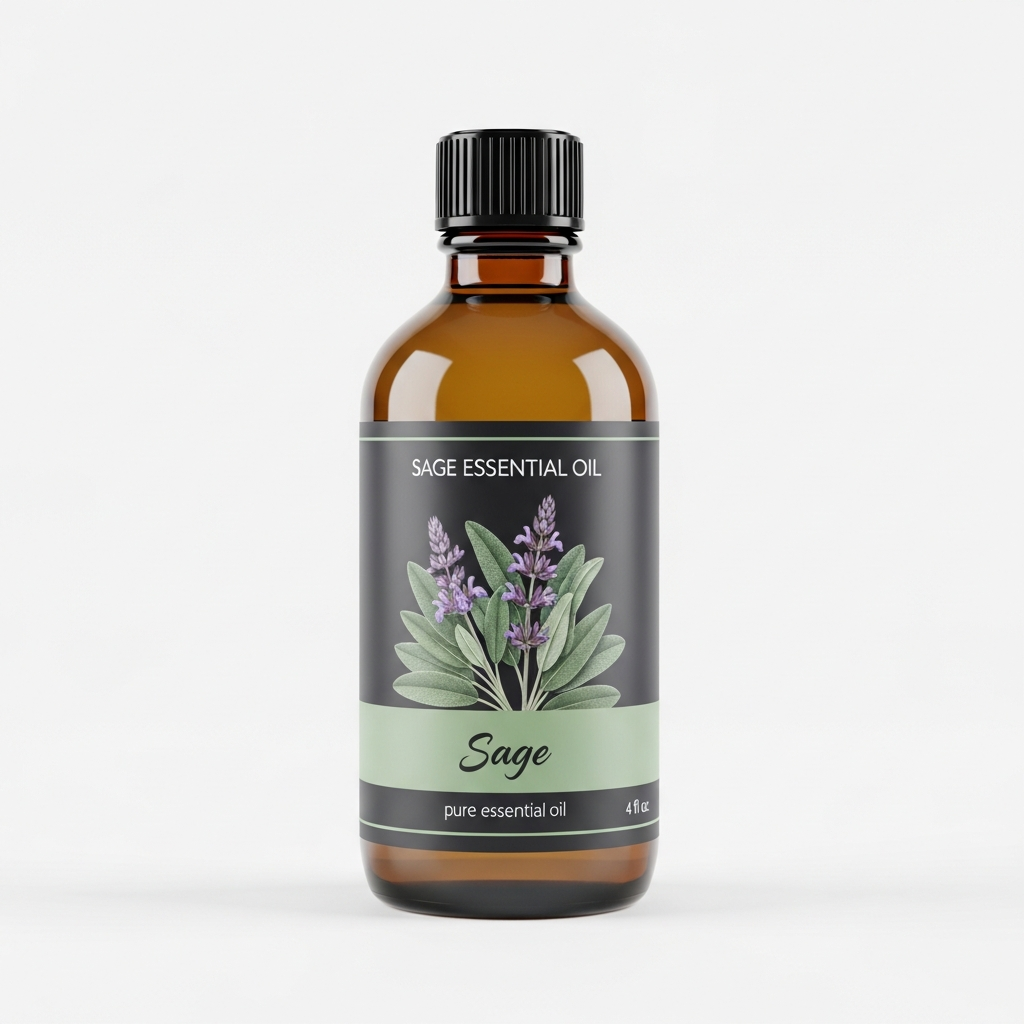
Sage Essential Oil
Sage Essential Oil from our own shop, in sizes from 0.5 oz to bulk.
From $13.99
Shop Now →Sources & Further Reading
- IFRA Standard: Thujone, 2020 (Amendment 49)
- Guidance for the Use of IFRA Standards (June 30, 2023)
- Safety and efficacy of a feed additive consisting of an essential oil derived from the leaves of Salvia officinalis L. (sage oil) for use in all animal species (FEFANA asbl), EFSA Journal, 2024
- FDA, Frequently Asked Questions on Soap
- National Capital Poison Center, Essential oils: Poisonous when misused