Essential Oil Massage Oil: Where Sage Fits In
A good massage oil is about ninety-nine percent carrier. The essential oil is the finishing touch, a few drops of scent, and the carrier is what you are actually spreading over your shoulders. That makes the interesting decisions about a massage oil quite different from what most recipe cards suggest, and it makes sage a special case worth thinking through before it goes anywhere near a bottle.
Why massage is a bigger application than it looks
An oil on a small patch of skin and an oil spread across a back are very different amounts of material, even at the same percentage. A one-ounce bottle of massage oil is about 30 ml, and that is a lot of surface. For an oil whose main concern is neurotoxicity, as it is for sage's thujone, the total amount applied matters at least as much as the dilution on the label. That is our reasoning, not a published rule, but it is why we advise extra care for any large-area use of sage.
The sage arithmetic
Here is how we get to our suggestion, step by step. The IFRA thujone standard limits thujone in a finished leave-on body product to 0.095 percent (category 5A) and in a face moisturizer to 0.032 percent (5B) (IFRA, 2020). It is a standard for fragrance makers, and we cannot say which category a home massage oil would fall into, so treat this as scale rather than a rule. If a sage oil carries about 30.6 percent thujone, the average in one EU review of five batches (EFSA FEEDAP Panel, 2024), the body limit works out to about 0.31 percent sage oil, or less than two drops in an ounce. Our own Certificate of Analysis has no thujone figure, so the real value for a given bottle could differ.
The EMA's assessment report adds that sage oil is reported to be a moderate skin irritant and is not recommended for use in aromatherapy (EMA/HMPC, 2016). Put together, this is where we land. Our general skin guidance for essential oils is 0.5 to 2 percent in a carrier, but for sage we start well below that: one drop in an ounce, which is about 0.17 percent, is the most we would suggest for an adult, on the body and never the face. We do not call 2 percent safe for sage. The honest alternative is a massage oil with no sage in it at all, and for most people that is the happy answer.
Building the oil
If you do want a hint of sage, the sums are short.
- Everyday oil. One ounce of carrier and no essential oil. You can scent it with something else from a supply shop, and it will still be a lovely massage oil.
- With a hint of sage. One ounce of carrier and one drop of sage, which is our suggested ceiling. This is arithmetic and a suggestion, not a tested formula, and a drop varies with your dropper, so weigh if you can: one drop is roughly 0.046 g at the density printed on our batch certificate.
We sell neither carriers nor massage products, so a craft or supply shop is where you will find them. Our carrier oil guide compares the options. A practical rule: choose a carrier you already know your skin gets along with, buy small bottles, and date them so you can discard anything that smells off.
Set up the room first
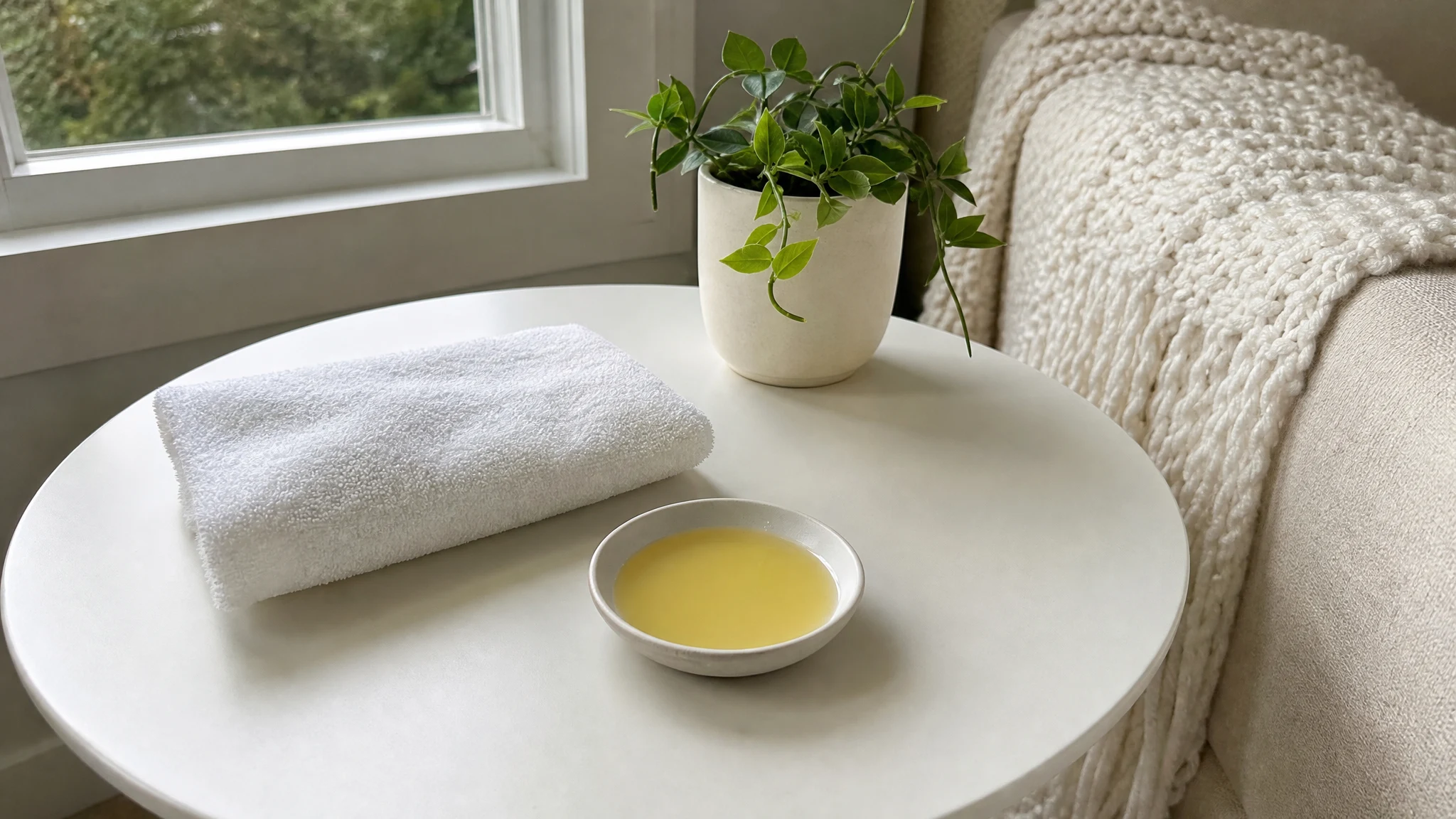
The oil is only half of a massage. Warm the carrier by holding the bottle in your hands for a minute, lay a towel under whoever is receiving, and keep a cloth within reach for slippery hands. A tidy setup makes the whole thing feel unhurried. Keep the finished blend labelled and away from the sunny window, and write the date on it so you know how old it is.
Scent comes last
Open your carrier on its own first and smell it. Some carriers have a gentle nutty or sweet smell, and that is already part of the finished scent. Add the sage only once you like what you started with, and remember it should be a background note, not the main event. If you can smell sage from across the room, the blend has gone too far.
Patch test first
Dermatologists recommend testing a product on a quarter-sized spot, such as the underside of the arm or the bend of the elbow, twice daily for seven to ten days; if you see no redness, itching or swelling, you can go ahead (American Academy of Dermatology). Our patch test article explains what that test can and cannot tell you.
When sage stays on the shelf
We would leave sage out of a massage oil entirely for pregnancy and breastfeeding, for anyone with a seizure disorder, for children, and for broken or inflamed skin. NCCIH notes that sage may be unsafe in pregnancy because of its thujone (NCCIH). For any of those situations, a midwife, physician or dermatologist is the person to ask. We sell a cosmetic oil and make no claim that sage relieves anything; the FDA judges a product by what it is intended to do, and a massage oil sold for aches and pains would be making a drug claim (FDA).
If you would like something smaller than a bottle, our roller blend piece works through the same ceiling for a 10 ml roller, and the dilution guide covers the ratios. Whatever you make, a simple oil you feel comfortable with always beats a clever one you worry about.
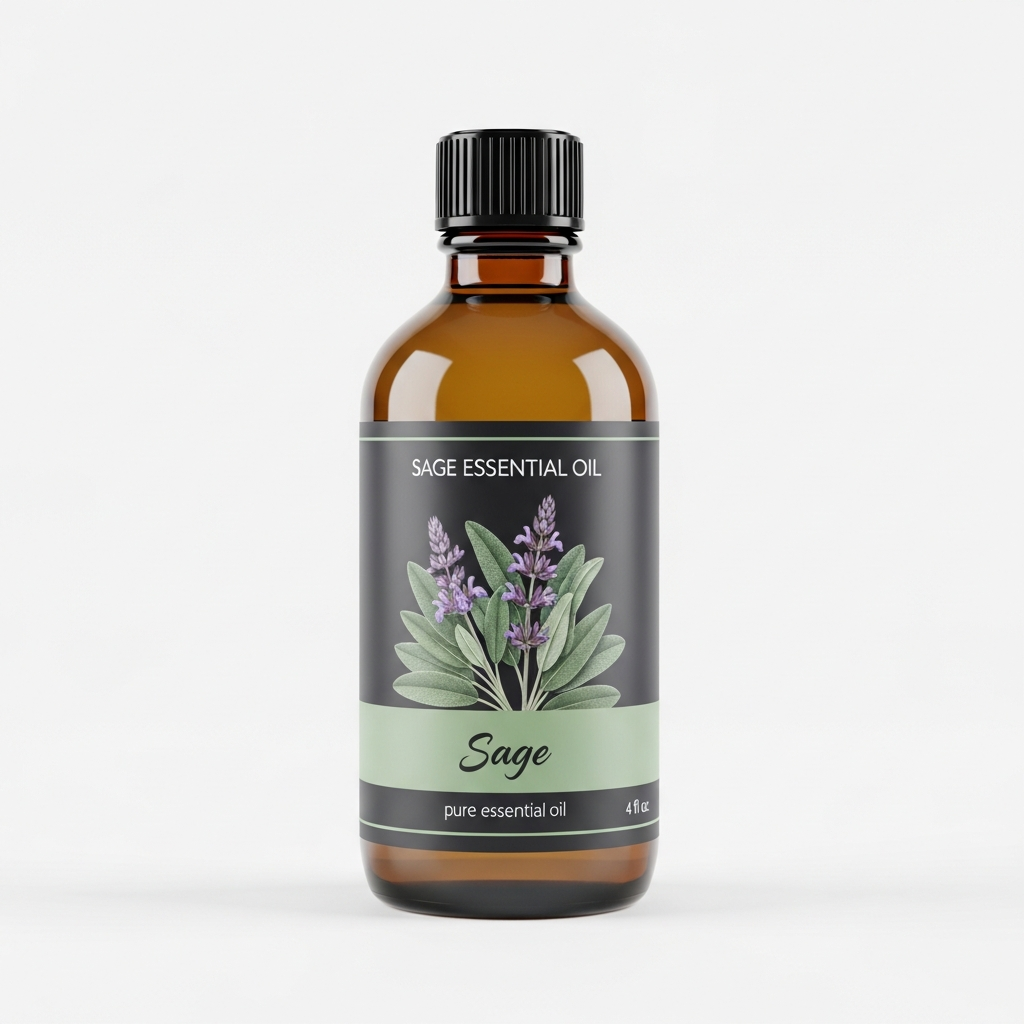
Sage Essential Oil
Sage Essential Oil from our own shop, in sizes from 0.5 oz to bulk.
From $13.99
Shop Now →Sources & Further Reading
- IFRA, 2020. IFRA Standard: Thujone (Amendment 49). ifrafragrance.org
- EFSA FEEDAP Panel, 2024. Safety and efficacy of a feed additive consisting of an essential oil derived from the leaves of Salvia officinalis L. (sage oil) for use in all animal species (FEFANA asbl). EFSA Journal. PMC11656093
- EMA/HMPC, 2016. Assessment report on Salvia officinalis L., folium and Salvia officinalis L., aetheroleum. ema.europa.eu
- American Academy of Dermatology. How to test skin care products. aad.org
- NCCIH. Sage: Usefulness and Safety. nccih.nih.gov
- FDA. Aromatherapy. fda.gov