Does Sage Oil Stain Fabric? What Actually Lifts It
A drip is the most likely accident with a bottle of essential oil: the cap comes off, the bottle tips, and a bead of oil lands on the sleeve of your favourite cotton tee. It does stain, in the plain sense that oil on fabric leaves a darker, translucent mark, and sage oil is no exception. The good news is that it is an ordinary oil stain, and ordinary oil stains have an ordinary, well-documented fix.
What kind of stain is it?
Essential oils do not dissolve in water, and they do not evaporate off cloth the way a splash of water does. Once it soaks into cloth it spreads outward from the drop and leaves a greasy-looking patch. That is the whole story as far as the oil itself goes, and it is why the fix is the same one you would use for a splash of salad dressing or a smear from a lip balm.
Colour is the one extra variable. The Certificate of Analysis we publish for the batch it covers lists the appearance standard for our sage oil as a yellow liquid. Reasoning from that, a fresh drop on white fabric could leave a faint yellowish tint as well as the grease mark, which is one more reason to act while the oil is still wet. We would not promise the tint either way, and we would not promise our oil will leave no mark on anything, so treat every fabric as one that can mark.
The order that works
Start with the instinct you would not expect: do not rinse it with water first. Oil and water do not mix, so water alone only spreads the mark around. Instead:
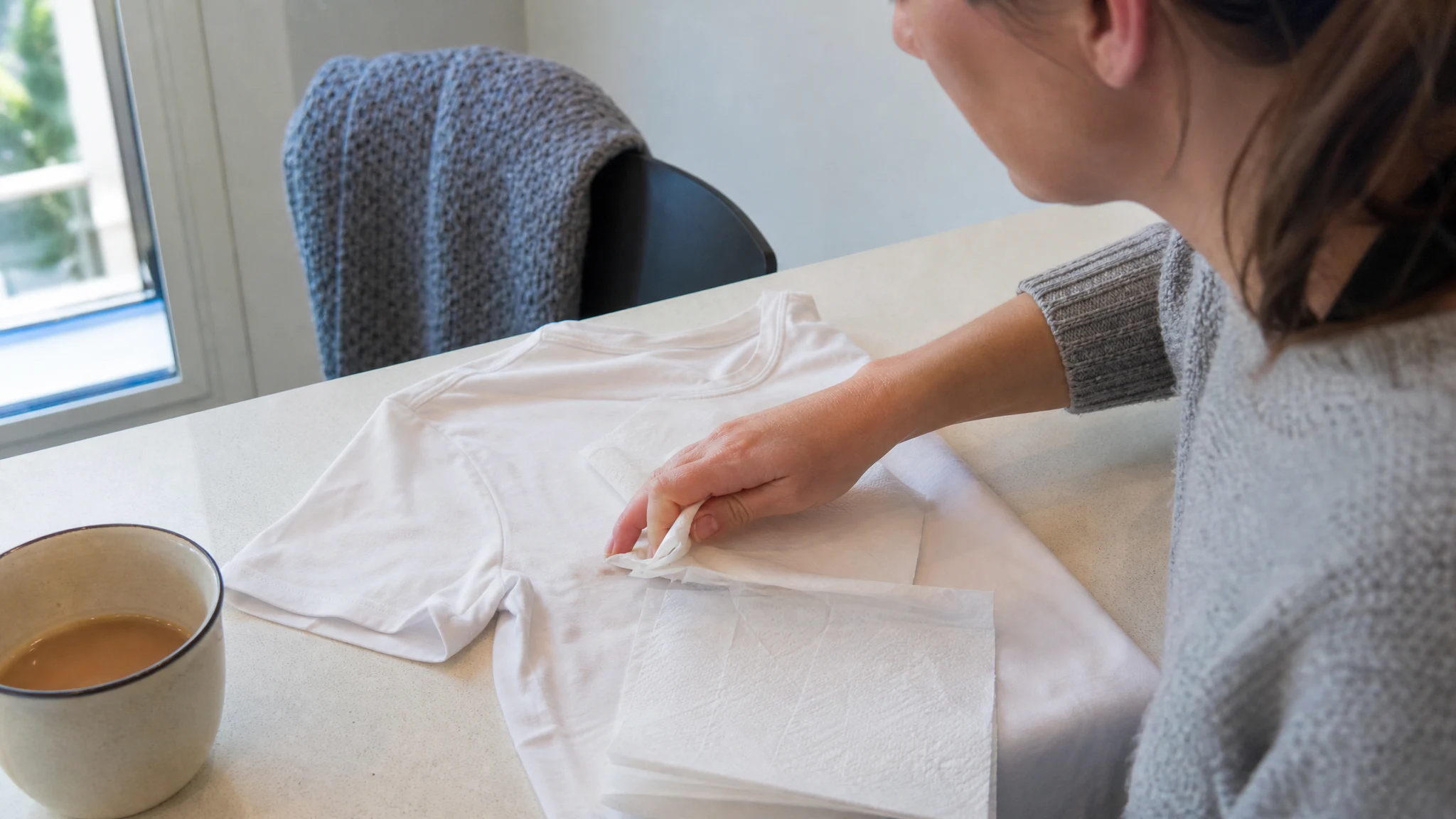
- Blot, do not rub. Lay the garment flat, press a clean towel or paper towel on the spot, and lift off whatever is still sitting on the surface. Rubbing pushes the oil deeper into the weave.
- Read the care label. Silk, wool, leather, suede and anything marked dry-clean-only belongs with a professional cleaner. Tell them it is an essential oil and point out the spot before anything is washed.
- Test first. University of Georgia Extension advises pretesting each cleaning agent on an inconspicuous area to check for colour running. A hem or the inside of a seam does the job.
- Pretreat with liquid detergent. Kansas State University's extension guidance for light grease and oil stains is to pretreat with a prewash stain remover, liquid laundry detergent or a liquid detergent booster. Plain liquid dish detergent is built for the same job, because it carries surfactants that wrap around oil so water can carry it off, and it is a common pantry stand-in.
- Wash in the hottest water the fabric allows. K-State's wording is the “hottest water safe for fabric,” and the care label is what tells you what that is.
- Air-dry and check. UGA's guide air-dries after treatment, and for good reason: if a faint mark is still there, a hot dryer can bake it in, while a second round of detergent on a still-damp or air-dried garment can still lift it.
Heavier spills and stubborn marks
If you tipped a bottle rather than a drop, K-State suggests a heavier routine: place the stain face down on clean paper towels, apply a cleaning fluid to the back of the stain so the oil is pushed into the towel rather than through the garment, replace the towels often, then let it dry and launder. Cleaning fluids are a hardware store or supermarket purchase, and the same rule about testing an unseen spot applies. For persistent marks UGA's page suggests sponging with a safe dry-cleaning solvent, which is also what a professional cleaner will reach for.
The same thinking applies to hard surfaces. A sealed countertop or tile can be blotted and wiped with a little dish soap and warm water. Unsealed wood, natural stone and leather soak oil up the way fabric does, so blot at once and ask the maker or a restorer before you try anything stronger. That last part is our reasoning from how oils behave, not a tested method.
The bigger stain is often the carrier
We sell our sage oil neat, and our skin guidance is to dilute it to 0.5% to 2% in a carrier oil before it touches skin. The arithmetic is on our dilution page. It also means the oil that ends up on the pillowcase or the towel after a body-oil massage is nearly all carrier, and a drop of a 2% blend is 98% carrier oil. Carrier oils such as almond or jojoba come from a craft or grocery shop, and they stain like any cooking oil, which responds to the same detergent routine above. Keep an old towel for oiled-skin days and do not rely on a quick rinse.
Diffusers and sprays are less of a worry for fabric, though a spray bottle held close to a curtain can leave small spots. Our posts on room sprays and candles cover how much oil those use, and storing the bottle upright, capped and away from the edge of a shelf is the cheapest stain prevention there is.
If it lands on skin or eyes
Sage oil is concentrated, which is why we ask readers to keep it away from eyes, children and pets. If neat oil gets on your skin, wash it off with soap and water; if irritation lingers or it reaches your eyes, ask a physician or pharmacist. If a child or a pet has been in a spill, call a doctor, poison control or a veterinarian rather than trying to treat it at home. We sell a cosmetic and aroma oil, not a remedy, and a stained shirt is a much smaller problem than any of those.
So the short answer is yes, it can mark cloth, and no, it is rarely a lasting problem if you blot, pretreat with detergent and check before the dryer. Catch it while it is wet, and a dropped bottle becomes a laundry-day footnote.
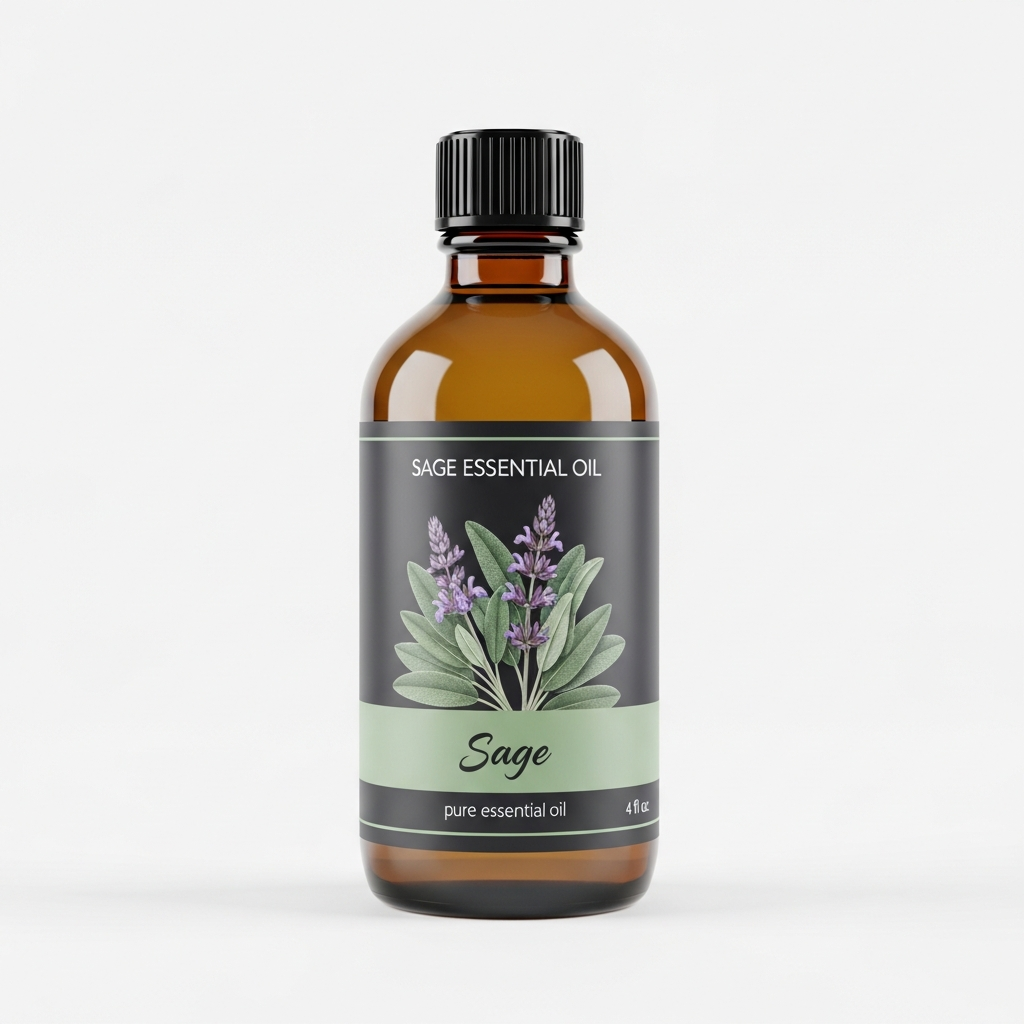
Sage Essential Oil
Sage Essential Oil from our own shop, in sizes from 0.5 oz to bulk.
From $13.99
Shop Now →Sources & Further Reading
- Stain Removal | K-State | Kansas State University (Kansas State University Research and Extension; grease and oil section)
- Remove Stains From Oil-Based Foods | Textiles (University of Georgia Cooperative Extension)