Types of Essential Oil Diffusers: Ultrasonic, Nebulizer, Reed
Choose a diffuser by how much upkeep you will actually do and whether you can stop it, not by how fine the mist looks. The four common designs, ultrasonic, nebulizing, heat or evaporative, and reed, differ in what they put into the air and what they leave on your shelf. We sell sage oil (two listings) and no diffusers, and we recommend no brand; the models named below are cited only because their manuals state figures.
The four designs and what the sources say about each
Ultrasonic (water-based)
The NOW Foods manual for its model 7512 describes the mechanism: "high frequency ultrasonic technology that vibrates cool water inside the unit creating an ultra fine mist," with the oil added to the water (NOW Foods manual, 2022). The same manual says oils "are corrosive, and over time, they build up on the ceramic parts," and lists "oils are clinging to ceramic disc or sensor" as a cause of no mist. That is upkeep you will do.
The water is the other half of the design. The US Environmental Protection Agency, writing about home humidifiers, says standing water lets microorganisms grow, that breathing mist containing them "has been implicated as causing a certain type of inflammation of the lungs," and that ultrasonic and impeller models are the most likely to spread these particles. Tap-water minerals leave "white dust" and crusty scale (EPA, humidifier care). The EPA's page is about humidifiers, not essential oil diffusers. A diffuser that mists water is the same kind of device, which is why we apply it here as our inference, and why our cleaning article exists.
Nebulizing
A nebulizer has no water. In the Organic Aromas manual for its Mobile-Mini unit, you put 20 to 25 drops of essential oil in a glass reservoir and a pump drives it out. The unit runs on a cycle of 2 minutes on and 1 minute off for two hours and then shuts down. The manual forbids water, fragrance oils and carrier oils, and lists thick resin and root oils (benzoin, myrrh, frankincense, patchouli, vetiver, clove, sandalwood) as likely to clog the micro-tubes. It recommends alcohol rinsing about every 5 to 6 uses and a monthly hot-water soak (Organic Aromas manual). Sage oil is not on that maker's list, and the manual does not name it as suitable either; ask the maker about your model.
The arithmetic is the point. 20 to 25 drops at about 20 drops per ml is 1.0 to 1.25 ml of oil sitting in the reservoir; with no water to dilute it, the output is whatever the pump meters out. Compare that with the NOW recipe card, where a single oil goes from 1 to 15 drops into 120 mL of water.
Heat and evaporative (passive)
This group includes candle-style warmers, plug-in heaters and fan pads. A vendor application note from a gas chromatography supplier describes passive units as subject to "uneven evaporation of components" and heated units as able to "potentially cause chemical changes to the essential oil" (Apsokardu, application note). That is an unreviewed vendor statement, so treat it as a hypothesis. The better evidence is a peer-reviewed household simulation with tea tree oil, which compared an ultrasonic diffuser with a heat diffuser. Terpene levels from the ultrasonic unit were below applicable exposure limits. Terpene levels from the heat unit were about ten times higher, and alpha-pinene and several other terpenes exceeded long-term derived no-effect levels (Zisook et al., 2025). One oil, one pilot-scale setup, one machine of each type: it supports caution about heat, and says nothing about sage.
Reed
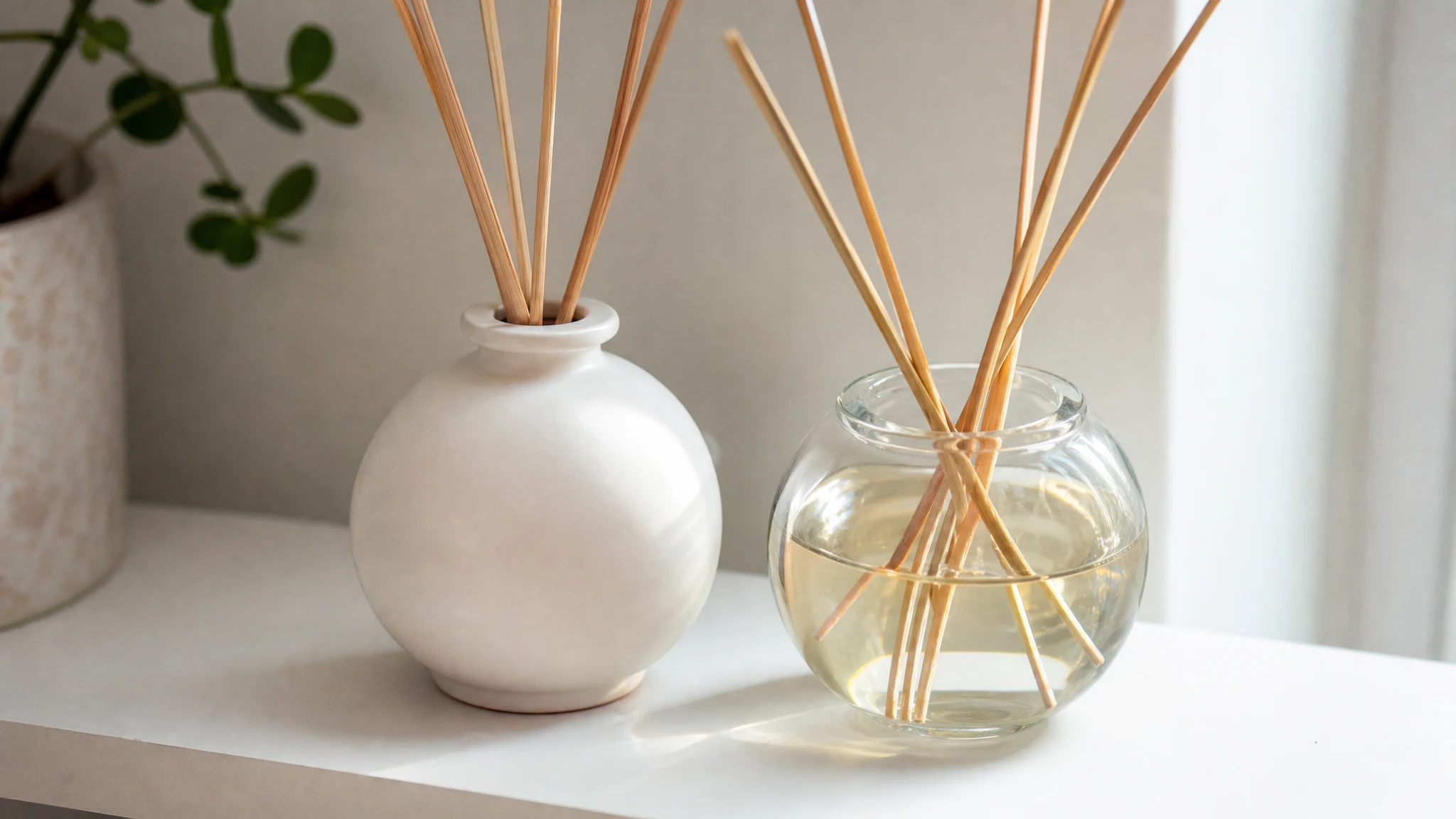
A reed diffuser has no power and no switch. Reeds draw the liquid up and release it; one candle maker describes this as creating "a consistent background scent," and advises flipping weekly, replacing reeds every 2 to 3 months, keeping the unit away from children, pets and open flames, and wiping up spills because oils "can damage finishes" (P.F. Candle Co., care and safety). Poison Control notes that reed diffuser liquid is an essential oil dissolved in isopropyl alcohol and "must be kept out of the reach of children" (poison.org). The way to stop one is to take the reeds out, and nobody does that at bedtime. We found no measurement study of reed diffuser emissions.
Decision table
| Design | What goes in | Stop control | Upkeep in the sources | Fit for a thujone-bearing oil |
|---|---|---|---|---|
| Ultrasonic | Water plus a few drops (NOW: 1 to 15 drops of one oil in 120 mL) | Timer or auto shut-off on many models | Rinse at each oil change; empty daily per EPA and CDC; oil film on the disc | Most controllable: low drops, a timer, an open door |
| Nebulizing | 20 to 25 drops of neat oil (one maker's manual) | Built-in cycle; shuts down after 2 hours on that model | Alcohol rinse about weekly; monthly hot soak; clogs with thick oils | Poor: undiluted output and a high oil load per fill |
| Heat or evaporative | Oil on a pad or in a dish | Unplug or snuff | Residue on the heating surface (reasoning) | Poor: highest terpene levels in the one study that compared heat |
| Reed | A pre-mixed base of oil in solvent | None short of removing the reeds | Flip weekly, replace reeds | Poor: continuous, uncontrollable, and sage is not sold in a reed base by us |
What it does to the oil, and what we cannot say
It is tempting to rank designs by what they do to the oil. The evidence in front of us is narrower. Emissions from a commercial diffuser run in an office peaked right after switch-on, then fell, with limonene highest, followed by beta-pinene and alpha-pinene (Kim and Kwon, 2026). The authors raise secondary chemistry as something exposure assessments should consider, and they flag an unidentified compound that spiked early. That is a statement about what is unknown. No fetched study measured sage oil in any diffuser, and none measured thujone in air, so we cannot tell you which design delivers least thujone per drop. What we can do is arithmetic on the amount of oil loaded.
Our position for sage
Choose the method with the lowest, most controllable output, and for sage that means an ultrasonic unit with a timer, a low drop count and a window you can open. Our process page says diffusing sage needs "a lighter hand than you would use with a mint or a citrus," that sage oil is high in thujone, and that it should be avoided in pregnancy and breastfeeding, kept away from children and left alone with a seizure disorder. The European Medicines Agency describes thujone as toxic and capable of causing seizures at high doses, in the context of consuming the oil, and rated the benefit-risk of sage oil "negative" under its herbal-medicine framework (EMA/HMPC, 2016). It did not assess diffusing. We have no data on inhaled thujone from any design.
Whichever you pick, the ASPCA says cats are "especially sensitive to essential oils" (ASPCA, 2020), which is a reason to ask a veterinarian first and to keep a passive or reed unit out of a home with pets. Setup and schedule are in how to use a diffuser, drop arithmetic is in drops in a diffuser, and sage blends are in our sage diffuser post.
For a purchase, a home-goods or aromatherapy supply shop is the right place; we sell the oil, not the equipment. A certificate we publish for one sage batch lists density, refractive index and optical rotation and no constituents, so anyone who needs a thujone figure should ask in writing before ordering.
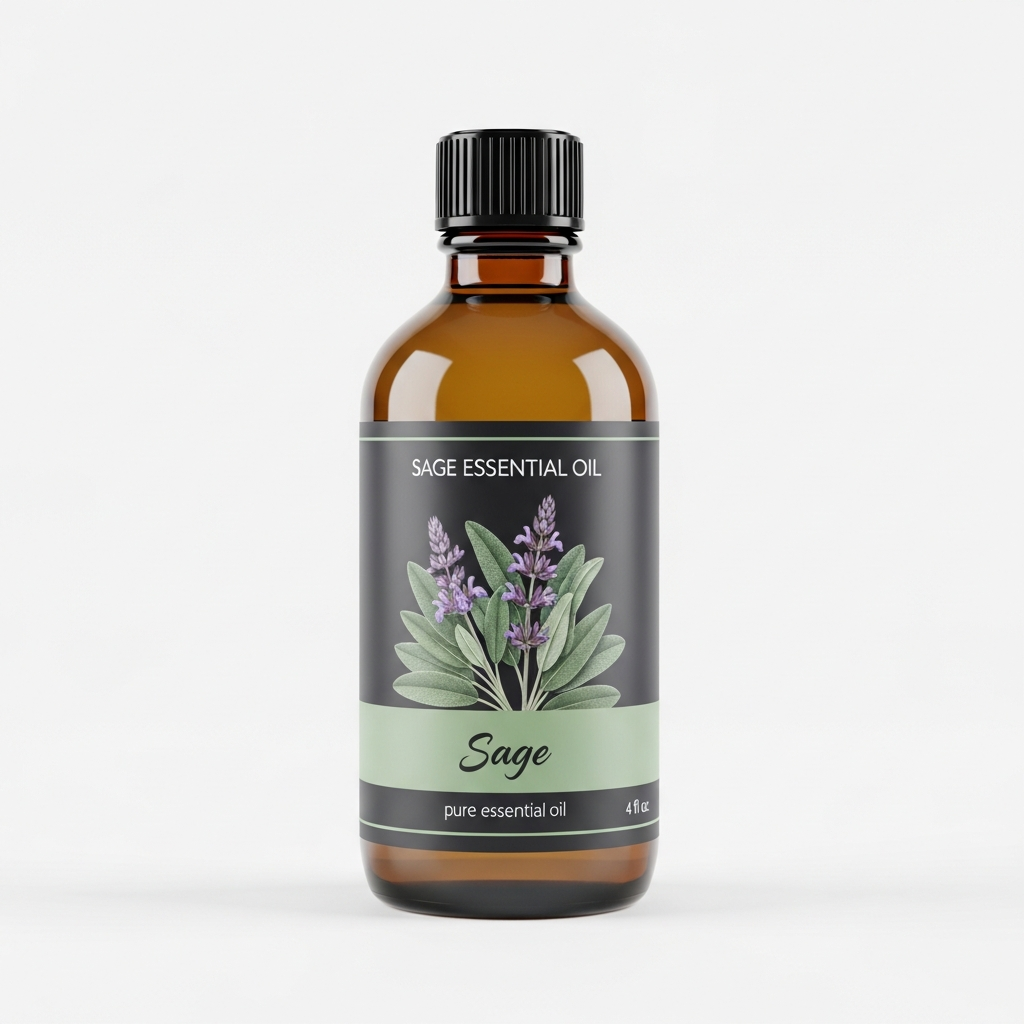
Sage Essential Oil
Sage Essential Oil from our own shop, in sizes from 0.5 oz to bulk.
From $13.99
Shop Now →Sources & Further Reading
- NOW Foods, 2022. Ultrasonic Oil Diffuser manual, model 7512. nowfoods.com/7512 manual
- Organic Aromas, undated. Mobile-Mini Nebulizing Diffuser instruction manual. organicaromas.com
- US EPA, 2026. Use and care of home humidifiers. epa.gov
- Zisook RE et al., 2025. Volatile organic compound and particle emissions from the use of tea tree oil in essential oil diffusers. J Occup Environ Hyg. PubMed 41004428
- Kim P-G, Kwon J-H, 2026. Time-dependent emission characteristics of terpenes from an essential oil diffuser. J Environ Sci Health A 61:263-271. PubMed 41805452
- Apsokardu M, undated. Thermal desorption analysis of essential oil emissions from common in-home diffusers (application note). theanalyticalscientist.com
- P.F. Candle Co., undated. Reed diffuser care and safety. pfcandleco.com
- Poison Control (poison.org), undated. Essential oils. poison.org/articles/essential-oils
- EMA/HMPC, 2016. Public statement on Salvia officinalis L., aetheroleum. ema.europa.eu
- ASPCA, 2020. Pet poisons: household products and cleaning agents. aspca.org