Can You Ingest Sage Essential Oil? Why the Herb Is Not the Oil
Sage is in the spice rack, so people reasonably wonder whether the oil is just a stronger version of the same thing. It is not, and our oils are sold for external, aroma use with the shop's statement that they are not for internal use. This article explains what the US food regulations do and do not say about sage, what a drop of oil carries compared with what regulators allow in herbal medicines, what has happened to people who swallowed it, and who to call. It gives no way to take the oil by mouth, and we will not.
What the FDA listing means
Federal regulations list sage in two places. Section 182.10, "Spices and other natural seasonings and flavorings", names Sage, Salvia officinalis L. (and Greek sage and clary sage); section 182.20, "Essential oils, oleoresins (solvent-free), and natural extractives (including distillates)", names Sage, Salvia officinalis L., Sage Greek (Salvia triloba L.), Sage Spanish (Salvia lavandulaefolia Vahl.) and Clary (Salvia sclarea L.) (21 CFR 182.10; 21 CFR 182.20). Section 182.10 describes its entries as generally recognized as safe "for their intended use". That wording matters. The listing covers sage as a food flavouring, in food, at flavouring levels, from a source made and labelled as food. It is not a statement about a bottle sold as an aroma oil, about drops, or about a person's daily total. It is also a US rule: the European Union, in Regulation 1334/2008, says thujone, sage's main neurotoxic constituent, may not be added as such to food, and caps it in drinks (10 mg/kg in alcoholic beverages other than Artemisia ones, 35 mg/kg in Artemisia spirits, 0.5 mg/kg in non-alcoholic Artemisia drinks) (Regulation 1334/2008, Annex III, read on the UK retained copy).
We sell no food-grade sage oil. Our certificate names the product Sage Essential Oil, steam distilled, and gives density, refractive index and optical rotation for one batch; it says nothing about food use, and it carries no thujone figure.
What a drop carries compared with a medicine limit
The European Medicines Agency restricted thujone in sage leaf preparations to 6.0 mg per person per day for at most two weeks, and judged the benefit-risk balance of sage oil as a single-ingredient product to be negative: consumption of it "involves a high risk of exceeding this maximum recommended daily intake of thujone" (EMA/HMPC, 2016). The same committee's 2012 statement estimates average dietary thujone intake at 0.3 to 1 mg per person per day (EMA/HMPC, 2012). Here is our own arithmetic:
- A drop is about 0.05 ml. At the 0.915 density on our published certificate (one batch), that is about 46 mg of oil.
- If the oil resembled the five sage oil batches that EFSA characterised in 2024, with alpha plus beta thujone about 28.5 to 32.2% of the oil (EFSA FEEDAP, 2024), one drop holds about 13 to 15 mg of thujone.
- That is more than twice the EMA's 6.0 mg daily figure, from one drop. A 5 ml teaspoon would hold roughly 1.3 to 1.5 g of thujone.
We do not know our oils' thujone content, and the EMA's 6.0 mg figure was set for leaf preparations, not the oil, so this is orientation, not a safety limit. It does show why "it's just sage" is the wrong comparison: the oil is the concentrated volatile fraction of the leaf, which the EMA's assessment report, citing Bradley (2006), puts at up to 3% of the leaf by weight, so its thujone is no longer diluted by the rest of the plant (EMA/HMPC, 2016).
What has happened to people who swallowed it
- In 1981, French researchers described eight human poisonings from commercial essences of sage, hyssop, thuja and cedar, tonic-clonic convulsions being the main sign (Millet et al., 1981).
- A 2011 case report described a newborn and a toddler with generalised tonic-clonic seizures after accidental exposure to sage oil; both recovered (Halicioglu et al., 2011). The EMA's report adds that the older child had taken about 5 ml for intestinal colic and seized about 20 minutes later, and that a case of poisoning is documented after sage oil was swallowed for acne.
- The EMA also reports an 18-month-old who had seizures after a tea made from home-grown sage; the original authors suggested the tea may have unmasked a seizure focus (EMA/HMPC, 2016 assessment report). That is a tea and one child; it does not mean tea and oil are alike.
NCCIH, the US National Center for Complementary and Integrative Health, says sage contains thujone that "can be toxic if consumed in large amounts" and may be unsafe in high doses or when taken for long periods (NCCIH, 2025). The National Capital Poison Center lists sage oil by name and says swallowing more than a very small amount has caused seizures in children, and that aspirating any essential oil can cause pneumonia (poison.org).
What about the studies where people took sage?
There are small trials, and they are about other materials. Tildesley and colleagues (2003) gave a standardised oil extract of Spanish sage (S. lavandulaefolia, a different species) at 25 to 150 microlitres to 20 and 24 volunteers in placebo-controlled crossover trials, and found the 50 microlitre dose improved immediate word recall (Tildesley et al., 2003). Kennedy and colleagues (2006) gave 30 volunteers placebo, 300 mg or 600 mg of dried S. officinalis leaf and measured mood and anxiety, with mixed results by dose and task (Kennedy et al., 2006). Both abstracts describe measured doses of a defined material in a controlled setting, with a different species in one and dried leaf in the other. Neither tested an aroma bottle, neither makes an aroma oil a supplement, and we do not suggest ours does anything for memory, mood or anything else.
Why the FDA question matters to a seller
The FDA decides whether a product is a cosmetic or a drug by its intended use, shown by labelling and promotion, and lists claims such as relieving colic, easing pain or helping you sleep as drug claims (FDA, aromatherapy page). We sell sage as an aroma and body-oil material and make no claim for internal use or any condition. Anyone offering the oil as something to swallow is making an intended-use choice we do not make.
If someone has swallowed it
Call Poison Help at 1-800-222-1222 (or use the webPOISONCONTROL online tool) and call emergency services for a seizure, trouble breathing or unresponsiveness. Have the bottle and label ready and note how much, and when. Do not wait for symptoms to start. For decisions about sage tea, supplements or culinary quantities, ask a pharmacist or your physician, especially if you are pregnant, breastfeeding or have a seizure disorder; see the pregnancy article and the thujone article.
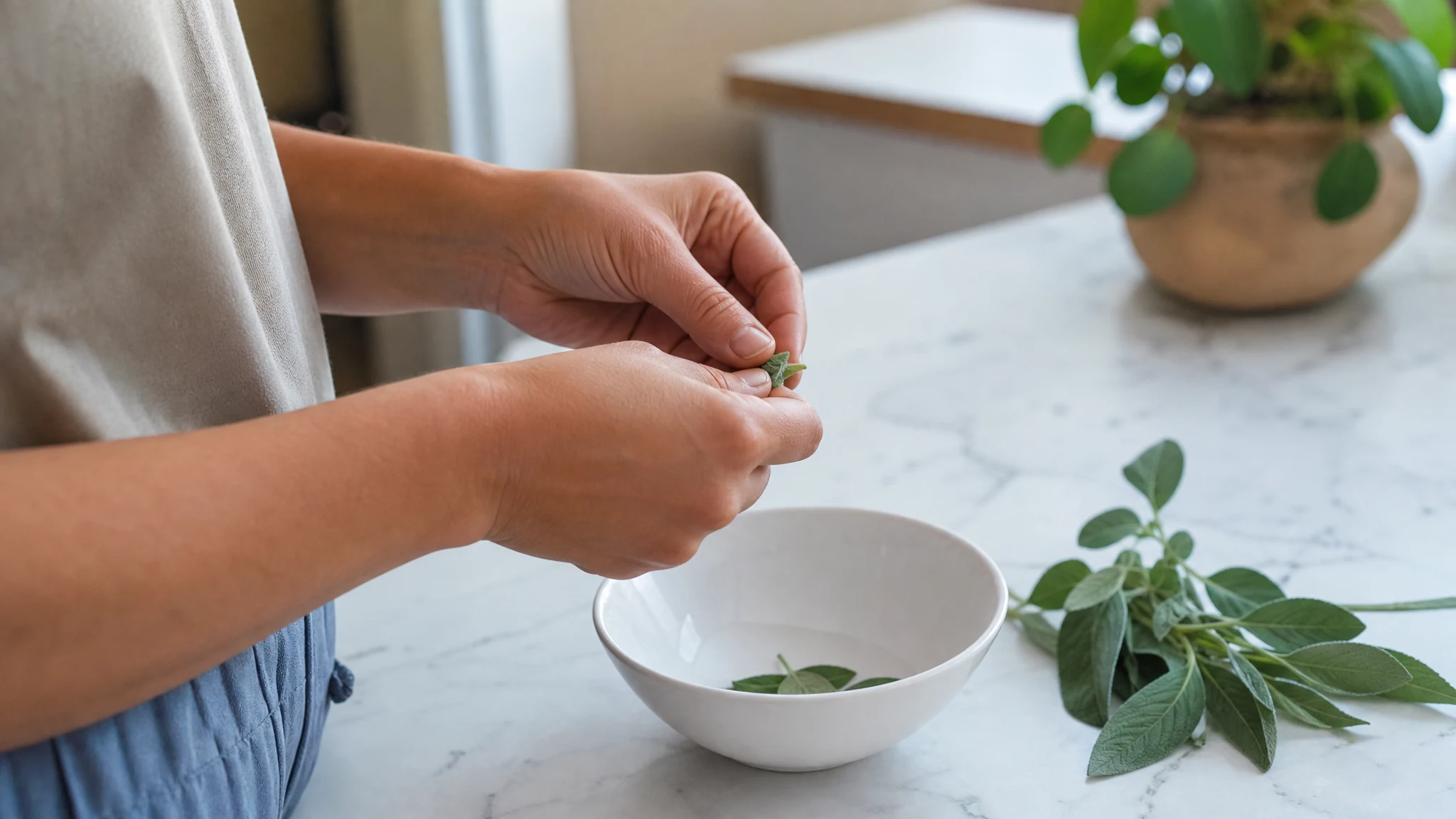
For cooking, the dried or fresh herb is a different product; this comparison sets out the difference, and the myths article covers the wider belief that natural means edible. Our oil is for the diffuser and the carrier-oil dilution, and not for the spoon.
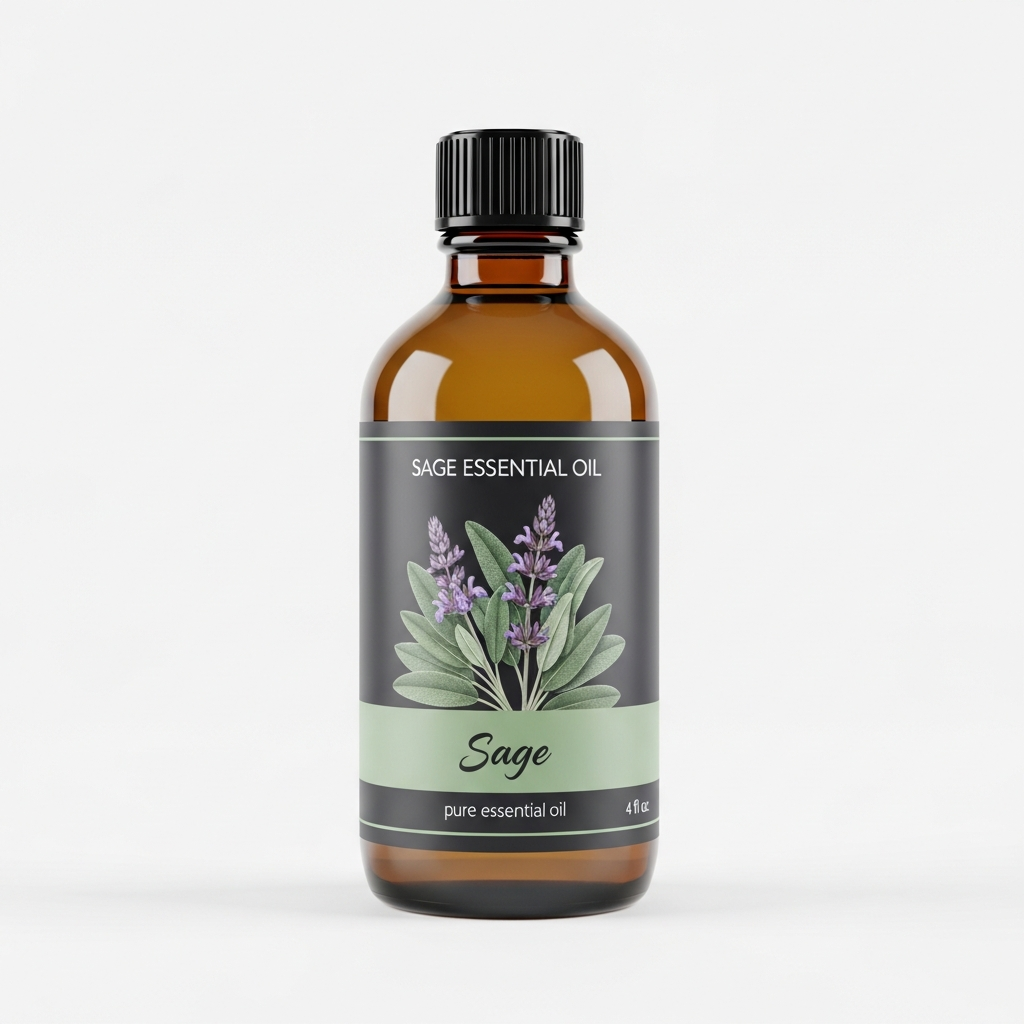
Sage Essential Oil
Sage Essential Oil from our own shop, in sizes from 0.5 oz to bulk.
From $13.99
Shop Now →Sources & Further Reading
- US FDA, 21 CFR 182.10, spices and other natural seasonings and flavorings. law.cornell.edu/21/182.10
- US FDA, 21 CFR 182.20, essential oils, oleoresins and natural extractives. law.cornell.edu/21/182.20
- European Union, 2008. Regulation (EC) 1334/2008, Annex III (UK retained copy). legislation.gov.uk
- EMA/HMPC, 2016. Public statement on Salvia officinalis L., aetheroleum. ema.europa.eu
- EMA/HMPC, 2012. Public statement on the use of herbal medicinal products containing thujone, Rev. 1. ema.europa.eu
- EMA/HMPC, 2016. Assessment report on Salvia officinalis L., folium and aetheroleum. ema.europa.eu
- EFSA FEEDAP Panel, 2024. Sage oil from Salvia officinalis L. as a feed additive. EFSA Journal 22(12):e9135. pmc/PMC11656093
- Millet Y et al., 1981. Toxicity of some essential plant oils. Clin Toxicol 18:1485-98. pubmed/7333081
- Halicioglu O et al., 2011. Toxicity of Salvia officinalis in a newborn and a child. Pediatr Neurol 45:259-60. pubmed/21907890
- NCCIH, 2025. Sage. nccih.nih.gov/health/sage
- National Capital Poison Center. Essential oils. poison.org/essential-oils
- Tildesley NTJ et al., 2003. Salvia lavandulaefolia (Spanish sage) enhances memory in healthy young volunteers. Pharmacol Biochem Behav 75:669-74. pubmed/12895685
- Kennedy DO et al., 2006. Effects of cholinesterase inhibiting sage (Salvia officinalis) on mood, anxiety and performance on a psychological stressor battery. Neuropsychopharmacology 31:845-52. pubmed/16205785
- US FDA. Aromatherapy (content current as of 09/08/2023). fda.gov/aromatherapy