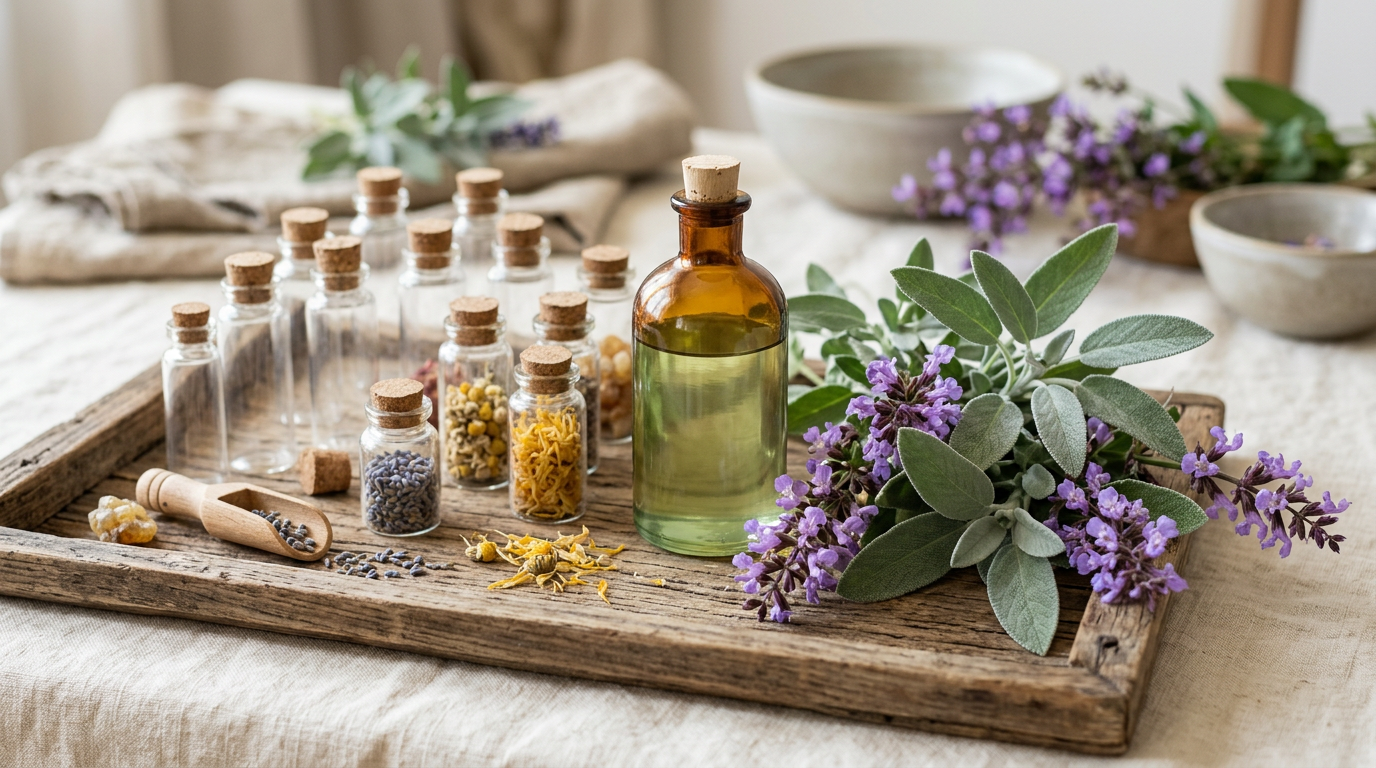
The Study Blend: Sage, Geranium, and Patchouli Fragrance Oil
Some blends are meant for the bathroom counter and some are meant for the desk. This one belongs on the desk. The Study Blend pairs garden sage with rosy geranium and deep, earthy patchouli to make a personal fragrance oil that smells like a well-used library: paper, herbs, and something a little resinous underneath. It is a sage essential oil personal fragrance blend built for focus rituals, quiet evenings with a book, or simply wanting a signature scent that reads as grounded rather than sweet.
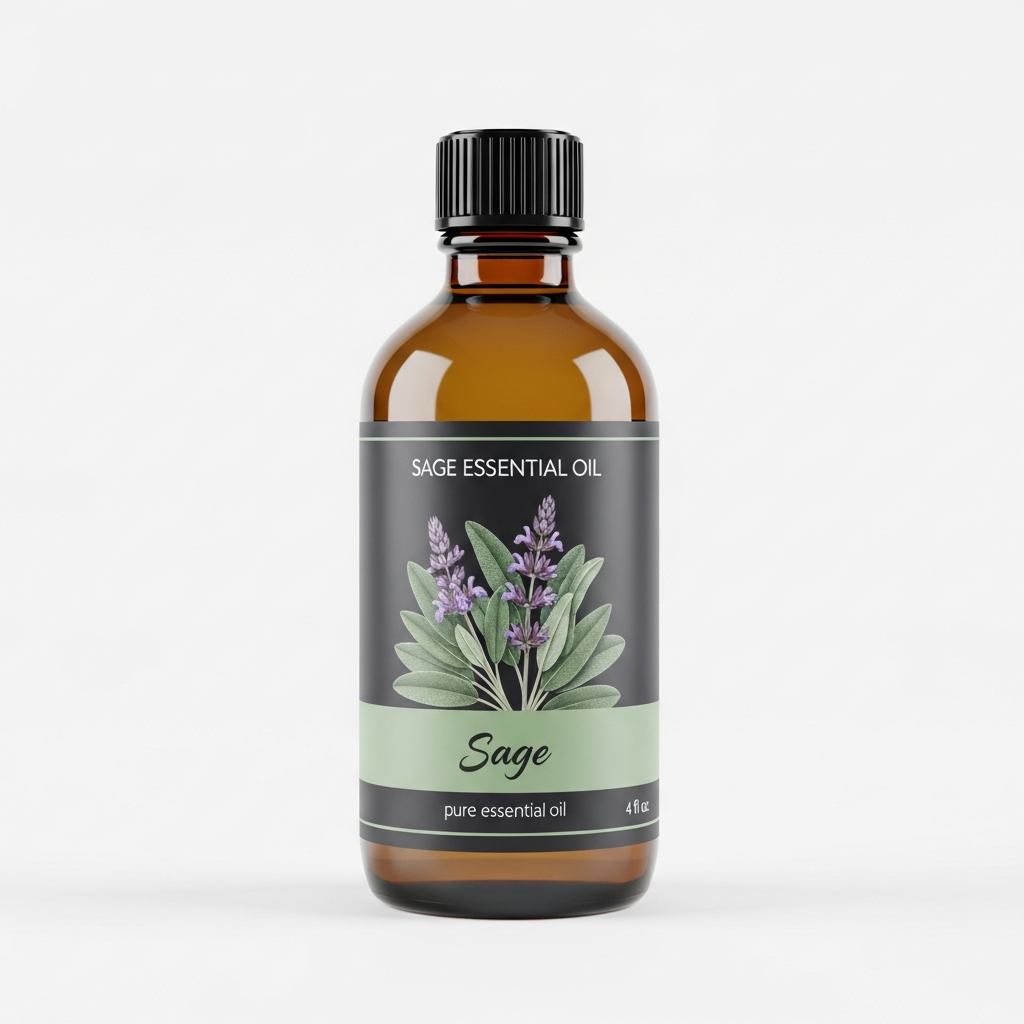
This is a cosmetic, aromatic recipe. Nothing here is positioned as anything other than a fragrance oil you wear or diffuse for the way it smells and the atmosphere it sets.
Why Garden Sage Anchors This Blend
Garden sage essential oil has a sharp, herbaceous opening that mellows into something warmer and slightly camphorous as it settles. It is the backbone of this recipe because it does two things at once: it keeps the blend from tipping into pure sweetness, and it gives the whole composition a dry, papery quality that suits a study or reading room far better than a floral or gourmand blend would.
Distilled sage also carries a natural variability from batch to batch, and we think that is worth being upfront about. Weather, harvest timing, and the specific stand of plants all shift the balance of the oil's aromatic compounds slightly season to season. If your bottle smells a touch greener or a touch warmer than the last one you bought, that is the plant, not an inconsistency in sourcing. It is part of what makes a signature sage oil recipe feel alive rather than manufactured.
The Aroma Profile: Sage, Geranium, Patchouli
Each of the three oils plays a distinct role in a classic top, middle, and base structure:
- Sage (top to middle note): herbaceous, slightly peppery, a little cool. It is the first thing you notice and it fades into the background as the blend develops on skin.
- Geranium (middle note): rosy but not sweet, with a green, slightly minty edge. It softens the sage and keeps the blend from smelling purely medicinal.
- Patchouli (base note): deep, earthy, faintly sweet with age. It is what makes this a lasting personal fragrance rather than a scent that disappears in twenty minutes. Patchouli also improves with time, so an older bottle will round out the blend even more than a fresh one.
Together they make a sage patchouli perfume oil blend that leans woody and herbal rather than floral. If you have smelled patchouli alone and found it too heavy, the sage and geranium here cut it back considerably. It reads more like a well-worn leather journal than incense.
What You Will Need
This recipe makes about 10 mL of blended fragrance oil at a wearable dilution, using a carrier oil base. Jojoba oil is our first choice because it has a long shelf life and almost no scent of its own, but fractionated coconut oil or sweet almond oil work as substitutes.
| Ingredient | Drops | Approx. mL | Role |
|---|---|---|---|
| Garden sage essential oil | 6 drops | 0.3 mL | Top/middle note, herbaceous backbone |
| Geranium essential oil | 4 drops | 0.2 mL | Middle note, softens and rounds out sage |
| Patchouli essential oil | 3 drops | 0.15 mL | Base note, depth and staying power |
| Jojoba oil (carrier) | n/a | 9.35 mL | Dilutes the blend to a skin-safe, wearable strength |
You will also want a 10 mL amber or cobalt glass rollerball bottle, a small glass stirring rod or toothpick, and a funnel with a narrow spout if your dropper bottles do not pour cleanly.
Step-by-Step: Blending the Study Blend
- Sanitize your bottle. Wash the rollerball bottle and cap in warm soapy water, rinse well, and let it air dry completely. Any moisture left inside can shorten the life of your blend.
- Add the base note first. Using the dropper, add 3 drops of patchouli essential oil directly into the empty bottle.
- Layer in the middle note. Add 4 drops of geranium essential oil on top of the patchouli.
- Finish with the top note. Add 6 drops of garden sage essential oil last.
- Cap and roll gently. Put the cap on (without the rollerball insert yet if you are working with a wide-mouth bottle) and roll the bottle between your palms for 20 to 30 seconds to let the three oils begin to marry.
- Top with carrier oil. Using the funnel, slowly pour jojoba oil into the bottle until it reaches just below the neck, leaving a small amount of headspace.
- Seal and mix. Insert the rollerball top or cap, then roll the bottle between your palms again for a full minute. Avoid shaking hard, as that can introduce air bubbles under a rollerball insert.
- Rest before wearing. Let the blend sit in a cool, dark place for at least 24 hours, and ideally 48, before your first wear. This resting period lets the three oils settle into each other so the blend smells cohesive rather than like three separate ingredients.
Once rested, roll a small amount onto pulse points such as the wrists or the inside of the elbows. A little goes a long way with patchouli in the mix.
Dilution Ratios and Patch Testing
The recipe above lands at roughly a 3 percent dilution, which is a common strength for a personal fragrance oil worn directly on skin. If you have sensitive skin or simply prefer a lighter scent, you can dilute further:
- Light wear (about 1–2%): Use the same 13 drops of essential oil but increase the carrier oil to around 15 mL.
- Standard wear (about 3%): The recipe as written above.
- For diffusing or scenting a room only: Skip the carrier oil dilution and use the essential oils at full strength in a diffuser, following your diffuser's recommended drop count. Do not apply undiluted essential oil directly to skin.
Before wearing any new blend, patch test it. Apply a small diluted amount to the inside of your forearm and leave it uncovered for 24 to 48 hours. If you notice redness, itching, or irritation at any point, wash the area and discontinue use of that blend. Patch testing matters even for oils you have used before individually, since combining oils can occasionally produce a different skin response than any single ingredient on its own.
Sage, geranium, and patchouli are all generally well tolerated at cosmetic dilution, but individual skin sensitivity varies. If you are pregnant, nursing, or have a known sensitivity to any plant in the mint or geranium family, check with a qualified healthcare provider before using this or any essential oil blend.
Keep this blend away from the eyes, and out of reach of children and pets. As with any concentrated essential oil, store the individual bottles upright with caps tightened firmly.
Storage and Shelf Life
Store your finished Study Blend in its dark glass bottle, away from direct sunlight and heat. A desk drawer or a closed cabinet works well, which fits the theme nicely. Kept this way, the blend should hold its character for about 12 to 18 months. The jojoba carrier oil is fairly stable and resists going rancid, but the aromatic top notes (sage in particular) will soften first, so the blend will gradually shift toward the deeper patchouli and geranium notes over time. Some people prefer it that way.
Label your bottle with the date you made it. If the scent turns noticeably sour, sharp, or unpleasant before then, it is time to make a fresh batch rather than continue wearing it.
Three Variations on the Study Blend
The Evening Study Blend (deeper and warmer)
Reduce the sage to 4 drops and increase the patchouli to 5 drops, keeping geranium at 4 drops. This shifts the balance toward the base notes for a heavier, more grounding scent suited to evening reading rather than daytime wear.
The Bright Study Blend (lighter and greener)
Increase the sage to 8 drops, keep geranium at 4 drops, and reduce patchouli to 2 drops. This keeps more of the sharp, herbaceous quality up front and works well for a daytime desk scent that will not overwhelm a shared workspace.
The Cedar Study Blend (woodier variation)
Keep the original ratio of sage, geranium, and patchouli, but add 2 drops of cedarwood essential oil along with the patchouli in step 2. This adds a dry, woody layer that pairs especially well if you plan to diffuse the blend rather than wear it on skin, since cedarwood tends to read stronger in the air than on the body.
Making the Blend Your Own
The ratios above are a starting point, not a rule. Essential oil blending rewards small adjustments made one drop at a time. If you make a batch and find the patchouli is louder than you would like a day or two after resting, note it down and dial it back by a drop in your next round. Keeping a simple log of what you used and how it smelled at day one versus day seven will teach you more about building a signature sage oil recipe than any fixed formula could.
For sourcing notes and more on how Garden Sage, Distilled is grown and steam distilled, see our guide on choosing a quality sage essential oil for blending.