What Is Sage Essential Oil? A Complete Beginner's Guide
If you've wandered past a bottle of sage essential oil on a shelf and wondered what exactly you'd be bringing home, you're not alone. Sage is one of those plants everyone half-recognizes, maybe from a holiday roast, a bundle at a farmers market, or a name half-remembered from an herbalism book, but the leap from "garden herb" to "amber bottle of concentrated oil" isn't always obvious. This guide walks through what sage essential oil actually is, how it's produced, what it smells like, and how people commonly incorporate it into aromatic and cosmetic routines. By the end, you'll have a grounded, practical understanding of sage oil explained in plain language, without the hype.
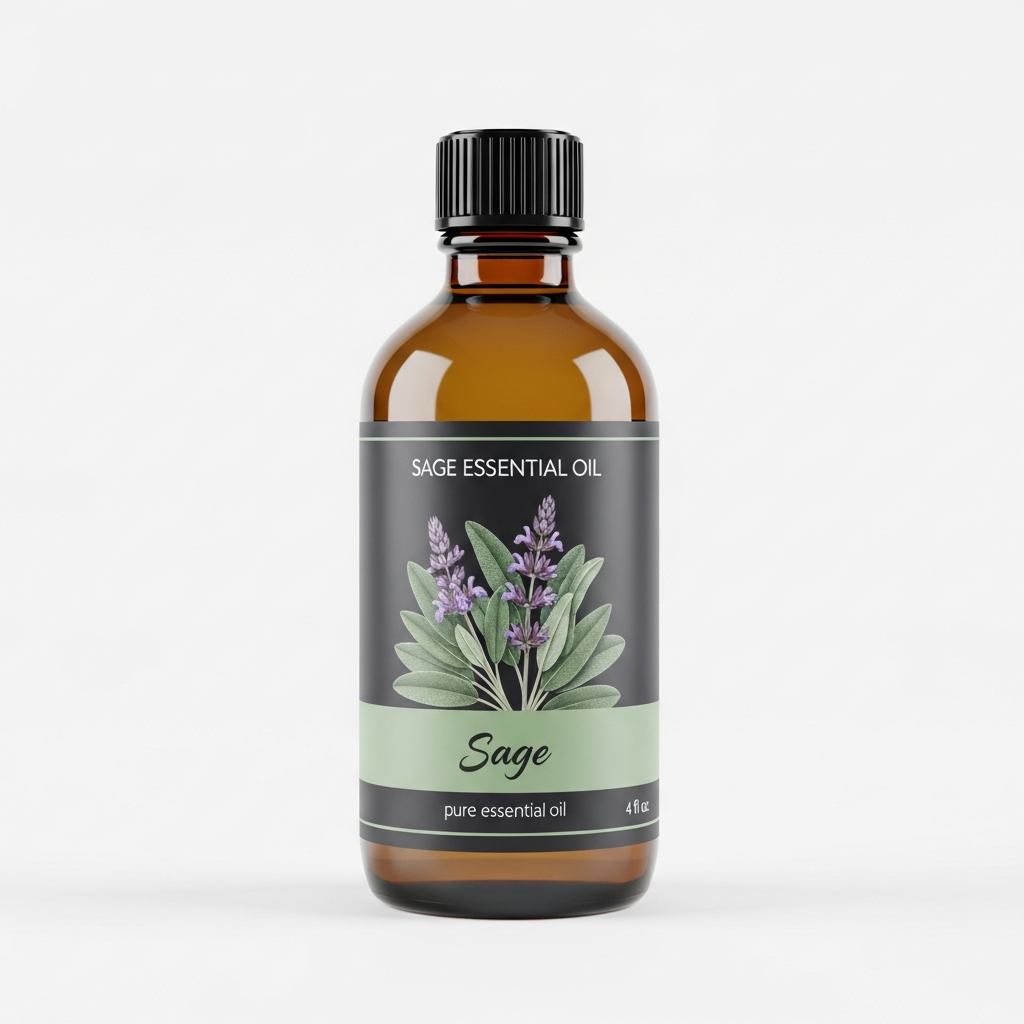 Sage Essential Oil
Our own Sage Essential Oil, in sizes from 0.5 oz to bulk. From $11.74.
Shop Now →
Sage Essential Oil
Our own Sage Essential Oil, in sizes from 0.5 oz to bulk. From $11.74.
Shop Now →
Key Takeaways
- Sage essential oil is steam-distilled from the leaves of Salvia officinalis (garden or common sage), not to be confused with white sage or clary sage, which are different plants with different aromatic profiles.
- The oil carries a sharp, herbaceous, slightly camphoraceous scent that reflects the fresh plant closely.
- Most home use falls into two categories: aromatic (diffusers, room scenting) and cosmetic (diluted skin and scalp applications).
- Sage oil contains a compound called thujone, which is part of why dilution and moderate use matter more with this oil than with many others.
- Quality varies widely by sourcing, distillation method, and batch testing, so label transparency is worth checking before you buy.
- This guide is educational. Always consult a qualified healthcare provider before adding any essential oil to your routine, particularly if you are pregnant, nursing, or managing a health condition.
Table of Contents
- What Is Sage Essential Oil, Exactly?
- The Aromatic Profile: What Sage Oil Smells Like
- A Brief History of Sage as a Botanical
- How Sage Essential Oil Is Commonly Used
- Sage Oil Chemistry: What's Actually in the Bottle
- How to Choose a Quality Sage Essential Oil
- Safety, Dilution, and Patch Testing
- Frequently Asked Questions
What Is Sage Essential Oil, Exactly?
Sage essential oil is a concentrated aromatic liquid extracted from the leaves of Salvia officinalis, commonly called garden sage or common sage. It's a member of the mint family, related botanically to rosemary, lavender, and thyme, which explains why its scent shares some of that same herbaceous, slightly woody backbone. The oil is what's left after the plant's volatile aromatic compounds are separated from the leaf material, leaving behind a highly concentrated version of the plant's natural scent.
From Garden to Bottle: How It's Made
Sage essential oil is almost always produced through steam distillation. Freshly harvested sage leaves and stems are packed into a still, and steam is passed through the plant material. The heat releases the plant's volatile aromatic compounds, which travel with the steam into a cooling chamber. As the steam condenses back into liquid, the oil separates naturally from the water, since oil and water don't mix. That oil layer is skimmed off, and what remains is pure sage essential oil.
It takes a substantial amount of plant material to produce even a small bottle of oil, which is one reason essential oils are used in small, diluted amounts rather than applied directly to skin or used casually the way you might use the fresh herb in cooking.
Garden Sage vs. Other "Sage" Oils
Here's where a lot of first-time buyers get tripped up: "sage" isn't one plant, it's a genus with hundreds of species, and several show up in the essential oil world under similar names. Garden sage (Salvia officinalis) is what this guide focuses on, and it's distinct from:
- Clary sage (Salvia sclarea), which has a sweeter, more herbal-floral aroma and a different chemical profile.
- White sage (Salvia apiana), a plant native to the southwestern United States, traditionally burned as dried leaf bundles rather than distilled into oil, and associated with cultural and ceremonial practices that deserve their own respectful context.
If a listing just says "sage oil" without a botanical name, it's worth asking the seller which species is inside the bottle. The aroma, chemical makeup, and appropriate dilution guidance differ across all three.
The Aromatic Profile: What Sage Oil Smells Like
Sage essential oil has a scent that's immediately recognizable to anyone who has crushed a fresh sage leaf between their fingers, just concentrated and a little sharper. People commonly describe it as:
- Herbaceous, green, and savory, close to the fresh plant
- Camphoraceous, with a cooling, almost medicinal edge (not to be confused with any medical claim, this simply describes the scent character shared with camphor and eucalyptus)
- Slightly woody and earthy in the base notes, once the sharper top notes settle
- Warm and a touch peppery on the finish
In perfumery and blending circles, sage is generally classified as a middle-to-base note, meaning its scent lingers longer than a bright citrus top note but doesn't quite have the deep, heavy staying power of something like sandalwood or patchouli. It blends well with other herbaceous and woody oils, lavender, rosemary, bergamot, and cedarwood among them, which is part of why it shows up so often in autumn and winter-leaning blends.
A Brief History of Sage as a Botanical
Sage has a long-standing place in European herb gardens and kitchens, and its Latin name is a clue to how it was regarded historically. Salvia traces back to the Latin word salvere, meaning "to save" or "to be in good health," a nod to how highly earlier generations esteemed this plant. Sage shows up in Mediterranean and European folk practice for centuries, woven into kitchen gardens alongside rosemary and thyme, and later distilled for its aromatic oil as extraction methods advanced.
It's worth being clear-eyed about this history rather than romanticizing it: folk tradition reflects what people believed and practiced at the time, not verified outcomes. Today, sage's place is primarily culinary (the dried and fresh leaf), ornamental (in gardens), and aromatic or cosmetic (as an essential oil), and that's the lens this guide keeps throughout.
How Sage Essential Oil Is Commonly Used
Within aromatic and cosmetic contexts, sage essential oil shows up in a handful of recurring ways. None of what follows should be read as a claim about managing any health condition. These are descriptions of common consumer applications, framed around scent and skin care formulation.
In Diffusers and Scenting Rituals
A few drops in a diffuser is the most common entry point for people new to sage oil. Its herbaceous, grounding scent is frequently paired with cedarwood or lavender for an evening wind-down atmosphere, or with citrus oils for a brighter, more energizing daytime blend during work or study. Some people also incorporate the scent into meditation or yoga spaces as part of a broader sensory routine.
In Skin Care and Cosmetic Formulations
Sage oil appears in small percentages in some cosmetic formulations, toners, clarifying face mists, and scalp treatments among them, always diluted into a carrier oil, hydrosol, or finished product rather than applied at full strength. When shopping for a formulated product, check the ingredient list for the concentration or ask the maker directly, since essential oil percentages in finished cosmetics vary widely by brand.
In Hair and Scalp Care
Some hair care formulations include sage oil for its scent profile and its long association with scalp-focused routines in herbal traditions. As with skin applications, this means a few diluted drops mixed into a carrier oil or an existing shampoo or conditioner base, never applied undiluted directly to the scalp.
Sage Oil Chemistry: What's Actually in the Bottle
Understanding a little of the chemistry helps explain both the scent and the safety guidance that follows.
Key Constituents
Garden sage essential oil typically contains a mix of naturally occurring compounds, and the exact ratios shift depending on where the plant was grown, when it was harvested, and how it was distilled. Some of the more prominent compounds researchers commonly report in Salvia officinalis oil include:
| Compound | General Character |
|---|---|
| Thujone (alpha and beta) | Sharp, camphor-like; a major contributor to sage's distinctive scent and a key reason for careful dilution |
| Camphor | Cooling, sharp, medicinal-smelling note |
| 1,8-Cineole | Fresh, eucalyptus-like brightness |
| Borneol | Woody, slightly sweet undertone |
These figures describe general research observations about the plant's composition, not a guarantee of any specific bottle's contents. Every batch is different, which is exactly why reputable sellers test each one individually (more on that below).
Why Thujone Content Matters
Thujone is the compound most associated with sage's distinctive, sharp aroma, and it's also the reason sage essential oil calls for more conservative dilution than many other common oils. Some research has looked at thujone's effects at higher concentrations, and the general consensus among aromatherapists and formulators is straightforward: use sage oil in small, well-diluted amounts, avoid prolonged undiluted exposure, and check with a qualified healthcare provider before use if you are pregnant, nursing, or have any condition that makes you sensitive to concentrated plant compounds. This is a good general habit with any essential oil, but it's especially worth following with sage.
How to Choose a Quality Sage Essential Oil
Not all bottles labeled "sage oil" are created equal. Here's what separates a well-sourced bottle from a questionable one.
Reading the Label
- Botanical name: Look for Salvia officinalis specifically, not just "sage."
- Plant part and extraction method: Steam-distilled from the leaf is standard for this oil.
- Country of origin: Sage grown in different regions can carry subtly different aromatic characteristics.
- Batch or lot number: A sign the seller can trace that specific bottle back to a specific distillation run.
Sourcing and Distillation
Ask (or look for documentation on) how the plant was grown, whether pesticides were used, and how recently it was distilled. Essential oils don't have an indefinite shelf life; sage oil generally holds its aromatic quality well for a few years when stored properly, in a dark glass bottle, away from heat and direct light, with the cap tightened between uses.
Third-party lab testing, often shown as a GC/MS (gas chromatography-mass spectrometry) report, is one of the clearest signs of a seller who takes quality seriously. This kind of report shows the actual chemical breakdown of that specific batch, including thujone content, so you're not just trusting a label claim.
Safety, Dilution, and Patch Testing
Essential oils are concentrated plant extracts, and sage oil in particular calls for a careful approach given its thujone content. A few general guidelines worth following:
- Always dilute before skin contact. A common starting ratio for body use is around 1% (roughly 6 drops of essential oil per ounce of carrier oil), and many formulators recommend staying even more conservative with sage specifically.
- Patch test first. Apply the diluted mixture to a small area of skin, such as the inner forearm, and wait 24 to 48 hours before wider use, watching for any redness, itching, or discomfort.
- Never apply undiluted oil directly to skin.
- Keep away from eyes, ears, and mucous membranes.
- Use diffusers in well-ventilated spaces and avoid prolonged, continuous diffusion in small, closed rooms.
- Keep out of reach of children and pets.
- Consult a qualified healthcare provider before use if you are pregnant, nursing, managing any health condition, or taking medication, and before use around infants or young children.
This guide is educational and does not replace individualized guidance from a healthcare provider. If you experience any adverse skin reaction or discomfort after use, discontinue use and speak with a qualified healthcare provider.
Frequently Asked Questions
Is sage essential oil the same as the sage I cook with?
They come from the same plant, but they're not interchangeable. Culinary sage is the fresh or dried leaf, used in cooking in whole or crumbled form. Sage essential oil is a highly concentrated distillate meant for aromatic and diluted cosmetic use, not for ingestion or cooking.
Can I apply sage essential oil directly to my skin?
No. Undiluted essential oils, sage included, are too concentrated for direct skin contact and should always be mixed into a carrier oil or a formulated cosmetic product first, followed by a patch test.
What's the difference between sage oil and clary sage oil?
They're different species with different aromas and chemical profiles. Garden sage (Salvia officinalis) has a sharper, more camphoraceous scent, while clary sage (Salvia sclarea) tends to be softer and more herbal-floral. Always check the botanical name before buying if you have a specific one in mind.
How long does a bottle of sage essential oil last?
Stored properly, in a dark glass bottle, capped tightly, away from heat and sunlight, sage essential oil generally maintains its aromatic quality for a few years. If the scent changes noticeably or seems "off" compared to when you first opened it, that's a sign it may be past its prime.
Is sage essential oil safe to diffuse around pets?
Pets can be more sensitive to concentrated aromatic compounds than people are, and sensitivity varies by species. If you have pets in the home, diffuse in well-ventilated areas, keep sessions short, and consult a veterinarian if you have any concerns about diffusing around a specific animal.
What should I look for when buying my first bottle?
Confirm the botanical name (Salvia officinalis), check for a batch number and, ideally, a third-party lab report, and buy from a seller who's transparent about sourcing and distillation. Starting with a smaller bottle is also a reasonable way to test whether you like the scent before committing to a larger size.