Clary Sage vs Common Sage Oil: Which One Should You Buy?
Walk into any shop selling essential oils and you'll likely find two bottles labeled "sage," sitting side by side with almost identical names and remarkably different personalities. Clary sage (Salvia sclarea) and common sage, sometimes called garden sage or Dalmatian sage (Salvia officinalis), come from related plants in the same botanical family, but they are not interchangeable. If you've ever stood in front of a shelf trying to decide which sage oil to buy, you're not alone. This guide walks through what actually separates clary sage vs sage oil, from their aroma and chemistry to how each one is typically used, so you can pick the bottle that fits what you're actually looking for.
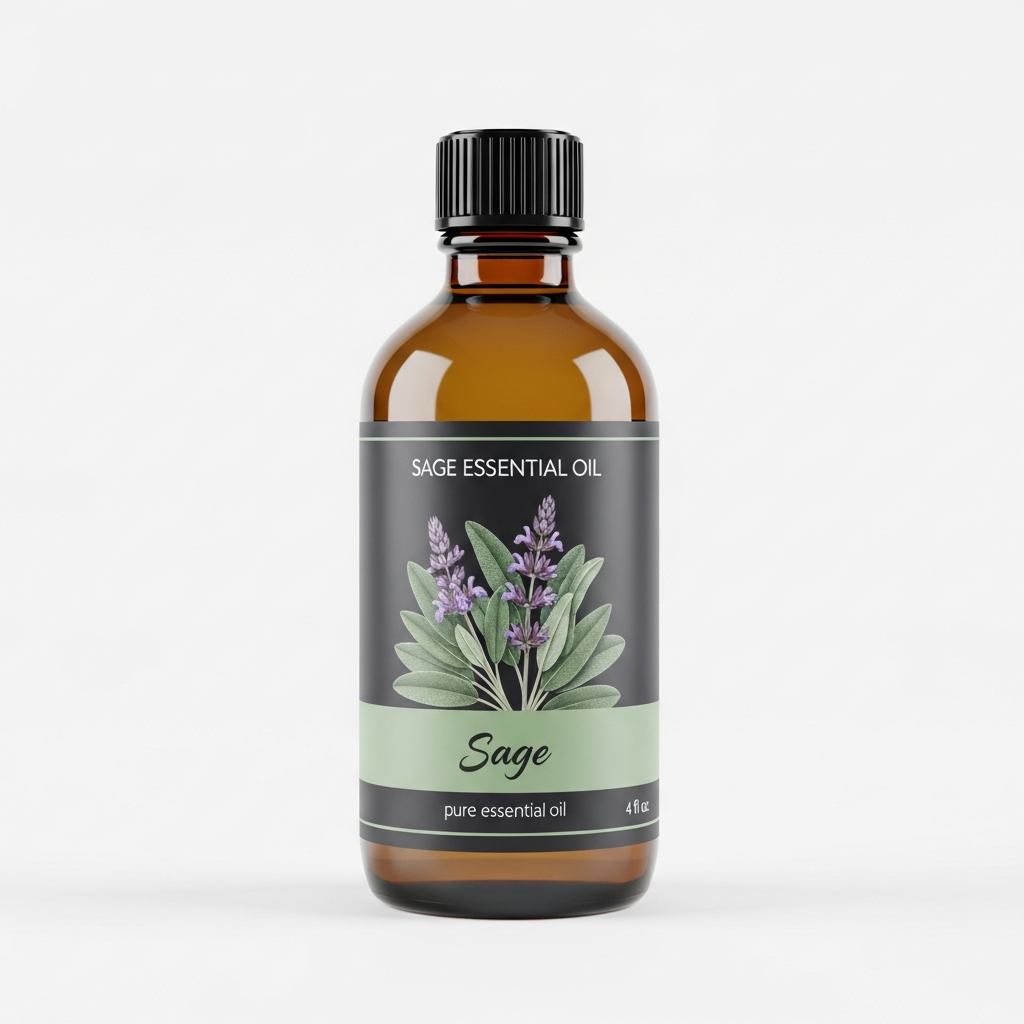 Sage Essential Oil
Our own Sage Essential Oil, in sizes from 0.5 oz to bulk. From $11.74.
Shop Now →
Sage Essential Oil
Our own Sage Essential Oil, in sizes from 0.5 oz to bulk. From $11.74.
Shop Now →
Two Different Plants, One Confusing Name
The shared word "sage" is where most of the confusion starts. Clary sage and common sage are cousins within the large Salvia genus, which includes hundreds of species grown around the world. They share a family resemblance in their leaves and growing habits, but the essential oils distilled from each plant are chemically distinct, and that difference shows up the moment you open the bottle.
Common sage is the culinary sage most people picture: silvery green leaves, a savory, herbaceous scent often associated with stuffing and roasted vegetables. Clary sage grows taller, with large, felted leaves and tall flowering spikes, and its oil is distilled mainly from the flowering tops rather than the leaves alone. That single difference in what part of the plant gets distilled, along with the plant's own natural chemistry, is a big part of why the two oils smell and behave so differently.
Aroma Profile: Herbaceous and Sharp vs Warm and Musky
If you're choosing between sage oil types primarily by scent, this is likely the deciding factor.
- Common sage oil smells sharp, camphorous, and distinctly herbal, close to what you'd expect from rubbing a fresh sage leaf between your fingers. It carries a cool, almost medicinal edge that some people find bracing and others find a little harsh in concentration.
- Clary sage oil is softer and rounder, with a warm, slightly sweet, musky quality that many describe as earthy or nutty, with a faint floral note underneath. It blends easily with woodsy and floral oils and tends to be the more approachable of the two for people new to sage scents.
In a diffuser blend or a personal fragrance, clary sage generally reads as cozy and grounding, while common sage reads as crisp and green. Neither is "better": the right pick depends entirely on the mood you're trying to create in a room or on your skin.
The Chemistry Behind the Difference
The aroma difference between these two oils traces back to their chemical makeup, and that chemistry also shapes how each oil is typically recommended for use.
Clary sage oil is rich in linalyl acetate and linalool, the same compounds that give lavender much of its soft, sweet character. This chemical profile is one reason clary sage is generally considered a gentler option for everyday aromatic and cosmetic use, though everyone's skin responds differently.
Common sage oil, by contrast, contains a notably higher concentration of thujone, a ketone compound found in a number of aromatic plants. Because of its ketone content, common sage oil is typically used more sparingly, in lower dilutions, and for shorter periods than many other essential oils. Some suppliers offer a "thujone-free" or low-thujone Spanish sage (Salvia lavandulifolia) as a milder alternative to Dalmatian sage for people who want a sage scent with a gentler chemical profile.
A good rule of thumb when comparing sage oil types: check the bottle for both the Latin name and, ideally, a batch-specific GC/MS test report. "Sage oil" alone doesn't tell you which species, or which chemotype, is inside.
Side-by-Side Comparison
| Feature | Clary Sage (Salvia sclarea) | Common Sage (Salvia officinalis) |
|---|---|---|
| Plant part distilled | Flowering tops | Leaves |
| Scent profile | Warm, sweet, musky, faintly floral | Sharp, herbaceous, camphorous |
| Key aromatic compounds | Linalyl acetate, linalool | Thujone, camphor, cineole |
| Typical dilution guidance | Moderate, similar to many floral oils | Lower percentage, used more sparingly |
| Common cosmetic role | Calming blends, scalp and hair rinses, grounding fragrance layers | Bracing, herbal fragrance accents; occasional hair rinse use |
| Blends well with | Lavender, bergamot, sandalwood, clary sage-forward florals | Rosemary, lemon, tea tree, other green herbal notes |
How Each Oil Is Typically Used
Clary Sage in Everyday Routines
Clary sage is a popular choice in evening diffuser blends meant to set a slower, quieter atmosphere, often paired with lavender or sandalwood for a bedtime wind-down. In cosmetic applications, it's sometimes added in small, well-diluted amounts to hair rinses or scalp oils, and it shows up in some skin-care formulations for its scent alone. Some people report enjoying its aroma as part of a grounding evening ritual, though this is anecdotal and not a substitute for professional guidance on any health concern.
Common Sage in Everyday Routines
Common sage oil tends to show up in smaller amounts, often as an accent note in herbal or woodsy blends rather than the star of the show. Because of its stronger ketone content, most formulators use it at a lower percentage than clary sage, and it's less commonly found in leave-on skin products. It's better suited to diffuser blends, cleaning-adjacent fragrance work, or diluted hair rinse recipes where a sharp, green note is the goal.
Safety Notes for Either Oil
Essential oils are concentrated plant extracts, and both clary sage and common sage deserve the same careful handling you'd give any oil in this category.
- Dilute before skin contact. A common starting ratio for adult cosmetic use is around 1 to 2 percent essential oil in a carrier oil (roughly 6 to 12 drops per ounce of carrier), though common sage is often used at the lower end of that range or less given its ketone content.
- Patch test first. Apply a small diluted amount to the inside of your forearm and wait 24 to 48 hours before wider use, watching for any redness or discomfort.
- Keep undiluted oil away from eyes, ears, and mucous membranes.
- Store away from children and pets, tightly capped and out of direct sunlight.
- If pregnant, nursing, or managing any health condition, talk with a qualified healthcare provider before adding either oil to your routine. This is especially worth doing given common sage's higher ketone content.
- Never take essential oils internally unless directed by a qualified practitioner experienced in that practice; this article covers aromatic and topical cosmetic use only.
Which Sage Oil to Buy: A Quick Decision Guide
If you're still weighing which sage oil to buy, a few quick questions can point you in the right direction:
- Want a soft, warm, grounding scent for evening blends or hair care? Clary sage is generally the more versatile, skin-friendlier pick.
- Want a sharp, green, herbal note reminiscent of the fresh leaf? Common sage delivers that more directly, used in smaller amounts.
- New to sage oils generally? Clary sage tends to be the gentler entry point thanks to its linalool-rich profile.
- Building a cleaning-adjacent or kitchen-inspired fragrance blend? Common sage's crisp, herbal edge fits that lane well.
What to Look for When Sourcing Either Oil
Regardless of which one you choose, quality varies enormously between suppliers. Look for:
- The full Latin binomial on the label (Salvia sclarea or Salvia officinalis), not just "sage."
- A batch number linked to a current GC/MS test report, so you can see the actual compound breakdown rather than taking scent alone as proof of purity.
- Clear country-of-origin and extraction method information (most sage oils are steam distilled).
- A price that makes sense. Clary sage, distilled from abundant flowering tops, is typically more affordable than many florals; if a bottle is priced suspiciously low compared to other reputable suppliers, that's worth a second look.
The Bottom Line
Clary sage and common sage share a name and a family tree, but little else when it comes to how they smell and how they're typically used. Clary sage offers a warmer, rounder, more universally easy scent that suits calming blends, hair care, and evening rituals. Common sage brings a sharper, more assertive herbal character best used sparingly and thoughtfully, given its higher ketone content. Neither is a cure-all, and both deserve the same respect for proper dilution and patch testing that any essential oil warrants. Choose based on the aroma and role you want in your routine, check the label for species and testing information, and when in doubt about how either oil fits your personal circumstances, a quick conversation with a qualified healthcare provider is always a good idea.